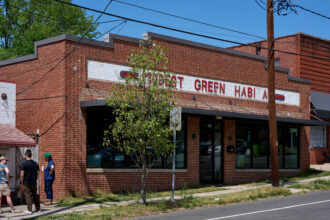


PALO, Iowa—There are two restaurants in Palo, not counting the chicken wings and pizza sold at the only gas station in town.
All three establishments, including the gas station, stand on the same half-mile stretch of First Street, an artery that divides the marshy floodplain of the Cedar River to the east from hundreds of acres of cornfields on the west.
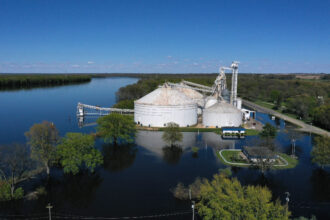
During historic flooding in 2008, the Cedar River surged 10 feet above its previous record, cresting at 31 feet and wiping out homes and businesses well outside the floodplain.
Nearly 20 years later, those structures have been rebuilt, but Palo residents still worry about the river. Except these days, they worry that data centers will drink it dry.
In an effort to shield residents and natural resources from the negative impacts of hyperscale data center development in rural Linn County, officials have adopted what may be one of the most comprehensive local data center zoning ordinances in the nation.
The new ordinance requires data center developers to conduct a comprehensive water study as part of their zoning application and to enter into a water-use agreement with the county before construction. It also places limits on noise and light pollution, introduces mandatory setbacks of 1,000 feet from residentially zoned property, and requires developers to compensate the county for damage to roads or infrastructure during construction and to contribute to a community betterment fund.
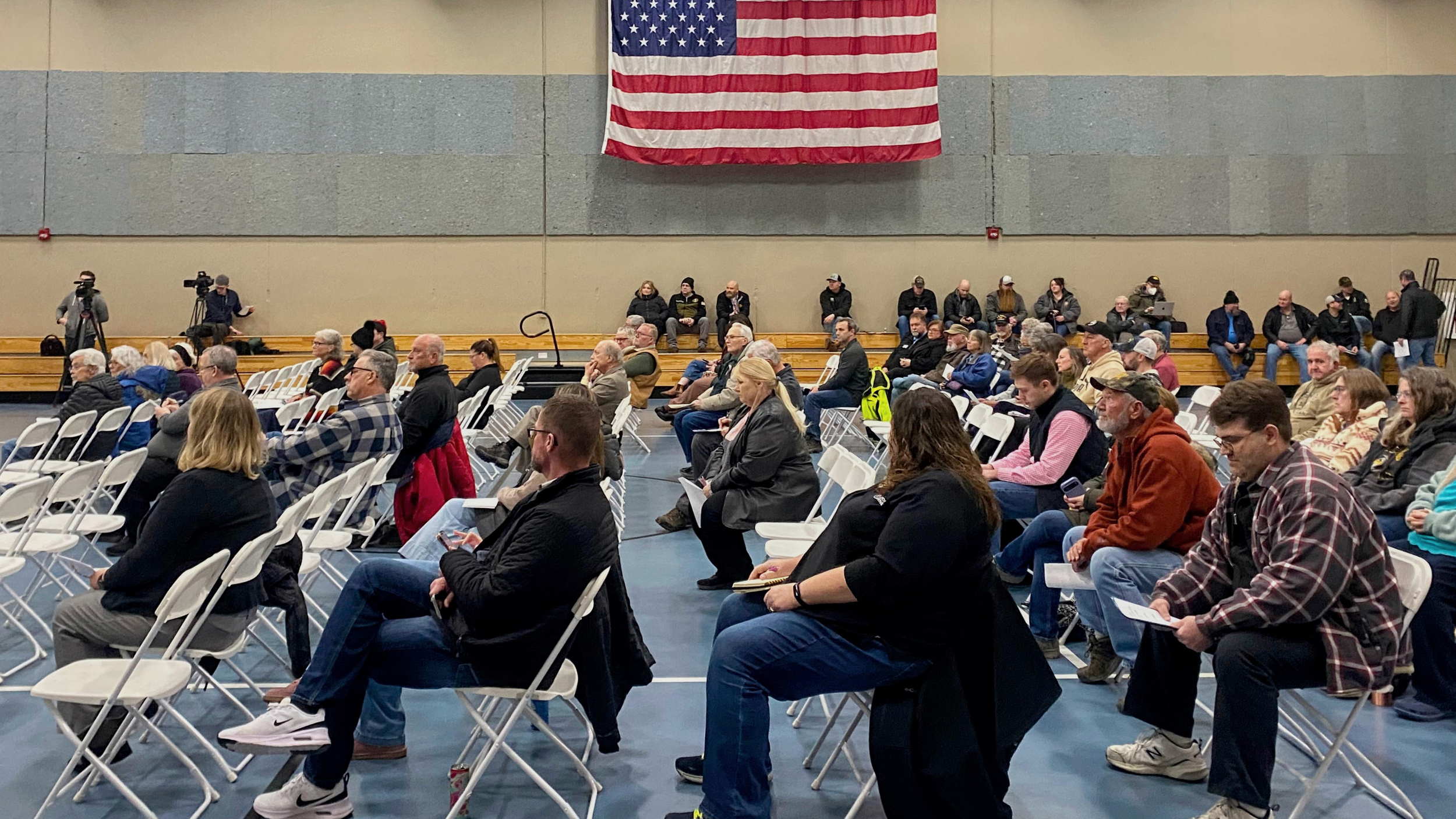
“We are trying to put together the most protective, transparent ordinance possible,” Kirsten Running-Marquardt, chair of the Linn County Board of Supervisors, told the nearly 100 residents who gathered for the draft ordinance’s first public reading in early February.
But seated beneath a van-sized American flag hanging from the rafters of the drafty Palo Community Center gymnasium, residents asked for even stronger protections.
One by one, they approached the microphone at the front of the gym to voice concerns about water use, electricity rates, light pollution, the impacts of low-frequency noise on livestock, and the county’s ability to enforce the terms of the ordinance. Some, including Dorothy Landt of Palo, called for a complete moratorium on new data center development.
“Why has Linn County, Iowa, become a dumping ground for soon-to-be obsolete technology that spoils our landscape and robs us of our resources?” Landt asked. “While I admire the efforts of the Board of Supervisors to propose a data center ordinance, I would prefer to see all future data centers banned from Linn County.”
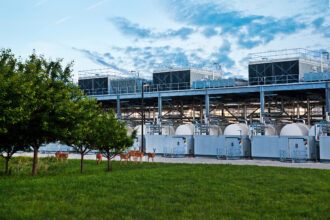
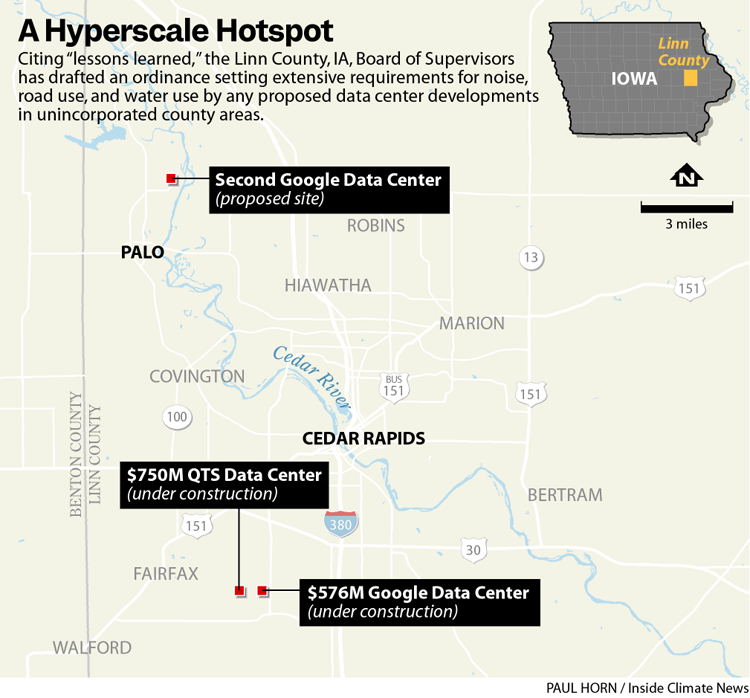
The county is already home to two major data center projects, operated by Google and QTS. Both are located in Cedar Rapids, Iowa’s second-largest city, and are therefore subject to its laws. The new ordinance would apply only to unincorporated areas of the county, which make up more than two-thirds of its geographic footprint.
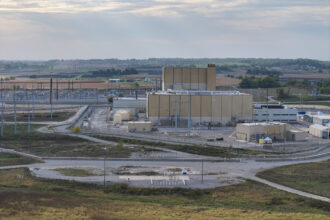
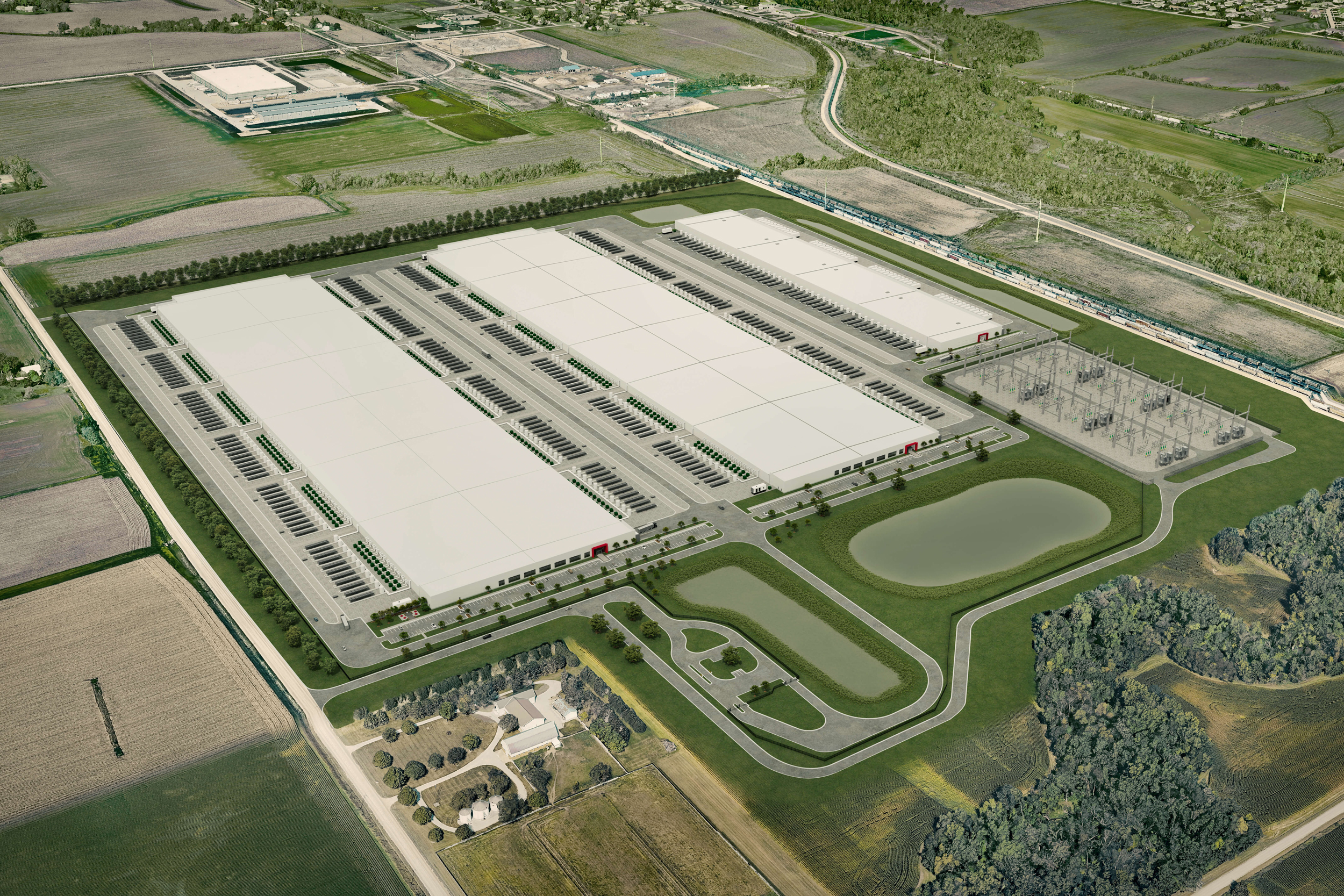
In October 2025, Google informed the Linn County Bard of Supervisors of early plans to construct a six-building campus outside Palo, in unincorporated Linn County, alongside the soon-to-reopen Duane Arnold Energy Center, Iowa’s sole nuclear power plant. Later that month, Google signed a 25-year power purchase agreement with the plant, committing to buy the bulk of the electricity it generates.
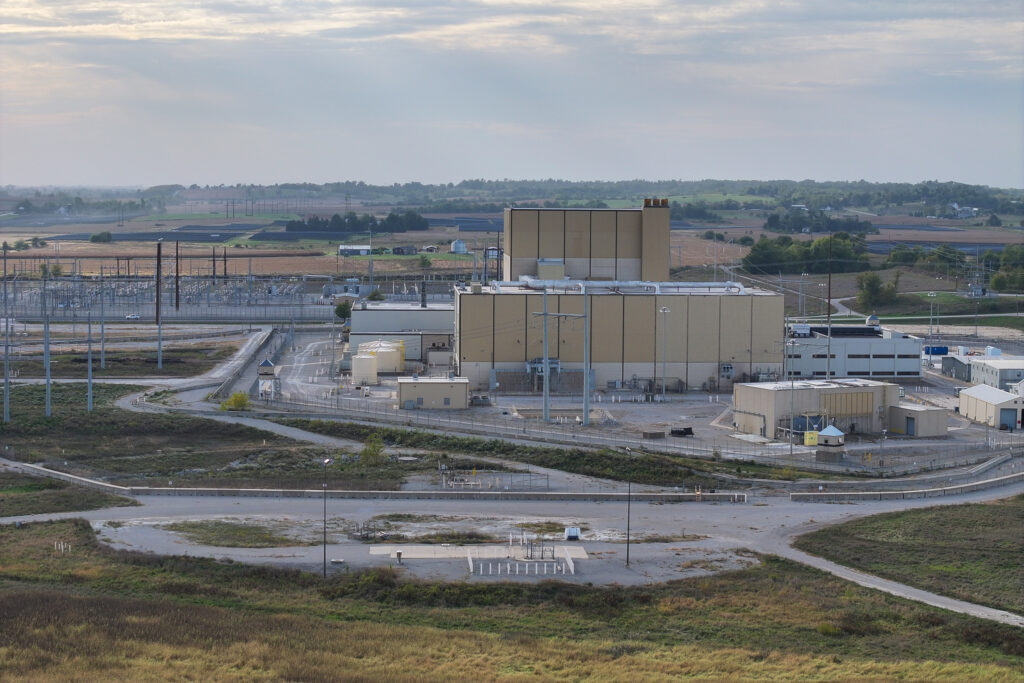
Google has not yet submitted a formal application to the county for the second campus, but its announcement last year, as well as interest from another, unnamed, hyperscale data company, prompted Linn County officials to begin work on an ordinance setting the terms for any new development, said Charlie Nichols, director of planning and development for Linn County.
“I just don’t want to be misled by anything. … I want to know as much as possible before we go ahead with this,” Sue Biederman of Cedar Rapids told supervisors at the public meeting in February.
In drafting the ordinance, Nichols and his staff drew on the experiences of communities nationwide, meeting with local government officials in regions that have seen massive booms in data center development, including several counties in northern Virginia, the “data center capital of the world.”
As data center development balloons, many communities that initially zoned the operations as warehouses or standard commercial users are abandoning that practice, Nichols noted.
The extreme energy and water demands of data centers simply cannot be accounted for by existing zoning frameworks, he said. “These are generational uses with generational infrastructure impacts, and treating them as a normal warehouse or normal commercial user is just not working.”
Loudoun County, Virginia, for example, is home to 198 data centers, nearly all of which were built before the county required conditional or “special exception” use designations for data centers. At the urging of hyperscale-weary residents, the county is now in the second phase of a plan to establish data-center-specific zoning standards.
Similar reassessments are taking place across the country, Chris Jordan, program manager for AI and innovation at the National League of Cities, wrote in an email to Inside Climate News. “We’re seeing tighter zoning standards, more required impact studies, and in some cases temporary moratoria while communities assess infrastructure capacity,” Jordan wrote.
The Linn County, Iowa, ordinance goes one step further than tightening existing zoning rules. Instead, it creates a new, exclusive-use zoning district for data centers, granting county officials the power to set specific application requirements and development standards for projects.
No other counties in the state have introduced similar zoning requirements, said Nichols. In fact, few jurisdictions nationwide have.
“Linn County’s approach is more comprehensive than many local zoning updates we’ve seen,” Jordan wrote. The creation of a data center-specific district, especially one that requires formal water-use agreements and economic development agreements, goes further than typical zoning amendments for data centers, Jordan said.
Despite the layers of protection baked into the new ordinance, Linn County still has limited ability to protect local water resources. Without a municipal water utility, permitting in rural Iowa communities falls to the state Department of Natural Resources (DNR), explained Nichols. Similarly, electric rates fall under the jurisdiction of the state utilities commission and cannot be regulated by the county.
This story is funded by readers like you.
Our nonprofit newsroom provides award-winning climate coverage free of charge and advertising. We rely on donations from readers like you to keep going. Please donate now to support our work.
Donate NowData centers may tap rivers or drill deep wells into shared aquifers, so long as that use complies with the terms of their water-use permit from the Iowa DNR. That leaves the Cedar River and public and private wells, which provide drinking water to much of Linn County, vulnerable.
Residents fear a new, large water user will dry up their wells, as occurred near a Meta data center in Mansfield, Georgia.
“We know that we can have multi-year droughts. The question is, are we depleting that river and the water table faster than it’s running?” Leland Freie, a Linn County resident, told supervisors at the first public meeting on the ordinance.
Without superseding state authority, the Linn County ordinance attempts to claw back a bit more local control, Nichols explained.
As part of their zoning application, data centers would submit a study “prepared by a qualified professional” assessing the capacity of proposed water sources, anticipating demands and cooling technologies, and developing contingency plans in case the water supply is interrupted.
Requiring a water study ensures, at a minimum, a baseline understanding of local water resources and dynamics near proposed data centers. That’s something the state of Iowa generally lacks, said Cara Matteson, a former geologist and the sustainability director for Linn County.
DNR staff told Matteson that water data gathered in Linn County by qualified researchers on behalf of a data center applicant would be incorporated in state-level permitting and enforcement decisions.
The department confirmed in an email to Inside Climate News that it would use the additional local water data.
If a data center’s application is approved, developers would then enter into an agreement with Linn County, outlining terms for water-use monitoring and reporting to both the county and the DNR. The agreement could also include contingency plans for droughts.
Still, the county has limited ability to act on the water monitoring data it’s seeking. The DNR doesn’t just issue water-use permits; it also issues penalties for permit violations.
Linn County’s zoning rule underwent several modifications in response to questions raised by attendees at the first two public readings, Nichols said.
From its first reading to final adoption, the ordinance has expanded to include language setting light pollution standards, requiring a waste management plan, including the Iowa DNR in the water-use agreement to address potential well interference issues and requiring an applicant-led public meeting before any zoning commission meetings.
“I am very confident that no ordinance for data centers in Iowa is asking for more information or asking for more requirements to be met than our ordinance right now,” said Nichols at the final reading.
The Cedar Rapids Metro Economic Alliance has said that it strongly supports current and future data center development in the area. The new ordinance is not an effective moratorium, Nichols said. He said he “strongly believes” that a data center can be built within the adopted framework.
Google spokespeople did not respond to requests for comment.
New rules may prompt data centers to develop elsewhere, acknowledged Brandy Meisheid, a supervisor whose district includes many of Linn County’s smaller communities. But the ordinance sets out to protect residents, not developers, Meisheid said. “If it’s too high a price for them to pay, they don’t have to come.”
Correction: This story was updated Mar. 4, 2026, to reflect that Google’s proposed data center lies in unincorporated Linn County, while Palo is considered an incorporated area.
About This Story
Perhaps you noticed: This story, like all the news we publish, is free to read. That’s because Inside Climate News is a 501c3 nonprofit organization. We do not charge a subscription fee, lock our news behind a paywall, or clutter our website with ads. We make our news on climate and the environment freely available to you and anyone who wants it.
That’s not all. We also share our news for free with scores of other media organizations around the country. Many of them can’t afford to do environmental journalism of their own. We’ve built bureaus from coast to coast to report local stories, collaborate with local newsrooms and co-publish articles so that this vital work is shared as widely as possible.
Two of us launched ICN in 2007. Six years later we earned a Pulitzer Prize for National Reporting, and now we run the oldest and largest dedicated climate newsroom in the nation. We tell the story in all its complexity. We hold polluters accountable. We expose environmental injustice. We debunk misinformation. We scrutinize solutions and inspire action.
Donations from readers like you fund every aspect of what we do. If you don’t already, will you support our ongoing work, our reporting on the biggest crisis facing our planet, and help us reach even more readers in more places?
Please take a moment to make a tax-deductible donation. Every one of them makes a difference.
Thank you,

Anika Jane Beamer
Reporter, Iowa
Anika Jane Beamer covers the environment and climate change in Iowa, with a particular focus on water, soil and CAFOs. A lifelong Midwesterner, she writes about changing ecosystems from one of the most transformed landscapes on the continent. She holds a master’s degree in science writing from the Massachusetts Institute of Technology as well as a bachelor’s degree in biology and Spanish from Grinnell College. She is a former Outrider Fellow at Inside Climate News and was named a Taylor-Blakeslee Graduate Fellow by the Council for the Advancement of Science Writing.