

When Cary Quintana learned about a new initiative to promote fair treatment and safe conditions for vineyard workers, the Northern California winemaker immediately signed on.
Quintana has partnered with organic and sustainable vineyards for the dozen-plus years she’s run Cary Q Wines, where her minimalist approach to winemaking accents the distinctive features of the Sonoma County soil and climate the grapes are grown in. She’s always favored growers who treat their vineyard workers at least as well as they tend their grapevines. So she didn’t hesitate when two social justice organizations invited her to collaborate on a new wine label—Guardian Vital—that requires ethical labor practices along with chemical-free farming.
It’s the first label to showcase the people who pick the grapes, rather than the grapes that go into the wine.
Quintana thinks most people in the wine industry are so focused on producing high-quality grapes they don’t think about the welfare of the people picking them. Yet vineyard workers are confronting ever-more hazardous conditions as the planet warms.
Climate change places outdoor workers at increased risk of heat-related illness and death, making agricultural work, where laborers sustain up to five times more fatal injuries than other professions, even more dangerous. Yet research has not kept pace with this rising risk: a search of the scientific literature shows nearly 250 times more studies assessing the effects of heat stress on grapevines than on vineyard workers.
“We’re missing the mark on the people,” Quintana said.
Quintana is choosing grape varieties with higher acidity to balance the higher sugar levels caused by rising temperatures. She wants winemakers to realize that those hotter conditions are also affecting workers, who need adequate water, shelter and breaks to stay safe during heatwaves.
She hopes the Guardian Vital label will help both industry insiders and consumers understand what she said should be obvious: wine can’t exist without the people who harvest the grapes.
Toward that end, Quintana plans to release two Guardian Vital wines in June: a white made from the Spanish grape variety Xarel-lo, and a red, made from cinsault, a heat-tolerant grape commonly planted in southern France.
Prioritizing Workers
The idea for a worker-focused label grew out of discussions at a wine and environmental justice conference in San Francisco three years ago hosted by The Vinguard, a nonprofit dedicated to promoting ecological farming and gender and labor equity in the wine industry.
Breakout sessions with vineyard workers and community leaders, including representatives of Lídereres Campesinas, which advocates for women farmworkers, highlighted a litany of threats plaguing grape pickers, from exposure to extreme heat, toxic pesticides and wildfires to low wages and the lack of hazard pay, healthcare and unemployment benefits. Anyone who profits from wine should understand the hazards vineyard workers endure, the participants concluded.
At a minimum, “We need to make consumers aware of the fact that there are human beings that are picking the grapes,” Vinguard founder and executive director Louie Seamus said at a recent conference on sustainable farming in Monterey County.
And even as climate change supercharges heatwaves and wildfires, workers are more reluctant than ever to ask for better protection.
The majority of farmworkers who tend California’s winegrapes and other agricultural crops are undocumented. Long before President Trump launched what he called “the largest criminal illegal immigrant deportation operation in American history” in March, undocumented workers accepted low pay and hazardous working conditions to keep a low profile.
Trump’s mass-deportation regime has created widespread fear among Latino communities, leaving many individuals reluctant to go to work, school and healthcare appointments, researchers with the University of California, Los Angeles reported in a January analytical brief. The administration’s immigration raids have so rattled the agricultural workforce that nearly 1 in 5 labor-intensive crop producers, including winegrowers, reported labor losses in a recent survey.
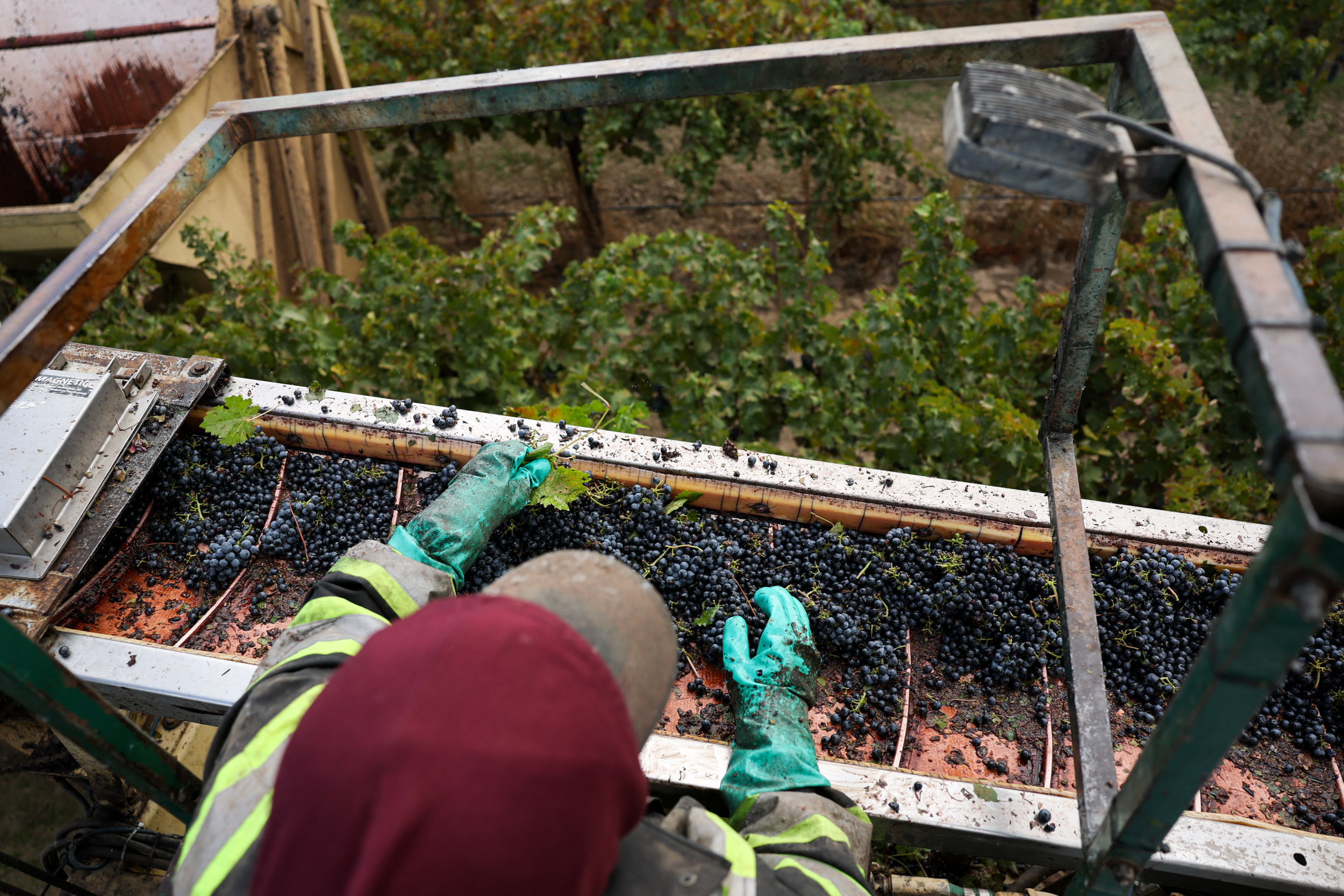
Quintana saw firsthand how the administration’s aggressive immigration crackdown is affecting California’s farmworkers. When it was time for her to harvest her cinsault grapes in late August, her grower told her to be at the vineyard by 3 a.m.
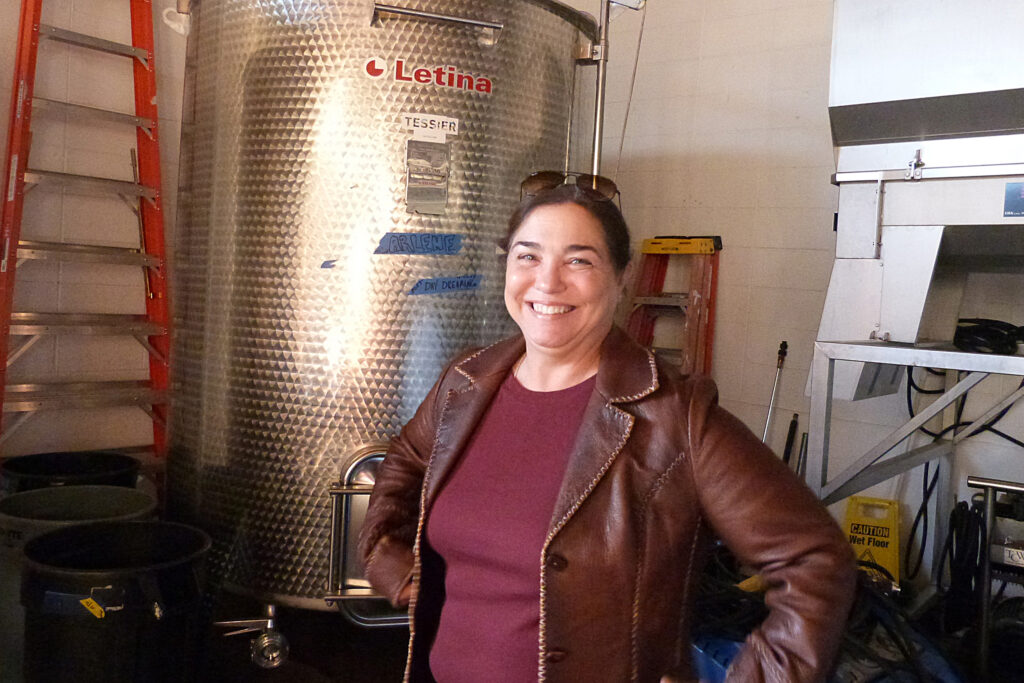
It’s typical to pick grapes before the sun rises so they’re still cool and fresh when they reach the winery. But three in the morning?
Quintana’s grower said his crews were too afraid to work later in the morning. He was starting the harvest as early as 10 p.m. to help them feel safer.
The reality of harvesting her grapes in the middle of the night was a big wakeup call for Quintana. She appreciated her grower’s willingness to accommodate workers’ fears, but was horrified to see what the administration’s anti-immigrant policies were doing to them.
It’s long past time for the industry and consumers to think about the human side of sustainability, she said.
“It’s not just about the grapes,” Quintana said. “Let’s acknowledge that wine does not start at the bottle. It starts in the field, in the vineyard.”
Battling Discrimination
California is the world’s fourth-largest wine producer, buoyed by decades of pioneering research at UC Davis on tailoring grape-growing and winemaking to the Golden State’s climate.
As California’s reputation for making fine wines grew, more women tried their hand at winemaking. Over the past decade, about 50 percent to 62 percent of the UC Davis viticulture and enology department graduating class has been female, said department chair and professor Ben Montpetit.
Yet that expertise has not translated to high-level jobs. Studies on women in the wine industry are scarce. But one research project, launched in 2011 by Lucia Gilbert and John Gilbert, professors emeriti at Santa Clara University, found that women work as the lead winemaker at less than 10 percent of California wineries. Their 2020 update reported a small bump, with 14 percent of wineries retaining a female head winemaker.
Those kinds of statistics drove Amy Bess Cook, an industry veteran, to launch Woman-Owned Wineries in 2017 to help female vintners thrive. Cook spent years raising awareness about all the hurdles women face in the male-dominated industry, from having trouble securing business loans and venture capital to being overlooked for senior positions.
This story is funded by readers like you.
Our nonprofit newsroom provides award-winning climate coverage free of charge and advertising. We rely on donations from readers like you to keep going. Please donate now to support our work.
Donate NowIt was no surprise to Cook that women-run wineries were the first to bottle a Guardian Vital wine.
“Many women automatically have some experience with marginalization,” she said. “So many women will be empathetic toward other marginalized communities.”
That’s why Seamus, who founded The Vinguard to combat gender discrimination in the natural wine movement, quickly expanded the mission to include all historically marginalized groups in the wine industry.
Seamus worked with Irene de Barraicua, Lídereres Campesinas’ policy, advocacy and communications director, to figure out how a wine label could bring attention to worker issues.
After the San Francisco conference on wine and environmental justice, Seamus approached The Vinguard’s board of directors about using a label to spark conversations about vineyard workers.
“We collaboratively fleshed out the idea as a group and came up with the name and qualifications all together,” said winemaker Megan Bell, who served on the board at the time and runs Margins Wines.
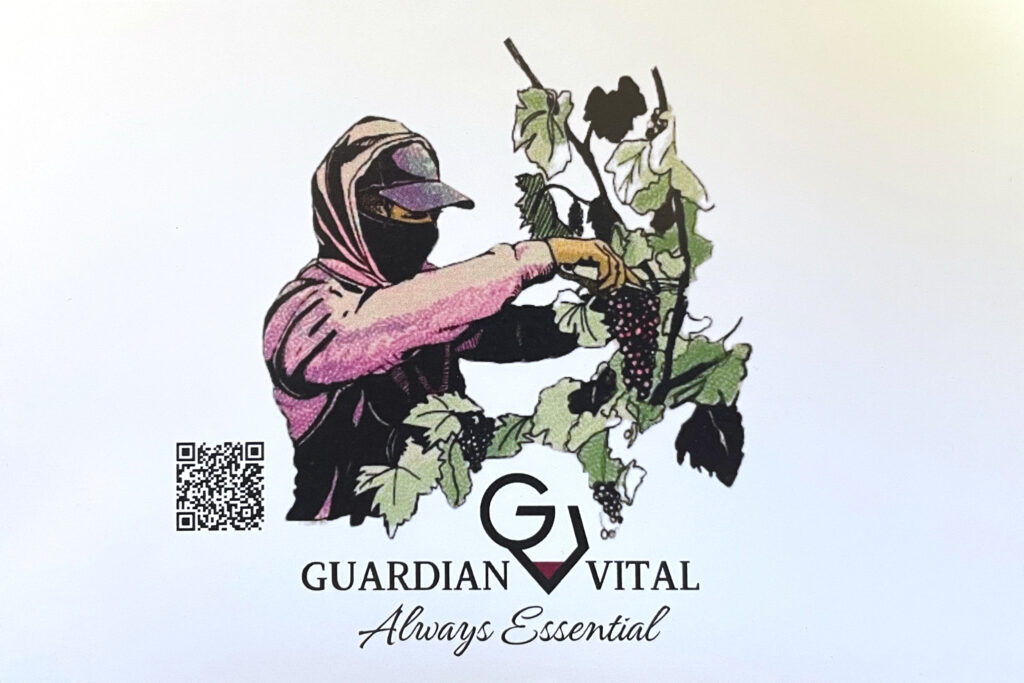
Bell’s Margins Wine and Camins 2 Dreams, run by two women in Santa Barbara County, were the first wineries to release wine with the label last year.
“It was an easy decision for us,” said Mireia Taribó, whose wife and Camins 2 Dreams partner, Tara Gomez, helped develop the label when she served on The Vinguard board a few years ago.
Making sure Camins’ winegrowers take care of their workers has always been a priority, said Taribó. “Every vineyard that we purchase fruit from, through the year, Tara and I go to the vineyards and talk with the workers and see how they are doing.”
Compounding Threats
Farmworkers often confront one challenge on top of another, like COVID-19, exposure to pesticides, extreme heat and wildfire smoke, said de Barraicua. They had a lot to say about what requirements should go on the label over the course of three different sessions that Lídereres Campesinas held to understand their needs, she said.
A major concern was lack of access to unemployment insurance, which the majority of California farmworkers don’t qualify for because they’re undocumented. “They are essential workers, and they should be able to have unemployment benefits when the season is off,” de Barraicua said.
Several requirements to keep workers safe emerged from Lídereres Campesinas’ Farmworker Immigrant/Indigenous Recovery Efforts, or FIRE, project. The group worked with researchers at the University of Wisconsin-Madison to survey Indigenous and immigrant vineyard workers who were affected by wildfires in Napa and Sonoma counties.
More than half worked while wildlife smoke was visible and about a quarter worked in a fire evacuation zone, the survey revealed. Agricultural workers are eligible for paid sick leave regardless of immigration status in California. But not all employers honor that right, de Barraicua said. And some workers have used sick pay to avoid working in unsafe situations, she said, which a new California law allows, “but is really kind of sad.”
That’s why the label says vineyard workers should not be asked to work in evacuation zones and should receive hazard pay when conditions turn dangerous.
The art on the label isn’t trademarked so any winery can use it as long as they meet the dozen-plus requirements, which also include farming without toxic chemicals, providing clean water and bathrooms and paying a living wage.
So far, the wineries using the label have done their own due diligence to make sure their growers honor Guardian Vital’s requirements. De Barraicua and Seamus hope to get a certification system in place in which vineyard workers participate in the verification process.
“It’s maybe the coolest project I’ve ever been a part of,” Bell said. Making a wine that highlights worker rights only brought good things, “like immediate sales and marketing opportunities,” she said. “All the things business owners want.”
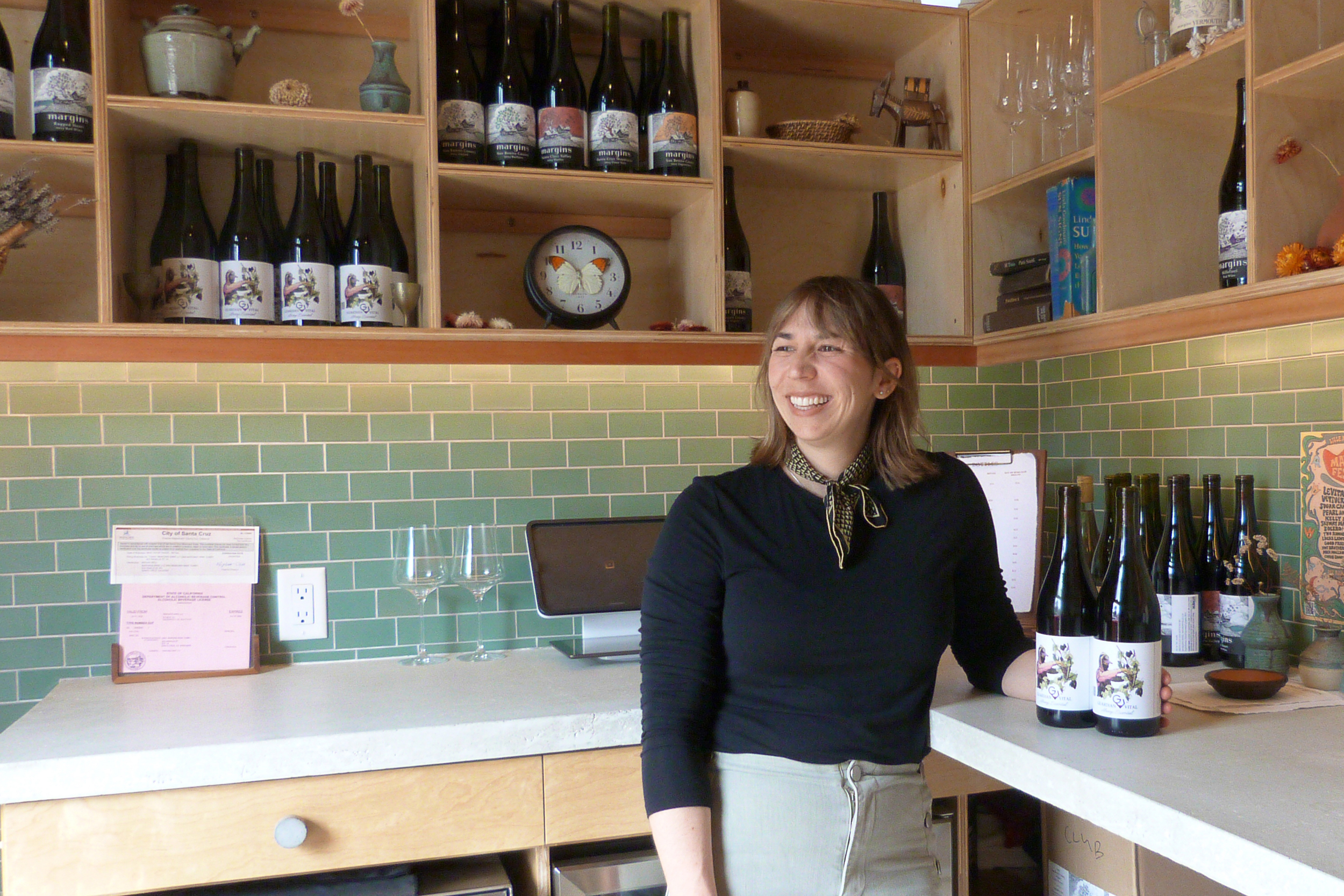
Even if most of the vineyards a winery works with don’t meet the label’s requirements, she said, it just takes one that qualifies to use the label.
Wineries that know about this label and aren’t using it are “really missing out on an opportunity for revenue at a time when people are kind of desperate for it,” Bell said, referring to the financial crisis that has upended the wine industry after decades of growth.
California’s wine industry is in a multi-year decline, thanks to flagging consumer demand, an oversupply of grapes and a loophole that allows wineries to market wines made with up to 25 percent imported grapes as American.
Everyone is affected by the industry’s current crisis, Bell said. After the best sales year Margins Wine ever had, Bell opened her tasting room in 2023, “right as the huge downturn in the wine market was happening.”
Costs for the tasting room skyrocketed as unexpected costs and permit delays led to what she called a huge monthly loan debt. If the downturn hadn’t happened, Bell might have found a way to keep Margins afloat. But she decided to close her winery in April because she no longer felt comfortable carrying the type of debt needed to keep it open.
“I’m a single woman in my mid-thirties who doesn’t have family money,” she said. “That’s what happened to me.”
Still, Bell has high hopes for Guardian Vital and imagines people talking about the label in tasting rooms around the world.
“If a bunch of wineries, like dozens of wineries, were making this label, and that meant their tasting room representatives were having this discussion every weekend, that could make a really big difference,” she said.
The UC Davis viticulture and enology department will hold its annual fundraiser dinner in May. Alumni typically donate wine for an auction that takes place during the dinner, where students mingle with industry leaders and donors. Bell sent a bottle of Margins’ Guardian Vital.
She sees it as a prime opportunity to shift the wine world’s focus to vineyard workers.
“Let’s get this out there,” she said. “Let’s start having this conversation.”
About This Story
Perhaps you noticed: This story, like all the news we publish, is free to read. That’s because Inside Climate News is a 501c3 nonprofit organization. We do not charge a subscription fee, lock our news behind a paywall, or clutter our website with ads. We make our news on climate and the environment freely available to you and anyone who wants it.
That’s not all. We also share our news for free with scores of other media organizations around the country. Many of them can’t afford to do environmental journalism of their own. We’ve built bureaus from coast to coast to report local stories, collaborate with local newsrooms and co-publish articles so that this vital work is shared as widely as possible.
Two of us launched ICN in 2007. Six years later we earned a Pulitzer Prize for National Reporting, and now we run the oldest and largest dedicated climate newsroom in the nation. We tell the story in all its complexity. We hold polluters accountable. We expose environmental injustice. We debunk misinformation. We scrutinize solutions and inspire action.
Donations from readers like you fund every aspect of what we do. If you don’t already, will you support our ongoing work, our reporting on the biggest crisis facing our planet, and help us reach even more readers in more places?
Please take a moment to make a tax-deductible donation. Every one of them makes a difference.
Thank you,

Liza Gross
Reporter, California
Liza Gross is a reporter for Inside Climate News based in Northern California. She is the author of The Science Writers’ Investigative Reporting Handbook and a contributor to The Science Writers’ Handbook, both funded by National Association of Science Writers’ Peggy Girshman Idea Grants. She has long covered science, conservation, agriculture, public and environmental health and justice with a focus on the misuse of science for private gain. Prior to joining ICN, she worked as a part-time magazine editor for the open-access journal PLOS Biology, a reporter for the Food & Environment Reporting Network and produced freelance stories for numerous national outlets, including The New York Times, The Washington Post, Discover and Mother Jones. Her work has won awards from the Association of Health Care Journalists, American Society of Journalists and Authors, Society of Professional Journalists NorCal and Association of Food Journalists.