

When New Jersey’s landmark environmental justice law was enacted in September 2020, there was plenty to celebrate for activists who had fought so hard to prevent more of the unrelenting pollution that has long plagued the Ironbound section of Newark, the state’s largest city.
More than five years later, the fight is still going on—but the stage has shifted largely to the courts.
In January, the state’s intermediate appellate court unanimously upheld the rules implemented to enforce the law. The recycling and construction industries that challenged the rules have asked the state Supreme Court to hear an appeal, but the state’s highest court has not yet decided whether to accept the case.
There are other legal skirmishes too—all revolving around the plan to build yet another power plant in the Ironbound. This plant, which would be the fourth in the Ironbound’s expansive industrial zone, has been proposed as a backup source of power at the Passaic Valley sewage treatment plant, the state’s largest waste treatment facility.
“It’s a very important moment,” said Ana Baptista, a longtime activist in the Ironbound and an associate professor in the Environmental Policy and Sustainability Management program at The New School in New York.
And it’s all unfolding against the backdrop of the Trump administration’s cutting and gutting of environmental policies and protections. The state’s new governor, Mikie Sherrill, a Democrat, has signaled a willingness to go up against Trump. But her administration, which includes a new head for the state Department of Environmental Protection (DEP), is just getting under way.
“I think this is going to be a very critical year,” said Baptista. “We’re paying very close attention.”
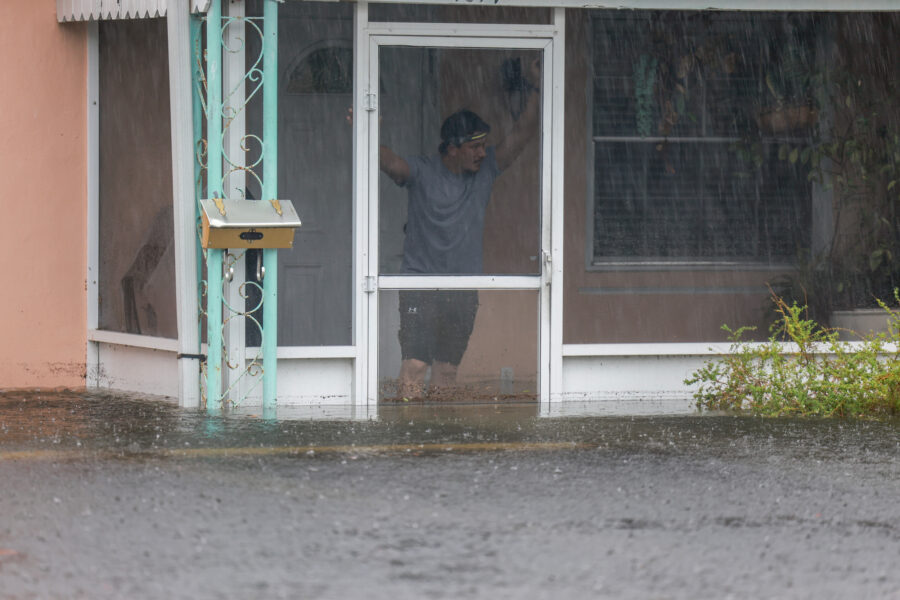
The new plant was proposed after the giant Passaic Valley sewage treatment plant lost power during Superstorm Sandy in 2012, spewing hundreds of millions of gallons of raw sewage into the streets. The sewage commission said it wanted the new natural-gas backup plant to prevent a repeat incident—and much to the disappointment of environmental activists, the DEP approved a permit for it, saying it was only for backup in case of emergency.
The Ironbound Community Corp., which provides educational, environmental and housing support to residents and advocated for the environmental justice law, is challenging the permit in the state’s Appellate Division. The ICC also has filed suit, along with the city of Newark, against the Passaic Valley Sewerage Commission for approving the project in June. Two judges have ordered a halt in construction while the cases play out.
A Landmark Environmental Justice Law
Charles Lee, a former Environmental Protection Agency official who is recognized as one of the pioneers of the environmental justice movement, said New Jersey put considerable thought into how to proceed with what he said is now “an extremely strong law.”
“These are issues that have been crying out … to be addressed for decades,” said Lee, now a visiting scholar at the Howard University School of Law’s Environmental and Climate Justice Center.
Lee said the Ironbound, like Chicago’s South Side and Louisiana’s Cancer Alley, bears the burdens of pollution from an array of industries. “There’s just this incredible concentration of environmental burdens,” said Lee.
This story is funded by readers like you.
Our nonprofit newsroom provides award-winning climate coverage free of charge and advertising. We rely on donations from readers like you to keep going. Please donate now to support our work.
Donate NowThe state’s business community has not embraced the law or the ensuing regulations.
In a statement in January after the appellate court affirmed the rules, the New Jersey Business and Industry Association expressed disappointment. The association’s deputy chief government affairs officer, Ray Cantor, said the rules have had “a chilling effect” on the business community because they go too far.
In its petition in February to the state Supreme Court, the New Jersey chapter of the Institute of Scrap Recycling Industries Inc. called the rules an “existential threat” to the recycling industry and said they go beyond the scope of the environmental justice law. “The importance of this issue to New Jersey businesses cannot be overstated,” lawyers for the institute said.
In a court filing in the ICC lawsuit against the Passaic Valley Sewerage Commission, Denis Driscoll, a lawyer for the commission, said the complaint should be dismissed and that the proposed power plant would only be used for emergencies.
Under the 2020 law, the DEP must consider the impact of projects such as power plants on poor and minority communities already disproportionately harmed by pollution. It requires regulators to deny permits for any facility that cannot avoid adding pollution to an overburdened community unless the project will serve a compelling public interest and also requires consideration of the cumulative impact of pollution from an array of industries. It essentially adds another layer of scrutiny on top of existing environmental laws.
A number of states, including California, Connecticut, Minnesota and Massachusetts, have enacted similar laws or require analysis and consideration of similar issues. But the strength of New Jersey’s law is the mandate to deny permits that add pollution to an overburdened community and to require a cumulative impact analysis. New York passed a law in 2023 that some say may ultimately prove even tougher than New Jersey’s.
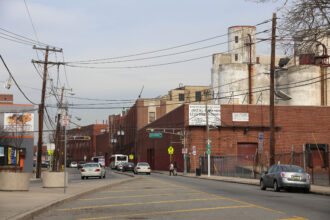
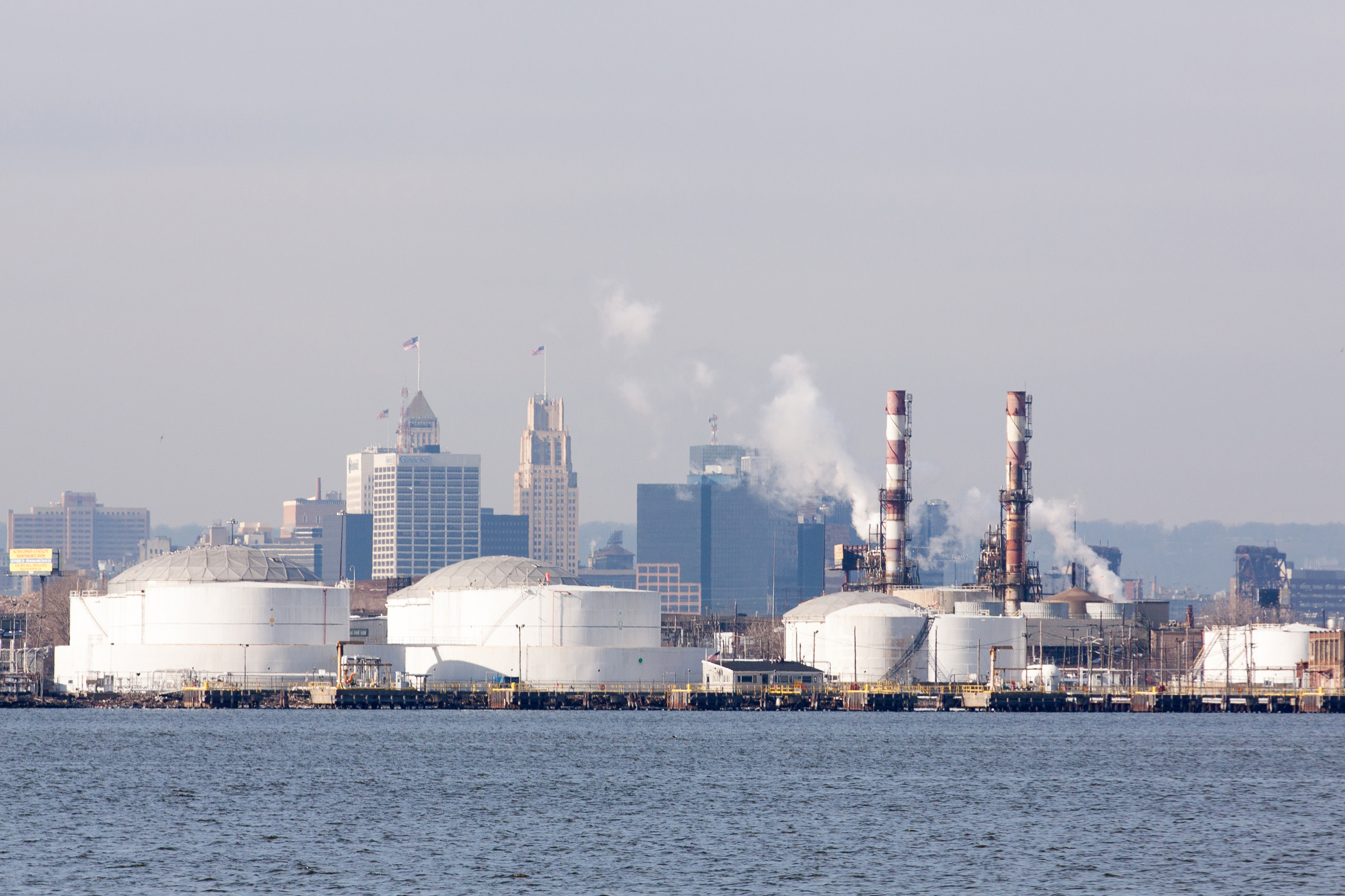
While the law protects communities across New Jersey, it is especially significant for the Ironbound, an eclectic neighborhood of homes, shops and restaurants on one side and a hulking industrial zone on the other. There is the giant Passaic Valley sewage treatment plant, the state’s biggest trash incinerator, the contaminated remains of an old Agent Orange factory and more, all in the gritty shadow of the New Jersey Turnpike, the port of Newark and Liberty International Airport.
The main street—Doremus Avenue—is known as the “Chemical Corridor” for its warehouses and plants. The diesel trucks crawl through as planes from the nearby airport take off or descend in the skies. Traffic seems to go in all directions, and the smells of all that industry waft through the community.
To the Ironbound Community Corp., the decades of pollution have taken a toll on the health of neighborhood residents, who face high asthma rates and an array of chronic health conditions.
Nicky Sheats, a longtime environmental activist in New Jersey, said it took a long time to get support for the idea of an environmental justice law—but the community’s persistence paid off.
“We’ve been talking about it for so long, maybe it makes sense … that we would be the first to do innovative things like this,” he said. Now, he said, the activist community will keep up the pressure to ensure that the law is enforced.
“We’re persistent,” he said.
Sheats and others in the Ironbound have been buoyed, meanwhile, by the appellate decision upholding the rules and by the interim orders halting construction of the new plant.
“It’s something to cheer and something to provide hope,” said Jonathan J. Smith, an attorney with Earthjustice who is representing the Ironbound community.
About This Story
Perhaps you noticed: This story, like all the news we publish, is free to read. That’s because Inside Climate News is a 501c3 nonprofit organization. We do not charge a subscription fee, lock our news behind a paywall, or clutter our website with ads. We make our news on climate and the environment freely available to you and anyone who wants it.
That’s not all. We also share our news for free with scores of other media organizations around the country. Many of them can’t afford to do environmental journalism of their own. We’ve built bureaus from coast to coast to report local stories, collaborate with local newsrooms and co-publish articles so that this vital work is shared as widely as possible.
Two of us launched ICN in 2007. Six years later we earned a Pulitzer Prize for National Reporting, and now we run the oldest and largest dedicated climate newsroom in the nation. We tell the story in all its complexity. We hold polluters accountable. We expose environmental injustice. We debunk misinformation. We scrutinize solutions and inspire action.
Donations from readers like you fund every aspect of what we do. If you don’t already, will you support our ongoing work, our reporting on the biggest crisis facing our planet, and help us reach even more readers in more places?
Please take a moment to make a tax-deductible donation. Every one of them makes a difference.
Thank you,