

When the Trump administration announced plans last year to rescind a rule limiting roadbuilding and timber harvests on millions of acres of national forests and grasslands, officials called the repeal necessary to prevent and manage wildfires.
But as the U.S. Department of Agriculture prepares to release its draft environmental impact statement for the rescission, that justification is unraveling. And many critics of the move see the claim that roads are needed to fight fires in remote forests as cover for a giveaway to the timber industry.
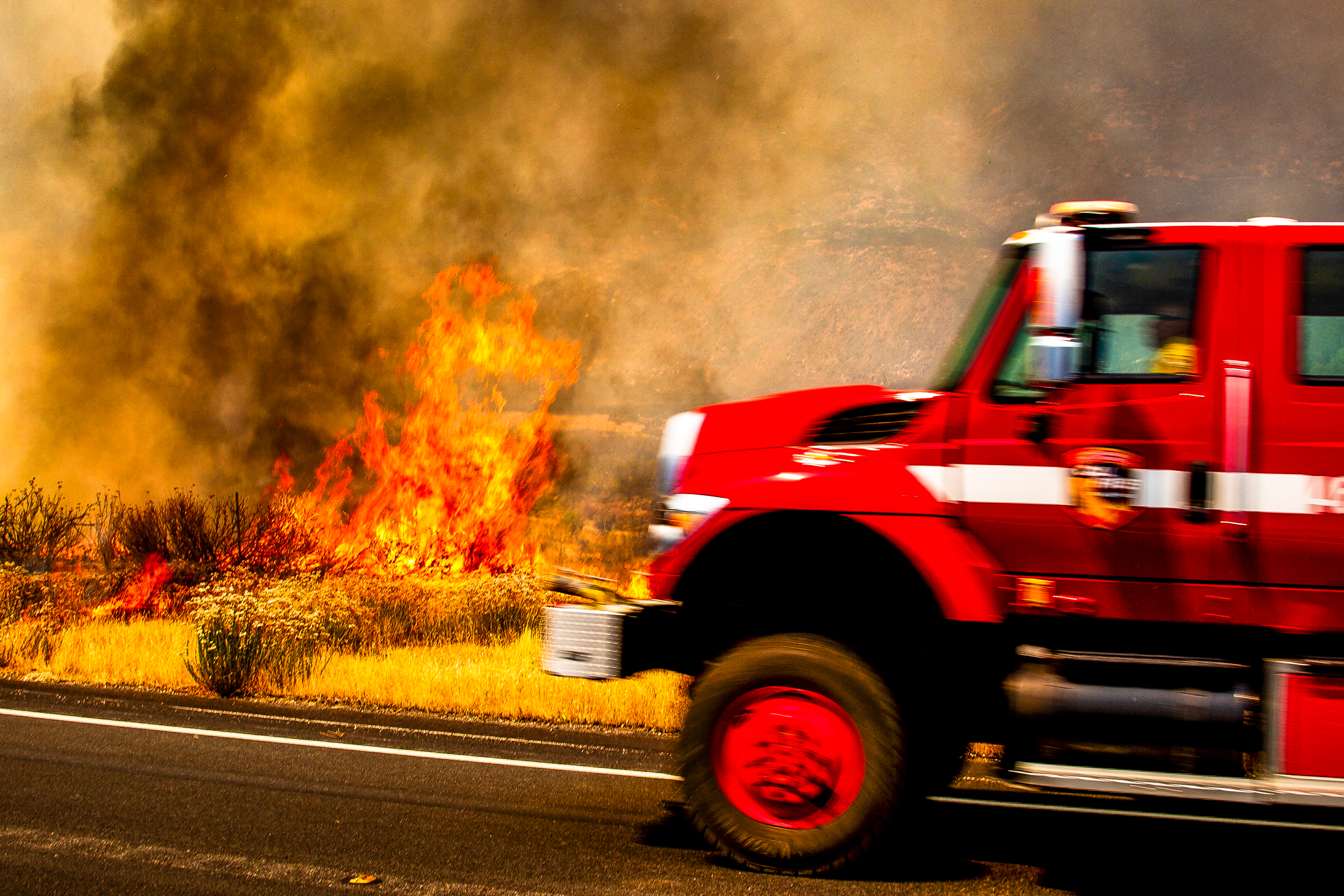
On average, about 8 million acres have burned each year between 2017 and 2021, according to the Congressional Budget Office, nearly double the average from 1987 to 1991. Wildfires on federal lands average about five times the size of those in the rest of the country, leading some of the nation’s top land managers to argue that national forests are a front line for fighting the nation’s steep increase in wildland blazes.
Yet a chorus of fire scientists, frontline firefighters, legal experts and the agency’s own historical record have contradicted that reasoning, saying that roads don’t reduce wildfire risk; they multiply it.
If he had to name the five biggest obstacles to effective wildfire response, lack of roads “probably either wouldn’t be on the list, or it’d be at the bottom,” said Lucas Mayfield, a former Hotshot firefighter and co-founder of Grassroots Wildland Firefighters, a nonprofit that advocates for policy on behalf of firefighters.
Now, a new study published in the journal Fire Ecology is throwing more cold water on the heated assertion that confronting the steep increase in the amount of U.S. land burning in wildfires requires cutting roads into previously untracked national forests.
Looking at a database of roads through national forests, the January study found that from 1992 to 2024, wildfires were four times more likely to ignite within 50 meters of a road than in a forest without routes for motor vehicles.
“The big surprise was just how stark the differences were,” says Greg Aplet, lead author on the study and Senior forest ecologist at The Wilderness Society. “We found the exact same result in every Forest Service region, consistent across the entire National Forest System.”
The number of ignitions drops steeply with distance from roads, the study discovered.
Roads of Fire
The study also reveals a fire management paradox.
Roads enable access to fight wildland blazes, and Aplet’s data shows that some of those road-proximate fires will be discovered early and snuffed while they’re small precisely because the road is there. But many of those fires would be less likely to ignite in the first place were it not for the roads, which bring people, the dominant source of ignitions, into the forest. According to Congressional Research Service data, 89 percent of wildfires nationwide are human-caused.
“The more people you put in the woods, the more fires you’re most likely going to have,” said Mayfield.
Until recently, Forest Service leaders agreed.
In its original environmental impact statement for the 2001 Roadless Rule, the agency wrote: “Building roads into inventoried roadless areas would likely increase the chance of human-caused fires due to the increased presence of people.” Meanwhile, fire data indicated that prohibiting road construction and reconstruction in these areas “would not cause an increase in the number of acres burned by wildland fires or in the number of large fires.”
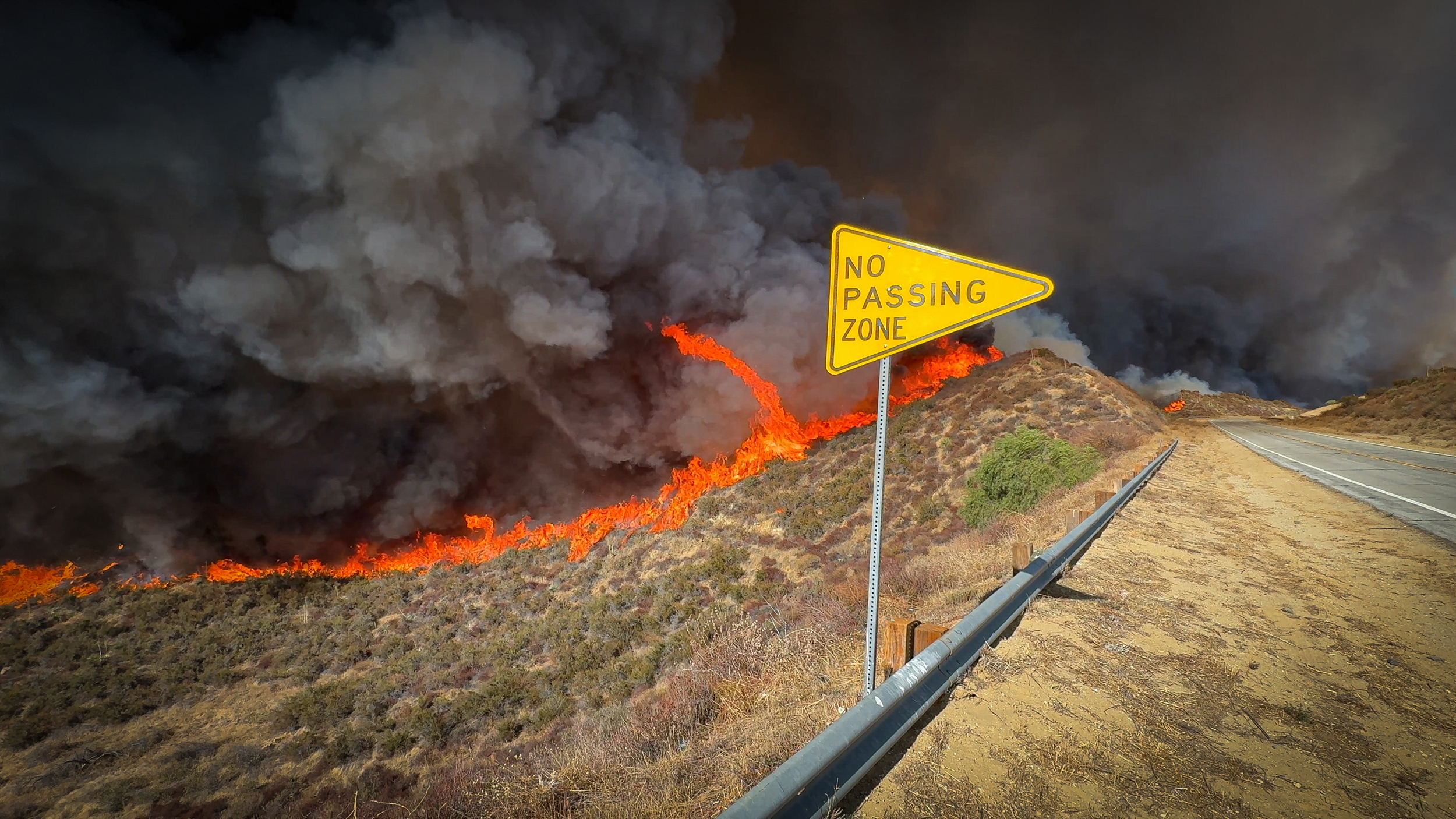
The new study found fires near roads were on average smaller, but notes that high variability makes this difference difficult to determine definitively. The fires that escaped initial attack by firefighters, the ones that become the large, catastrophic blazes driving the current crisis, show no meaningful size difference between roaded and roadless areas. So more roads means more fire, and they provide no improvement in the outcomes of the fires that matter most.
Beyond human ignitions, roads also alter the ecological conditions that drive fire risk. Aplet’s research found elevated ignitions from lightning near roads, not because there were more strikes, but because roads change ground-level fuel conditions by putting gaps in the forest canopy that allow sunlight and wind to heat and dry vegetation on the forest floor.
Roads also serve as corridors for invasive species, many of which evolved to use fire to help them spread. In the Great Basin, an area that stretches from Salt Lake City to nearly Sacramento, southern Oregon to Las Vegas, cheatgrass carried by vehicles, boots and livestock to roadsides has displaced native vegetation by creating continuous fields of fine stalks that dry out when other grasses are just sprouting. The dry cheatgrass ignites easily and burns quickly across landscapes where native grasses that stay moist later in the season and grow in dispersed bunches previously inhibited the spread of the flames.
Vital Protection for Habitat, Water and the Climate
The areas that the rule covers are vast. After state-specific carve-outs for Idaho and Colorado and the separate exemption of Alaska’s Tongass National Forest, all of which came after the rule’s adoption, it today applies to roughly 45 million acres.
Proponents of the Roadless Rule say that it’s a vital environmental protection that achieves something no other regulation can. According to Defenders of Wildlife, while roadless areas make up only about 2 percent of the lower 48 states, they provide habitat for up to 57 percent of vulnerable terrestrial wildlife, home to more than 1,600 at-risk species and 200 species protected by the Endangered Species Act.
Roads can change that picture. Sediment from road construction, for instance, can smother fragile fish spawning beds and clog culverts to block their migration.
Roadless areas provide clean drinking water for up to 60 million Americans, hold much of the nation’s remaining old-growth forest and capture up to 15 million tons of carbon per year to help slow climate change.
“There’s nothing that protects what the Roadless Rule protects,” says Kristin Gendzier, senior attorney at the Southern Environmental Law Center. “You’ve got really protective designations … like a wilderness designation, but those are relatively small. After that, the Roadless Rule is the next big thing.”
She argues that forest plans, created by land managers, provide weaker protections, can be amended and only last 10 to 15 years. As the Trump administration’s other environmental-regulation rollbacks take effect, many environmentalists see the prevention of roadbuilding as many areas’ best chance for lasting protection.
“If you rescind the Roadless Rule, you are now saying these 45 million acres, do what you will,” Gendzier said.
Paths to Protect Forests, or Cut Them Down?
The question before a federal court may soon be whether the fire justification for rescinding the rule constitutes reasoned decision-making, or, as defenders of the rule argue, a conclusion that runs counter to the evidence before it. At stake is a 25-year-old rule that has survived every legal challenge from various presidential administrations, driven by special interests, but now faces its most serious test yet.
“The intent of rescinding the 2001 Roadless Rule is to return to local decision making as part of individual national forest and grassland plans, which includes robust public involvement and focus on land management decisions at the right scale,” a USDA spokesperson said in response to a request for comment on the rule repeal and the new study. “Currently, nearly half of our roadless acres, over 28 million, are at high or very high risk of catastrophic wildfire and are in desperate need of treatment.”
This story is funded by readers like you.
Our nonprofit newsroom provides award-winning climate coverage free of charge and advertising. We rely on donations from readers like you to keep going. Please donate now to support our work.
Donate NowAccording to Matt Thompson, a former Forest Service fire researcher who now runs the consultancy firm Risk & Resilience, that 28 million figure is “generous.” A 2022 paper co-authored by Thompson challenged the geographic logic underlying claims that reducing wildfires in currently unroaded forests would protect communities, where most of the financial losses from wildfires occur.
Tracking the direction fire spread from one jurisdiction to another, the researchers found that fires on federal lands originated outside them, on private and state land, more often than blazes in national forests crossed boundaries into more-developed areas.
“You could almost invert the framing of the question and say: ‘How could we be better managing ignitions [outside of national forests] so that they’re not burning down our natural and cultural resources?’” Thompson said.
A separate analysis of four decades of satellite fire data, shared this month as a preprint by researchers at Oregon State University and the University of Oregon, found that inventoried roadless areas have not burned at significantly higher rates or severity than roaded national forest lands, and that in the most recent decade, roadless areas burned at a slightly lower rate than forests with roads. The elevated fire rates often attributed to roadless areas, the study found, are driven by congressionally designated wilderness areas, which the rule change would not affect.
Proponents of rescinding the rule point to wanting more flexibility in forest management, a rationale that has been backed by timber interests.

“The roadless rule itself really reflects an older way of thinking about forests as static landscapes, which don’t align with today’s realities of wildfire, declining forest health and climate stress,” said Nick Smith, head of public affairs at the American Forest Resource Council, a western timber industry trade organization that publicly supported the repeal.
“Poor access is a top obstacle to fire suppression and in nearly every major wildfire of the past 15 to 20 years the Forest Service has identified that lack of road access as a key barrier to effective response,” he added.
But firefighters have well-developed systems for getting into hard-to-access areas, Mayfield said, including crews that land or rappel into fires using helicopters, and smokejumpers who parachute into remote wildfires from planes that take off from nine bases across the West. New roads, which would require upkeep and maintenance, shouldn’t be a priority, he said.
According to Mayfield and Aplet, many existing roads in national forests are already impassible, part of a backlog of Forest Service maintenance growing as the agency dedicates more of its resources to fighting wildfires.
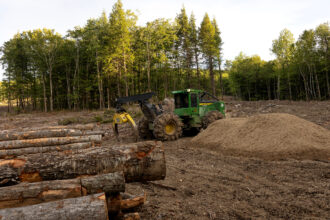
Defenders of the rule say that the emphasis on fire mitigation is a misdirection from the administration’s true motivation for cutting more roads into forests—opening more land up to logging. In March 2025, President Donald Trump issued an executive order, “Immediate Expansion of American Timber Production,” calling for increased timber harvesting on federal lands and the “streamlining” of environmental permitting for logging.
“The industry and their political allies do not like the roadless rule because it gets in the way of logging. Full stop,” said Drew Caputo, vice president of litigation for Lands, Wildlife, and Oceans at Earthjustice, a nonprofit environmental law organization that has defended the Roadless Rule in court since its adoption in 2001.
“The nature of their attacks has shifted and that tells you something about why they’re talking about different topics,” said Caputo. “That disconnect suggests that the real concern is not fire.”
While the National Environmental Policy Act, the Endangered Species Act and the National Forest Management Act would all still apply to forests that lose their protection from roadbuilding, the Roadless Rule is the protective floor, he noted. Without it, industry can seek access to areas that now are functionally off-limits.
Aplet, with The Wilderness Society, characterized the push to rescind the rule not as a genuine attempt to mitigate fire risk, but part of the larger administration crusade to roll back environmental regulations.
The Legal Test
The Administrative Procedure Act requires that when an agency rescinds a rule, it must be able to demonstrate a rational connection between the evidence and the eventual decision, and cannot be “arbitrary and capricious.” Essentially, the administration must be able to logically and scientifically defend its argument in the environmental impact statement due this month, and a court will rule on whether it meets that standard.
“They cannot offer as an explanation a decision that just runs counter to the evidence before it,” says Gendzier.
Under the National Environmental Policy Act, the agency must fully analyze the environmental consequences of rescinding the rule, consider a full range of alternatives to the rescission and meaningfully grapple with the science, including the Aplet study.
“They’ve been pretty cavalier in their public statements so far about the fire-based reasons,” Caputo said. “Much of what they’re saying is seemingly contrary to the science, and those are all things they’re going to have to deal with.”
While the administration’s motive in lifting the rule won’t determine the legal outcome, and proving it is using the nation’s wildfire crisis as a pretext to increase logging would be difficult, Caputo said failure to engage with the body of evidence indicating that roads increase fire ignition risk will be actionable and will likely result in legal challenges.
The Wildland Fire Mitigation and Management Commission, a congressionally chartered, bipartisan body with 50 members from across industry, science and fire management, spent years producing a comprehensive look at wildfire policy. That resulted in 167 official recommendations in 2023 across every dimension of the problem, including risk reduction, fire suppression, post-fire recovery, workforce and technology.
According to Tyson Bertone-Riggs, co-founder of the Alliance for Wildfire Resilience and a staff co-lead of the commission, the Roadless Rule didn’t feature in any recommendations or significant discussion.
“I think there is a risk in wanting to use fire as a piece of an argument,” he said. “Roadless certainly deserves a conversation, but it’s probably a separate conversation.”
About This Story
Perhaps you noticed: This story, like all the news we publish, is free to read. That’s because Inside Climate News is a 501c3 nonprofit organization. We do not charge a subscription fee, lock our news behind a paywall, or clutter our website with ads. We make our news on climate and the environment freely available to you and anyone who wants it.
That’s not all. We also share our news for free with scores of other media organizations around the country. Many of them can’t afford to do environmental journalism of their own. We’ve built bureaus from coast to coast to report local stories, collaborate with local newsrooms and co-publish articles so that this vital work is shared as widely as possible.
Two of us launched ICN in 2007. Six years later we earned a Pulitzer Prize for National Reporting, and now we run the oldest and largest dedicated climate newsroom in the nation. We tell the story in all its complexity. We hold polluters accountable. We expose environmental injustice. We debunk misinformation. We scrutinize solutions and inspire action.
Donations from readers like you fund every aspect of what we do. If you don’t already, will you support our ongoing work, our reporting on the biggest crisis facing our planet, and help us reach even more readers in more places?
Please take a moment to make a tax-deductible donation. Every one of them makes a difference.
Thank you,