

Iowa is among a few states where cancer diagnoses are on the rise. A new analysis from the Harkin Institute for Public Policy & Citizen Engagement and the Iowa Environmental Council says that environmental exposures are partially to blame.
High pesticide and fertilizer use in the top corn-producing state, per- and polyfluoroalkyl substances (PFAS) in public drinking water supplies and elevated radon levels in soil and water threaten the health of residents and likely interact to drive up Iowa’s cancer rate, the second highest in the nation, the report’s authors say.
“These environmental risk factors are things that, by and large, we don’t have much ability to dramatically impact ourselves,” said Adam Shriver, director of wellness and nutrition policy at the Harkin Institute and one of the report’s lead authors. “They’re being imposed on the citizens of Iowa, really, without their input. And so it’s a basic fairness issue.”
People living in agriculturally intensive landscapes like Iowa face environmental contaminants and possible cancer risk factors, said Shriver, but much of the discussion about cancer prevention from state leaders has focused on individual behaviors, like smoking, diet and alcohol use.
When tackling the state’s cancer crisis, lawmakers must also consider environmental exposures, Shriver said. That means adopting stronger water-quality standards, expanding Iowa’s air and water quality monitoring networks and regulating pollution from sources like fertilizer application, high-risk pesticide use and industries that discharge PFAS.
“There’s always a gap between what science knows and what policy is implemented,” said Colleen Fowle, director of the water program at the Iowa Environmental Council and a lead author of the report. “But we’re at that moment now where we have enough scientific research, we have plausible mechanisms for how these contaminants are causing changes in our bodies, and now is the time to act.”
Amid growing alarm over the far-reaching impacts of cancer in Iowa, the Harkin Institute and the Iowa Environmental Council launched an initiative last summer to explore the relationship between environmental risk factors and cancer rates in the state.
Pesticides, PFAS, nitrate and radon were the top environmental risk factors raised by a panel of scientific experts the organizations convened for the project. The finding echoed many of the same concerns expressed by attendees of “cancer listening sessions” held across the state last summer.
“I think we have enough evidence to convince us that there is something more than the traditional risk factors of obesity, smoking and alcohol use,” said Iowa state Rep. Austin Baeth, also a doctor practicing internal medicine in Des Moines. “And it’s in our environment. Because there’s really no other good reason why Iowa stands out in the nation as having the fastest-rising cancer rate.”
For each of the four key risk factors, the authors looked deeply at peer-reviewed studies, systematic reviews and assessments produced by the United States and international health agencies that examine their cancer-causing potential.
Radon is a colorless, odorless gas formed as radium decays in the soil. More than 12,000 years ago, glaciers deposited uranium-rich rock across Iowa. Roughly half of all homes in the state exceed the Environmental Protection Agency’s radon action level in some indoor space.
Radon is the second-leading cause of lung cancer in the United States, after smoking, and is the leading cause of lung cancer for people who have never smoked. Nearly a quarter of all cancer deaths in Iowa in 2026 are expected to be from lung cancer, the 2026 Cancer in Iowa Report by the Iowa Cancer Registry estimates.
While radon occurs naturally in Iowa soil, the remaining three environmental risk factors emphasized in the report are products and by-products of intensive agriculture and industrial manufacturing.
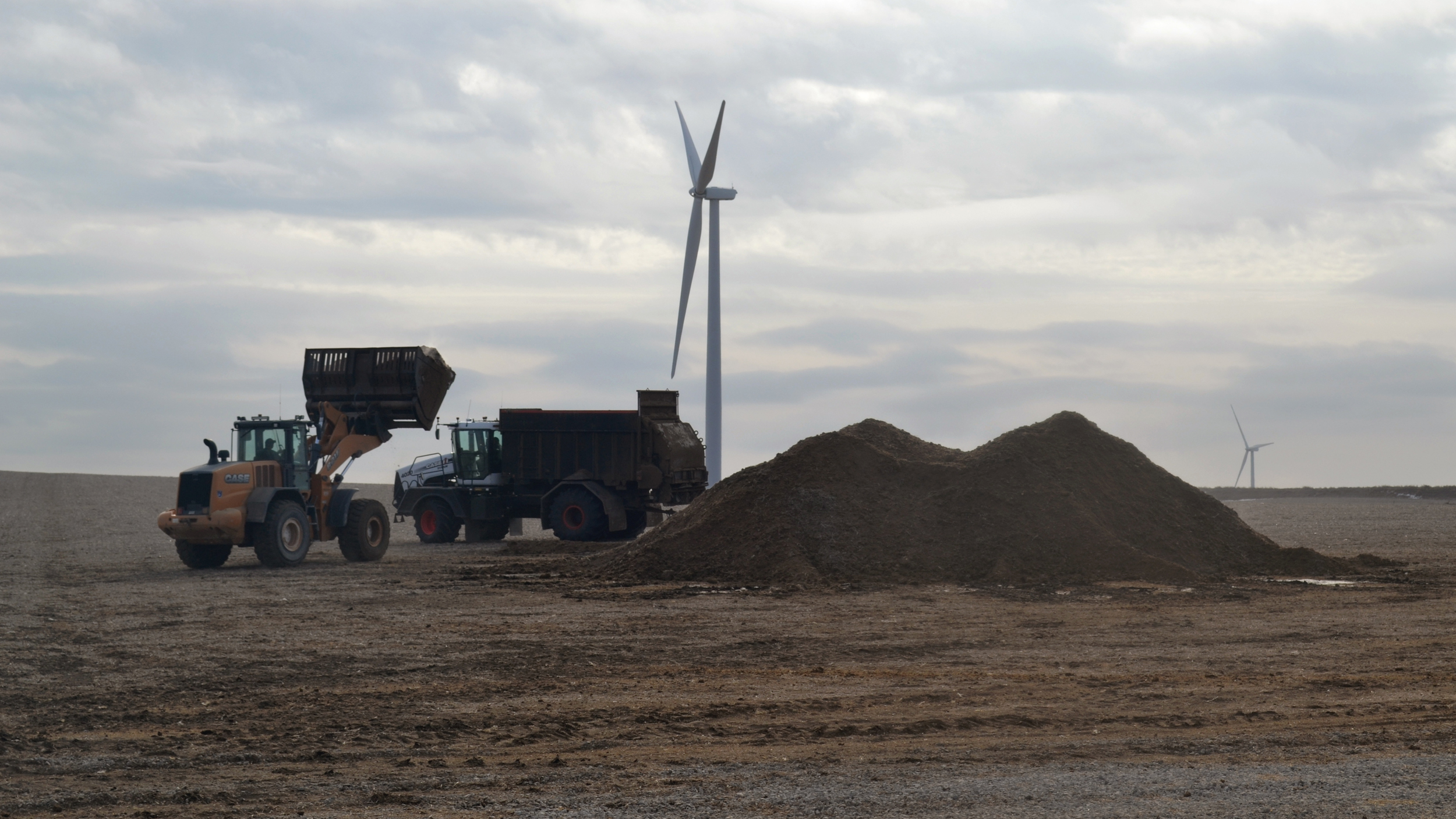
Among U.S. states, Iowa ranks fourth for total pesticide use by weight, with chemicals sprayed to control insects, fungi and weeds that might curb the productivity of the state’s nearly 30 million acres of cropland.
“We live in a unique region in which the volume of chemical application is staggering,” explained Audrey Tran Lam, the environmental health program director at the University of Northern Iowa’s Center for Energy and Environmental Education, who contributed to the report.
Iowa farms apply more than 60 million pounds of pesticides each year. Though that figure includes hundreds of compounds, the report focuses on the cancer risks of the three most commonly used chemicals in the state: acetochlor, atrazine and glyphosate.
Acetochlor, a weedkiller for corn growers, was approved by the EPA in 1994 as a replacement for other weedkillers of “known concern,” but the compound has been banned in the European Union for over a decade based on studies that determined it is genotoxic, tumor-causing in laboratory animals, capable of contaminating water and of high risk to wildlife.
A growing body of research has also linked the pesticide atrazine to increased risk of non-Hodgkin lymphoma and aggressive prostate cancer, while multiple studies using human cells have observed links between glyphosate and changes to gene expression and DNA damage, the report says.
The authors note that the process for evaluating pesticide tolerance levels in U.S. food and feed does not account for how pesticides break down into other chemicals in the environment or consider how multiple pesticides may interact to increase health risks through a “cocktail effect.”
Long-term exposure to heightened nitrate levels in drinking water has also sparked concern among Iowa residents over the last year, as high amounts of the fertilizer-derived compound in drinking water sources prompted lawn-watering bans and shortages.
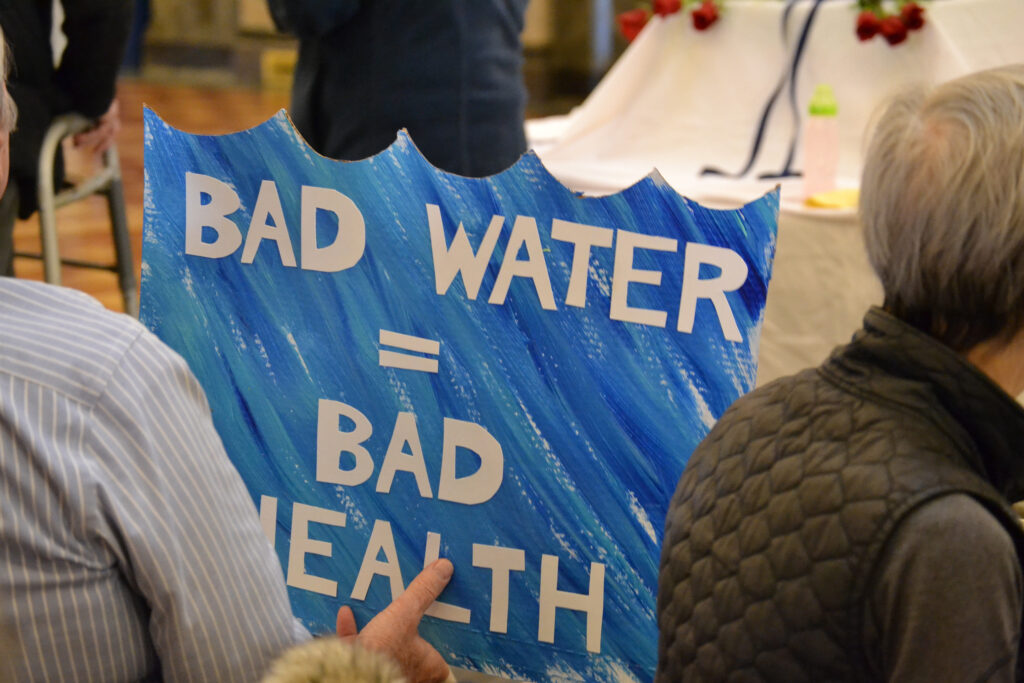
The EPA set a water quality standard limiting nitrate concentrations in drinking water to 10 milligrams per liter in 1975. But that standard was intended only to prevent methemoglobinemia, or blue baby syndrome, a life-threatening condition that lowers blood oxygen levels in infants.
This story is funded by readers like you.
Our nonprofit newsroom provides award-winning climate coverage free of charge and advertising. We rely on donations from readers like you to keep going. Please donate now to support our work.
Donate NowSince the 1970s, other health impacts have been identified at prolonged exposure to nitrate concentrations well below the 10 mg/L benchmark, the Harkin Institute and the Iowa Environmental Council say. These include reproductive health risks and birth defects as well as colorectal, ovarian, bladder and kidney cancer.
The report also addresses PFAS, a broad class of more than 9,000 man-made compounds that are increasingly detected in Iowa’s surface waters and groundwater reservoirs.
PFAS are found in a wide range of consumer products, from cosmetics and cookware to fire-retardant foam, but a “startling number” of pesticides on the market are also classified as PFAS, possessing the fluorinated carbon chain that designates the class of compounds, Tran Lam said.
Once released into the environment, PFAS are extremely slow to break down, accumulating in water and soil, and across all levels of the food chain.
The report cites research showing a strong association between exposure to PFAS and kidney and testicular cancer, as well as links to liver and kidney damage, reduced fertility and endocrine disruption.
A 2024 decision by the EPA to set tap water quality standards for six PFAS compounds reflects growing awareness of their potential health risks, the authors argue. Yet Iowa has not yet adopted any PFAS criteria in its state water quality standards.
Doing so, as well as adopting the EPA’s 2015 human health water quality criteria, would be “real low-hanging fruit when we think about what can be done in the short term,” said Fowle of the Iowa Environmental Council.
An imperiled statewide water quality monitoring network could recover political backing in the near future, said Baeth, the legislator, but he added that it’s also important that the state “think upstream” to keep water clean at the source. That includes interventions that reduce field runoff, limit pesticide and fertilizer use in the fall and prevent manure seepage into waterways, he said.
There may be additional, poorly understood health impacts when pesticides, nitrate and PFAS mix in contaminated drinking water or through occupational exposure, said Darrin Thompson, associate director of the Center for Health Effects of Environmental Contamination at the University of Iowa.
In his research, Thompson, who was not involved with the report, has documented broad contamination of private wells in Iowa by agrochemicals, heavy metals and PFAS. “That diversity potentially creates new risks that some of those chemicals, individually, may not have presented on their own,” he said.
The recommendations in the report are consistent with many of the concerns and questions raised by environmental epidemiologists, Thompson said. “With more robust environmental monitoring and better data, you have better epidemiological studies that can give us clearer answers.”
While scientists continue to study the links between environmental contaminants and cancer, Iowa policymakers should act in accordance with the “precautionary principle,” the report’s authors argue.
“The precautionary principle says it is prudent to act when there is evidence showing that there may be a link of some concerning outcome, and right now the body of evidence is quite large,” Tran Lam said. “We know enough to act. We know enough to act and change the way that things are done here.”
About This Story
Perhaps you noticed: This story, like all the news we publish, is free to read. That’s because Inside Climate News is a 501c3 nonprofit organization. We do not charge a subscription fee, lock our news behind a paywall, or clutter our website with ads. We make our news on climate and the environment freely available to you and anyone who wants it.
That’s not all. We also share our news for free with scores of other media organizations around the country. Many of them can’t afford to do environmental journalism of their own. We’ve built bureaus from coast to coast to report local stories, collaborate with local newsrooms and co-publish articles so that this vital work is shared as widely as possible.
Two of us launched ICN in 2007. Six years later we earned a Pulitzer Prize for National Reporting, and now we run the oldest and largest dedicated climate newsroom in the nation. We tell the story in all its complexity. We hold polluters accountable. We expose environmental injustice. We debunk misinformation. We scrutinize solutions and inspire action.
Donations from readers like you fund every aspect of what we do. If you don’t already, will you support our ongoing work, our reporting on the biggest crisis facing our planet, and help us reach even more readers in more places?
Please take a moment to make a tax-deductible donation. Every one of them makes a difference.
Thank you,

Anika Jane Beamer
Reporter, Iowa
Anika Jane Beamer covers the environment and climate change in Iowa, with a particular focus on water, soil and CAFOs. A lifelong Midwesterner, she writes about changing ecosystems from one of the most transformed landscapes on the continent. She holds a master’s degree in science writing from the Massachusetts Institute of Technology as well as a bachelor’s degree in biology and Spanish from Grinnell College. She is a former Outrider Fellow at Inside Climate News and was named a Taylor-Blakeslee Graduate Fellow by the Council for the Advancement of Science Writing.