

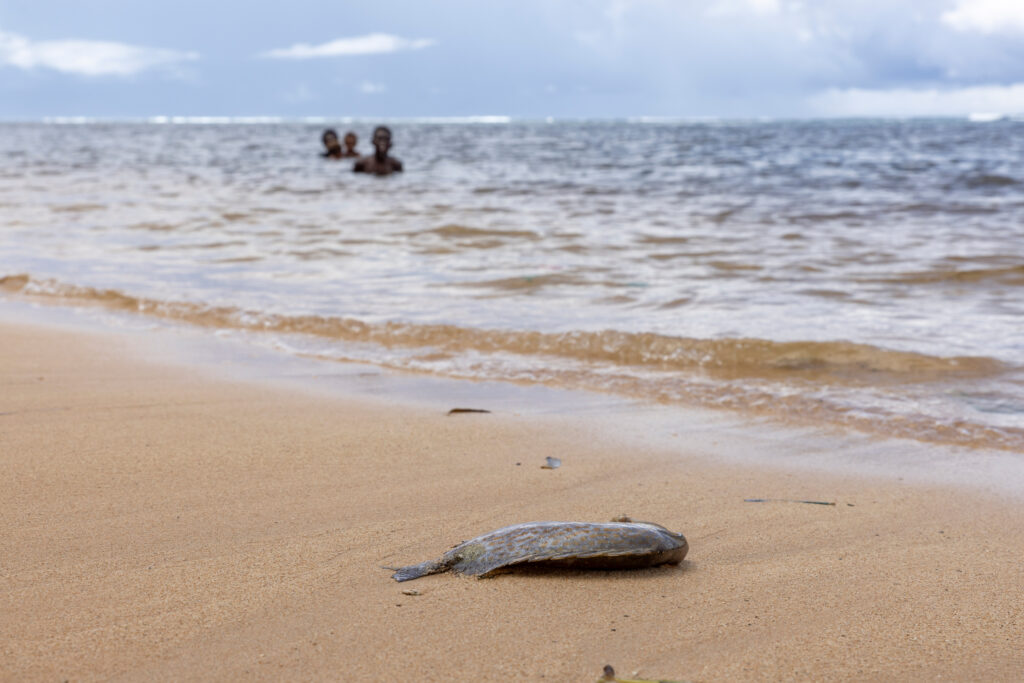
It started in December, when dead fish began washing ashore New Ireland—a mountainous island in Papua New Guinea’s New Ireland Province, flanked by the Pacific Ocean and the Bismarck Sea.
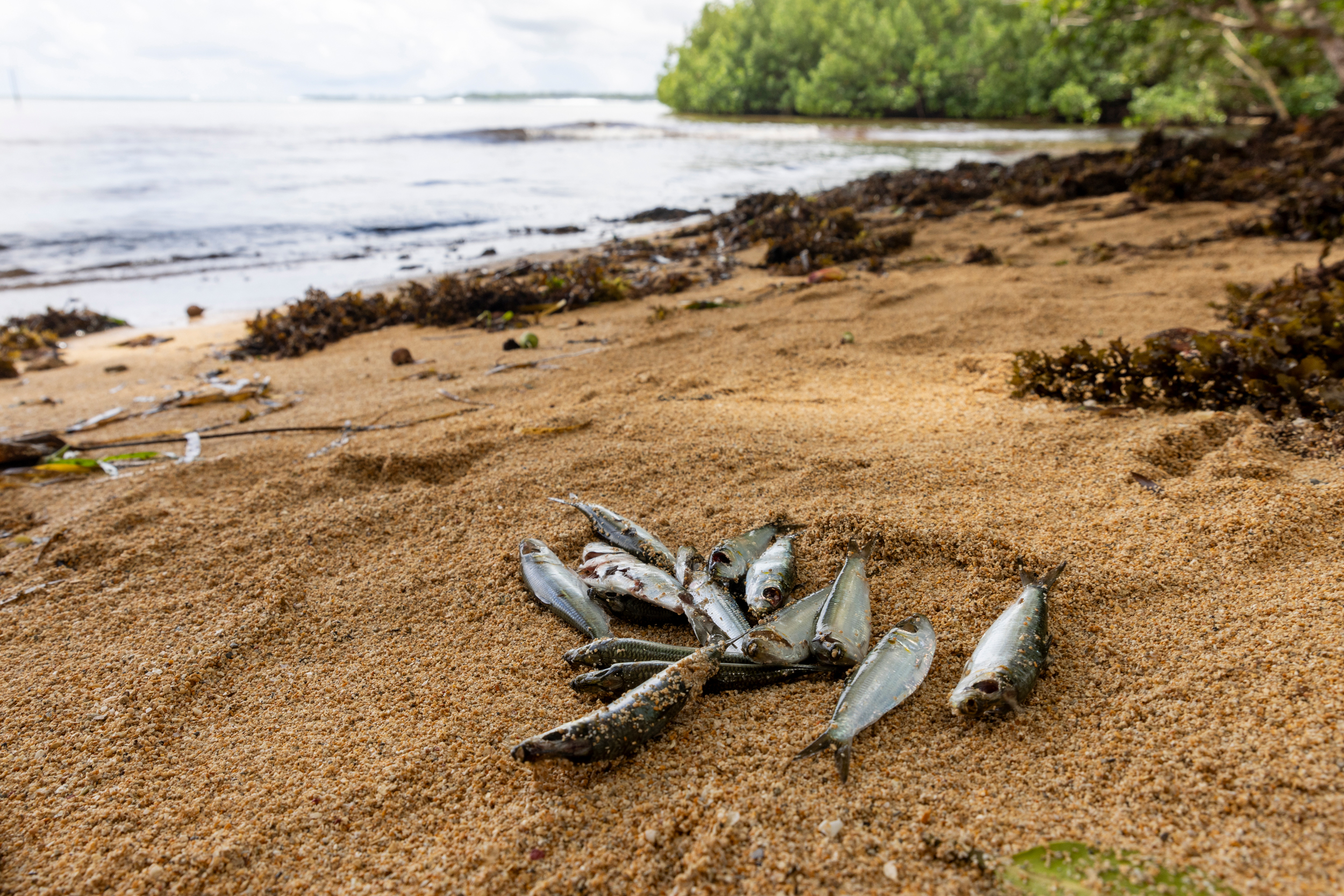
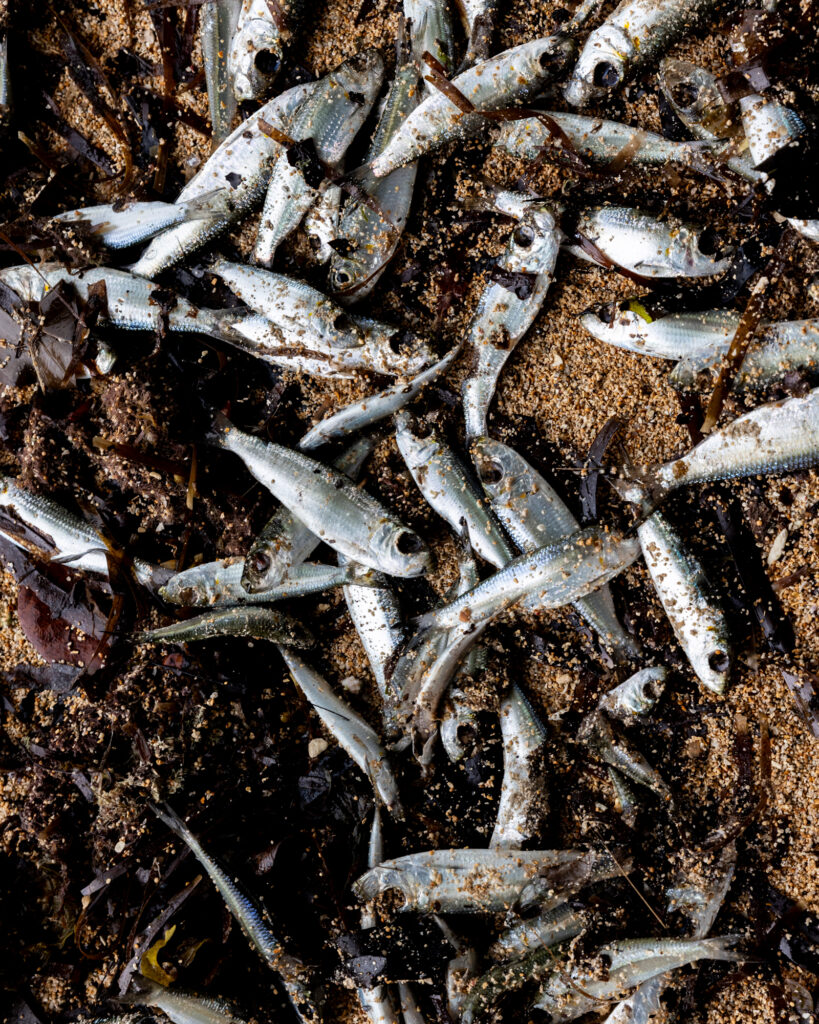
At first, just a few fish scattered the beaches—mostly small bluestripe herring, which school in shallow tropical waters. Within a few weeks, they were landing in droves.
By January, reports of the die-offs mounted across several coastal communities settled along the island’s east coast. Some residents reported they’d also developed severe rashes after coming into contact with seawater. As alarm spread, John Aini—founder of Ailan Awareness, a local Indigenous-led marine conservation non-government organization—set out with his team to investigate by visiting some of the affected villages. What he saw was worse than he could have imagined.
“Hundreds and hundreds of fish littered the beach,” said the elder activist in his 60s. Most had no eyes, he said. “I’ve never witnessed anything like it in my entire life.”
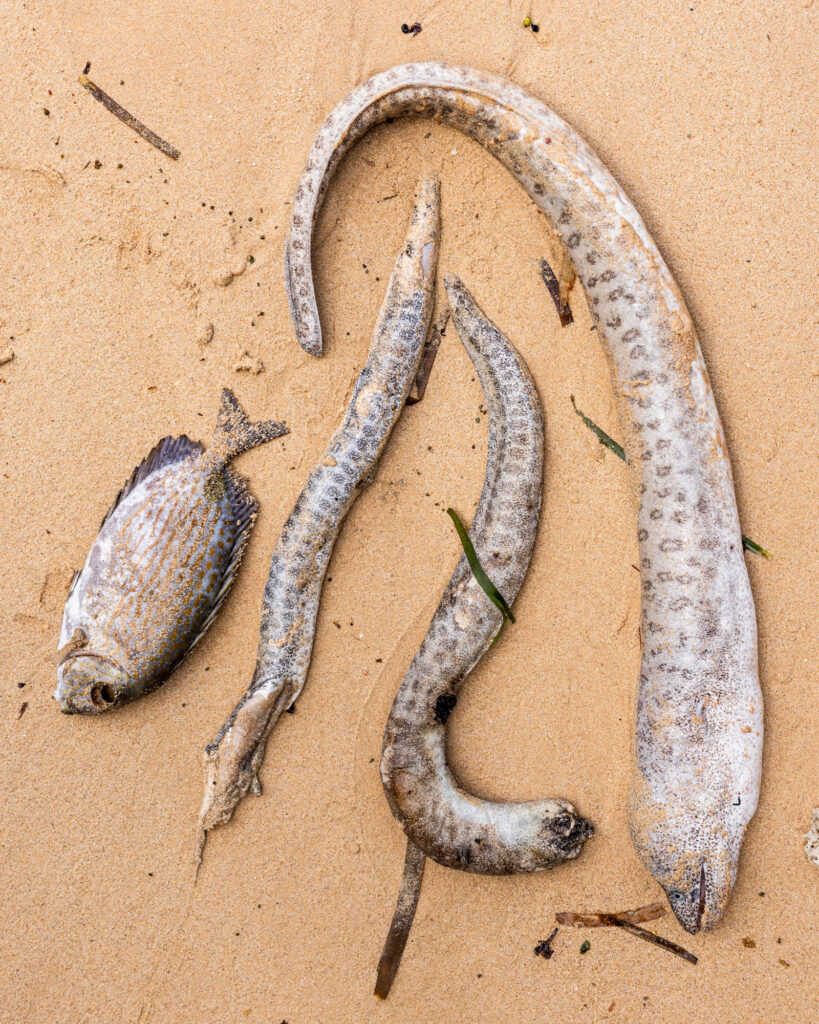
Over a five-day community monitoring period, Aini, his team and local residents documented nearly 3,500 dead marine animals onshore. Many more floated offshore, uncounted. At least 15 species of fish were identified. Dead octopus, eels, lobster, sea cucumbers and even a black tip reef shark have also been spotted since.
“It is like the alien stories in the movies, but it’s happening here,” Aini said.
Similar die-offs have since been confirmed in at least six communities, according to Rebecca Marigu, an environmental journalist in New Ireland who has been supporting the Ailan Awareness team in documenting the crisis, which continues to unfold with no confirmed cause.
Earlier this year, the country’s Conservation and Environment Protection Authority (CEPA) collected water samples to test for potential toxins and contaminants that could be driving the disaster. The results have yet to be released.
Aini said many communities and leaders like himself feel frustrated by the lack of information and aid available as they struggle to grapple with not only a growing ecological crisis, but also a public health emergency.
“I am thinking about my people and how responsible authorities are keeping them in the dark and not providing relief,” Aini said. “This is total neglect in our time of crisis.”
Officials from CEPA did not respond to requests for comment. But, Jelta Wong, Papua New Guinea’s minister for fisheries and marine resources, confirmed publicly that authorities were still awaiting test results from the water sampling they conducted. These should be available in the coming weeks, he said.
In the meantime, he issued a warning: “We have to let our people of New Ireland know not to eat that fish, because without the scientific data that we get, we don’t know which chemical is in the fish.”
But for many in New Ireland, being told to avoid fish from the ocean comes with profound consequences. “Our life is centered around the ocean. That’s our source of income, source of protein,” Marigu said.
Papua New Guinea sits at the heart of the Coral Triangle—a roughly 6-million-square-kilometer marine region spanning Indonesia, Malaysia, the Philippines, the Solomon Islands and Timor-Leste, widely recognized as the global epicenter of marine biodiversity. Its waters contain more than 40,000 square kilometers of coral reefs and support over 3,000 fish species, including around 1,500 found on reef systems, which serve as critical marine nurseries, feeding grounds and breeding habitats.
“Our life is centered around the ocean. That’s our source of income, source of protein.”
— Rebecca Marigu, environmental journalist
In New Ireland, such coastal ecosystems are never just resources, said environmental anthropologist Paige West, an endowed chair in anthropology at Columbia University and Barnard College who has worked with coastal communities in Papua New Guinea for decades.
“It is the basis of livelihood, kinship, memory and everyday life. That is what makes this crisis so painful,” she said. “What is being threatened here is not only marine life, but the social and material worlds that people have built in relation to the ocean over generations.”
For many residents, Marigu said the ocean is a place people go to heal. Now, it’s making them sick.
At least 750 people have reported experiencing severe skin irritation or other illnesses after contact with the sea, according to community surveys the Ailan Awareness team conducted. One 12-year-old boy, who Marigu interviewed and photographed, jumped into the ocean to cool off after mowing a lawn. Soon after exiting the water, Marigu said the boy told her his face began swelling so badly that one eye closed. Itchy blisters formed around it. “It felt like how cooking oil burns your skin,” Marigu said the boy told her.
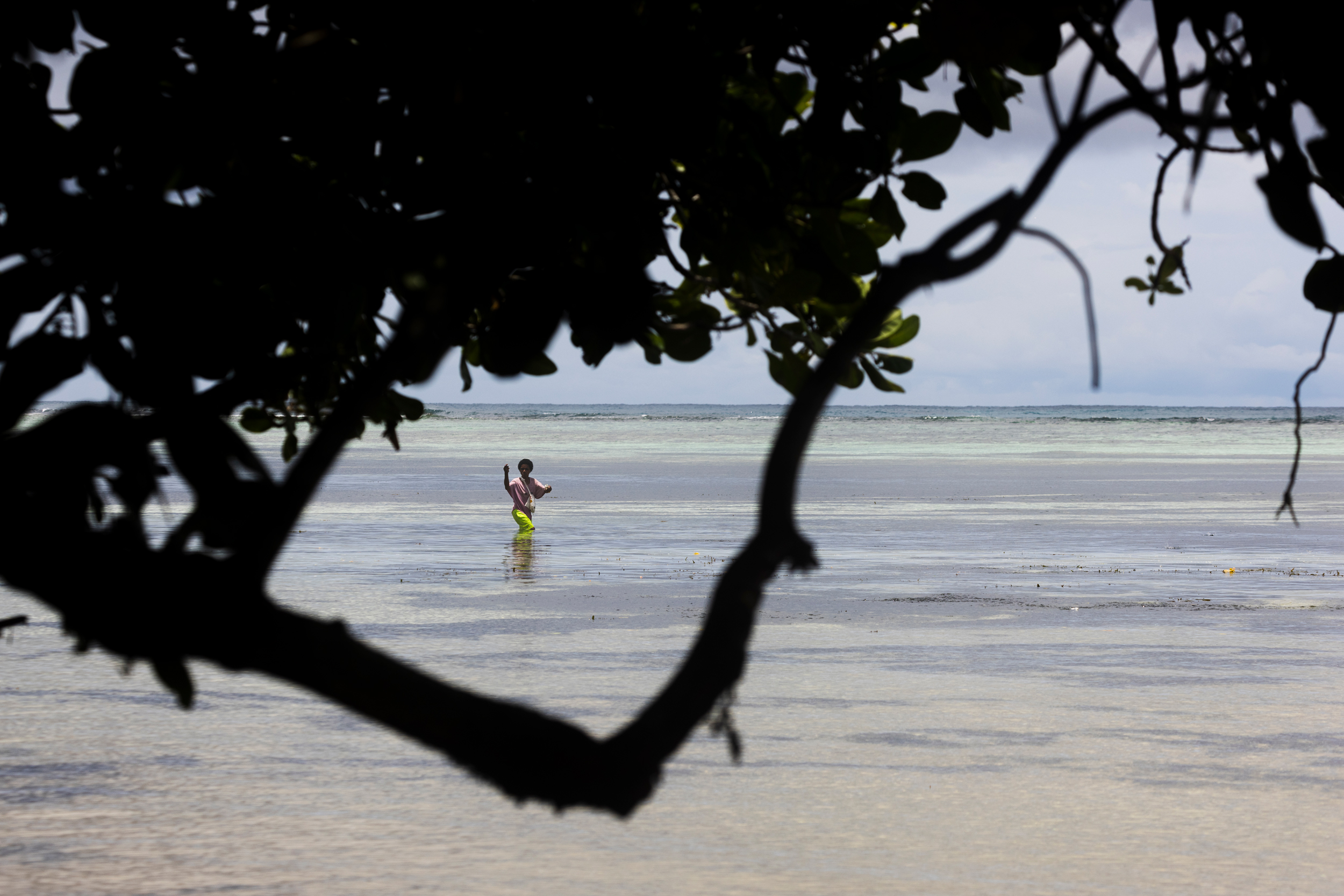
Some community members have reported respiratory distress and gastrointestinal symptoms. Others said they experienced throat irritation, fever and other flu symptoms after smelling strange odors along the beach, resembling rotten eggs or tobacco, but “like 10 times stronger,” Marigu said.
According to Wong, Papua New Guinea’s fisheries minister, several possible causes are being examined through their water sampling that may possibly be linked to nearby industrial or agriculture activity.
Some of the hardest-hit communities lie near palm oil plantations—one of the country’s largest agricultural industries—where fertilizers, pesticides and herbicides are widely used.
“There’s a lot of activity along the coast there with the oil palm and agriculture activities,” Wong said. “They’re looking at different types of chemicals that they’re using.”
In New Ireland, where plantations often sit close to rivers and the coastline, these chemicals can move quickly from land to sea, especially in areas comprised of porous limestone and sandy sediments, which allow pollutants to leach into groundwater and flow into coastal lagoons where much of the island’s fishing takes place along nearshore reefs.
This story is funded by readers like you.
Our nonprofit newsroom provides award-winning climate coverage free of charge and advertising. We rely on donations from readers like you to keep going. Please donate now to support our work.
Donate NowDuring the monsoon season, which runs from December to March, heavy rains can accelerate this process, washing pesticides and herbicides into nearby streams and rivers, which carry them into the ocean. These can be highly toxic to fish and other marine life, as well as people, said Rachel Sapery James, an Indigenous marine scientist from New Ireland Province who leads WWF’s Coral Reef Rescue Initiative. Chemicals used in pesticides and herbicides have been linked to a range of health issues in humans, including skin rashes, asthma, neurodegenerative diseases, birth defects, cancer and more.
Environmental safeguards are meant to limit this kind of contamination. Creating buffer zones of 50 to 100 meters between plantations and local waterways, along with clear protocols for the handling and use of fertilizers, pesticides and herbicides, are standard practice. But they’re not always enforced, said James, who spent her early career as a marine scientist researching the impacts of land-based pollution on coastal ecosystems in New Ireland.
One clue that points to such chemicals as a potential driver of the crisis, she said, was the death of a blacktip reef shark.
When she saw a photo of the animal shared in one of several WhatsApp groups that have been created to mobilize a response to the crisis, she was immediately struck by its condition: The shark’s eyes were clear. Its body was intact. There were no visible lesions or signs of disease. To her, the evidence suggested the shark died suddenly from an acute toxin.
“I immediately said, OK, that shark has died from something that’s very toxic in the water, cyanide, marine harmful algae or a pesticide, herbicide exposure.”
But, according to James, the crisis is likely being fueled by a multitude of factors.“I wouldn’t say there’s one particular culprit here. I think there’s a lot going on in this system at play.”
Warming ocean conditions, combined with runoff from agriculture and possibly untreated sewage, may be converging in coastal waters, she said. Fertilizers used in large-scale farming are rich in nitrogen and phosphorus. These nutrients, plus wastewater from nearby communities, could be fueling a harmful algal bloom—a rapid overgrowth of algae that thrive in warm, nutrient-rich waters.
New Ireland has been inundated in recent months with sargassum—a type of harmful algal bloom that has been spreading in various parts of the world, including the Caribbean and West Africa.
As this seaweed—also known as a macro-algae—decomposes, it can significantly reduce oxygen levels in coastal waters, triggering fish kills and broader marine die-offs, said Jordan Emmanuel Bulo, an environmental scientist from New Ireland, who lives near some of the most heavily impacted communities. Dead sargassum can also release toxic gases such as hydrogen sulfide, which, Bulo said, may pose health risks to people, including skin irritation and other respiratory illnesses.
To address the unfolding emergency, James said, immediate action is needed on multiple fronts.
“We need to take action now and address all these land-based threats,” she said. That includes improving water quality monitoring and equipping local teams with the tools to test and track contamination in real time, rather than relying on distant labs. At the same time, she said, communities need urgent support, including access to safe drinking water, food supplies and medical care.
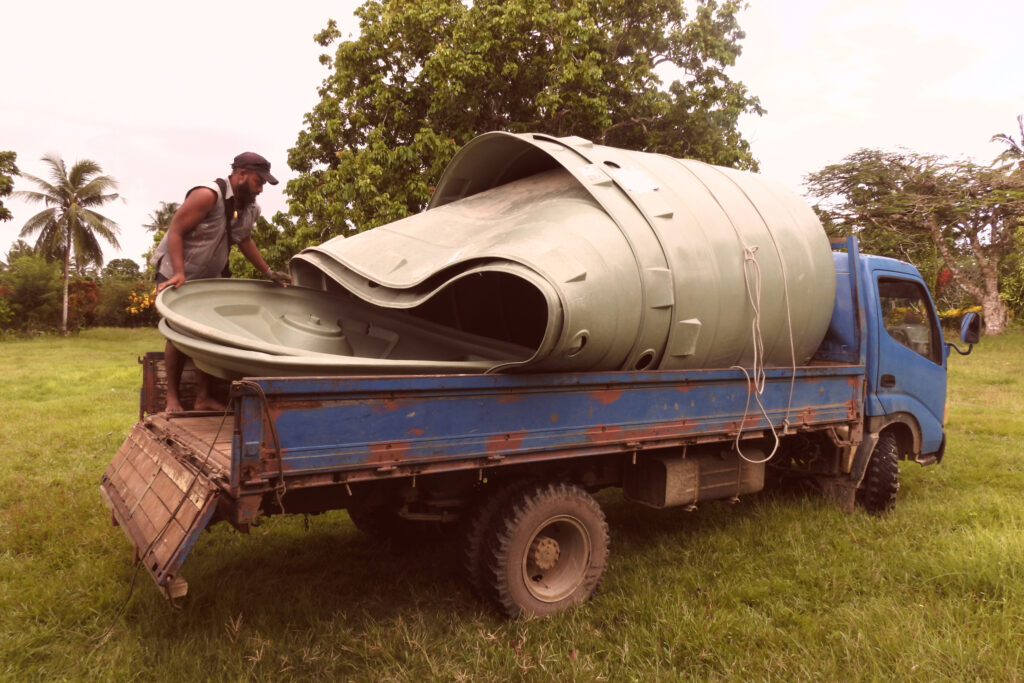
So far, James said government authorities have provided freshwater drinking tanks to some villages. But some residents are reporting that they are feeling sick even after drinking from these, according to Marigu, the environmental journalist from New Ireland.
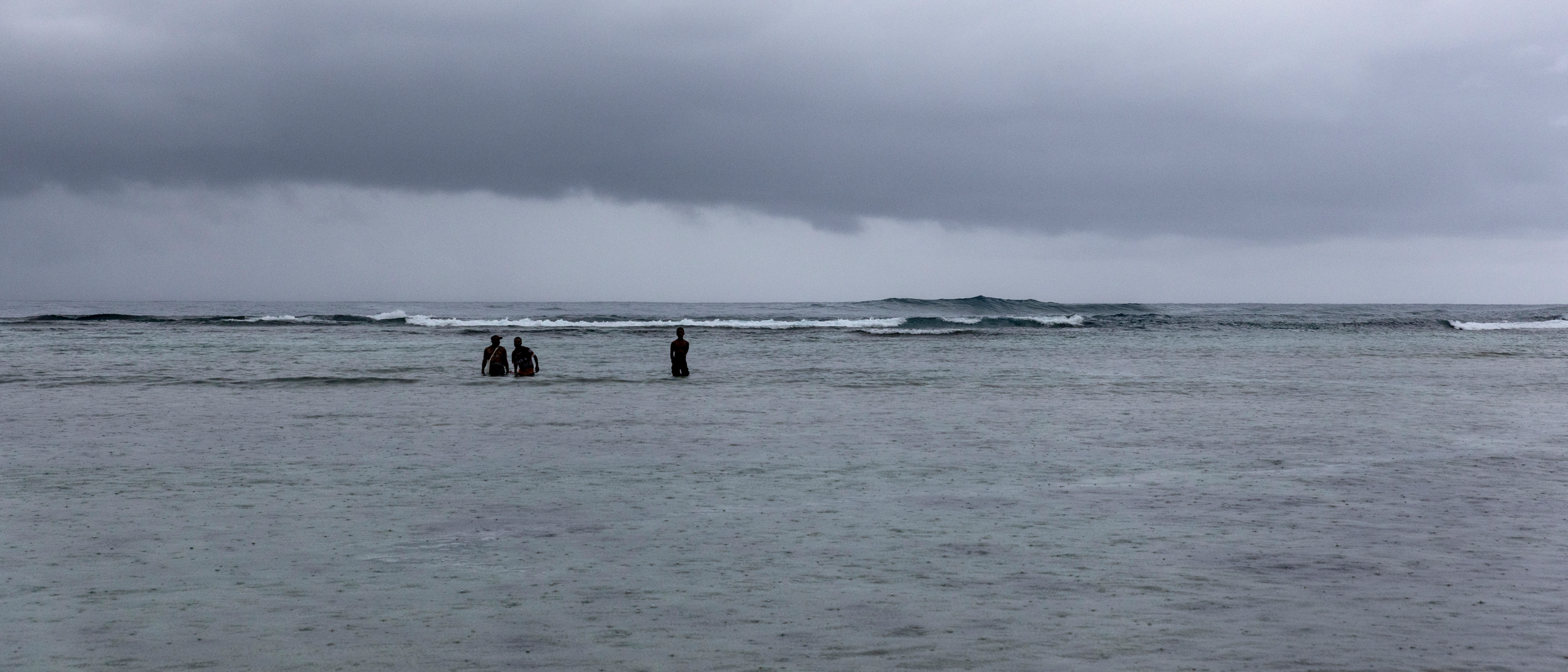
In the meantime, communities have returned to fishing out of necessity despite local bans.
“People are still going in the water,” said Bodhi Patil, a Canadian-American ocean advocate and founder of InnerLight, a foundation that supports Indigenous and youth-led ocean stewardship geared towards improving both ocean and human health.
Patil was visiting New Ireland in March when he first learned of the crisis. He began sharing what he was seeing and hearing on the ground on social media and launched a WhatsApp group, “PNG Toxic Ocean Rapid Response,” now connecting more than 300 people, including scientists, local leaders and other environmental advocates.
One boy told Patil he can no longer fish or sell his catch at the local market—income he relied on to pay for transportation to school and school lunches. Without it, Patil said, the child told him he has stopped attending school and now spends his days helping his family secure food through subsistence farming.
Together with Ailan Awareness, Patil has helped mobilize an international aid effort. So far, more than $10,000 of a $15,000 goal has been raised through a GoFundMe campaign to support communities in need.
“The money will be used directly by Ailan Awareness to purchase water tanks, emergency medical supplies, including skin ointments and antibiotics to treat some of the skin rashes and irritations and supplemental protein sources for the communities that are food scarce,” Patil said.
But this event will require long-term investment and support, he added.
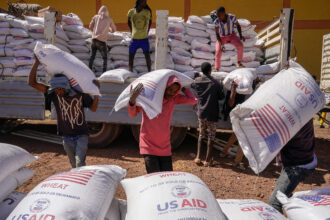
With water test results still pending, residents of New Ireland are left waiting anxiously, unsure as to when it will be safe to rely on the ocean again. In the meantime, bags of rice and cartons of chicken-flavored two-minute packaged noodles have begun to arrive in bulk in some of the hardest-hit villages, temporary substitutes to help hold over the hungry as fish continue to surface, lifeless, along the coast.
About This Story
Perhaps you noticed: This story, like all the news we publish, is free to read. That’s because Inside Climate News is a 501c3 nonprofit organization. We do not charge a subscription fee, lock our news behind a paywall, or clutter our website with ads. We make our news on climate and the environment freely available to you and anyone who wants it.
That’s not all. We also share our news for free with scores of other media organizations around the country. Many of them can’t afford to do environmental journalism of their own. We’ve built bureaus from coast to coast to report local stories, collaborate with local newsrooms and co-publish articles so that this vital work is shared as widely as possible.
Two of us launched ICN in 2007. Six years later we earned a Pulitzer Prize for National Reporting, and now we run the oldest and largest dedicated climate newsroom in the nation. We tell the story in all its complexity. We hold polluters accountable. We expose environmental injustice. We debunk misinformation. We scrutinize solutions and inspire action.
Donations from readers like you fund every aspect of what we do. If you don’t already, will you support our ongoing work, our reporting on the biggest crisis facing our planet, and help us reach even more readers in more places?
Please take a moment to make a tax-deductible donation. Every one of them makes a difference.
Thank you,

Teresa Tomassoni
Oceans Correspondent
Teresa Tomassoni is an environmental journalist covering the intersections between oceans, climate change, coastal communities and wildlife for Inside Climate News. Her previous work has appeared in The Washington Post, NPR, NBC Latino and the Smithsonian American Indian Magazine. Teresa holds a master’s degree in Journalism from the Craig Newmark Graduate School of Journalism at CUNY. She is also a recipient of the Stone & Holt Weeks Social Justice Reporting Fellowship. She has taught journalism for Long Island University and the School of the New York Times. She is an avid scuba diver and spends much of her free time underwater.