

Ask Gemini, Google’s AI chatbot, whether Pennsylvania politicians are doing anything about the swelling public concern over data center development in the commonwealth, and it answers confidently.
“Yes, Pennsylvania lawmakers are actively moving to regulate AI data centers, with bipartisan efforts focusing on environmental impact, utility costs, and local community protections,” Gemini offers.
Humans, however, aren’t so sure.
Perhaps no one has taken a more adversarial stance on data center development in Pennsylvania than state Sen. Katie Muth, a suburban Philadelphia Democrat proposing a three-year moratorium on building “hyperscale” data centers in the state. But even after an endorsement from Republican state Sen. Rosemary Brown, Muth thinks the measure won’t stand a chance in the state’s divided and often gridlocked legislature. She doubts that even lesser measures will prevail.
“I don’t see Pennsylvania putting out some sort of progressive policy,” Muth said.
David Hess is also skeptical. The former head of the state’s Department of Environmental Protection said Pennsylvania has a long history of playing host to extractive industries, including in some of the same areas now targeted for data center development, but residents’ concerns about the consequences have rarely prompted action at the state Capitol in Harrisburg. He thinks things may be headed that way again, pointing in particular to the Republican-controlled state Senate.
“I think the Republican stance [on data centers] has been just like shale gas: ‘Let’s just muddle through and not try to do anything that’s going to upset the industry,’ which they often do support,” said Hess, who now authors a newsletter tracking Pennsylvania environmental issues. “It’s the same thing with a lot of the other state legislators. In some ways, I think they are happy to let local officials shoulder all of the blame.”
But there are signs something is happening, and others think there’s room for a deal.
Nine months after industry and political leaders held a kickoff for the development play at a summit at Carnegie Mellon University in Pittsburgh, the backlash is inescapable. Grassroots resistance groups rapidly organized, some of them quashing projects. In February, a Quinnipiac survey found 68 percent of Pennsylvania voters would oppose the construction of an AI data center in their community. That included 53 percent of Republicans.
“The magic of AI may be the future, but when it comes to building the physical infrastructure, Pennsylvanian voters say: ‘Not in my backyard,’” Quinnipiac University polling analyst Tim Malloy concluded.
Politicians have taken note.
As recently as last fall, there was essentially no talk of data center regulations in the Pennsylvania legislature, nor from the office of Democratic Gov. Josh Shapiro, a high-profile guest at the Carnegie Mellon summit. Now, Democratic House leadership just hailed the passage of the “first-ever data center regulations” in Pennsylvania, a bill from Democratic Rep. Robert Matzie aimed at protecting consumers from utility-bill increases driven by the electricity-hungry projects.
Several other bills seeking to address data center water consumption and zoning are percolating, with more in the works. Shapiro, meanwhile, used part of his annual budget address in February to promise to protect the public from any downsides of data center development.
And there is some bipartisan movement, with two House Republicans voting for the Matzie bill, and Republican State Rep. Jamie Walsh planning to introduce additional legislation, “grounded in the simple idea that long-term development must serve the public interest and provide real benefits to local communities.”
Even some in the Senate are starting to make noise. Last year, Brown was a panelist at a largely industry-friendly Senate committee hearing on data centers hosted in her Northeast Pennsylvania district. Since then, she has ping-ponged from township meeting to township meeting, as nearly a dozen data center proposals popped up in her district. Now, she plans to introduce a “Residents First” package of bills to address public concerns, in addition to signing onto the Muth moratorium proposal.
Brown says she believes there is “truly” an opportunity for some kind of bipartisan policymaking in Harrisburg, especially as consternation over data-center impacts grows.
“I have had strong conversations [with Senate leadership] about my concerns, and the why,” Brown said. “My voice, hopefully, is something that can unlock it … and open eyes to certain people who might have blinders up.”
What’s on Offer
One potential path toward legislative action on AI data centers in Pennsylvania starts in the House Energy committee, chaired by Rep. Elizabeth Fiedler, a Democrat from Philadelphia. That’s the committee from which Matzie’s recently passed bill originated before receiving a floor vote.
In early March, committee members voted on party lines to advance two other data center bills. The first, House Bill 2150, authored by Democratic Rep. Kyle Mullins, would require data centers to produce annual reports on water and energy usage.
“If the data center industry wants to expand in Pennsylvania and avail itself of our critical resources — water, electricity, and land — the very least among many things that should be required is full transparency,” Mullins said in a press release from the committee.
The other bill, from Democratic Rep. Kyle Donahue, would create a “model ordinance” that townships could adopt for data-center proposals.
“House Bill 2151 gives municipalities an optional tool they can use to ensure data centers are responsibly sited and operated while protecting residents’ quality of life,” Donahue said in the press release.
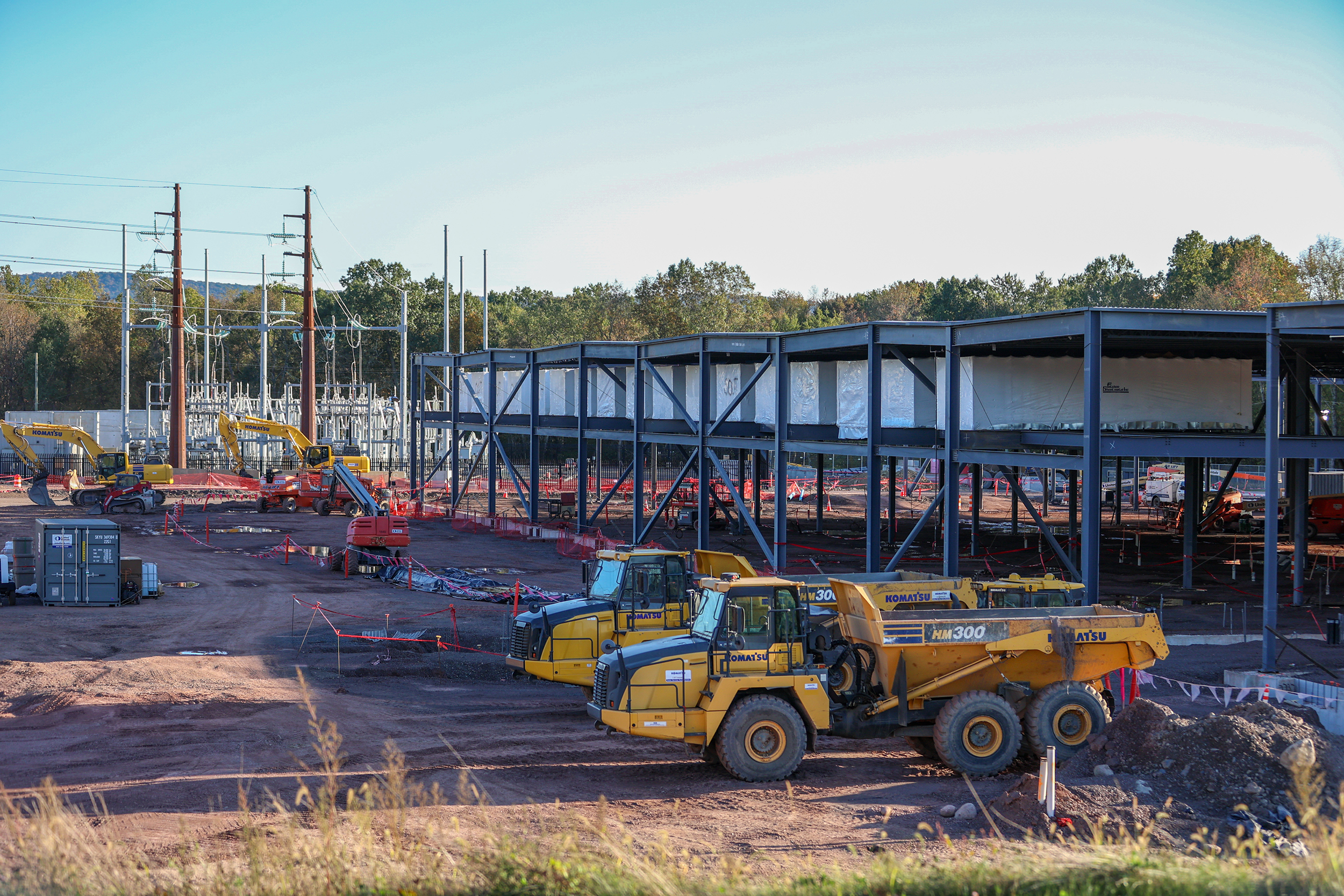
Neither bill has yet received a floor vote in the Democratically controlled House. Should they join Matzie’s bill in the Senate, they could have a steep hill to climb in the Environmental Resources & Energy committee. Republican chair Gene Yaw has long served as a sort of boogeyman to those wanting stronger environmental regulations in the state.
“Senator Yaw has a very strong record of holding hearings, but not doing anything,” Hess said.
Yaw’s office did not respond to a request for comment.
Muth, the senator supporting a data center development moratorium, sits on that committee and currently opposes the model ordinance bill. She’s concerned it could open the door to treating AI data centers as a public good, eroding local control.
The Pennsylvania State Association of Township Supervisors originally opposed the bill due to similar concerns, but it has since shifted its position to “neutral” after some technical modifications, said Holly Fishel, the group’s director of policy and research. Even if the ordinance bill becomes law, she says she’s not sure how much help it would provide to the beleaguered townships already fielding close to 60 proposals across the state in various stages, according to a commonly cited data center tracker.
“Doing something that is going to be six months or a year behind,” Fishel said, “is going to be six months to a year behind.”
Industry input could also add headwinds. Dan Diorio, vice president of state policy for the trade group Data Center Coalition, said that even something as seemingly simple as asking data centers to deliver annual reports on energy and water usage could prove a heavy lift.
Companies need to protect proprietary information, and there are also national security considerations, Diorio said: “If there’s a specific profile [that can be used to identify a critical facility], that becomes problematic.”
Diorio added that his group, which represents industry behemoths such as Amazon and Microsoft, believes public concerns are mostly based on “misperceptions” about data centers. Education, not legislation, is what’s needed most, he said.
The group has already come out against the Matzie bill, saying it is concerned that the legislation is overly prescriptive, singles out the industry for unfair utility rates and will disincentivize data centers from locating in the state. The coalition also opposes the bill’s requirement that data centers curtail energy use when the grid is stressed.
“The internet can’t shut off. We can’t just shut it down and say, ‘Sorry, you can’t have access to this service.’ That’s not how it works,” Diorio told The Philadelphia Inquirer.
This story is funded by readers like you.
Our nonprofit newsroom provides award-winning climate coverage free of charge and advertising. We rely on donations from readers like you to keep going. Please donate now to support our work.
Donate NowFor all these reasons, Muth remains skeptical that consequential policy will pass through both the House and Senate. Instead, she predicts that the most critical actions will take place at the local level, with townships asserting zoning authority to deny proposals. Legal battles will likely follow.
Fishel, with the township supervisors association, said the group isn’t asking for any policy prescriptions from state lawmakers, only that townships continue to control their own zoning.
For that reason, the most consequential proposal so far for her group has been Senate Bill 939, legislation introduced last year by Republican Sen. Greg Rothman. When it was first proposed, the bill outlined a “Commonwealth Opportunity Zone” that would create a fast-track permitting process for data centers, as well as a “regulatory sandbox” encouraging deregulation.
Fishel says her group opposed the bill until its authors agreed to take land-use provisions out, shifting the township supervisors’ stance to neutral. Even so, the bill continues to sit in the Senate Communications & Technology Committee. Rothman’s office did respond to an inquiry into the bill’s status.
Where the Governor Stands
The fate of any data center policy proposal that makes it through the legislature will be in the hands of the governor. His plans are somewhat enigmatic.
Shapiro has positioned himself as a supporter of bringing AI data centers to Pennsylvania, predicting last year that they will “generate hundreds of millions of dollars in new tax revenue for state and local governments.” Shapiro said in his budget address this February that the U.S. needs to win the technology race with competitors like China.
But in the same address, he also acknowledged public angst.
“I know Pennsylvanians have real concerns about these data centers and the impact they could have on our communities, our utility bills and our environment,” Shapiro said. “And so do I.”
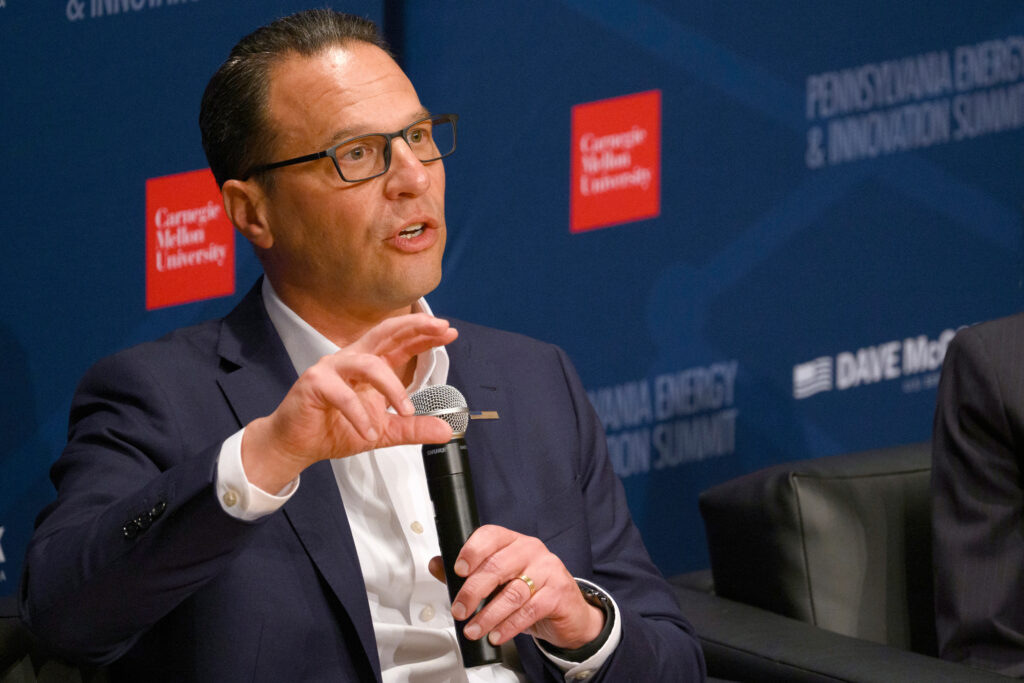
Enter the Governor’s Responsible Infrastructure Development standards, or GRID, a corresponding set of policy principles Shapiro says will address concerns about resource consumption, community engagement and transparency. Shapiro first referenced them in his address, and his office released some conceptual information the same day, including that developers either supply their own electricity or fully pay for what they’ll need. But scant information about how GRID is to be implemented has followed.
Asked for details, Shapiro’s office first pointed to a series of press clippings arguing that the governor has been consistent “all along” on wanting to both attract data centers and address local concerns, such as asking developers to bring their own power.
“Not a shift,” Shapiro told a gaggle of reporters in February about his position. “What we did with GRID, which is our acronym for the standards, is to make clear to everybody what the rules of the road are going to be in Pennsylvania.”
Pressed for information about what those rules are, his office said in a statement that developers’ adherence to GRID principles is a prerequisite for accessing a “fast track” permitting process launched in 2024.
“Every project accepted into the PA Permit Fast Track program must meet the same rigorous environmental and safety standards as all other projects,” the statement said. “The Shapiro Administration strongly encourages all data center developers who want to build in Pennsylvania to meet the Governor’s GRID standards – and will only accept new Fast Track applications for data center projects that meet those standards.”
Shapiro’s office did not answer questions about the specific requirements or provide an example of a developer successfully following them.
Asked if the Data Center Coalition had a firm understanding of the governor’s GRID expectations, Diorio said the group “appreciates” the goals and Shapiro’s efforts to balance growth with protections. But he also indicated that GRID remains an ongoing policy conversation. His group, he said, is concerned about a potential one-size-fits-all solution.
“What we want to do is ensure that policies are drafted in a way so that all the data centers have an equal opportunity to develop in the state,” Diorio said, offering the example of a smaller data center that doesn’t have the resources to secure its own energy generation.
Hess, the former environmental protection secretary, said he was skeptical of the impact of linking GRID to fast permits. That process has nothing to do with project siting, he noted, and state environmental permits can only be based on criteria mandated by law.
Shapiro’s office said the governor is further developing the standards through talks with environmentalists, labor groups and developers. He told the TV station WNEP that he hoped “lawmakers will step up on some of the things that require changes to our laws,” although his office declined to offer specifics on what policies the governor is pursuing, through which legislation and on what timeline.
“The Shapiro Administration looks forward to announcing further details in the near future and will work with the General Assembly to ensure each one of these projects benefits local communities across Pennsylvania,” his office’s statement said.
About This Story
Perhaps you noticed: This story, like all the news we publish, is free to read. That’s because Inside Climate News is a 501c3 nonprofit organization. We do not charge a subscription fee, lock our news behind a paywall, or clutter our website with ads. We make our news on climate and the environment freely available to you and anyone who wants it.
That’s not all. We also share our news for free with scores of other media organizations around the country. Many of them can’t afford to do environmental journalism of their own. We’ve built bureaus from coast to coast to report local stories, collaborate with local newsrooms and co-publish articles so that this vital work is shared as widely as possible.
Two of us launched ICN in 2007. Six years later we earned a Pulitzer Prize for National Reporting, and now we run the oldest and largest dedicated climate newsroom in the nation. We tell the story in all its complexity. We hold polluters accountable. We expose environmental injustice. We debunk misinformation. We scrutinize solutions and inspire action.
Donations from readers like you fund every aspect of what we do. If you don’t already, will you support our ongoing work, our reporting on the biggest crisis facing our planet, and help us reach even more readers in more places?
Please take a moment to make a tax-deductible donation. Every one of them makes a difference.
Thank you,