

From our collaborating partner Living on Earth, public radio’s environmental news magazine, an interview by Jenni Doering with Pat Parenteau, an emeritus professor and senior fellow for climate policy at Vermont Law and Graduate School.
On March 31, a panel known as the “God Squad,” consisting mostly of Trump cabinet members, voted to exempt the oil and gas industry operating in the Gulf of Mexico from the Endangered Species Act, or ESA.
The Endangered Species Committee was established by Congress decades ago to evaluate cases where the ESA could pose a threat to the national interest or security. If courts do not intervene, this most recent decision would waive the standard ESA requirements for the oil and gas industry to take steps to protect the endangered species living in the area. One of them is the critically endangered Rice’s whale, of which there are only a few dozen left.
Pat Parenteau is an emeritus professor and senior fellow for climate policy at Vermont Law and Graduate School and a former EPA regional counsel. This interview has been edited for length and clarity.
JENNI DOERING: What exactly is this God Squad, as it’s nicknamed?
PAT PARENTEAU: This is a cabinet-level committee, and it was created in 1978 after the Supreme Court’s decision in Tennessee Valley Authority v. Hill, the infamous snail darter case in which the Supreme Court basically said only Congress can decide how to deal with a situation where the Endangered Species Act is causing a matter of national interest to be blocked. That’s where the term “God Squad” comes from, because the committee does have the power to waive the requirements of the ESA all the way to the point of allowing a species to go extinct—but only after there has been every effort expended to avoid that outcome.
The exemption process is the last resort where there’s truly an irreconcilable conflict between a matter of national interest, sometimes national security, and preservation of an endangered species. That’s the background.
DOERING: When you say that this is usually part of a long process, this is the measure of last resort, there’s no other options available, everything else has been exhausted … I don’t think there’s been much of a process at all when it comes to this most recent use of the God Squad.
PARENTEAU: There’s been no process at all. None of the steps required in the statute have been met. All that’s happened as a result of the meeting of the Endangered Species Committee—that’s its formal name—is that Defense Secretary Pete Hegseth appeared and said “There’s a national security problem here.”

He wasn’t terribly specific. He talked about the fact that there are lawsuits challenging oil and gas development in the Gulf, of which there are, and there will be more, but none of those lawsuits are blocking oil and gas development. None of those lawsuits have resulted in a determination that the Endangered Species Act is actually being violated by anything happening in the Gulf right now.
This idea that you can invoke a national security exemption when there is no threat to national security is not only brand new, it’s ridiculous. And I certainly hope that the courts will agree with me and see it that way, but we’ll have to wait and see how that plays out.
DOERING: What does this decision to exempt oil and gas in the Gulf of Mexico from the Endangered Species Act really mean?
PARENTEAU: Well, if it was upheld by the courts, it would be a devastating blow to multiple endangered species that are in the Gulf of Mexico. That includes the critically endangered Rice’s whale, of which there are only about 51 in the wild, as well as the sperm whale, two species of endangered sea turtles and the manatee. These are all species that require protection of the Endangered Species Act to survive and recover. Without those protections, the risk of extinction becomes much greater for these species. So that’s the real world consequence of what Trump is trying to do.
He could actually be the first president in history to be responsible for the extinction of a marine mammal, the Rice’s whale. The science is saying if just one breeding female of that population were to be killed as a result of a vessel strike, that could doom the Rice’s whale to extinction. This kind of decision is not only unprecedented, it’s wildly irresponsible, because the mechanisms to avoid jeopardy to these species are common-sense things.
For example, NOAA, the National Oceanic and Atmospheric Administration, has determined that to avoid jeopardy to the Rice’s whale, boats need to keep a lookout for when whales are in the vicinity, and then slow down so you don’t run over them.
The law is operating very reasonably, just trying to avoid the worst impacts to these species. And along comes Secretary Hegseth [who] says, “I don’t care about any of that. I want oil and gas development to proceed without regard to protection of any of these species.”
“He could actually be the first president in history to be responsible for the extinction of a marine mammal, the Rice’s whale.”
DOERING: Can you explain how the Trump administration is using national security to justify this most recent use of the God Squad?
PARENTEAU: There is a provision in the law for a national security exemption, but the legislative history of the 1978 amendments that created the exemption process makes it clear that that is a very narrow exception, and it is only to be used where there is a direct threat to military readiness and military operations.
Hegseth’s finding that he presented to the committee is that the supply chain for oil has been interrupted because of the war in Iran and the closure of the Straits of Hormuz. But none of that has anything to do with the Endangered Species Act. The Endangered Species Act is not threatening oil supplies in the United States at all. It’s not even slowing down oil and gas development. There’s no outstanding injunction against oil and gas development in the Gulf of Mexico—none. So I don’t know what Hegseth is talking about.
This story is funded by readers like you.
Our nonprofit newsroom provides award-winning climate coverage free of charge and advertising. We rely on donations from readers like you to keep going. Please donate now to support our work.
Donate NowDOERING: What are the broader legal and environmental implications?
PARENTEAU: If, God forbid, this exemption were upheld by the courts all the way up to perhaps the U.S. Supreme Court, this kind of an exemption could apply in all kinds of circumstances.
For example, Trump has also said we have a timber emergency in the United States, and he’s called upon the Forest Service, which manages 190 million acres of forest land in the country, to use every means at its disposal to increase clear cutting on national forests.
If Hegseth were to come along and declare—like he’s just done here with the Gulf—that the timber supply is a vital national security interest, and domestic production of timber needs to proceed expeditiously, and therefore he’s directing or demanding that the Endangered Species committee also grant an exemption for timber harvest … You see what I mean? You can apply this kind of national security rationale to any kind of natural resource extraction affecting endangered species anywhere in the country.
“What I’m getting at here is there’s always an alternative to driving species to extinction, always.”
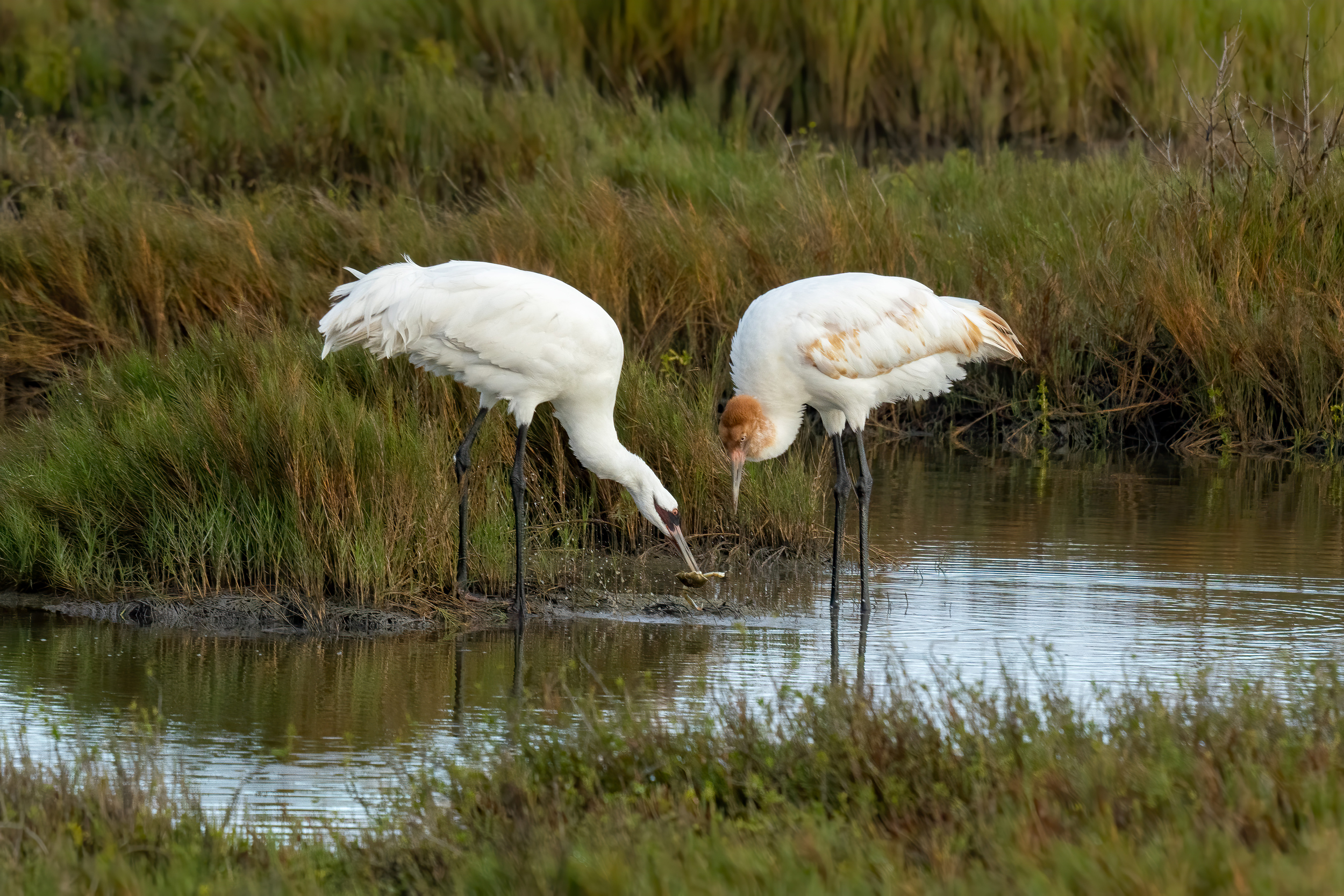
DOERING: Wow. Can you share a little bit of the backstory about the first God Squad convening nearly 50 years ago, and how you helped secure protections for endangered whooping cranes? They’re still endangered, but they’re doing OK. What do you think we can learn from the past when it comes to navigating ESA exemptions?
PARENTEAU: It’s not an either-or choice. It never is. In the case of the whooping crane, what we were able to do there, we brought a lawsuit. We stopped the construction of a massive coal-fired power plant, but then we negotiated an agreement that created a mechanism—it’s now called the Crane Trust on the Platte River in Nebraska—which would work actively to conserve the habitat on the Platte River for the whooping crane and also educate people.
Each year, the Crane Trust brings tens of thousands of people to the river to watch the magnificent migration of sandhill cranes, whooping cranes, and millions, literally, of ducks and geese and migratory waterfowl.
What I’m getting at here is there’s always an alternative to driving species to extinction, always. It’s a choice we have to make. Are we willing to live with some limitations on resource extraction that’s threatening the survival of these species? Or would we prefer a world in which these species keep going extinct one after another?
If it weren’t for the Endangered Species Act, thousands of species would have gone extinct by now. The science has documented that. It’s a shame, isn’t it, that we don’t have an administration that sees the world that way?
Let’s find a way to develop the resources we need without driving species to extinction. We have that ability. We can make that choice, if we will.
About This Story
Perhaps you noticed: This story, like all the news we publish, is free to read. That’s because Inside Climate News is a 501c3 nonprofit organization. We do not charge a subscription fee, lock our news behind a paywall, or clutter our website with ads. We make our news on climate and the environment freely available to you and anyone who wants it.
That’s not all. We also share our news for free with scores of other media organizations around the country. Many of them can’t afford to do environmental journalism of their own. We’ve built bureaus from coast to coast to report local stories, collaborate with local newsrooms and co-publish articles so that this vital work is shared as widely as possible.
Two of us launched ICN in 2007. Six years later we earned a Pulitzer Prize for National Reporting, and now we run the oldest and largest dedicated climate newsroom in the nation. We tell the story in all its complexity. We hold polluters accountable. We expose environmental injustice. We debunk misinformation. We scrutinize solutions and inspire action.
Donations from readers like you fund every aspect of what we do. If you don’t already, will you support our ongoing work, our reporting on the biggest crisis facing our planet, and help us reach even more readers in more places?
Please take a moment to make a tax-deductible donation. Every one of them makes a difference.
Thank you,