

RUTLAND, Vt.—Eighteen years after the first “climate tort” lawsuit was filed, no U.S. plaintiff has collected damages for the harms of global warming. Now, Vermont’s different legal strategy to make fossil fuel companies pay is facing its first real test.
On Monday, the state defended its “climate superfund” law before the U.S. District Court of Vermont. Groups representing the fossil fuel industry, 24 Republican state attorneys general and the Trump administration all want to kill it.
The law would require many of the world’s largest fossil fuel companies to reimburse Vermont for the costs the state and its residents face to adapt to a changing climate, in proportion to the amount of fossil fuels the companies produced over the past 30 years—fuels whose production and combustion are the main source of greenhouse gases causing climate change.
New York passed its own version of a superfund law days before the first suit was filed challenging Vermont’s, and at least 11 other states have considered legislation along similar lines.
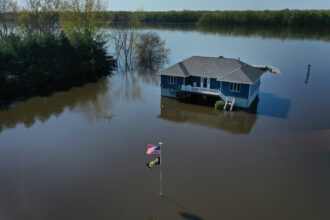
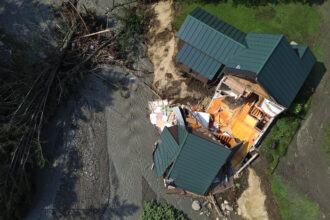
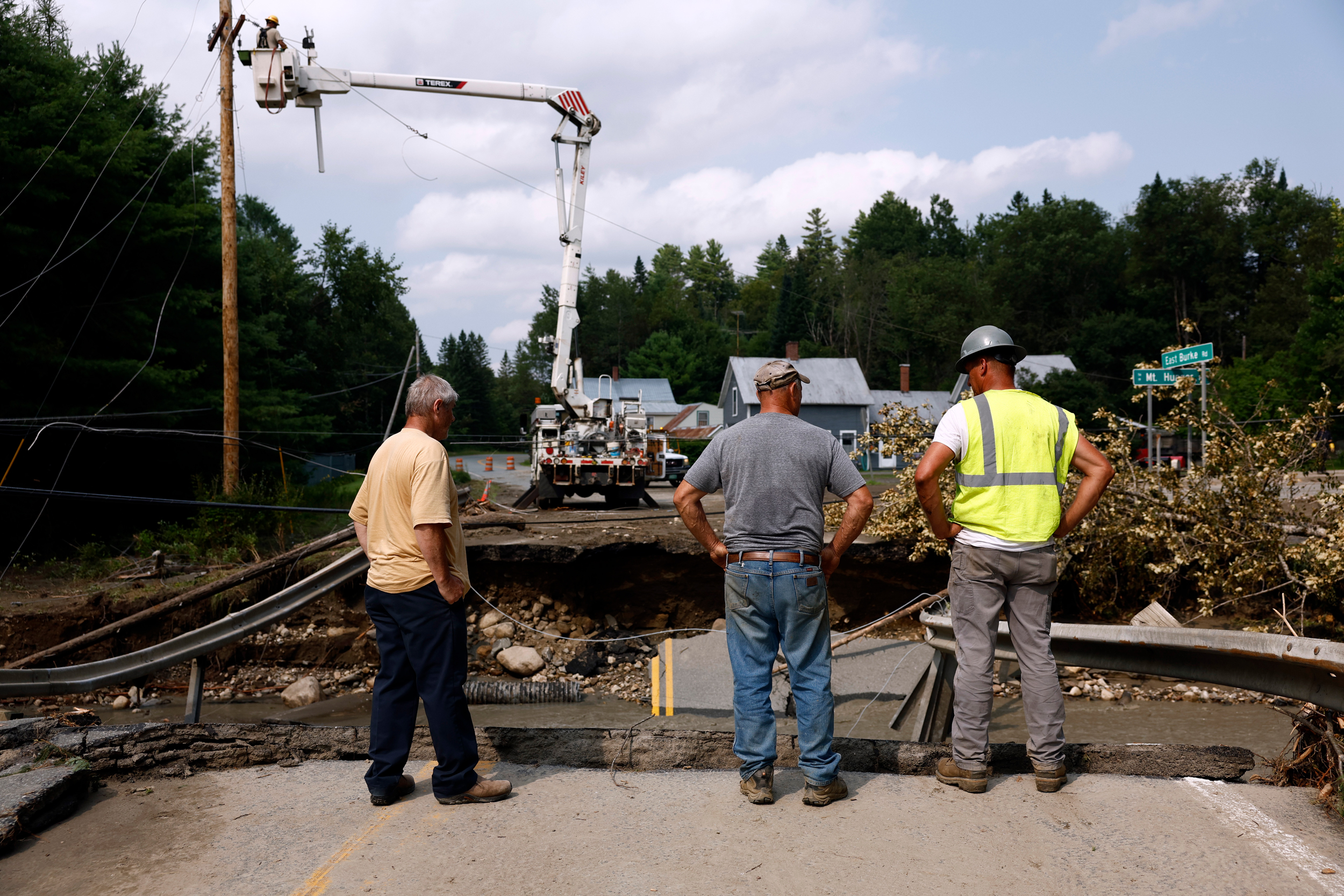
Vermont passed its law in 2024, between two rounds of severe statewide flooding exactly a year apart. “Anyone who witnessed firsthand what Vermont experienced in 2023 will understand why the legislature took this step,” Bridget Asay, one of the lawyers defending Vermont’s law, said in her closing argument on Monday.
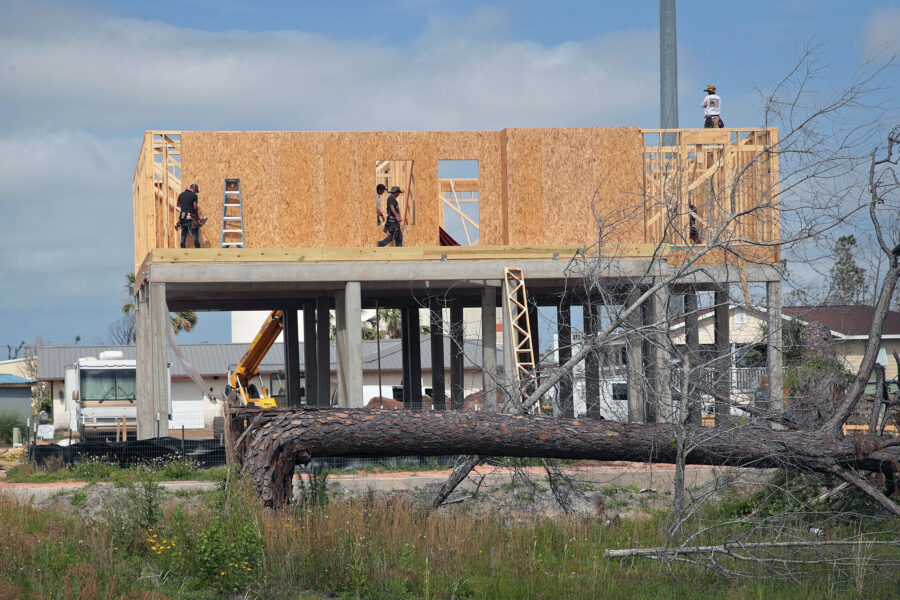
As the parties wrangle over whether the superfund law is preempted by the federal Clean Air Act and whether its challengers have standing to sue, town governments, business owners and farmers around Vermont confront far tougher questions. Where can they find the funds for infrastructure upgrades that could save lives during future climate-fueled floods, droughts or wildfires? And is there any way to do that without taking on crushing debt or driving residents away with high taxes?
These questions are particularly pressing in Johnson, about 25 miles south of Canada.
The 3,500-person community, both a town and a smaller village within its borders, sits at the confluence of two rivers, the Gihon and the Lamoille. Once the power behind world-famous woolen mills, the rivers today offer recreation and scenic beauty. They also have shown an increasing tendency to flood in recent years: in 2019, twice in 2023, again in 2024.
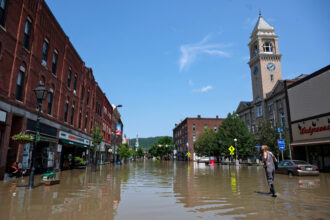
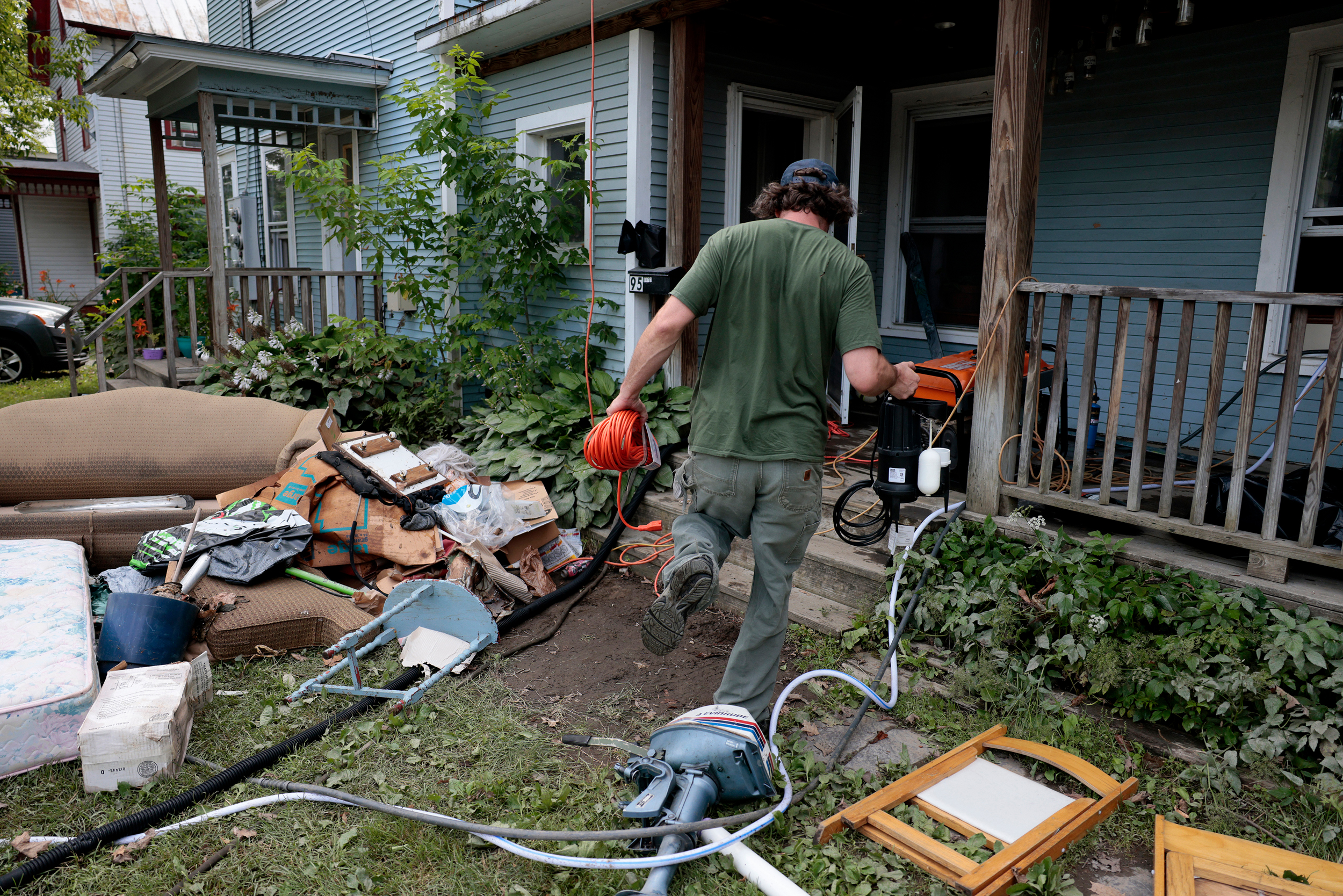
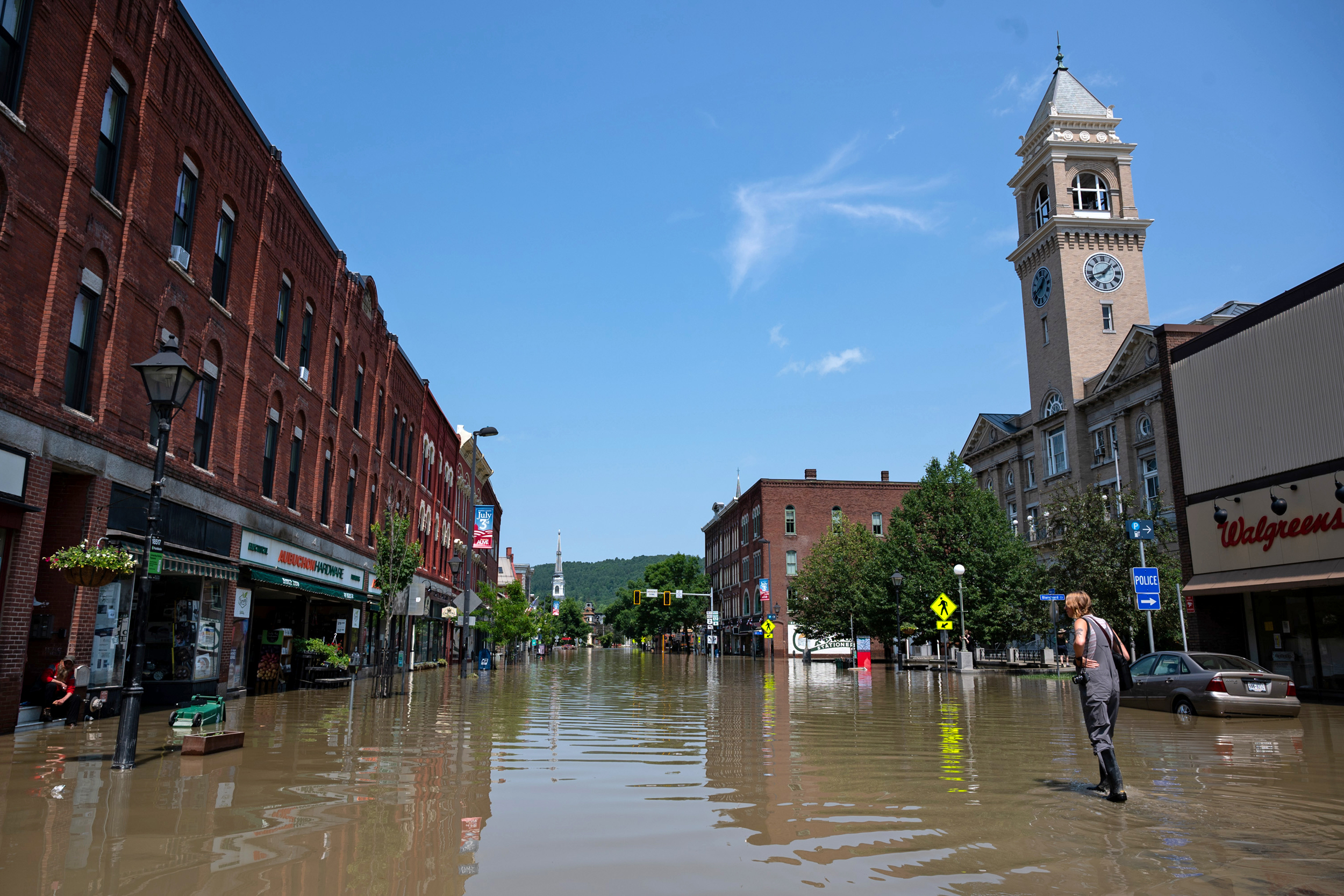
The 2023 floods were particularly destructive, inundating the town hall, library and wastewater treatment plant, as well as the town’s only grocery store and post office and many homes.
In its aftermath, Johnson residents gathered in a series of moderated discussions to “reimagine Johnson.” They needed to figure out how their community could remain vibrant with fewer inhabited properties and more green space—floodplains—in the traditional downtown.
Adrienne Parker, vice-chair of the town selectboard, said this process helped showcase Johnson’s “strongest points” and how to build upon them, including growing local food and recreation hubs.
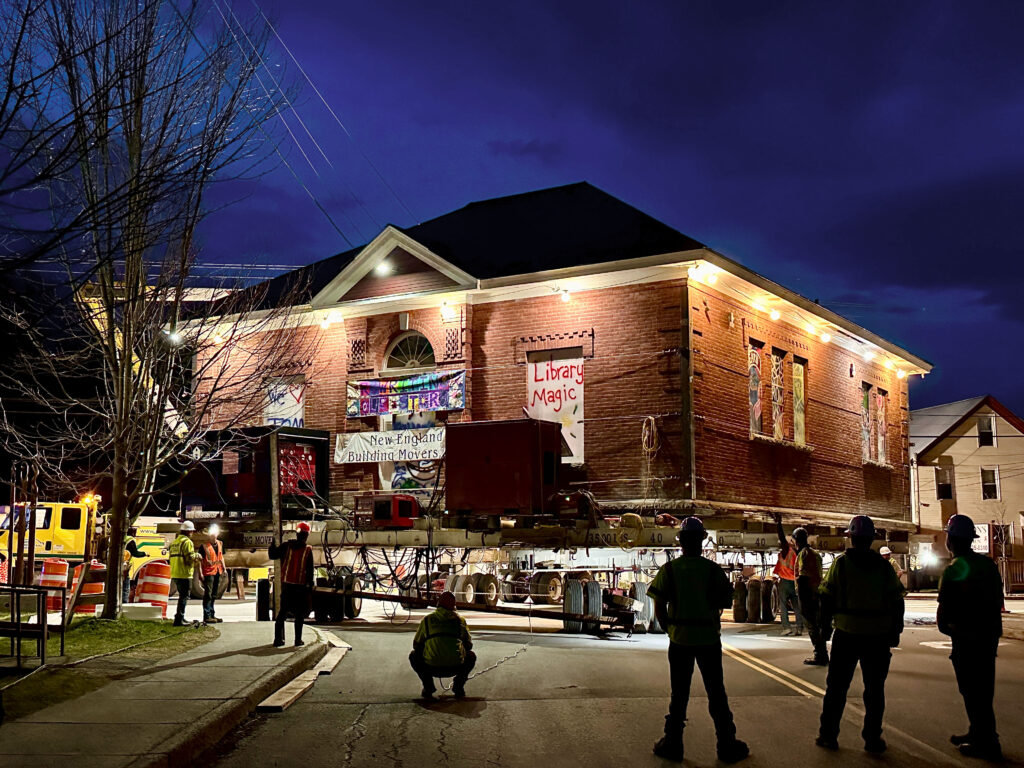
The most cinematic outcome came when the town plucked its century-old library off its foundation in the floodplain and drove it on a flatbed truck to higher ground.
A wastewater treatment plant—or, more precisely, what’s inside of it—is harder to relocate than a library. Yet many believe that is exactly what’s needed for the plant that serves much of Johnson. It sits in a floodplain and has flooded at least three times during the past 21 years—in 1995, 2019 and 2023.
The 2023 floods knocked operations out for a full month, during which untreated sewage flowed into the Lamoille River. Afterward, Johnson collaborated with the Federal Emergency Management Agency (FEMA) to explore whether to move the plant or simply rebuild it on a higher foundation in its current flood-prone location.
Johnson has yet to reach a decision, but Village Manager Erik Bailey said, “At this point, it looks like the village is favoring the remain-in-place option.” Suitable land is limited, and another major factor is what FEMA would fund.
Initial estimates put the difference in cost between the two options at about $15 million, with FEMA’s policies preventing it from making up the difference, or guaranteeing it would cover cost overruns for the “move” option, according to Bailey.
“We’ve got a small and impoverished user base,” Bailey said; typical household income in the village is $49,000, compared with $81,000 statewide. “There is no way it can handle the $10-$15 million delta to do the more expensive option.”
That sort of dilemma is exactly why legislators proposed the climate superfund law. Whether it will ever produce funds to help pay for such projects is now up to the courts.
Law, Interrupted
Just as Johnson was kicking off its “reimagining” in July 2024, the superfund law took effect. By the end of December, the U.S. Chamber of Commerce and American Petroleum Institute sued on behalf of their fossil fuel company members, joined soon after by the Republican state attorneys general. The Department of Justice filed its own suit the following May.
The lawsuits preceded a number of steps mandated under the law, coming before Vermont’s treasurer could prepare an estimate of how much money the state would need to spend to adapt to climate change, before the state’s Agency of Natural Resources could determine which fossil fuel companies met the law’s criteria for financial responsibility and before that agency could apportion costs to companies based on emissions.
Those defending the law—the Vermont Attorney General as well as the Conservation Law Foundation (CLF) and Northeast Organic Farming Association of Vermont—argue the suits are therefore “unripe,” or filed too early.

The law’s challengers point to early preparatory work by Vermont to argue that as a practical matter, the rough scale of the cost demands is known and, collectively, falls in the hundreds of millions of dollars. They also argued that the identity of at least some of the companies that would receive demands to pay up can be deduced from the law’s criteria and a separate lawsuit Vermont filed against oil companies over alleged greenwashing.
“Vermont’s so-called climate superfund law rewrites the rules after the fact—penalizing companies for lawfully providing the energy Americans rely on every day,” Ryan Meyers, senior vice president and general counsel of the American Petroleum Institute, said in an emailed statement. “We’re asking the court to put a stop to this activist-driven state overreach and reaffirm federal authority over national energy policy.”
One impact the lawsuits are already having: Some of the other states considering climate superfund laws have hit the brakes. The Maine Legislature, for instance, did not advance a climate superfund bill last year in order to see what comes of the cases, according to the Maine Morning Star. And this session, the legislature instead passed a more limited bill to only initiate a climate costs assessment.
Will States Be Allowed to Act?
Whether Vermont can keep its law on the books may come down to what, exactly, the courts decide the superfund statute is.
Core to plaintiffs’ arguments that the state is overstepping into federal territory is the claim that by charging fossil fuel companies based on the global greenhouse gas emissions associated with their past production, Vermont is effectively “regulating” such emissions.
Vermont countered that the law does not regulate emissions or production at all. It creates a process, the state says, for fairly estimating the money the state will need to spend to protect residents from climate change and apportioning that cost to the companies who sold their products knowing that burning them would damage the climate.
“This is solely an adaptation statute,” Vermont Solicitor General Jonathan Rose said as he opened the state’s arguments on Monday.
Vermont contends that the law is highly unlikely to shift fossil fuel production or prices as a regulation would, because the charges are based exclusively on past behavior. A team of economists led by Nobel Prize winner Joseph Stiglitz supported this argument in a filing with the court.
Even those economists acknowledged, however, that the prospect of future liability could shift behavior. The plaintiffs insisted it would be naive to assume that Vermont will limit itself to charging fossil fuel companies just this once, or that other states will not follow suit.
“If Vermont can do this once, it can do this again,” Riley Walters, one of the Justice Department attorneys, argued in court.
Vermont called such arguments speculative and inappropriate for the court to consider, especially without a trial.
Hanging over these arguments is a 2021 decision from the 2nd Circuit Court of Appeals. That court, which sits directly above the District of Vermont in the federal court system, upheld dismissal of a suit New York City brought against fossil fuel companies under state tort law, seeking to cover its own significant climate adaptation costs. The Circuit Court found that the “substantial damages” New York City sought would effectively act as a regulation of interstate emissions—an area controlled exclusively by federal law—and so the suit was preempted.
That decision took what some legal experts have called an unusual and sweeping approach to deciding the issue of preemption, one which several other courts have declined to follow. Nevertheless, it set binding precedent the Vermont court must follow.
Vermont says its statute doesn’t create any ongoing legal duties, unlike a tort lawsuit such as New York City’s. And the Trump administration’s recent disavowal of power to regulate greenhouse gases could also play in Vermont’s favor on preemption.
In February, the Environmental Protection Agency revoked the endangerment finding that had served as the legal underpinning for its rules to rein in climate pollution under the Clean Air Act. In axing the science-based finding and repealing the greenhouse gas emissions standards for motor vehicles that flowed from it, Trump’s EPA is now making a legal argument that it lacks authority to regulate these emissions.
This story is funded by readers like you.
Our nonprofit newsroom provides award-winning climate coverage free of charge and advertising. We rely on donations from readers like you to keep going. Please donate now to support our work.
Donate NowSome legal experts say that such a claim undermines the federal preemption argument asserted by the administration and industry groups challenging Vermont’s climate superfund law.
“The Trump administration is trying to have it all ways. Now you see them saying that the endangerment finding repeal basically removes the federal government from the business of regulating greenhouse gases but [federal authority] still occupies the field and preempts all state regulation. It’s essentially a ‘no one can ever regulate greenhouse gases’ type of argument,” said Ann Carlson, faculty director at the Emmett Institute on Climate Change and the Environment at the UCLA School of Law.
According to Carlson, the endangerment finding repeal also changes the “factual scenario” of EPA accepting legal authority to address climate pollution under the Clean Air Act that was central to the preemption holdings of prior climate cases, including New York City’s.
The Justice Department says there is no inconsistency in the federal government’s positions. Even though the EPA has disavowed authority under the Clean Air Act to regulate emissions from motor vehicles, it has not disclaimed all regulatory authority under the federal statute and so states cannot step into the gap, the Justice Department argued.
Catastrophic Flooding and Questions of Fairness
As the parties debated these questions, Andy Jones started preparing for another growing season at the Intervale Community Farm in Burlington, roughly 68 miles north of the federal courthouse.
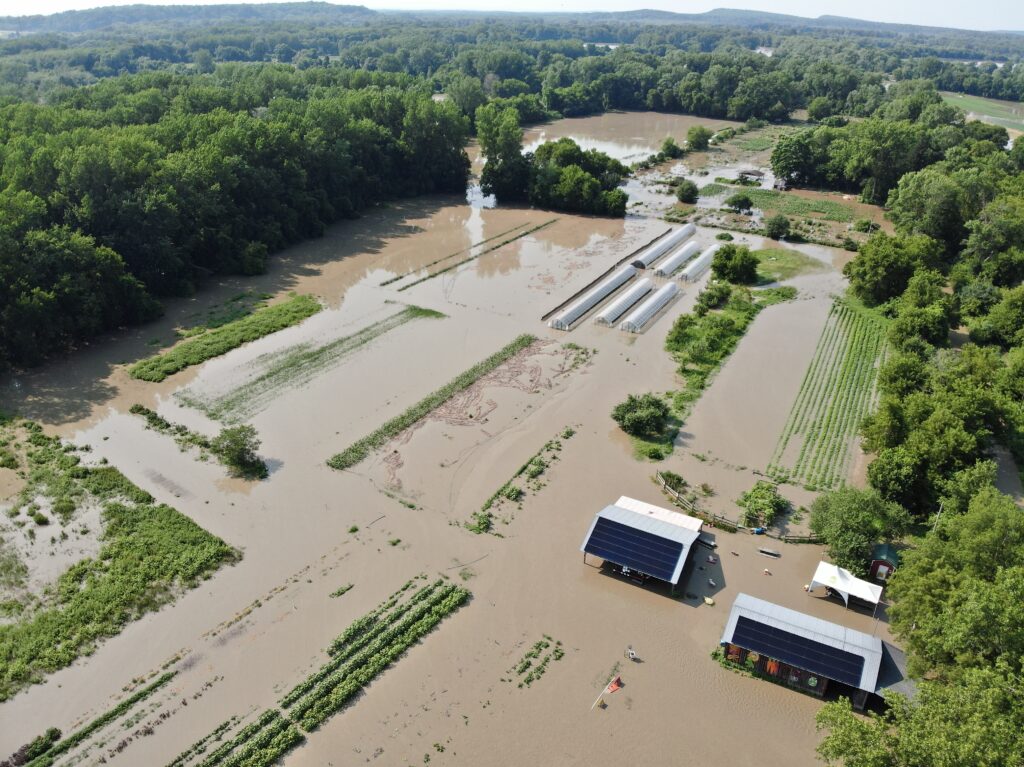
The 55-acre member-owned organic farm lies entirely within the 100-year floodplain of the Winooski River. Flooding is not uncommon, but the floods used to come in the early spring or late fall and not impact the growing season much. In recent years, more have hit in the summer, from Hurricane Irene in August 2011 to the 2023 and 2024 floods.
Those back-to-back floods suggested to Jones that something more was going on beyond mere coincidence. “It was so clear that it was related to all of this extra water in the atmosphere,” said Jones, the farm manager.
The July 2023 flood inundated 99 percent of the farm and destroyed $200,000 in crops.
Jones testified before a state legislative committee in April 2024 in support of the climate superfund bill. Following Hurricane Irene, the farm spent nearly half a million dollars in infrastructure upgrades, about $100,000 of which were necessary to account for more climate-driven extreme weather, Jones told the committee. He said farmers and communities across the state would benefit from additional funds to help move assets out of harm’s way.
Jones sees the law as common-sense fairness, an attempt to hold accountable an industry that has lied about the harmful consequences of its products, just like tobacco.
“It’s clear that the fossil fuel industry knew about the problems and what the downstream effects would be for the last 50 years, and worked really hard to cover it up, worked really hard to short-circuit climate change legislation and regulation, and basically did everything in its considerable power and influence to maintain the status quo, all while knowing there would be massive damage as a predictable outcome,” Jones said. “It seems like a fitting thing to allow the petroleum companies to pay for the mess. And they’re not going to end up paying for all of it, only a small portion of it.”
Attorneys representing Vermont made a similar point during Monday’s hearing, saying fossil fuel companies would only be on the hook for paying their “fair share” of the state’s total assessed costs, based on the proportion of carbon emissions attributable to each company.
The plaintiffs argued that it unfairly targets a select group of emitters while ignoring all other greenhouse-gas sources and imposing “harsh and oppressive” penalties that would disrupt fossil fuel production.
“Imposing billions of dollars of costs onto our members is going to have some effect,” Steven Lehotsky, an attorney representing the Chamber of Commerce and American Petroleum Institute, told the court.
Both the Republican state attorneys general and the Trump administration have argued that the law would raise energy costs nationwide.
The law’s supporters dispute that. And the country is experiencing price shocks right now for entirely different reasons: President Donald Trump’s war in Iran has disrupted oil supplies and rapidly raised prices at the pump as well as profits for oil companies. And consumers, experts warn, will bear the brunt of the Trump administration’s continued efforts to thwart offshore wind and other new clean energy development as hyperscale data centers drive up electricity demand.
A Long Road Ahead
One person who believes the argument that the superfund law would raise consumer costs is Fred Messer. He’s a selectboard member, emergency management director and town health officer for Waitsfield, Vermont, but he was speaking only for himself about the Climate Superfund Act.
“You can fine the oil business, but they’re going to pass that all on to the consumer,” Messer said on a tour of some of the bridges and culverts in this picturesque town popular among skiers and writers.
It was a loop Messer drives during the early phases of bad storms. It takes him past many of the most vulnerable culverts carrying mountain brooks encased in steel beneath the town’s winding roads. The survey gives him a sense of which of his neighbors might be cut off as roads wash out.
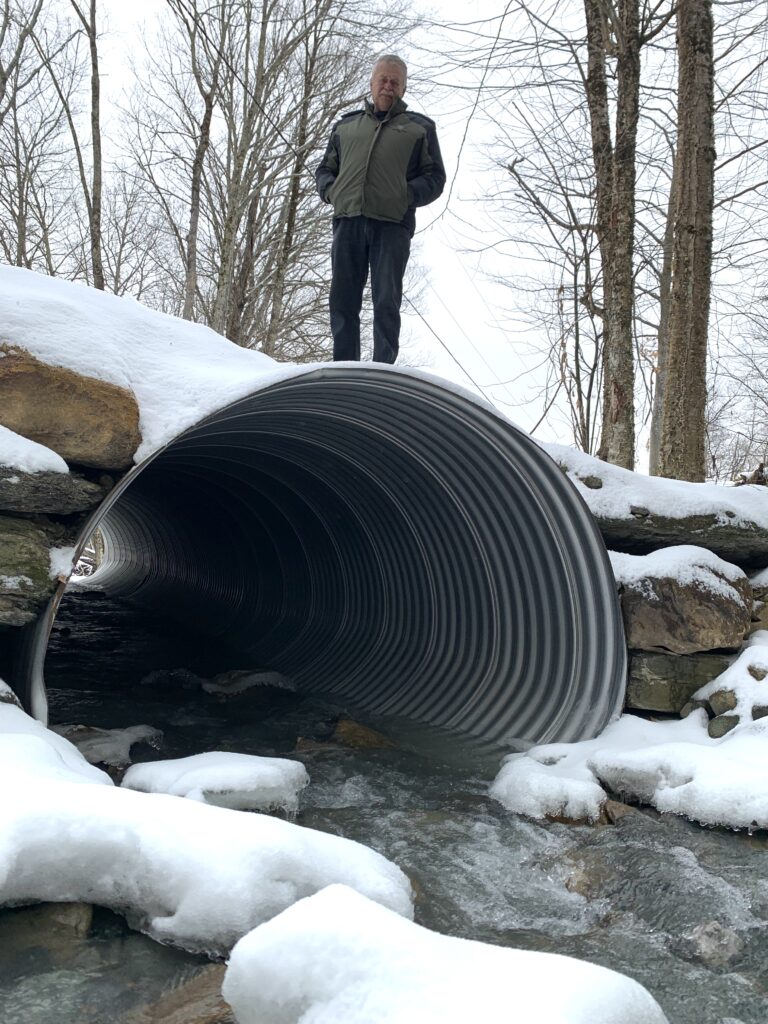
Messer was emergency manager in 2011 during Hurricane Irene when the Mad River leapt its banks, flooding much of Waitsfield and its neighboring towns. Upgrading culverts has been a major priority for the town in the years since.
Waitsfield has nearly 300 of them, according to a public database, with 40 rated in “poor” condition or in need of repair as of 2020. More would likely achieve that designation today. Many, perhaps most, of the remainder are undersized, Messer said, meaning they were not built to carry the volumes of water that now pour through them in heavy downpours.
FEMA offers several routes to federal funding for preventative work like upsizing culverts. The easiest for Vermont towns to access, state officials say, is through an add-on to FEMA’s public assistance for replacing infrastructure damaged during a federally declared disaster. That incentivizes a small town to wait until a culvert fails before replacing it, and local officials still must prove to FEMA that upsizing is necessary.
Messer said that to fund replacements more quickly and proactively, the state and other towns should do what Waitsfield has done by creating an interest-earning reserve fund for repairs and upgrades to bridges and culverts. As of last June, the fund had about $320,000 in it, according to a budget presentation at this year’s town meeting.
That might sound promising. But replacing a single culvert, Messer said, can cost anywhere from $30,000 to hundreds of thousands of dollars, and he acknowledged the gap between the fund balance and the scale of Waitsfield’s needs.
Whether communities and states will ever be allowed to seek some relief from major fossil fuel companies for the climate change damages their products contribute to remains an open question.
Residents of Kivalina, Alaska—the first U.S. community to sue fossil fuel companies for climate harms—have lived in a kind of limbo since their lawsuit was dismissed. They’ve tried to navigate many layers of federal bureaucracy in search of adequate funding for climate adaptation while erosion eats away at sections of their island.
The fate of the superfund laws will ultimately rest with the nation’s highest court.
“Way down the road, the Supreme Court will decide: Do the states get paid or not?” said Patrick Parenteau, emeritus professor of law at Vermont Law and Graduate School.
The Supreme Court may provide clues within the next year about how it will answer that question. The justices recently agreed to hear an appeal from a decision that allowed Boulder, Colorado’s state tort lawsuit against fossil fuel companies to move forward, though they raised questions about their power to hear the appeal now.
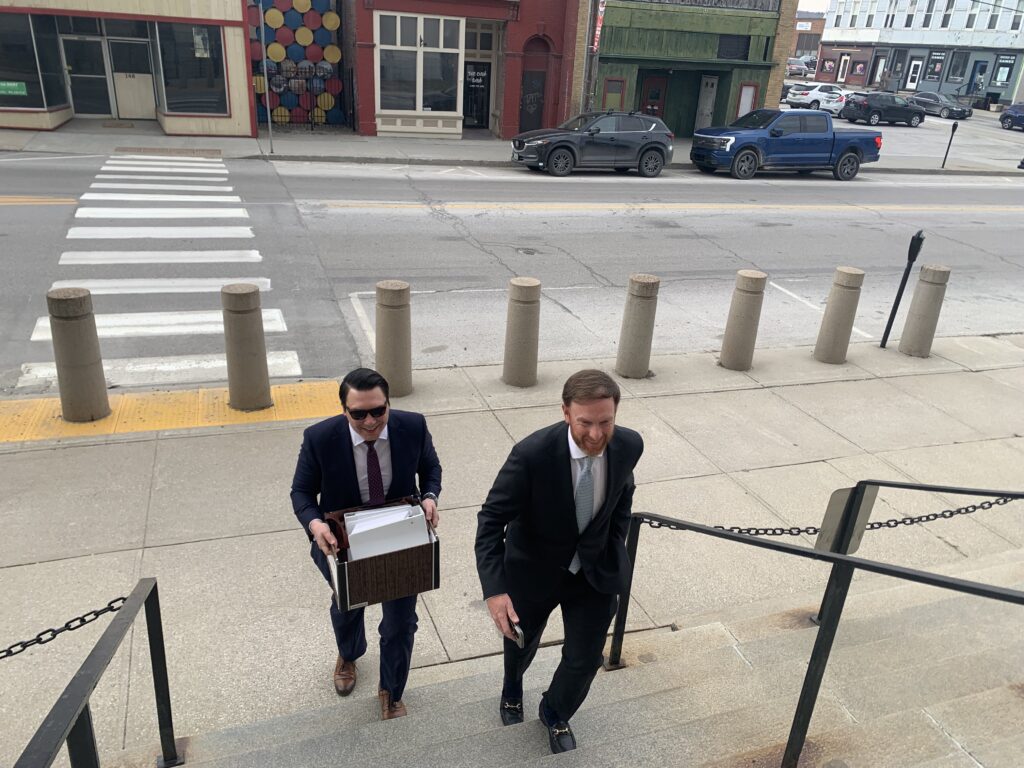
As the Monday hearing in Vermont was wrapping up, U.S. District Judge Mary Kay Lanthier asked how that Supreme Court review of Boulder’s case might impact the issues in the Vermont litigation. Rose, representing Vermont, simply noted that because Boulder’s case is a tort claim, it should be distinguishable from Vermont’s law.
Lanthier said at the close of the hearing that the court will try to issue a ruling on the motions at issue “as quickly as we can.”
“This is just the first round of what promises to be a very long fight,” Parenteau told Inside Climate News. “If Vermont wins this round, it’s a temporary reprieve. That’s it, that’s all they’re playing for.”
In the meantime, Vermont and other states and communities across the country continue to bear the burdens of responding and adapting to ever more extreme weather.
“We are living with the very real ramifications of climate change here in Vermont,” Grace Oedel, executive director of the Northeast Organic Farming Association of Vermont, said after the hearing. “And when they say, ‘We don’t want to be handed that bill to just adapt’—that bill has already been handed to our farmers. That bill has already been handed to our towns. That bill has already been handed to the people of Vermont. And it’s ridiculous to say it’s not fair to hand it to the companies who were causing it.”
About This Story
Perhaps you noticed: This story, like all the news we publish, is free to read. That’s because Inside Climate News is a 501c3 nonprofit organization. We do not charge a subscription fee, lock our news behind a paywall, or clutter our website with ads. We make our news on climate and the environment freely available to you and anyone who wants it.
That’s not all. We also share our news for free with scores of other media organizations around the country. Many of them can’t afford to do environmental journalism of their own. We’ve built bureaus from coast to coast to report local stories, collaborate with local newsrooms and co-publish articles so that this vital work is shared as widely as possible.
Two of us launched ICN in 2007. Six years later we earned a Pulitzer Prize for National Reporting, and now we run the oldest and largest dedicated climate newsroom in the nation. We tell the story in all its complexity. We hold polluters accountable. We expose environmental injustice. We debunk misinformation. We scrutinize solutions and inspire action.
Donations from readers like you fund every aspect of what we do. If you don’t already, will you support our ongoing work, our reporting on the biggest crisis facing our planet, and help us reach even more readers in more places?
Please take a moment to make a tax-deductible donation. Every one of them makes a difference.
Thank you,