Many of our impact case studies cover ongoing stories that Inside Climate News continues to actively cover. The impact reflected here is current as of publication and may be updated as the situation develops.
In my 11 years covering environmental news in Alabama, I’ve had sources, in and out of government, share tales of trepidation in their dealings with Alabama Power, one of the most powerful and omnipresent forces in the state.
“Were they mad?” an official in the state’s environmental department asked me nervously, when the company agreed to pay a record $1 million fine in 2018 for coal ash violations.
Another time environmental activists recounted how a company official told them in 2015 that he would come after them “with hobnail boots” if they were too aggressive in their demand for formal rate hearings.
No matter the experience, one fact is indisputable for people living in the realm of Alabama Power. Its bills – and its profits – are high. That’s where colleague Lee Hedgepeth and I began our reporting of the series, “Wired for Profit.”
We examined the federal filings of the 100 largest utilities in the country and found none reported higher total residential bills than Alabama Power. We found that Alabama Power’s record high profits were ignored or even obfuscated by the Public Service Commission, the regulator that is supposed to be a watchdog for consumers.
We spoke to customers struggling to keep their lights on and some who had turned to loans or high-interest credit cards to pay their power bills. We spoke to utility experts, former PSC staffers, academics and more to explain how Alabama Power had captured its regulators.
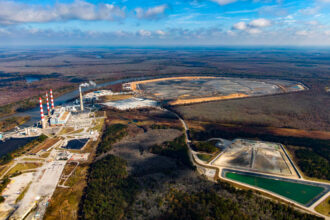
We investigated how the company’s very expensive electricity carried a huge climate and environmental footprint. What we found was astonishing: An Alabama Power coal plant has been the largest source of greenhouse gas emissions in the country for nearly a decade, and the company’s decision to leave millions of tons of coal ash in unlined lagoons on Alabama rivers threatens some of the country’s most sensitive ecosystems.
Our reporting was re-published and cited by Chattanooga Times Free Press, WBHM, Alabama Reflector, Yahoo! News, News from the States, The Guardian and more. After that, numerous local TV stations and media outlets began their own reporting on Alabama Power’s high rates.
The groundswell of customers shocked by ICN’s calculations and the company’s environmental negligence grew louder. Even U.S. Sen. Katie Britt, a Republican whose husband is a lobbyist who worked for Alabama Power, called the situation “unacceptable.” One month after our first story published, Alabama Power announced a two-year rate freeze.
Driven by our reporting, utility regulation became an unexpected hot topic in the Alabama Legislature this spring. By late March, Legislators seemed on track to pass a bill that would have required Alabama Power to face its first formal rate case hearings since 1981, capped the company’s profits, and limited which costs the utility could pass on to its customers.
Then the legislators went on spring break. A week later, a dramatically different—and more utility-friendly—bill was substituted in place of the original. Gone were the requirements for formal rate hearings and the profit cap. The bill’s sponsor voted against his own bill, saying he could not support the changes.
The resulting bill is still the most significant utility reform Alabama has seen in four decades. It allows, but does not require, the Public Service Commission to call formal rate hearings. It expands the commission to seven members, one for each congressional district, all but ensuring a bipartisan commission. It blocks Alabama Power from charging customers for the costs of lobbying and most advertising.
And the push for more meaningful reform will continue.
“The people of Alabama deserved better, and we will not pretend otherwise,” Daniel Tait, executive director of Energy Alabama said after the bill was signed. “But we want to be clear about something: This fight is not over.”
About This Story
Perhaps you noticed: This story, like all the news we publish, is free to read. That’s because Inside Climate News is a 501c3 nonprofit organization. We do not charge a subscription fee, lock our news behind a paywall, or clutter our website with ads. We make our news on climate and the environment freely available to you and anyone who wants it.
That’s not all. We also share our news for free with scores of other media organizations around the country. Many of them can’t afford to do environmental journalism of their own. We’ve built bureaus from coast to coast to report local stories, collaborate with local newsrooms and co-publish articles so that this vital work is shared as widely as possible.
Two of us launched ICN in 2007. Six years later we earned a Pulitzer Prize for National Reporting, and now we run the oldest and largest dedicated climate newsroom in the nation. We tell the story in all its complexity. We hold polluters accountable. We expose environmental injustice. We debunk misinformation. We scrutinize solutions and inspire action.
Donations from readers like you fund every aspect of what we do. If you don’t already, will you support our ongoing work, our reporting on the biggest crisis facing our planet, and help us reach even more readers in more places?
Please take a moment to make a tax-deductible donation. Every one of them makes a difference.
Thank you,