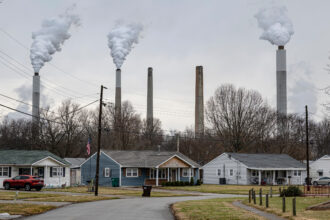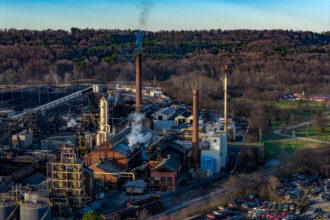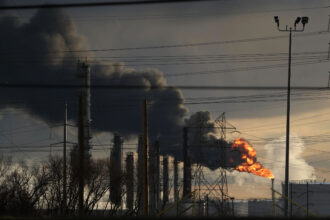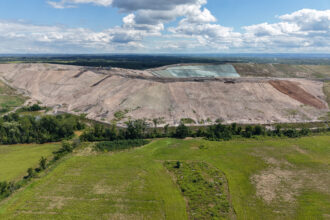


At one time, the U.S. electricity grid ran mostly on coal.
But coal-fired power plants have steadily been decommissioned. Power producers found the plants were too expensive to operate and carried risks tied to toxic air pollution, waste and climate-warming emissions.
Then President Donald Trump returned to the White House last year with a fresh zeal to revive the coal industry. His Department of Energy invoked emergency powers to force utilities to keep old plants operating.
Not only is this bad policy, it’s also a misuse of a law designed for wartime, according to legal scholars and analysts. If allowed to stand, this poses problems for utilities, grid operators and regulators who plan for decades-long timeframes, only to be overruled by short-term political imperatives that favor certain industries.
“It’s just illegal,” said Alexandra Klass, a professor at University of Michigan Law School, about the emergency orders. She served in the Biden administration as a deputy general counsel at the Department of Energy.
Environmental advocates and state officials have challenged the orders in court, with cases underway in the U.S. Court of Appeals for the District of Columbia Circuit.
I’m focusing on the emergency orders because I don’t think the public grasps how much these actions undermine the principles of utility planning and regulation, with harmful consequences for consumer bills and the climate.
While the Trump administration props up coal, it aims to slow the deployment of clean alternatives with actions such as a stop-work order on offshore wind and slow-walking permits to build onshore wind.
Klass co-authored a new essay with Dave Owen of UC Law San Francisco forthcoming in the Michigan Law Review Online that examines the history and current use of presidential emergency powers on energy.
The Department of Energy under President Donald Trump is invoking Section 202(c) of the Federal Power Act, a provision first used by President Franklin D. Roosevelt in 1941 to meet electricity demand in the Southeastern United States in the run-up to U.S. entry into World War II. The idea was that the government needed the ability to step in to meet short-term needs when existing regulations failed to do so.
The government issued 23 orders under Section 202(c) during the 1940s and almost none in the decades that followed.
In the first Trump administration and the Biden administration, the Department of Energy used the power 12 times in response to requests from utilities or grid operators, usually for permission to operate plants briefly in excess of emissions limits.
Since returning to office in 2025, Trump has used this power differently, seemingly to benefit coal producers by preventing coal plants from closing. The key difference is that this latest wave of orders, starting in May 2025 with the JH Campbell plant in Michigan, was not sought by plant owners.
“What the administration is doing now is using these 202(c) orders to basically override all of the long-term resource adequacy and grid planning that states, regional transmission organizations and utilities do,” Klass said. “And this is now coming in saying, ‘We don’t care what any of you experts and planners have to say. We want to save the coal industry, and we’re going to use this emergency authority that’s not designed for long-term resource planning.’”
Consumers Energy, the utility that operates JH Campbell, had planned to close the plant and replace it with a less-expensive combination of a natural gas plant and renewables that already were online.
Think of this in terms of the car you drive. You bought a new car and then the government says you need to keep your old one and continue driving it, even if it’s spewing black smoke and costs more to run than your new one.
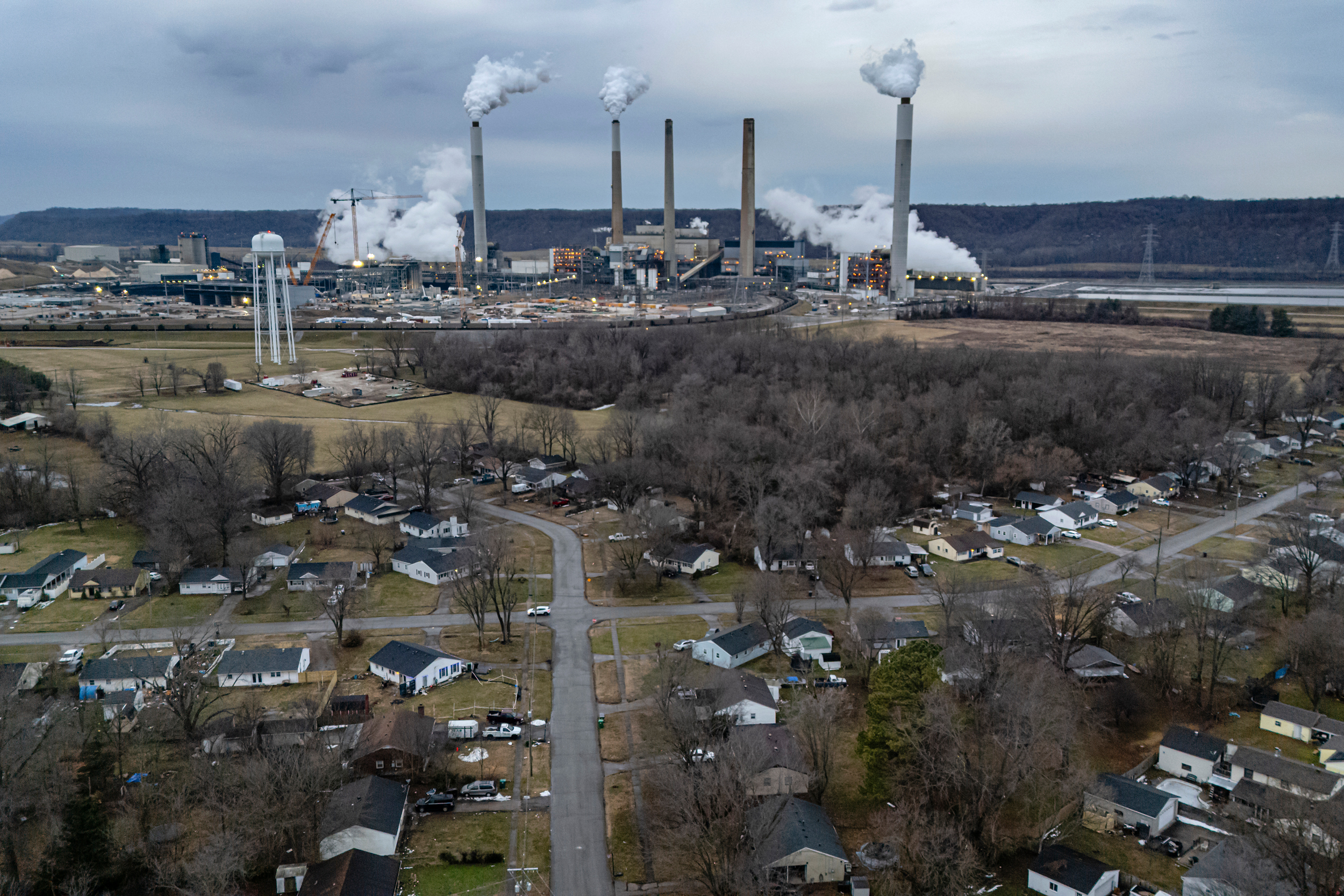
The JH Campbell plant, opened in 1960, has a summer generating capacity of 1,331 megawatts. In 2024, it emitted 8.9 million tons of carbon dioxide, ranking 19th among U.S. power plants, based on an analysis of federal Energy Information Administration data.
It got its fuel last year from the country’s two largest coal mines by production, North Antelope Rochelle Mine and Black Thunder, according to regulatory filings. Both are based in Wyoming and they are owned by Peabody Energy and Core Natural Resources, respectively.
James Grech, Peabody’s CEO, is also the chair of the Department of Energy’s National Coal Council. Jimmy Brock, Core’s CEO, is the vice chair. The Trump administration reconstituted the council last year after it had lapsed under the Biden administration. It was founded during the Reagan administration and advises the secretary of energy on policy, technology and markets.
I reached out to Peabody and Core and did not receive an immediate response.
Since ordering JH Campbell to remain open, the Trump administration has issued orders for five other plants: Eddystone in Pennsylvania, Centralia in Washington, RM Schahfer and Culley in Indiana and Craig Station in Colorado. All run on coal except for Eddystone which runs on natural gas and oil.
And, the administration may just be getting started.
“I think as part of the national energy emergency which President Trump has declared we’ve got to keep every plant open,” said Interior Secretary Doug Burgum last month in an interview with Bloomberg News. “And if there have been units at a coal plant that have been shut down, we need to bring those back on.”
For context, the country has 169,417 megawatts of coal-fired power plants.
Of that total, 40,784 megawatts have retirement dates listed by the EIA. More than half of that total is set to shut down before 2029 and would be caught up in a policy barring the closure of any coal plant on Trump’s watch.
While the administration can slow the decline, coal’s long-term retreat is near-inevitable. As recently as 2005, the country generated at least half of its electricity from coal-fired power plants. The share plummeted to a low of 15 percent in 2024, then rebounded slightly to 17 percent in 2025.
This story is funded by readers like you.
Our nonprofit newsroom provides award-winning climate coverage free of charge and advertising. We rely on donations from readers like you to keep going. Please donate now to support our work.
Donate NowFor coal power to make a sustained comeback in this country, developers would need to start building new plants. The best possibility right now may be the Terra Energy Center in Alaska, a proposal to build a 1,250-megawatt coal-fired power plant that would be the first of its kind in the United States since 2013. But this kind of project is speculative, and it’s not yet clear that it will find the right combination of financing and reliable coal supply.
Energy Secretary Chris Wright had said the emergency orders are necessary to keep electricity reliable and affordable.
“The states that have rushed to close their coal plants have also had rapidly escalating electricity prices,” he said in a Jan. 19 appearance on Fox Business. “Americans don’t like that. President Trump doesn’t like it.”
His comment leaves a lot to unpack for an energy analyst. But rather than go into the reasons electricity prices have risen, which is something Marianne Lavelle and I covered in- depth for ICN last month, I’ll just note that the administration’s policy is making power more expensive.
In a February regulatory filing, Consumers Energy reported that it had spent $290 million to operate the plant since the first emergency order. Of this total, $155 million was offset by revenue from the grid operator, leaving $135 million to be covered by the utility’s customers.
“It’s definitely interfering with the ability of utilities to make sure that they’re able to supply the lowest cost, most reliable energy to their customers, as well as states’ abilities to plan their own generation,” said Michelle Solomon, a manager in the electricity program at the think tank Energy Innovation.
If the courts don’t rein in Trump’s use of 202(c), then there is little recourse. Congress could seek to modify the law on emergency powers, but that seems far from likely.
If we want a system in which experts make decisions based on the public interest and economics, then leaders will need to spend the post-Trump years making rules that aren’t so easy to abuse.
Other stories about the energy transition to take note of this week:
The War in Iran Could Reshape the Global Energy Landscape: The war in Iran and resulting disruption of fossil fuel trade are highlighting the need for countries to diversify their energy resources, according to a panel hosted by the think tank Resources for the Future, as my colleague Lisa Sorg reports. The lesson is coming too late for the world to avoid average warming of 1.5 degrees Celsius, which was once the goal of global carbon mitigation strategies, but there is still an opportunity for countries to take steps to reduce the severity of warming.
Pakistan Embraced Solar and Now Reaps the Benefits Amid Gas Market Disruption: Consumers in Pakistan invested heavily in solar power following Russia’s invasion of Ukraine and are now less dependent on imported energy amid the Iran war, as Sara Schonhardt reports for E&E News. But analysts have doubts about whether Pakistan’s experience can be replicated elsewhere in Asia because of regulatory barriers, among other factors.
Offshore Wind Opposition Was Never About the Whales: The Trump administration raised concerns about the effects of offshore wind on endangered whales, but is lifting protections for whales to help with development of oil and gas, as Maria Gallucci reports for Canary Media. Right-wing groups took up the cause of whales as part of a successful effort to slow the development of offshore wind.
Rooftop Solar Is Now One-Fifth of Puerto Rico’s Electricity Mix: New data from the Energy Information Administration shows that small-scale solar has grown to the point that it is now 20 percent of the territory’s generation mix, as Diana DiGangi reports for Utility Dive. Puerto Rico has ramped up rooftop solar and battery installations following the devastation of Hurricane Maria in 2017. The heavy reliance on rooftop solar provides examples for researchers who want to understand its effects on the grid.
Inside Clean Energy is ICN’s weekly bulletin of news and analysis about the energy transition. Send news tips and questions to [email protected].
About This Story
Perhaps you noticed: This story, like all the news we publish, is free to read. That’s because Inside Climate News is a 501c3 nonprofit organization. We do not charge a subscription fee, lock our news behind a paywall, or clutter our website with ads. We make our news on climate and the environment freely available to you and anyone who wants it.
That’s not all. We also share our news for free with scores of other media organizations around the country. Many of them can’t afford to do environmental journalism of their own. We’ve built bureaus from coast to coast to report local stories, collaborate with local newsrooms and co-publish articles so that this vital work is shared as widely as possible.
Two of us launched ICN in 2007. Six years later we earned a Pulitzer Prize for National Reporting, and now we run the oldest and largest dedicated climate newsroom in the nation. We tell the story in all its complexity. We hold polluters accountable. We expose environmental injustice. We debunk misinformation. We scrutinize solutions and inspire action.
Donations from readers like you fund every aspect of what we do. If you don’t already, will you support our ongoing work, our reporting on the biggest crisis facing our planet, and help us reach even more readers in more places?
Please take a moment to make a tax-deductible donation. Every one of them makes a difference.
Thank you,

Dan Gearino
Reporter, Clean Energy
Dan Gearino covers the business and policy of renewable energy and utilities, often with an emphasis on the midwestern United States. He is the main author of ICN’s Inside Clean Energy newsletter. He came to ICN in 2018 after a nine-year tenure at The Columbus Dispatch, where he covered the business of energy. Before that, he covered politics and business in Iowa and in New Hampshire. He grew up in Warren County, Iowa, just south of Des Moines, and lives in Columbus, Ohio.