

California Assemblymember Nick Schultz is leading an effort to phase out the use of pesticides containing toxic “forever chemicals” to safeguard the nation’s produce.
Schultz, D-Burbank, introduced A.B. 1603 earlier this year to ban the use, sale and manufacture of PFAS pesticides in California starting in 2035. The state is the nation’s top agricultural producer, its fruits, nuts and vegetables landing on plates across the U.S.
California has passed so many laws to get these highly persistent, harmful synthetic chemicals out of homes and the environment, the assemblymember said at a briefing Wednesday, he was shocked to learn that pesticides with intentionally added PFAS are regularly sprayed on the state’s crops.
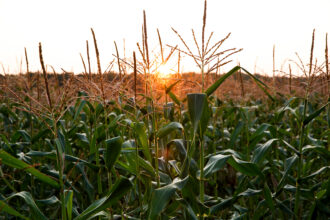
“I was even more startled to find out that these PFAS pesticides are present on the fruit and vegetables that we purchase at the grocery store, on the fruits and vegetables that we feed our families,” Schultz said.
More than 2.5 million pounds of pesticides containing PFAS were sprayed on California crops between 2018 and 2023, according to an analysis of state pesticide use data by the Environmental Working Group, which is co-sponsoring Schultz’s bill with other public-interest and health groups.
EWG also detected residues of at least one PFAS pesticide on nearly 40 percent of conventional produce grown in the Golden State.
EWG always advises consumers to wash their produce. But it’s unclear whether rinsing fruits and vegetables laced with chemicals designed to resist water would have any effect.
The Environmental Protection Agency has said that the pesticides pose no risks when used as directed.
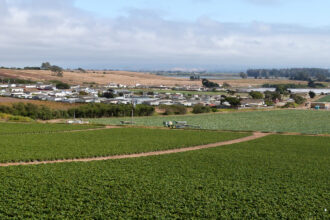
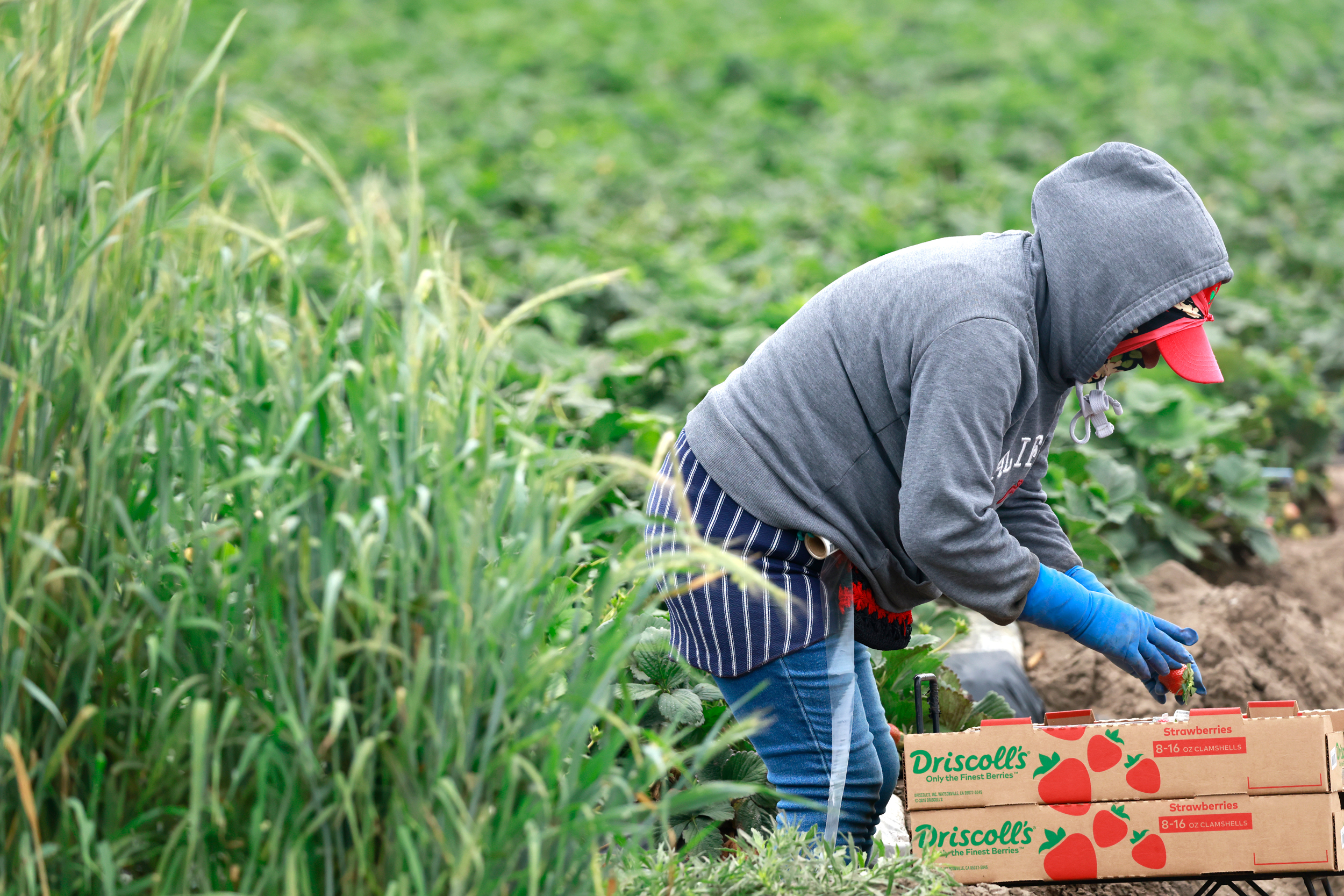
More than half a million pounds of PFAS pesticides were applied in Monterey County, where for decades University of California, Berkeley, researchers have studied how pesticides affect farmworker communities. The pioneering research in the Salinas Valley has linked pesticide exposure to a variety of health problems in children.
“Studies have shown that Salinas children are born with higher levels of pesticides in their urine and experience early cognitive difficulties and later develop serious behavioral and mental health problems in adolescence and adulthood,” said Andrew Sandoval, a Salinas city council member. “Now we’re learning that some of these pesticides are not only linked to serious health concerns, but also forever chemicals.”
And these highly persistent toxic chemicals were applied more than 1,000 times between 2018 and 2023 in Monterey County, he said, more than in nearly any other California county.
PFAS have nearly indestructible chemical bonds that allow them to resist water, grease and heat, making them valuable ingredients in hundreds of consumer products, including food packaging, cookware, dental floss, cosmetics and outdoor gear. But the same properties that make these industrial chemicals commercially attractive have allowed them to build up in the environment and the tissues of wildlife and people around the globe.
Thanks to the chemicals’ widespread commercial appeal, nearly every American has PFAS in their blood, where it stays for years and leads to serious health problems—impaired vaccine response, higher cholesterol levels, increased risk of kidney and testicular cancer and lower birth weight, among other ills.
The EPA has approved 70 active-ingredient PFAS pesticides, and the California Department of Pesticide Regulation has allowed 53 of these PFAS pesticides to be used in the state, Schultz’s bill notes. For the 23 California-approved PFAS pesticides that are prohibited in the European Union, the ban would begin five years earlier, in 2030.
The European Union has outlawed two of the most commonly applied pesticides, bifenthrin and trifluralin, due to health and environmental concerns, said EWG science analyst Varun Subramaniam.
This story is funded by readers like you.
Our nonprofit newsroom provides award-winning climate coverage free of charge and advertising. We rely on donations from readers like you to keep going. Please donate now to support our work.
Donate NowYet California farmers sprayed nearly 4 million pounds of the toxic chemicals on fruits and vegetables over six years.
The most frequently detected pesticide on produce was fludioxonil, a PFAS fungicide linked to hormone disruption and reproductive problems, Subramaniam said. The toxic compound tainted 90 percent of tested nectarine, plum and peach samples grown in California.
PFAS pesticides have largely been used in California with no limitations, and we’re only just beginning to understand their long-lasting effects, Subramaniam said. “As the breadbasket of the United States,” he added, “residues that are found on produce grown in California will spread across the nation.”
Earlier EPA research found that PFAS compounds were leaching into pesticides from storage containers. But that’s not why PFAS showed up on California fruits and vegetables, Schultz said.
“It’s there because they were directly sprayed onto our crops and onto our fields,” he said. “It’s appalling.”
Farmers may have no idea they’re applying these chemicals to their land, and local governments and water agencies aren’t informed about the presence of PFAS either, Schultz said. A.B. 1603 would ensure that communities and growers are informed that PFAS pesticides are being used until they’re phased out once and for all.
“We are trying to bring California into alignment with the European Union, which is already meeting this moment and banning certain PFAS-contaminated pesticides from deployment in their crops,” Schultz said, adding that other states have passed or are considering bans. “It’s time that California, which is the bread basket of our country and of the world, get in line and meet this moment and set at least an equivalent standard.”
About This Story
Perhaps you noticed: This story, like all the news we publish, is free to read. That’s because Inside Climate News is a 501c3 nonprofit organization. We do not charge a subscription fee, lock our news behind a paywall, or clutter our website with ads. We make our news on climate and the environment freely available to you and anyone who wants it.
That’s not all. We also share our news for free with scores of other media organizations around the country. Many of them can’t afford to do environmental journalism of their own. We’ve built bureaus from coast to coast to report local stories, collaborate with local newsrooms and co-publish articles so that this vital work is shared as widely as possible.
Two of us launched ICN in 2007. Six years later we earned a Pulitzer Prize for National Reporting, and now we run the oldest and largest dedicated climate newsroom in the nation. We tell the story in all its complexity. We hold polluters accountable. We expose environmental injustice. We debunk misinformation. We scrutinize solutions and inspire action.
Donations from readers like you fund every aspect of what we do. If you don’t already, will you support our ongoing work, our reporting on the biggest crisis facing our planet, and help us reach even more readers in more places?
Please take a moment to make a tax-deductible donation. Every one of them makes a difference.
Thank you,

Liza Gross
Reporter, California
Liza Gross is a reporter for Inside Climate News based in Northern California. She is the author of The Science Writers’ Investigative Reporting Handbook and a contributor to The Science Writers’ Handbook, both funded by National Association of Science Writers’ Peggy Girshman Idea Grants. She has long covered science, conservation, agriculture, public and environmental health and justice with a focus on the misuse of science for private gain. Prior to joining ICN, she worked as a part-time magazine editor for the open-access journal PLOS Biology, a reporter for the Food & Environment Reporting Network and produced freelance stories for numerous national outlets, including The New York Times, The Washington Post, Discover and Mother Jones. Her work has won awards from the Association of Health Care Journalists, American Society of Journalists and Authors, Society of Professional Journalists NorCal and Association of Food Journalists.