

Governments cannot reach their climate goals without rethinking humanity’s relationship to the Earth.
That is the overarching takeaway from a new paper published today in Frontiers in Science by a global team of scientists, conservationists and Indigenous people. The authors examined a set of climate targets from around the world, including the Paris Agreement, through the lens of a “Nature Positive” approach to climate change, in which biodiversity loss is halted and reversed by 2030 compared to a 2020 baseline.
They found that climate progress cannot happen without widespread attempts to increase biodiversity, protect intact ecosystems and reverse ecological damage from centuries of consumption.
For too long, humanity—particularly in the Global North—has viewed the environment as either a resource to mine, or a hindrance to economic growth, said Harvey Locke, the paper’s lead author and a co-founder of the Yellowstone to Yukon Conservation Initiative.
“Nature is essential to the functioning of the Earth system, which is in turn essential to people, and people are essential to the economy,” he said. “That is the hierarchy, nothing else.”
The paper characterized the present global economic order as occurring in the “sweet spot” between competing environmental, societal and economic interests, but says that trichotomy has occurred at the expense of other species and the planet. To maintain a habitable planet, humanity must nest its economy within the limits of Earth’s environment, the authors said.
One of the most severe examples of the current imbalance is climate change, Locke said.
“We’ve wildly exceeded the planetary boundary for putting CO2 into the atmosphere and we’re wildly destabilizing the Earth system through the destruction of nature,” he said. “Everyone in humanity loses—everyone—if we continue to destabilize the Earth system. And everyone wins if we work toward stabilizing it.”
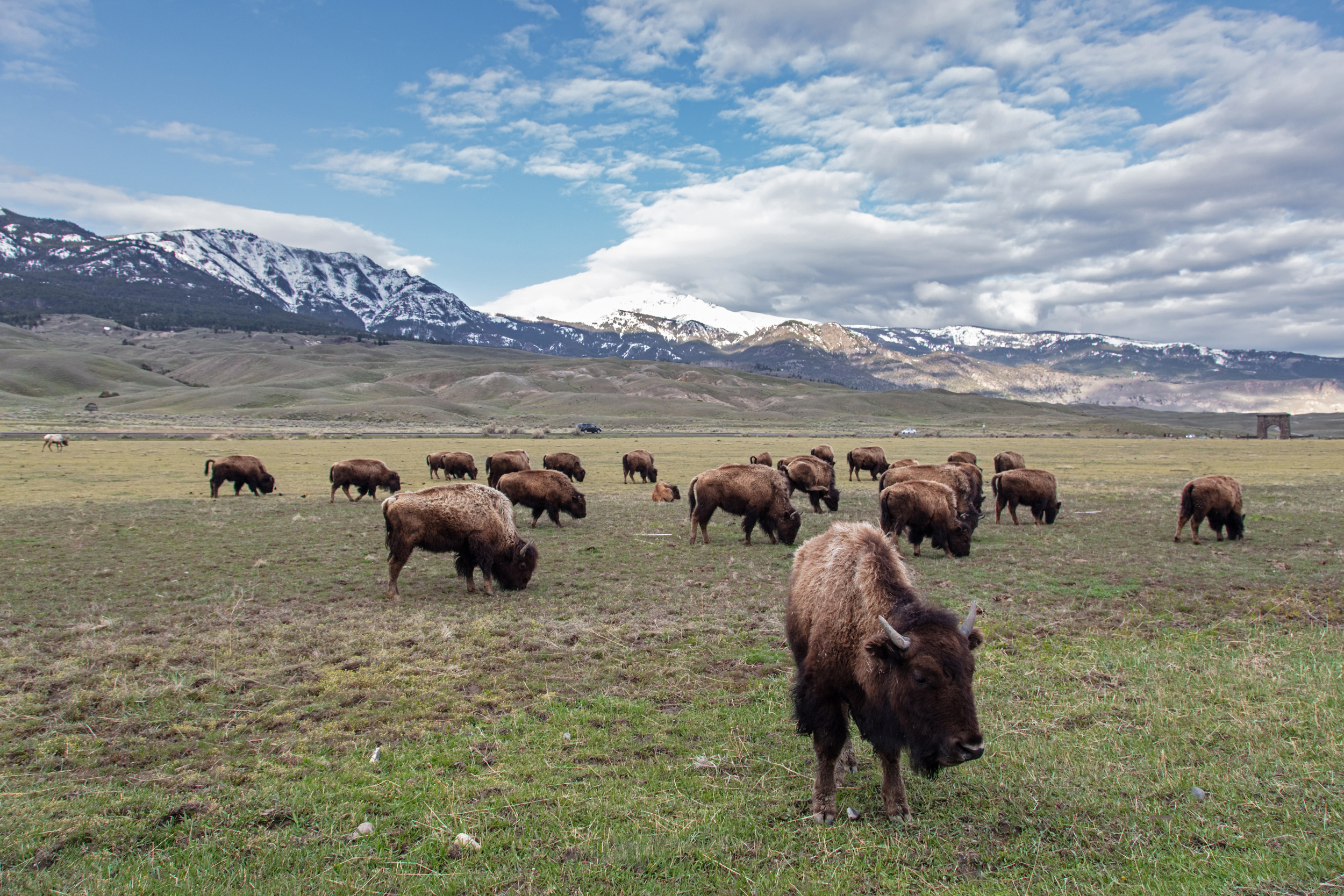
As an example of how economies can grow while ecosystems are preserved and biodiversity is restored, Locke pointed to the Rockies in North America, particularly the region spanning Yellowstone to Yukon.
According to the National Park Service, the greater Yellowstone ecosystem is “one of the largest nearly intact temperate-zone ecosystems on Earth.”
“We have a wider distribution of bears and wolves and bison today than we did thirty years ago. We have more protected areas now than we did thirty years ago. And meanwhile the human population has flourished in that landscape,” Locke said, “in big measure because people value nature.”
The greater Yellowstone area’s growth has not been without its pains. As more people settle in the mountains, urban and suburban enclaves sprawl into forests, increasing fire risks. Grizzly bears and wolves, while magnates for tourists and their dollars, have also become political lightning rods, with some arguing that their rising populations are exceeding the capacity that the growing human settlements in the area will accept.
“If we don’t grow wisely, we will kill the goose that’s laying the golden egg,” Locke acknowledged.
This story is funded by readers like you.
Our nonprofit newsroom provides award-winning climate coverage free of charge and advertising. We rely on donations from readers like you to keep going. Please donate now to support our work.
Donate NowThe idea that humans are just one cog in nature’s fabulously complex and interconnected machine is an Indigenous premise, said Leroy Little Bear, one of the paper’s authors and a member of the Kainaiwa tribe that resides near the border of Canada and Montana.
If Indigenous groups across the world had more stewardship over ecosystems, species and land management decisions, it would go a long way toward restoring biodiversity and creating societies and economies that are better tailored to Earth’s environment, Little Bear said.
“We come from and operate on the basis of relationships,” he continued. “When you’re related to everything else in the environment, everything out there—the water, the rocks, the trees, the birds—are all animate. So if they’re animate then they all have the same kind of spirits as you have. How would I treat my relatives?”
But European settlers and their descendents have taken a different approach, he said. “In Western thought, we separate ourselves from nature and to a very large extent, we take the Biblical view that everything is made for the benefit of humans.”
To make their point, the authors collected an “enormous number of references to previous work,” said Cara Nelson, a professor of restoration ecology at the University of Montana who was not involved with the paper.
“I felt they did a really great job of identifying this inherent property of life on Earth: interconnection and interdependency,” she said.
To help change human economies’ relationship to natural systems, Locke said the Yellowstone to Yukon Conservation Initiative is exploring creating natural asset companies, where the value of the organization is tied to the preservation of nature, not its destruction, so private capital can spur conservation.
“You basically think about nature like gold. It’s gonna go up in value because it’s perceived to have value,” Locke said. “And we’re not making any more of it.”
About This Story
Perhaps you noticed: This story, like all the news we publish, is free to read. That’s because Inside Climate News is a 501c3 nonprofit organization. We do not charge a subscription fee, lock our news behind a paywall, or clutter our website with ads. We make our news on climate and the environment freely available to you and anyone who wants it.
That’s not all. We also share our news for free with scores of other media organizations around the country. Many of them can’t afford to do environmental journalism of their own. We’ve built bureaus from coast to coast to report local stories, collaborate with local newsrooms and co-publish articles so that this vital work is shared as widely as possible.
Two of us launched ICN in 2007. Six years later we earned a Pulitzer Prize for National Reporting, and now we run the oldest and largest dedicated climate newsroom in the nation. We tell the story in all its complexity. We hold polluters accountable. We expose environmental injustice. We debunk misinformation. We scrutinize solutions and inspire action.
Donations from readers like you fund every aspect of what we do. If you don’t already, will you support our ongoing work, our reporting on the biggest crisis facing our planet, and help us reach even more readers in more places?
Please take a moment to make a tax-deductible donation. Every one of them makes a difference.
Thank you,

Jake Bolster
Reporter, Wyoming and the West
Jake Bolster reports on Wyoming and the West for Inside Climate News. Previously, he worked as a freelancer, covering climate change, energy, and the environment across the United States. He holds a Masters in Journalism from Columbia University.