

The days of Britain’s fish and chip shops might be numbered.
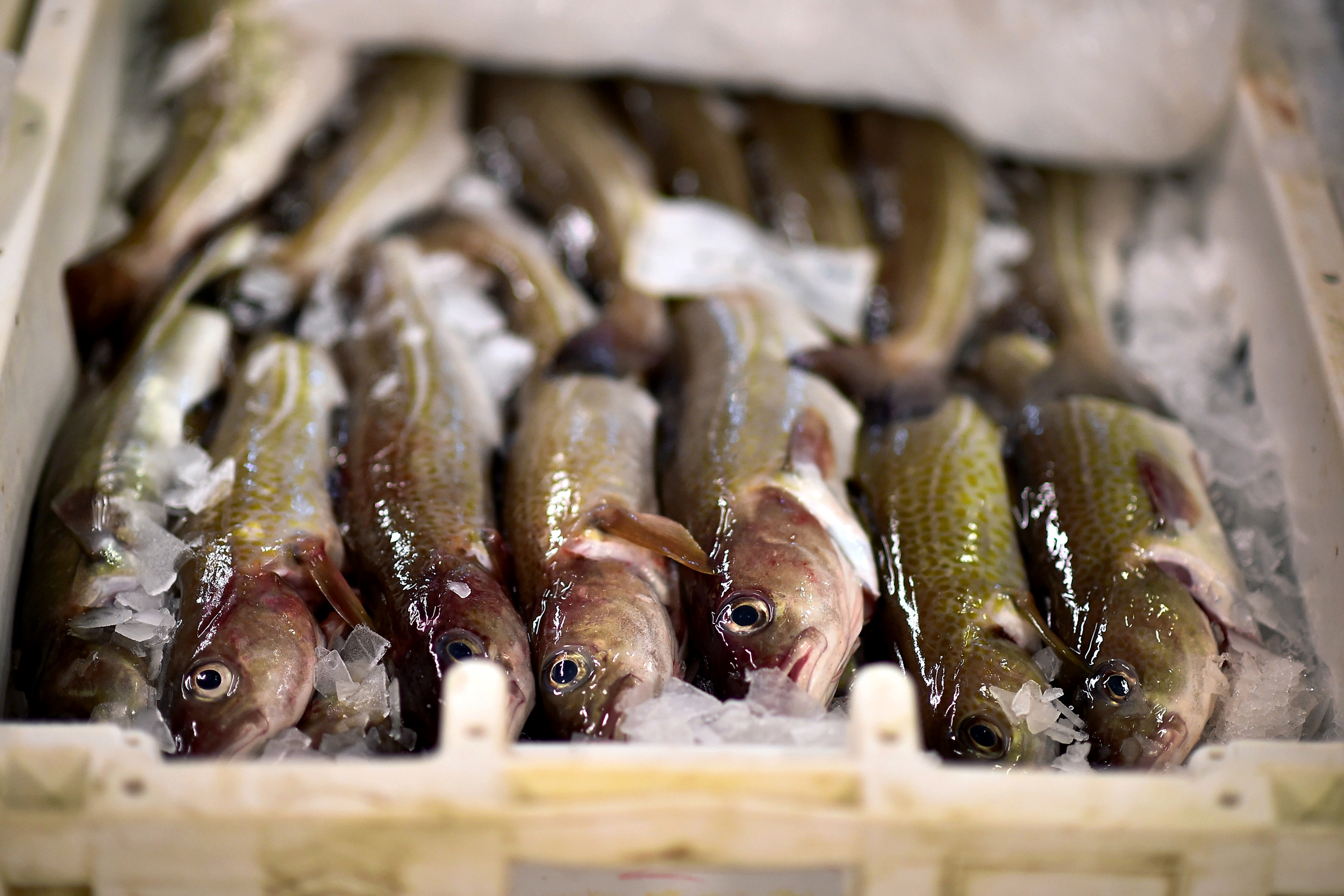
Consumers in the U.K. are being warned to “completely avoid” all home-caught cod by the Marine Conservation Society (MCS). The nation’s cod stocks have declined over the last decade, driven by overfishing and sea temperature changes, warns the environmental charity.
The downgrading of all U.K.-caught cod in its Good Fish Guide—an assessment published twice a year to help consumers make more sustainable choices—is a “warning signal,” wrote Kerry Lyne, the guide’s manager, in a press statement.
“There’s a scandal in the making,” said Hugo Tagholm, executive director of Oceana UK, referencing the wide-scale extraction of iconic British species like cod, mackerel and scampi at unsustainable rates.
In September, the International Council for the Exploration of the Sea (ICES) issued scientific findings to the U.K. and European Union calling for a zero catch of North Sea cod in 2026. They advised that any commercial fishing could threaten reproduction rates.
The Denmark-based fishery board warned fishermen to avoid catching off the west coast of Scotland, in the North Sea and in the English Channel.
The advice, however, was ignored when the minister for Food Security and Rural Affairs, Angela Eagle, announced a 44 percent quota reduction instead. Announced as part of a joint deal with the EU and Norway, the reduction still secured 290,000 tonnes of U.K. fishing rights, valued at over half a billion dollars.
“Consistently ignoring the science is what takes us to a bad place in the climate debate, in the nature debate, in the fishing debate,” Tagholm said. “If we don’t follow the science, we’re going to end up in the wrong place. Science is absolute. Science is not politics.”
With 97 percent of UK households eating fish, the MCS has recommended consumers choose more sustainable alternatives such as Icelandic cod or European hake.
However, this is not the first reckoning for British fisheries in recent months. Last year’s MCS guide warned that mackerel stocks were nearing a breaking point from overfishing. As a result, grocery retailer Waitrose announced it would suspend all sales of mackerel beginning next month.
“It’s deeply concerning seeing so many of our iconic fisheries—from cod to mackerel—under increasing pressure,” said Chris Graham, head of sustainable seafood and ocean regeneration at MCS, in a press release. “We need strong action from the UK Government to support a transition to low-impact fisheries and sustainable seafood farming.”
Yet, with over 160 million portions of fish and chips sold each year in Britain, the news is bound to send cultural shockwaves.
Adrian Fusco, a third-generation fish and chip shop owner from Whitby, Yorkshire, described the recent announcement as the “perfect storm,” adding to already increasing costs. Owing to quota reductions and sanctions on Russian-caught white fish, prices have doubled in the last five years, he said.
“Hopefully the U.K. palate will change over the next few years,” said Fusco, referencing the need for menus to experiment with pollock and hake, or smaller portion sizes. “Nothing beats the nostalgia of walking down the pier with fish and chips. People today want their children to experience that too.”
About This Story
Perhaps you noticed: This story, like all the news we publish, is free to read. That’s because Inside Climate News is a 501c3 nonprofit organization. We do not charge a subscription fee, lock our news behind a paywall, or clutter our website with ads. We make our news on climate and the environment freely available to you and anyone who wants it.
That’s not all. We also share our news for free with scores of other media organizations around the country. Many of them can’t afford to do environmental journalism of their own. We’ve built bureaus from coast to coast to report local stories, collaborate with local newsrooms and co-publish articles so that this vital work is shared as widely as possible.
Two of us launched ICN in 2007. Six years later we earned a Pulitzer Prize for National Reporting, and now we run the oldest and largest dedicated climate newsroom in the nation. We tell the story in all its complexity. We hold polluters accountable. We expose environmental injustice. We debunk misinformation. We scrutinize solutions and inspire action.
Donations from readers like you fund every aspect of what we do. If you don’t already, will you support our ongoing work, our reporting on the biggest crisis facing our planet, and help us reach even more readers in more places?
Please take a moment to make a tax-deductible donation. Every one of them makes a difference.
Thank you,

Johnny Sturgeon
Fisheries Reporter
Johnny Sturgeon is a London-based reporter covering fisheries and aquaculture. Joining us from the Outlaw Ocean Project, he has experience producing in-depth maritime investigations for nonprofit newsrooms. A former boatbuilder, he holds a B.A. in History & Politics from the University of Oxford, and an M.S. from Columbia Journalism School.