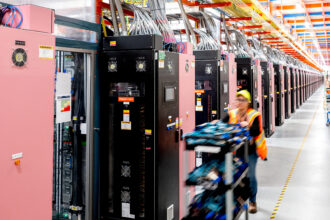


Tax breaks for data centers in North Carolina keep as much as $57 million each year from state and local government coffers, state figures show, an amount that could balloon to billions of dollars if all the proposed projects are built.
Despite these generous subsidies, data center owners are legally allowed to shield many of their financial details from state oversight. They aren’t required to prove their ongoing eligibility for the tax exemptions unless they are audited by the state Department of Revenue. Lawmakers enacted sales and use tax breaks for data centers in 2010 and expanded them in 2015.
“At that time, no one could have predicted the explosive growth of data centers and how much energy they consumed,” Gov. Josh Stein told his Energy Policy Task Force, which met this week. “And because data centers at that point were a brand-new industry, they benefited from financial incentives to induce capital to invest. Those days are long gone.”
Consumers pay sales and use taxes on food, clothing, furniture, utility payments, general merchandise and other goods.
In North Carolina, data centers don’t pay sales tax on certain equipment—heating and air conditioning, computer hardware and software, and electrical infrastructure—if they meet county wage standards, provide health insurance to full-time employees and invest $75 million in private funds in a project within five years.
Sales and use taxes are the second-largest source of revenue for local governments, behind property taxes, according to the Department of Revenue. And a third of the state’s general fund comes from these taxes.
Nor do qualifying data centers pay taxes on electricity use. Under that exemption, a large project that consumes 100 megawatts of energy avoids paying as much as $2.2 million a year, state Commerce Department figures show. Because utility Duke Energy might negotiate project-specific terms with very large customers, this number could vary.
Data center operators don’t have to report the amount of exemptions they’ve claimed. Nor must they provide information that would allow an independent evaluation of the financial impact of their projects. In some cases, data centers contractually require local governments to keep electricity and water usage secret.
“State agencies have a limited view of the sector’s energy use and economic activity,” the Commerce Department wrote in a report to the energy policy task force.
Inside Climate News asked Microsoft and Google, two of the largest data center operators in North Carolina, to disclose the amount of their sales and use tax exemptions. Microsoft directed ICN to its website that lists general economic investments; Google did not respond.
Sen. Julie Mayfield, a Buncombe County Democrat who sits on the energy policy task force, said the legislature should reconsider tax breaks for data centers, consistent with its repeal of several clean energy incentives.
“If the original purpose was to incentivize data centers to come here, you could argue that the objective has been met,” she said.
This story is funded by readers like you.
Our nonprofit newsroom provides award-winning climate coverage free of charge and advertising. We rely on donations from readers like you to keep going. Please donate now to support our work.
Donate NowThe Commerce Department said it did not calculate the economic benefits of data centers because it doesn’t have the information it needs to do so. Lawmakers would have to change the reporting requirements “to know the true value of the exemptions.”
Scott Mooneyham, a spokesman for the NC League of Municipalities, said the group hasn’t taken a position on the tax exemptions. For some member cities and towns, data centers, when appropriately sited, “have been seen as a huge boost to property tax revenues,” he said. “Others have been concerned about proposals that, based on the potential sites, could create quality of life issues for residents and damage surrounding home values.”
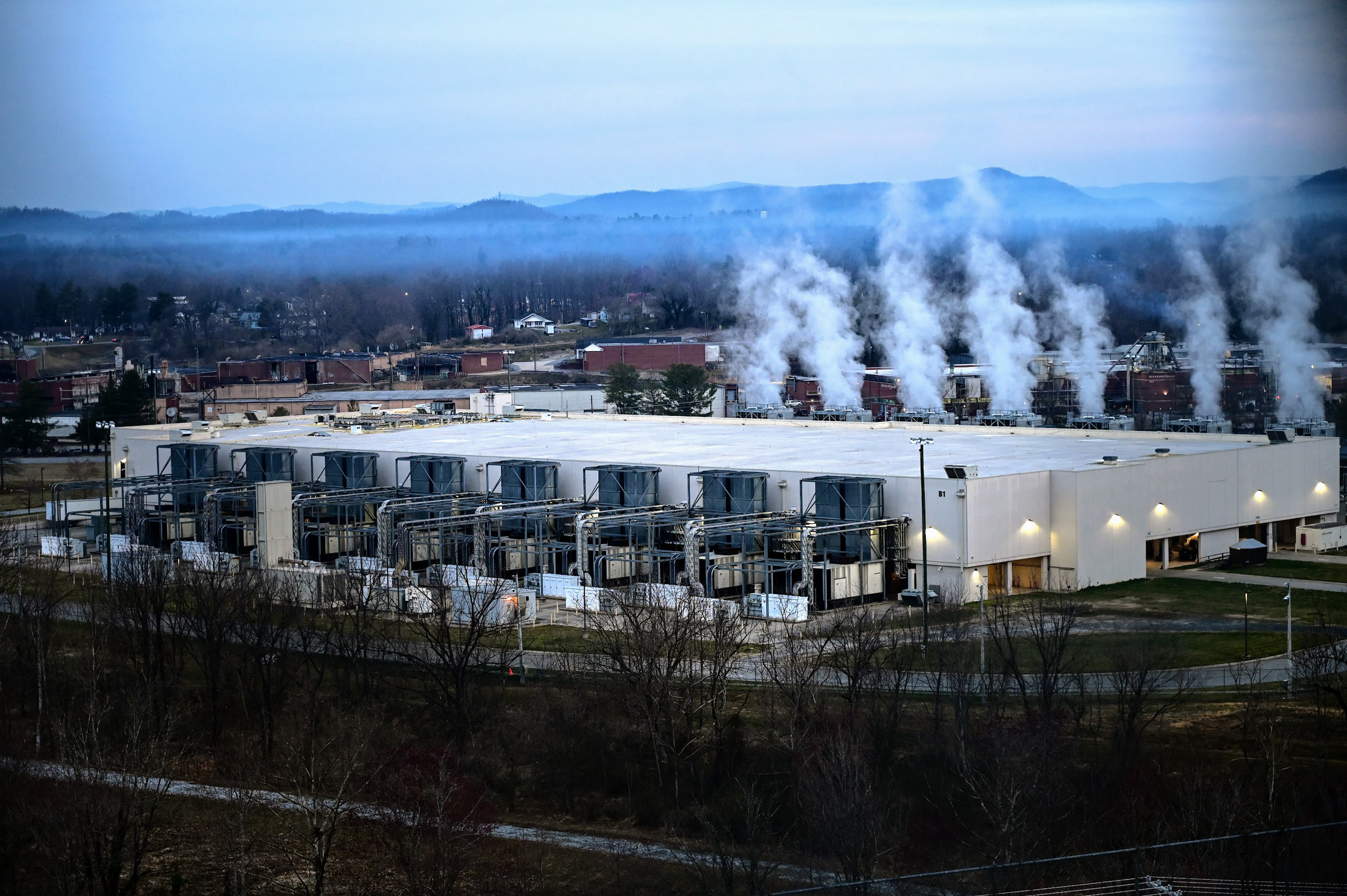
Google has operated a large data center since 2007 in Lenoir, a small town in Caldwell County at the foothills of the Blue Ridge Mountains. The company says it has invested $600 million in the project and plans a $1 billion expansion.
Yet it’s difficult to know how Google’s presence has influenced the county’s economy. Caldwell is a Tier 1 county, a Commerce Department designation for those most economically distressed.
In media reports, the company has said 400 people work at the data center, but the precise number of employees is a “trade secret,” according to an agreement signed in 2024 with the county and city. Google’s energy, water and sewer use is also confidential.
Caldwell County and Lenoir also gave Google property tax incentives, contingent on the company’s financial investments for the expansion, which includes the creation of 30 additional jobs. Google paid roughly $5.2 million in property taxes last year, county records show, nearly 10 percent of the county’s total property tax collection.
At the energy task force meeting, Rep. Pricey Harrison, a Democrat from Guilford County, asked commerce officials to include two metrics if they can eventually analyze the costs and benefits of data centers: residents’ health impacts and quality of life.
“It’s not all numbers,” she said.
About This Story
Perhaps you noticed: This story, like all the news we publish, is free to read. That’s because Inside Climate News is a 501c3 nonprofit organization. We do not charge a subscription fee, lock our news behind a paywall, or clutter our website with ads. We make our news on climate and the environment freely available to you and anyone who wants it.
That’s not all. We also share our news for free with scores of other media organizations around the country. Many of them can’t afford to do environmental journalism of their own. We’ve built bureaus from coast to coast to report local stories, collaborate with local newsrooms and co-publish articles so that this vital work is shared as widely as possible.
Two of us launched ICN in 2007. Six years later we earned a Pulitzer Prize for National Reporting, and now we run the oldest and largest dedicated climate newsroom in the nation. We tell the story in all its complexity. We hold polluters accountable. We expose environmental injustice. We debunk misinformation. We scrutinize solutions and inspire action.
Donations from readers like you fund every aspect of what we do. If you don’t already, will you support our ongoing work, our reporting on the biggest crisis facing our planet, and help us reach even more readers in more places?
Please take a moment to make a tax-deductible donation. Every one of them makes a difference.
Thank you,

Lisa Sorg
Reporter, North Carolina
Lisa Sorg is the North Carolina reporter for Inside Climate News. A journalist for 30 years, Sorg covers energy, climate environment and agriculture, as well as the social justice impacts of pollution and corporate malfeasance.
She has won dozens of awards for her news, public service and investigative reporting. In 2022, she received the Stokes Award from the National Press Foundation for her two-part story about the environmental damage from a former missile plant on a Black and Latinx neighborhood in Burlington. Sorg was previously an environmental investigative reporter at NC Newsline, a nonprofit media outlet based in Raleigh. She has also worked at alt-weeklies, dailies and magazines. Originally from rural Indiana, she lives in Durham, N.C.