
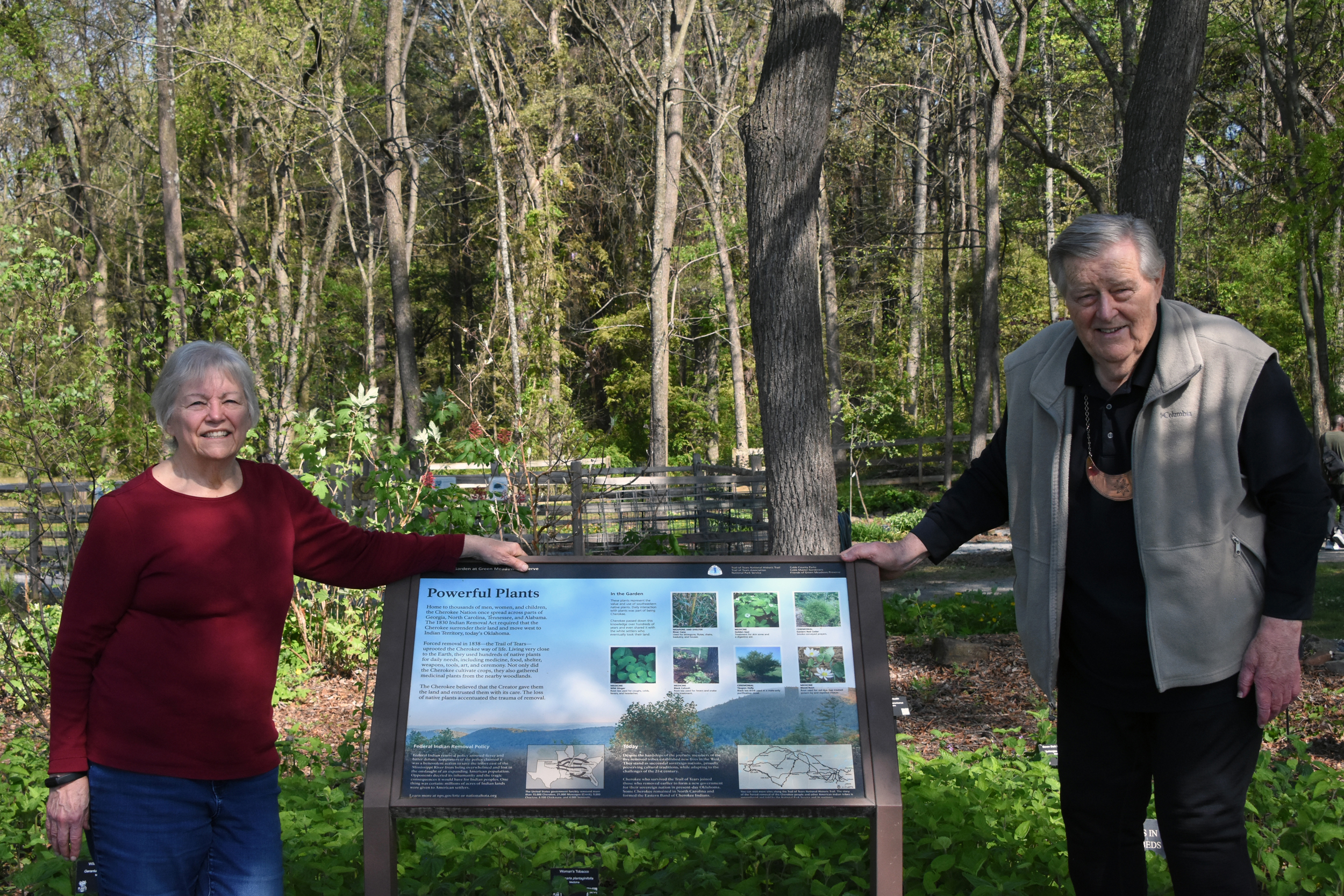


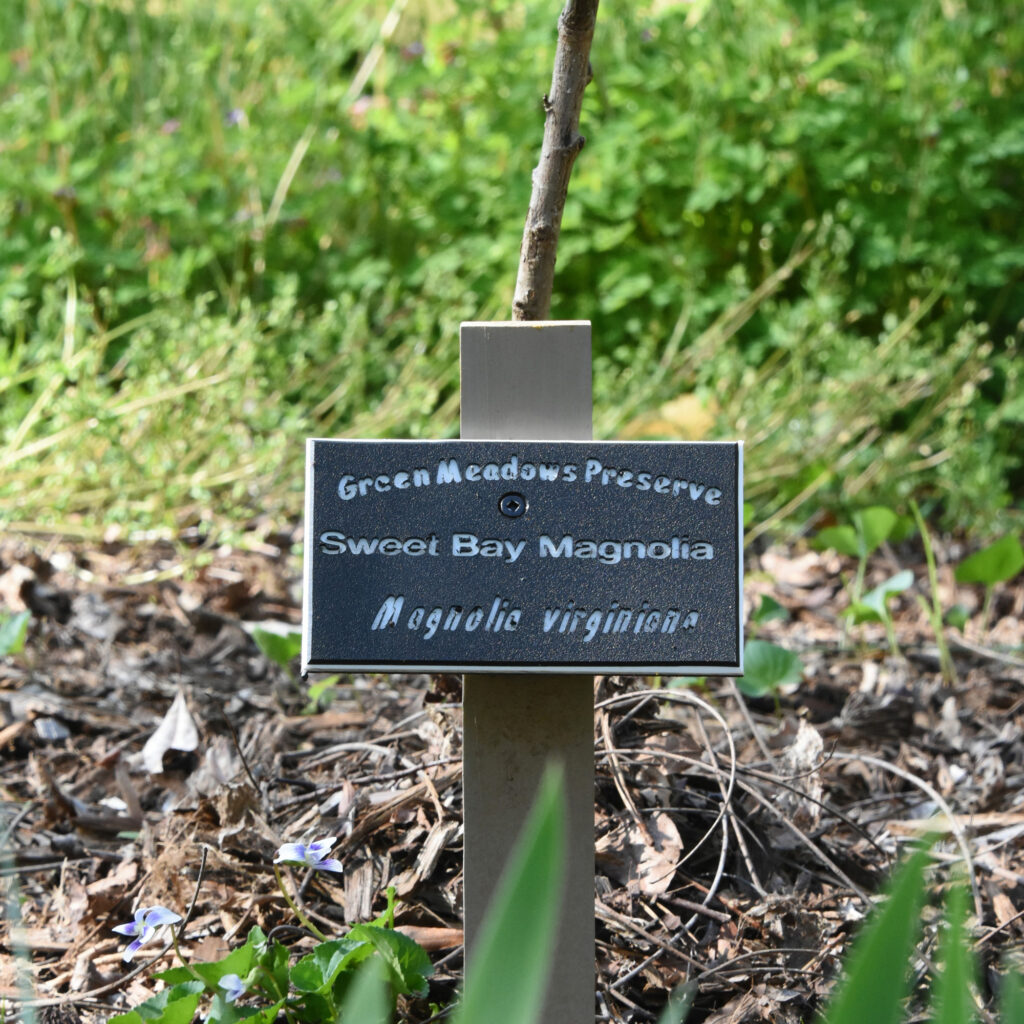
As Tony Harris walks through his garden, he stops beside a young sapling, its thin branches stretching upward into the early spring air. In a few years, he says, it will bloom with fragrant white flowers the size of a fist.
It is one of hundreds of native plants tied to Cherokee history growing in the Cherokee Garden, a space Harris founded and manages outside Atlanta. This one, the Sweetbay magnolia, has recently been at the center of an effort to make it Georgia’s next state flower.
“Every plant has a story and a lesson to tell,” Harris said, watching volunteers tend the garden as part of its work to teach visitors about the connection between plants, Cherokee culture and place. For him, state symbols help decide which stories get told.
Harris, a Cherokee elder and member of the Georgia Cherokee Community Alliance, has supported the flower in its bid to become a state symbol, not only because of its beauty and connection to his heritage, but because the current flower is an invasive species and represents a history tangled up in colonization and mythmaking.
In the late 18th century, French botanist André Michaux documented a white rose climbing along dense, thorny vines while traveling through Georgia. His notes became the first recorded references to the plant in western scientific literature. Believing it to be native, Michaux gave the vine its scientific name, Rosa laevigata, meaning “polished rose.” Local tradition held that the plant originated in northern Georgia, on Cherokee land, and it soon became known as the Cherokee rose.
More than a century later, that belief helped pave the way for its adoption as a state symbol. In 1916, Georgia lawmakers adopted the Cherokee rose as the official state flower. In the resolution, they wrote that the plant “had its origin among the aborigines of the northern portion of the State of Georgia,” referring to the Cherokee, and was “indigenous to its soil.”
By then, state flowers had become fashionable symbols meant to foster pride and identity among residents. But Georgia’s choice carried a different meaning.
According to a widely shared legend, when the Cherokee were forcibly removed from their lands by state and federal authorities in the 1830s, white roses grew where the tears of Cherokee women fell along the trail. The flower’s seven petals were said to represent the Cherokee’s seven clans, and its yellow center their homeland.
The designation was framed as an act of remembrance tied to the suffering of the Trail of Tears, during which more than 100,000 Indigenous peoples were removed from their lands and thousands died.
Harris said the story reflects what he calls the “Hollywoodification” of Indigenous history, where settlers romanticize and reshape the past.
“They didn’t have Cherokee roses with them during the Trail of Tears,” he said. “They were lucky to have the clothes on their backs and a few vegetable seeds from their gardens.”
Cherokee oral history, according to Harris, and Western historical record, suggest the rose held little cultural significance for the Cherokee.
Less than two decades after the plant entered the scientific record, botanists were already questioning whether it was truly native to Georgia. Among the first was Stephen Elliott—a banker and Episcopal bishop known as the “Planting Prelate.” Writing in 1821, Elliott noted that the plant had been cultivated in Georgia gardens under the name “Cherokee rose,” but concluded that “its origin is still obscure.”
The mystery did not last forever. In the mid-19th century, the renowned Harvard botanist Asa Gray reported that plant explorers had documented the species growing in China, suggesting the rose had been introduced to the American South rather than originating there. Modern botanical research has since confirmed the plant’s East Asian origins using genetic analysis.
Exactly how the rose first reached Georgia remains uncertain. But historians say the plant likely arrived the way many species did—along the routes of colonization.
Various species of plants, including those from East Asia, crossed the Atlantic in the possession of traders and settlers. Botanists believe the Cherokee rose likely reached Savannah, Georgia, sometime in the decades before the American Revolutionary War. Had it arrived much earlier, historians note, it likely would have appeared in the records of earlier botanical explorers before Michaux encountered it.
Once established in Georgia, the plant spread largely through cultivation. Elliott himself predicted the rose would become widely used in the region, suggesting it would make an ideal hedge because of its rapid growth, durability and ease of cultivation.
He was right. The climbing rose soon became a common hedge plant on large plantations, used to mark property lines, fence livestock and ornament vast estates. Wealthy landowners, including Elliott, cultivated the rose on their properties, where enslaved laborers likely planted and maintained the dense, thorny hedges.
Over time, the Cherokee rose became embedded in the landscape of the plantation South. In support of the flower becoming a state symbol, a columnist for The Macon Telegraph wrote that the flower was “intertwined with the romance of the Old South,” calling the period between the Revolution and the Civil War the region’s “best days.”
But for the people the flower was later meant to represent, those years marked something very different. By the time the rose was spreading across plantations, the Cherokee were facing mounting pressure from state and federal authorities that would culminate in their forced removal during the Trail of Tears.
As a staple plantation hedge that soared in popularity around the same time as the Trail of Tears, the Cherokee rose held more practical and cultural value for settlers who cultivated it than for the Indigenous nation its name carried.
This story is funded by readers like you.
Our nonprofit newsroom provides award-winning climate coverage free of charge and advertising. We rely on donations from readers like you to keep going. Please donate now to support our work.
Donate NowThat contradiction is not unique, according to historians and Indigenous scholars. While there is little reason to believe Georgia lawmakers acted with anything but good intentions when they named the Cherokee rose the state flower in 1916, historians say the decision reflects a broader pattern in how Indigenous history is remembered and retold.
“Settlers and their descendants often engage with Native American history to deepen their sense of place,” said Andrew Denson, a Cherokee history professor at Western Carolina University. “In American culture, that can lead to romanticized stories or even outright fabrication.”
The Cherokee rose fits into a long tradition of settlers embracing symbols meant to honor Native Americans that are partly invented or misunderstood—echoing familiar myths surrounding Thanksgiving or popular retellings of Pocahontas.
“These kinds of stories create a disconnect,” Denson said. “They push Native people into the past or somewhere else, rather than recognizing their ongoing presence and priorities.”
Cherokee history did not disappear with removal, Harris said. At his garden in Georgia’s Green Meadows Preserve, he preserves and shares knowledge about plants tied to Cherokee culture and memory, which he sees as part of that continuing history.
“You can’t understand Cherokee history or culture without understanding their relationship to the Earth and to plants,” Harris said. “And I realized that knowledge was one generation away from being lost.”
What is preserved in his garden is deliberate. There is no Cherokee rose in the garden and its absence is intentional.
The plant is not part of Cherokee cultural tradition, Harris said, and like many species introduced through colonization, it has reshaped the landscape around it.
By the mid-20th century, botanists had begun formally recognizing the Cherokee rose as an invasive species. It spreads quickly across Georgia, forming dense, thorny vines that crowd out native plants. Today it is considered a low-priority invasive species in the Southeast.
That ecological reality, along with the flower’s history, has fueled efforts to replace it.
“Georgia is one of the most biodiverse regions in the world, with so many beautiful native flowers,” said state Rep. Deborah Silcox, a Republican who has sponsored legislation to change the state flower. “We deserve a state flower from Georgia.”
The effort has come close. But for the second year in a row, legislation to replace the Cherokee rose fell short of final passage.
Supporters say the push is not over.
The Sweetbay magnolia, despite its fragrant blooms and deep ties to Cherokee history, remains unfamiliar to many outside of gardening circles. In recent years, however, it has begun appearing more frequently in nurseries and garden stores across the state, a quiet shift driven in part by the same advocates pushing for its recognition.
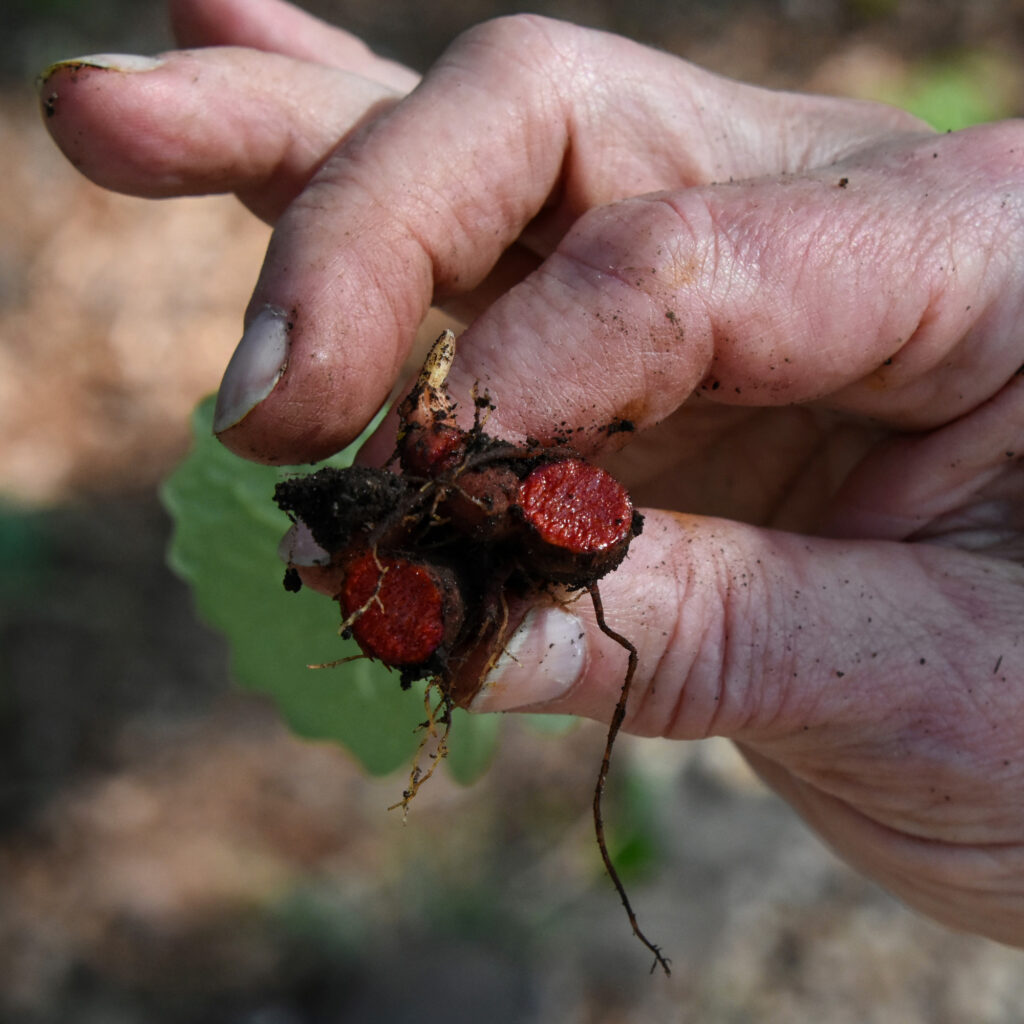
In Harris’s garden, the plant is not a symbol or a proposal. It is something that has been used and passed down over time. Its story comes from that history.
“Every plant has a story,” he said. “The question is whether we’re telling the right ones.”
About This Story
Perhaps you noticed: This story, like all the news we publish, is free to read. That’s because Inside Climate News is a 501c3 nonprofit organization. We do not charge a subscription fee, lock our news behind a paywall, or clutter our website with ads. We make our news on climate and the environment freely available to you and anyone who wants it.
That’s not all. We also share our news for free with scores of other media organizations around the country. Many of them can’t afford to do environmental journalism of their own. We’ve built bureaus from coast to coast to report local stories, collaborate with local newsrooms and co-publish articles so that this vital work is shared as widely as possible.
Two of us launched ICN in 2007. Six years later we earned a Pulitzer Prize for National Reporting, and now we run the oldest and largest dedicated climate newsroom in the nation. We tell the story in all its complexity. We hold polluters accountable. We expose environmental injustice. We debunk misinformation. We scrutinize solutions and inspire action.
Donations from readers like you fund every aspect of what we do. If you don’t already, will you support our ongoing work, our reporting on the biggest crisis facing our planet, and help us reach even more readers in more places?
Please take a moment to make a tax-deductible donation. Every one of them makes a difference.
Thank you,