

Many of our impact case studies cover ongoing stories that Inside Climate News continues to actively cover. The impact reflected here is current as of publication and may be updated as the situation develops.
The Texas Commission on Environmental Quality plays a big role in this kingdom of the American oil and gas industry. With 2,800 employees, 16 regional offices and a $558 million annual budget, its mission to protect public health and natural resources often plays second fiddle to protecting the interests of industry.
One example I discovered in 2023 was the “one-mile rule,” something the TCEQ discreetly enforced although the rule appeared nowhere in the law. Lawyers told me their clients were denied the right to challenge pollution permits in court if they lived more than a mile away from the facility in question. The so-called rule appeared to have no legal basis, and I found, from digging into records, the TCEQ avoided explicit citations of the rule in its writings.
Oil company lawyers, however, weren’t as cautious. In one case, company attorneys wrote in a brief that the “one-mile rule” was a “quintessential test” and then provided footnotes listing the cases where this unwritten standard had been applied.
I pulled all those records, which led me to others. Eventually I had compiled evidence to show systemic application of the “one-mile rule” over almost two decades. When I shared the findings with TCEQ, the agency issued a blanket denial that any such rule even existed.
My story, part of an ongoing series called “State of Denial,” exposed one mechanism that Texas uses to protect big industry from public participation requirements established in the Clean Air Act. It was republished and cited by Houston Public Media, The Texas Tribune, San Antonio Express-News and more, and I spoke on radio with Houston’s public radio station to discuss examples and implications of the rule.
Three months later, the Fifth Circuit Court of Appeals struck down one of the air permits featured in my story—for Sempra Infrastructure’s $14 billion Port Arthur LNG Phase 2 expansion project.
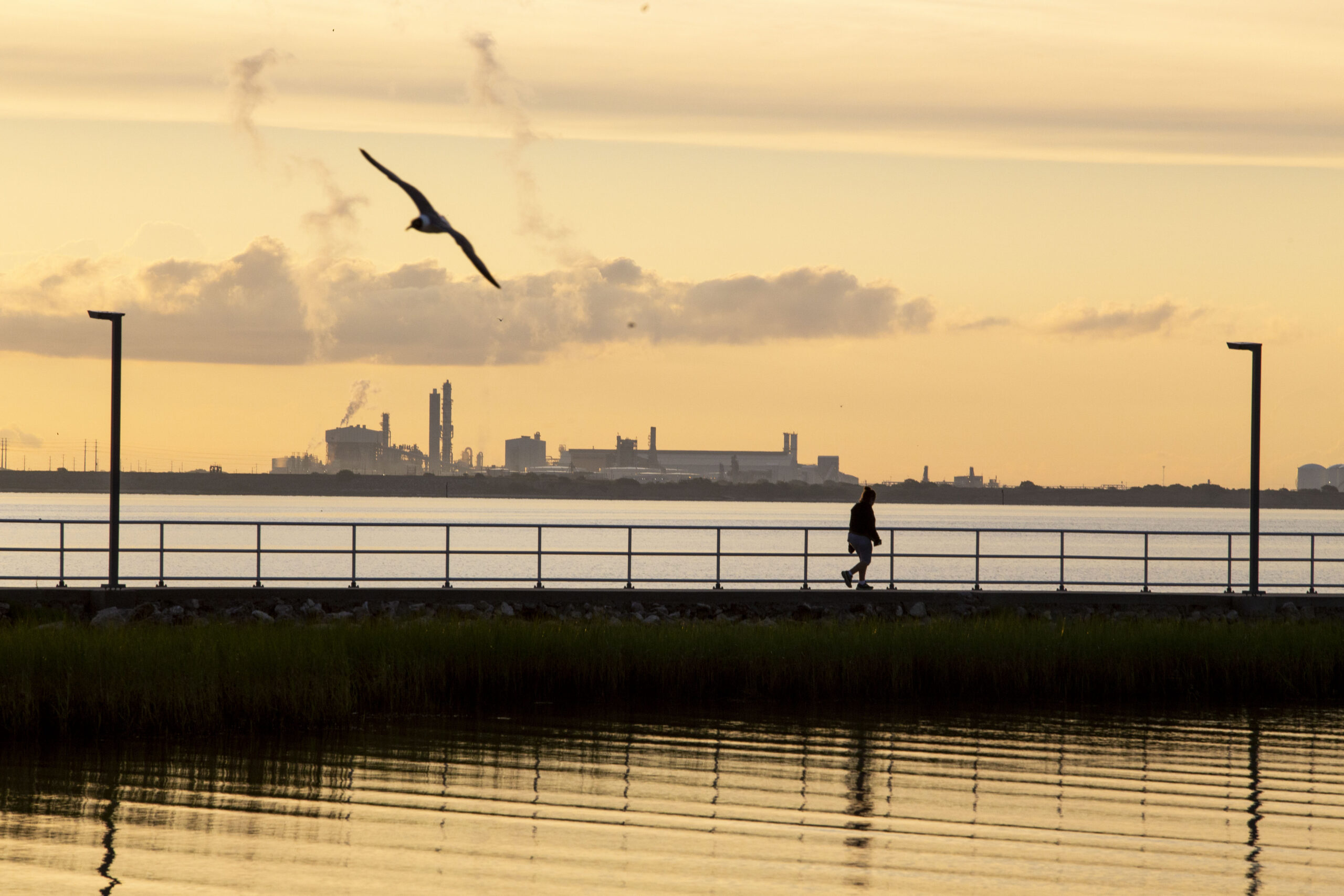
One month after that, a state district court in Austin overturned another air permit from my story, which Texas had granted for part of Max Midstream’s $1 billion oil terminal expansion project, and would involve dredging a Superfund site in Matagorda Bay.
(The companies appealed both actions and permits were reinstated while courts continue to litigate the cases. The permits are still in force.)
Both projects are part of broader plans to move more fossil fuels from Texas, unlocked by the shale revolution, to buyers around the world.
Environmentalists and landowners who felt shut out of the government process told me that they saw the ICN coverage for what it was. ICN gave them a chance to be heard and for laws to be enforced. Citizens of Texas now know the “one-mile rule” is a fantasy. It is not a valid basis for rejecting challenges to pollution in their communities. The TCEQ now is on notice: it can’t apply a rule that doesn’t exist.
About This Story
Perhaps you noticed: This story, like all the news we publish, is free to read. That’s because Inside Climate News is a 501c3 nonprofit organization. We do not charge a subscription fee, lock our news behind a paywall, or clutter our website with ads. We make our news on climate and the environment freely available to you and anyone who wants it.
That’s not all. We also share our news for free with scores of other media organizations around the country. Many of them can’t afford to do environmental journalism of their own. We’ve built bureaus from coast to coast to report local stories, collaborate with local newsrooms and co-publish articles so that this vital work is shared as widely as possible.
Two of us launched ICN in 2007. Six years later we earned a Pulitzer Prize for National Reporting, and now we run the oldest and largest dedicated climate newsroom in the nation. We tell the story in all its complexity. We hold polluters accountable. We expose environmental injustice. We debunk misinformation. We scrutinize solutions and inspire action.
Donations from readers like you fund every aspect of what we do. If you don’t already, will you support our ongoing work, our reporting on the biggest crisis facing our planet, and help us reach even more readers in more places?
Please take a moment to make a tax-deductible donation. Every one of them makes a difference.
Thank you,