

Many of our impact case studies cover ongoing stories that Inside Climate News continues to actively cover. The impact reflected here is current as of publication and may be updated as the situation develops.
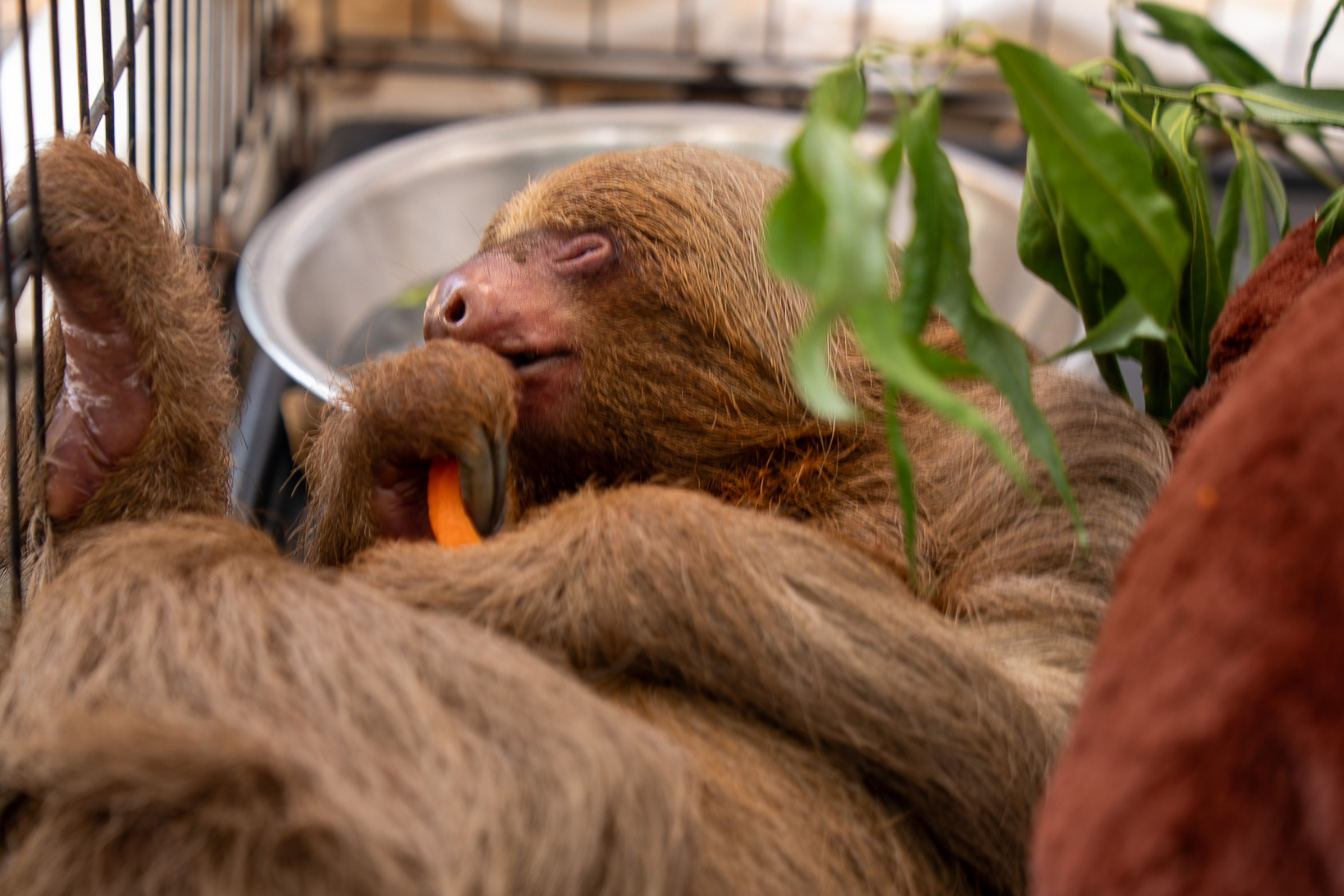
It started with a tip: a for-profit tourist attraction in Florida was importing wild sloths, and former employees of the business said the animals were dying in droves. Inside Climate News dug in to reveal government inspectors had reported unsafe and, it turns out, deadly conditions for the animals.
ICN’s reporting led to calls for reform from lawmakers, a state-led criminal investigation and a short-term ban on sloth imports.
We often report on wildlife for our beats: Katie Surma focuses on the rights of nature and Kiley Price on conservation. We decided to work together when Katie was tipped off by a source about Sloth World, a planned attraction in Orlando being marketed as a conservation-friendly center.
In April 2026, our investigation exposed the deaths of dozens of wild-caught sloths and some systemwide failures that allowed a commercial business to import highly sensitive, tree-dwelling mammals from the rainforests of Guyana and Peru to a warehouse near noisy bars and souvenir shops.
The warehouse had no running water and no electricity. Space heaters were meant to keep the animals warm but, according to a Florida Fish and Wildlife Conservation Commission incident report that Inside Climate News obtained, the heaters repeatedly tripped their fuse and shut off. At least one night in December 2024, the agency found, 21 sloths from Guyana were left in the warehouse without heat.
One by one, the animals died. A new shipment of 10 wild sloths arrived from Peru in February 2025. Two were dead on arrival and the rest were “emaciated.” None survived, according to the incident report.
We spoke to experts who said that, unlike most mammals, sloths lack a strong fight-or-flight response and rely on camouflage to survive. When handled by strangers or placed in noisy high-traffic environments, they don’t scream or struggle. Instead, they internalize the stress—sometimes curling into a ball and closing their eyes. Their bodies flood with cortisol, triggering a cascade of physiological stress that can end in organ failure.
We obtained internal Sloth World emails and other government records indicating the business had imported more than 60 wild sloths and that dozens had died. Among the deceased: a nine-month-old baby, named Kiwi by Sloth World, that weighed less than three pounds.
Days after Inside Climate News’ investigation, pressure on Sloth World and its regulators mounted as social media posts about our reporting went viral and our story received hundreds of thousands of views. Lawmakers and advocacy groups called for changes in regulation and government investigation. Our reporting was credited and followed by other news outlets, including The Guardian, The New York Times, BBC, NPR and many online newsrooms and television stations in Florida.
A week after our first story, Sloth World told a local news organization that it had closed. The Central Florida Zoo & Botanical Gardens said it received Sloth World’s 13 remaining animals—the only survivors.
On May 1, the Florida Attorney General’s office announced a criminal investigation into the deaths. Two weeks later, the state ordered a temporary ban on all sloth imports, a move with broad impact given that the vast majority of sloths enter the United States through the port of Miami.
Exposing harms at a business in the wildlife trade holds people accountable and safeguards animal welfare. Our work also catalyzes larger conversations about the rights of other species and nature as a whole.
We continue to report on the situation. If you have tips about the wildlife trade, please get in touch: [email protected] and [email protected].
About This Story
Perhaps you noticed: This story, like all the news we publish, is free to read. That’s because Inside Climate News is a 501c3 nonprofit organization. We do not charge a subscription fee, lock our news behind a paywall, or clutter our website with ads. We make our news on climate and the environment freely available to you and anyone who wants it.
That’s not all. We also share our news for free with scores of other media organizations around the country. Many of them can’t afford to do environmental journalism of their own. We’ve built bureaus from coast to coast to report local stories, collaborate with local newsrooms and co-publish articles so that this vital work is shared as widely as possible.
Two of us launched ICN in 2007. Six years later we earned a Pulitzer Prize for National Reporting, and now we run the oldest and largest dedicated climate newsroom in the nation. We tell the story in all its complexity. We hold polluters accountable. We expose environmental injustice. We debunk misinformation. We scrutinize solutions and inspire action.
Donations from readers like you fund every aspect of what we do. If you don’t already, will you support our ongoing work, our reporting on the biggest crisis facing our planet, and help us reach even more readers in more places?
Please take a moment to make a tax-deductible donation. Every one of them makes a difference.
Thank you,