

Krystal Pate keeps a running calculation in her head: the electricity bill or food. Last month her bill from Tampa Electric came to $491. “I either pay my light bill,” she said, “or I buy food and be without lights.”
Pate, a mother of six in South Tampa—a high-rent stretch of the city—lost her job as a hospital patient-care technician and now lives on a fixed income. One daughter is recovering from brain surgery; another developed a seizure disorder. When the bill outruns the budget, she goes to a food bank or other community aid organizations, or she asks her brother for help.
Some nights, she said, “I have cried because I don’t know how I’ll make it. But I always figure it out.”
When looking at how Tampa’s environment is changing, from extreme heat to stronger storms, she doesn’t reach for the language of climate. She keeps the answer where she lives it—on the bill. “How am I going to make it?” she asked. “How are we going to have food? How are we going to keep the lights on?”
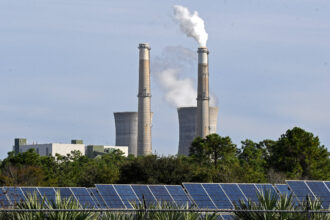
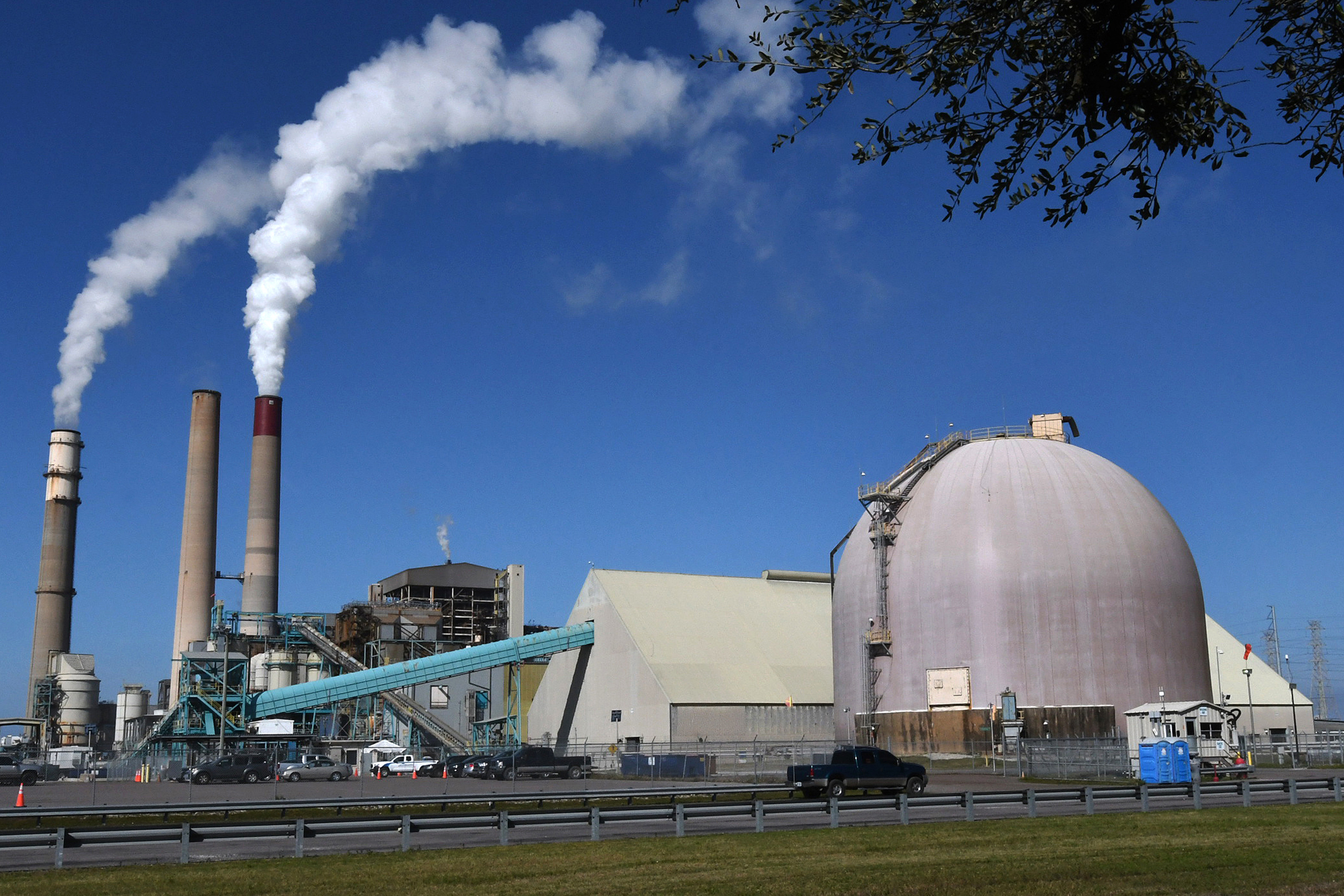
Rate increases between December 2020 and January 2026 mean the average Tampa Electric (TECO) customer now pays about 86 percent more, or about $980 a year more, according to an analysis from Food & Water Watch, a climate nonprofit.
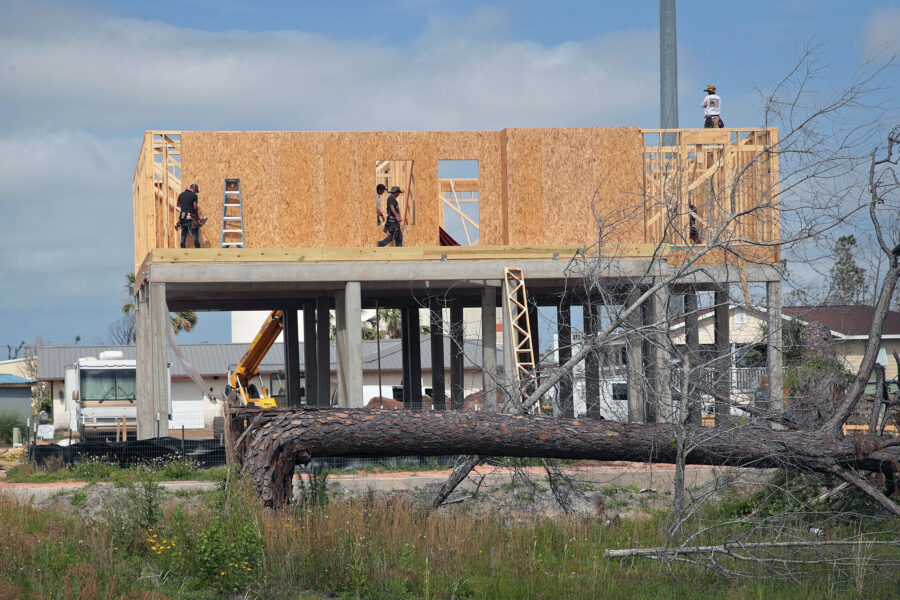
The increases aren’t disconnected from the climate pressing on Pate: TECO attributes part of the rising cost to stronger storms and record heat, including a hurricane-recovery surcharge now adding about $20 a month to a typical bill.
What Pate describes—a household stretched past breaking by forces it can only do so much to control—is, according to new research, the exact soil in which a particular dread, known as eco-anxiety, takes root.
A study published earlier this year in the journal People and Nature surveyed more than 1,200 Tampa Bay residents and found that eco-anxiety—persistent worry over environmental decline—is not spread evenly. It falls hardest on lower-income residents and on people who believe their communities face unfair environmental burdens. Wealthier, more environmentally engaged residents appear comparatively insulated from its severe forms.
Among the general public surveyed, roughly one in six showed moderate to severe symptoms. Since the sample wasn’t weighted to the population and deliberately oversampled underserved communities, that figure is best read as a finding within the study, not a clean prevalence estimate for the region.
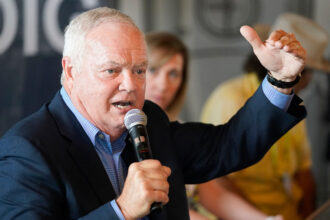
The author, Blake Simmons, a social scientist at the Tampa Bay Estuary Program, named the class divide bluntly. A financial “security blanket,” he said, “may help essentially shield a lot of these folks from the threat of serious physical or financial repercussions from the environmental crisis.”
But the finding that most drew independent experts’ attention was about the feeling of injustice. Sarah Lowe, a Yale School of Public Health psychologist who studies climate and mental health, said she was “not aware of much research linking perceived environmental justice to eco-anxiety,” and Simmons’ study strikes her as a relatively novel contribution.
The logic follows, she said: People who feel their communities are treated unfairly may reasonably expect to be neglected again as the climate changes; left without adequate cooling in extreme heat, or housing that survives the next storm. The anxiety is, in part, an accurate forecast.
The symptoms themselves are ordinary anxiety aimed at an unusual target. Simmons measured them with a seven-item scale modeled on the standard clinical screen for generalized anxiety disorder—the same nervousness, restlessness and trouble shutting off the worry—but triggered by thoughts of environmental loss rather than work or health. It is not a diagnosis; eco-anxiety appears in no psychiatric manual. Bridget Gerovac, a University of Florida extension agent in St. Lucie County, and Jessica Ogiony, a counselor, recently co-led a workshop on it. Ogiony described it as something closer to a signal than a disorder: “a healthy response,” she said, “even though they’re uncomfortable feelings,” to what’s actually happening in the world.
Much media coverage casts that response as one that eases when people get involved. Simmons complicates the picture. In his data, the most active residents often reported more anxiety, not less, so activity alone is no cure. What set apart those who avoided the severe end wasn’t how much they did but whether they believed it made a difference; the strongest predictor of severity was the collapse of that belief.
The involvement that seemed to help, at the workshop, wasn’t activism but the kind that rebuilds the belief behind it: sharing the feeling with people who share it, and doing tangible, visible things—citizen science, restoration you can watch take hold—that let people feel, as Gerovac put it, “a little bit more in power of the situation.”
Pate understands this; she went to public meetings to ask Tampa Electric not to raise its rates. The rates went up anyway. “These people don’t care,” she said, “because they don’t have to live how we are living.” Tampa Electric’s parent company, Emera, is based roughly 2,000 miles away, in Nova Scotia, Canada, a fact that lands hard for a woman rationing electricity in the Florida heat.
“We’re here, and we’re affected by it,” she said.
Here is the gap the study can measure but not close: In the communities it identifies as hardest hit, the dread rarely goes by the name “eco-anxiety.” Pate never related her situation to any form of climate-speak. She called it survival.
At Gerovac and Ogiony’s workshop, the same gap surfaced. “No one said, ‘I am feeling anxious about this loss of seagrass,’” Gerovac said. “Instead, they would say, ‘I’m angry, I’m upset.’” The feeling was there; the vocabulary wasn’t. A burden and the language to name it are not always handed to the same people; the weight belongs to residents like Krystal Pate.
The study measured something slippery: not whether these communities are formally overburdened, but whether residents feel they are—a perception that can diverge from the official record, where agencies designate environmental-justice communities using mapped pollution and health data.
“Whether that’s objectively true or not is another question,” Simmons said. “In the end, it’s true to the person.”
That gap is also the study’s main limit, Lowe said. Since both the sense of injustice and the eco-anxiety were self-reported, an anxious person may simply report more of both. She’d retest it against an objective measure like the federal Environmental Justice Index, which scores communities on measured burdens rather than feelings; Simmons’ research is correlational.
Florida spends less per capita on mental health than any other state—about $36 a person, against more than $360 in top-ranked Maine—and has ranked near the bottom for access to care.
The dread the study found concentrated among the least-buffered Floridians arrives in the state least equipped to help them carry it.
Pate isn’t waiting for anyone to name what she feels. She has one request for the utility’s chief executive. “Would he step a mile in my shoes?” she said. “Come live in my shoes for one month—see how it is for me and my children.”
About This Story
Perhaps you noticed: This story, like all the news we publish, is free to read. That’s because Inside Climate News is a 501c3 nonprofit organization. We do not charge a subscription fee, lock our news behind a paywall, or clutter our website with ads. We make our news on climate and the environment freely available to you and anyone who wants it.
That’s not all. We also share our news for free with scores of other media organizations around the country. Many of them can’t afford to do environmental journalism of their own. We’ve built bureaus from coast to coast to report local stories, collaborate with local newsrooms and co-publish articles so that this vital work is shared as widely as possible.
Two of us launched ICN in 2007. Six years later we earned a Pulitzer Prize for National Reporting, and now we run the oldest and largest dedicated climate newsroom in the nation. We tell the story in all its complexity. We hold polluters accountable. We expose environmental injustice. We debunk misinformation. We scrutinize solutions and inspire action.
Donations from readers like you fund every aspect of what we do. If you don’t already, will you support our ongoing work, our reporting on the biggest crisis facing our planet, and help us reach even more readers in more places?
Please take a moment to make a tax-deductible donation. Every one of them makes a difference.
Thank you,

Kate Waxman
Fellow
Kate Waxman is a Florida-based Outrider fellow at Inside Climate News, where she covers climate injustice across the state. She earned her M.S. in journalism from Columbia Journalism School and her B.A. in environmental science from Barnard, with reporting focused on coral reefs, climate science, and the communities closest to the water.