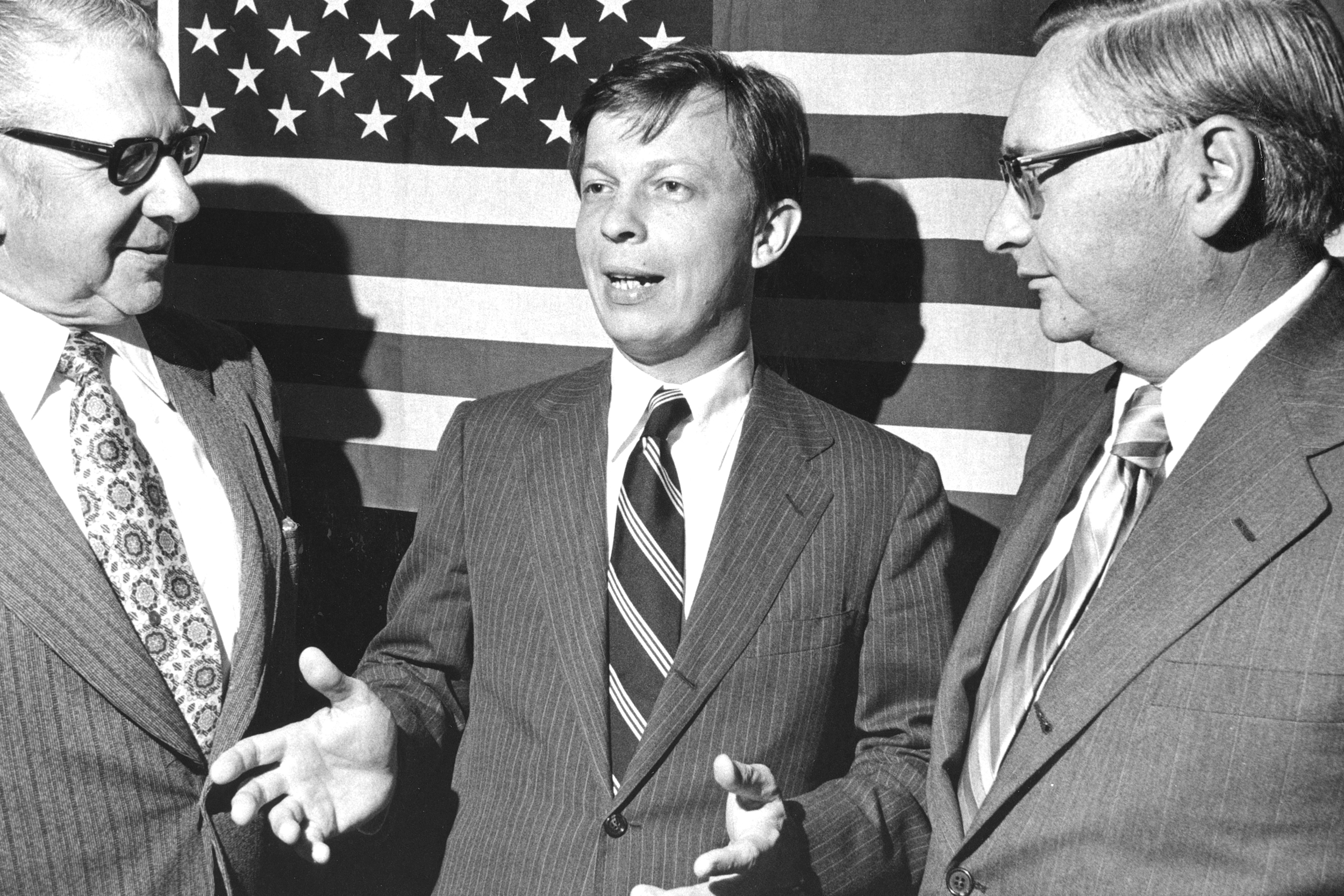


A monumental figure in Pennsylvania’s environmental movement passed away last week. Former state legislator Franklin Kury, who was 89, led Pennsylvania to become one of the first governments in the world to adopt a constitutional amendment guaranteeing a healthy environment as a basic right.
“He is a true icon, and a historic leader,” said Delaware Riverkeeper Maya van Rossum. “When people start writing the history of the environmental movement, they will not just be looking to people like Rachel Carson; they will be talking about Senator Franklin Kury.”
Kury authored Article 1, Section 27—better known as the environmental rights amendment— which was approved by voters and added to Pennsylvania’s constitution in 1971. Today, dozens of countries and several states have similar provisions in their constitutions. In some places, they’ve formed a legal basis for an argument that governments have a responsibility to act on climate change.
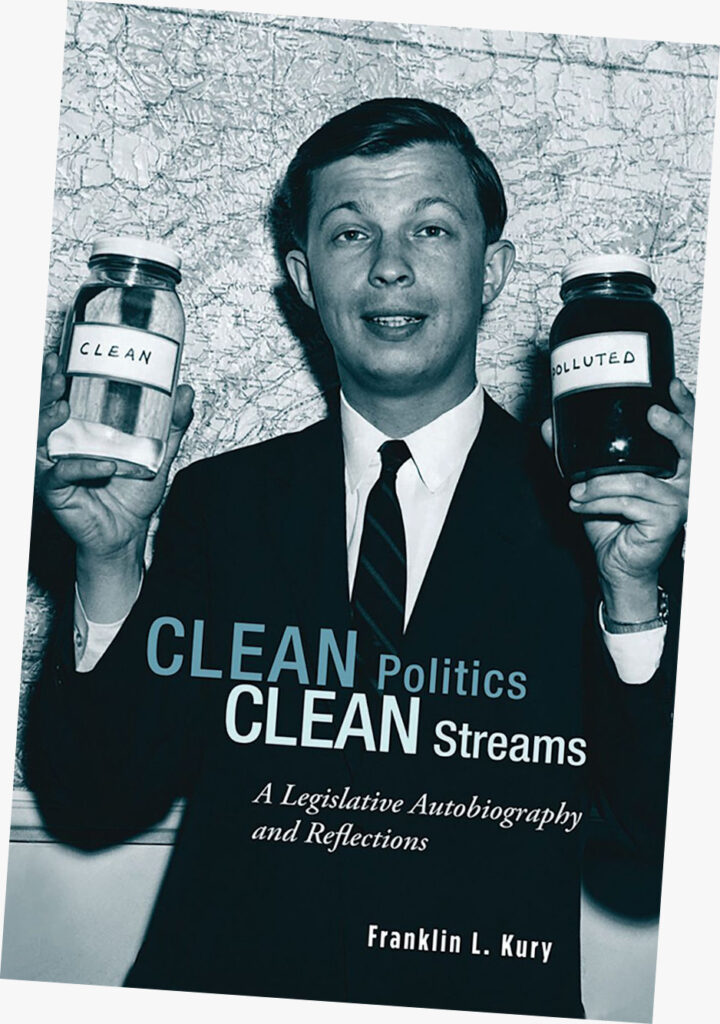
Kury had the idea for the amendment in 1968 after reading a news article about a New York state constitutional provision to protect its forests. That inspired him to attempt something even bigger in Pennsylvania, he recalled in his 2011 memoir, “Clean Politics, Clean Streams: A Legislative Autobiography and Reflections.”
“Why not give our natural environment the same kind of constitutional protection that has been given to our political rights?” he wrote.
Pennsylvania’s environmental rights amendment has three parts. The first section declares people have a right to “clean air, pure water, and to the preservation of the natural, scenic, historic and esthetic values of the environment.” Secondly, it states that Pennsylvania’s “public natural resources are the common property of all the people” including future generations. Finally, it requires the Commonwealth to act as a trustee to “conserve and maintain” these resources for the “benefit of all the people.”
“In the 1960s when the environmental movement was cresting [Kury] saw it wouldn’t last forever,” said John Dernbach, emeritus professor at Widener University Law School. “He knew the statutes being passed in the legislature could always be repealed. To see beyond the top of the hill like he did—–that’s visionary.”
Growing Up in the Shadow of the Coal Industry
Kury was deeply influenced by his upbringing in central Pennsylvania, both in terms of politics and the environmental degradation the coal industry left behind. Born in Sunbury, Northumberland County, in 1936, Kury wrote in his memoir that his family’s shoe business was his political incubator and a “Democratic island in a sea of Republicanism,” where his father enjoyed political banter with everyone who came in.
As a child, Kury visited his grandparents in Shenandoah and remembered seeing a huge culm bank near their home and a stream nearby. The polluted water from the coal waste was “black as the ace of spades. I never quite got over that,” he recalled in a 2018 interview for a documentary by WITF, the Harrisburg PBS station. “For a hundred years after the Civil War, the state government of Pennsylvania was pretty much controlled by the railroad industry, the steel industry and the coal industry. They were accomplices to all this exploitation.”
After graduating from Trinity College in Hartford, Connecticut, and earning a law degree from the University of Pennsylvania, Kury ran for the state house in 1966 as a Democrat. He centered his campaign on clean streams. He credited his wife Elizabeth (Beth) Kury with the idea for what became his defining campaign image. The photograph shows him, eyebrows raised, with the message “The Choice is Yours.” In each hand he holds a jar of water. One is transparent and labeled “clean,” and the other is filled with black water with the label “polluted.” His simple message worked, and he scored a major upset—defeating a powerful Republican incumbent who had held the seat for nearly 30 years.
Kury and his wife, a fellow attorney, raised three sons together. He later served in the state senate from 1973 to 1980. After his time in the legislature, he continued his career in law at several firms, including the Kury and Kury law firm with Beth, who died in 2024.
Michael Aumiller was Kury’s administrative aide in the Senate, and the two men became lifelong friends.
“Frank was driven,” Aumiller said. “That’s the way he’s been all through his life.”
Aumiller recalled working with Kury to get legislation passed to address floodplain management following the devastating flooding that hit Pennsylvania in 1972 from Hurricane Agnes.
“When you start telling townships, boroughs, and counties what to do with their land, it’s not easy stuff to get through,” Aumiller remembered. “But he worked at it. What he really wanted to do was save lives and property. When he had a passion for something, he stayed with it until the job was done.”
David Hess spent more than 40 years working on environmental issues in the state, including as former secretary of the Department of Environmental Protection and credits Kury with creating the foundation of environmental protection in the state.
“His accomplishments made life better for Pennsylvanians impacted by the environmental insults of industry, something we need to again focus on today,” Hess wrote in an email.
A ‘Revolutionary’ Court Ruling
Despite his success in politics, Kury didn’t see the powerful language of the environmental rights amendment interpreted the way he’d hoped it would be until a pair of state Supreme Court decisions in the 2010s.
The rulings dealt with how Pennsylvania was managing its new fracking boom. The two cases in 2013 and 2017, relating to oil and gas zoning and the leasing of state forest land for drilling respectively, were the first time courts upheld a broad interpretation of the environmental rights amendment. Previously, the amendment was seen as a mostly toothless legal tool, due to a state court interpretation in the 1970s.
“Pennsylvania has a notable history of what appears retrospectively to have been a shortsighted exploitation of its bounteous environment, affecting its minerals, its water, its air, its flora and fauna, and its people,” former state Supreme Court Chief Justice Ronald Castille wrote in the 2013 oil and gas zoning ruling. “The lessons learned from that history led directly to the Environmental Rights Amendment, a measure which received overwhelming support from legislators and the voters alike.”
This story is funded by readers like you.
Our nonprofit newsroom provides award-winning climate coverage free of charge and advertising. We rely on donations from readers like you to keep going. Please donate now to support our work.
Donate NowKury was with his wife when he got a phone call from John Dernbach, excitedly sharing the news about the court’s decision.
Dernbach was invested because he had helped breathe new life into the environmental rights amendment. His legal scholarship was extensively cited in the ruling. Dernbach’s research had highlighted how previous courts’ interpretations had significantly diverged from the original text.
“We couldn’t believe it—how revolutionary [the 2013 State Supreme Court decision] was,” Kury said in the WITF documentary. “Castille said, ‘you gotta read the English language.’ And how much they quoted from my book and from my floor speeches. It was one of the most stunning nights of my life to read that opinion.”
Dernbach became friends with the Kurys after that.
“He was a decent, gracious, thoughtful man,” said Dernbach. “I’m going to miss him greatly.”
Maya van Rossum also became friends with Kury following the resurgence of the environmental rights amendment. She and her group, the Delaware Riverkeeper Network, were among the successful plaintiffs in the 2013 oil and gas zoning case. After that win, she went on to found Green Amendments For The Generations, a nonprofit organization aimed at inspiring passage of similar environmental amendments around the country.
“When I needed help persuading legislators in other states, all I needed to do was make a call to Senator Kury. He was quick to respond—either with a written letter or a willingness to speak to legislators,” said van Rossum. “He created the model other states are following.”
New York state passed an amendment to its constitution in 2021 declaring that “each person shall have a right to clean air and water, and a healthful environment.” Similarly, Montana has an environmental rights amendment in its state constitution, which helped a group of young people suing the state over its failure to address climate change secure a win in 2024.
Dernbach is hopeful Pennsylvania’s amendment will be a powerful tool to protect the environment into the future and an enduring testament to Kury’s legacy.
“If you go back and look at the original U.S. Constitution, there are provisions whose meaning has not been fully worked out,” he said. “The environmental rights amendment is 55 years old. That’s not very long for a constitutional provision to show its full effect.”
About This Story
Perhaps you noticed: This story, like all the news we publish, is free to read. That’s because Inside Climate News is a 501c3 nonprofit organization. We do not charge a subscription fee, lock our news behind a paywall, or clutter our website with ads. We make our news on climate and the environment freely available to you and anyone who wants it.
That’s not all. We also share our news for free with scores of other media organizations around the country. Many of them can’t afford to do environmental journalism of their own. We’ve built bureaus from coast to coast to report local stories, collaborate with local newsrooms and co-publish articles so that this vital work is shared as widely as possible.
Two of us launched ICN in 2007. Six years later we earned a Pulitzer Prize for National Reporting, and now we run the oldest and largest dedicated climate newsroom in the nation. We tell the story in all its complexity. We hold polluters accountable. We expose environmental injustice. We debunk misinformation. We scrutinize solutions and inspire action.
Donations from readers like you fund every aspect of what we do. If you don’t already, will you support our ongoing work, our reporting on the biggest crisis facing our planet, and help us reach even more readers in more places?
Please take a moment to make a tax-deductible donation. Every one of them makes a difference.
Thank you,