

First of two stories about the effort to support Lahaina fire survivors’ health in the disaster’s long, hard aftermath.
LAHAINA, Hawaiʻi—Early on a Saturday morning in May, Ruben Juarez took the 45-minute flight from Oʻahu to Maui, just like he’d done dozens of times over the past three years.
This one felt different.
Juarez landed in Kahului Airport with his partner, Alika Maunakea, and drove on a long winding highway beside the piercing blue ocean until they reached the Lahaina Comprehensive Health Center.
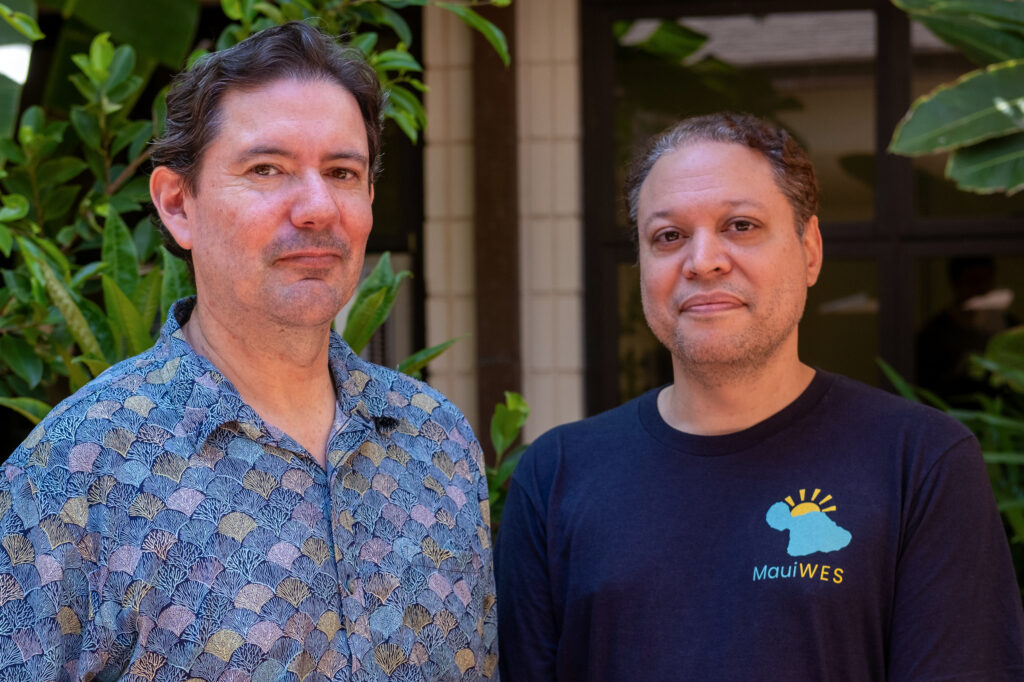
A cool breeze wafted in from the Pacific less than half a mile below as they set up stations for blood collection, lung function tests and mental health check-ins, directing a team of Ph.D. students and local healthcare providers. Then they waited for the fire survivors to arrive.
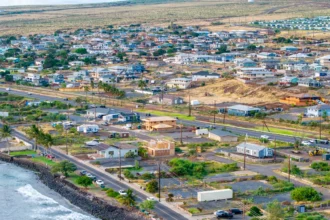
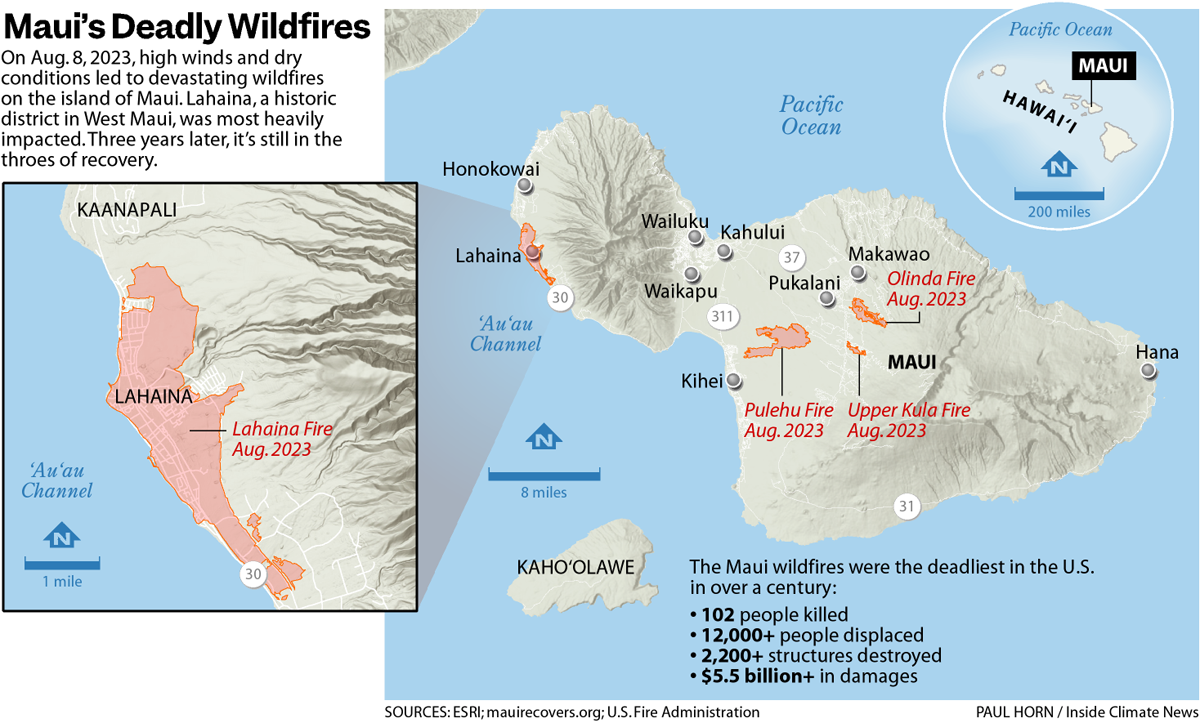
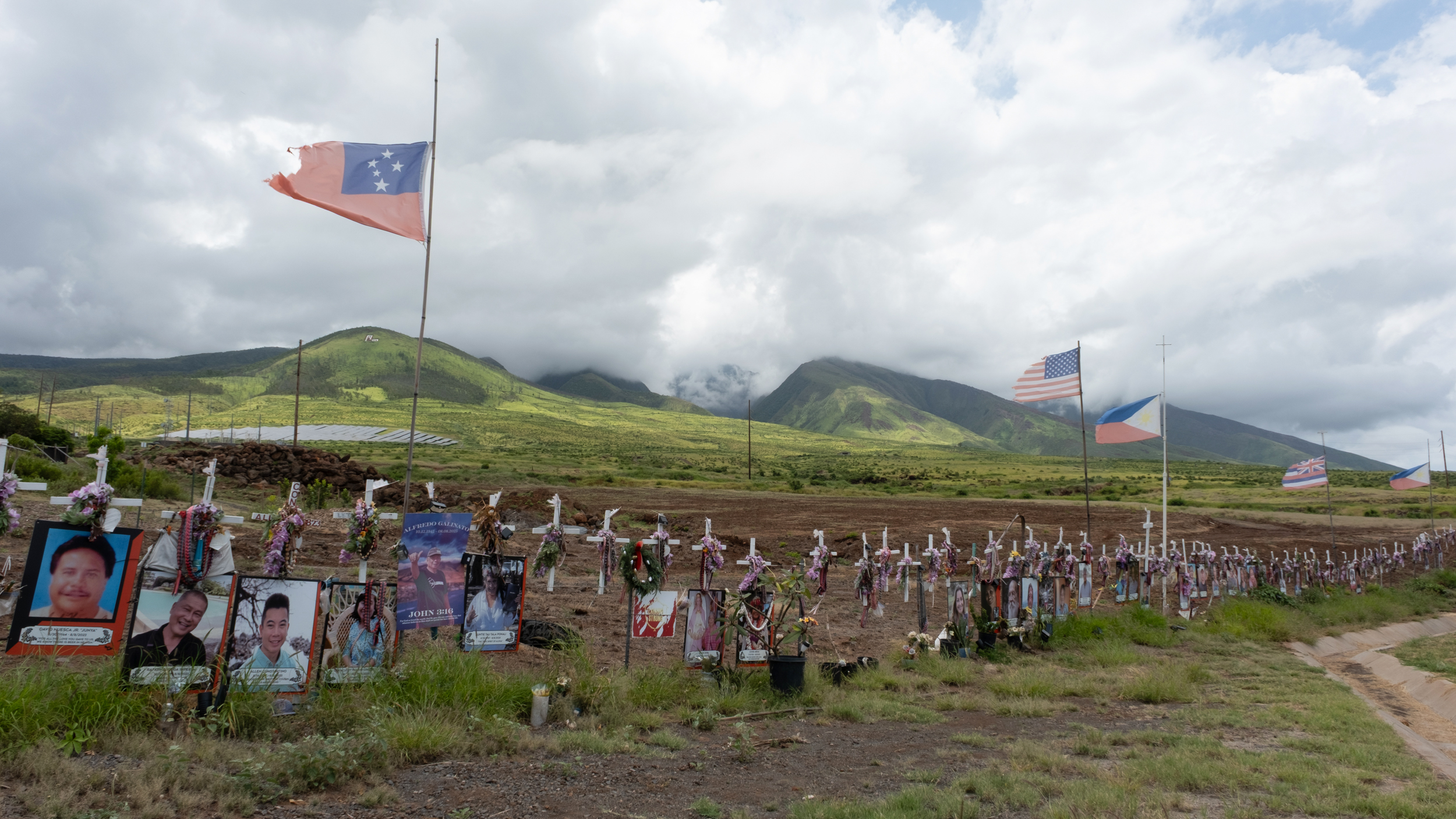
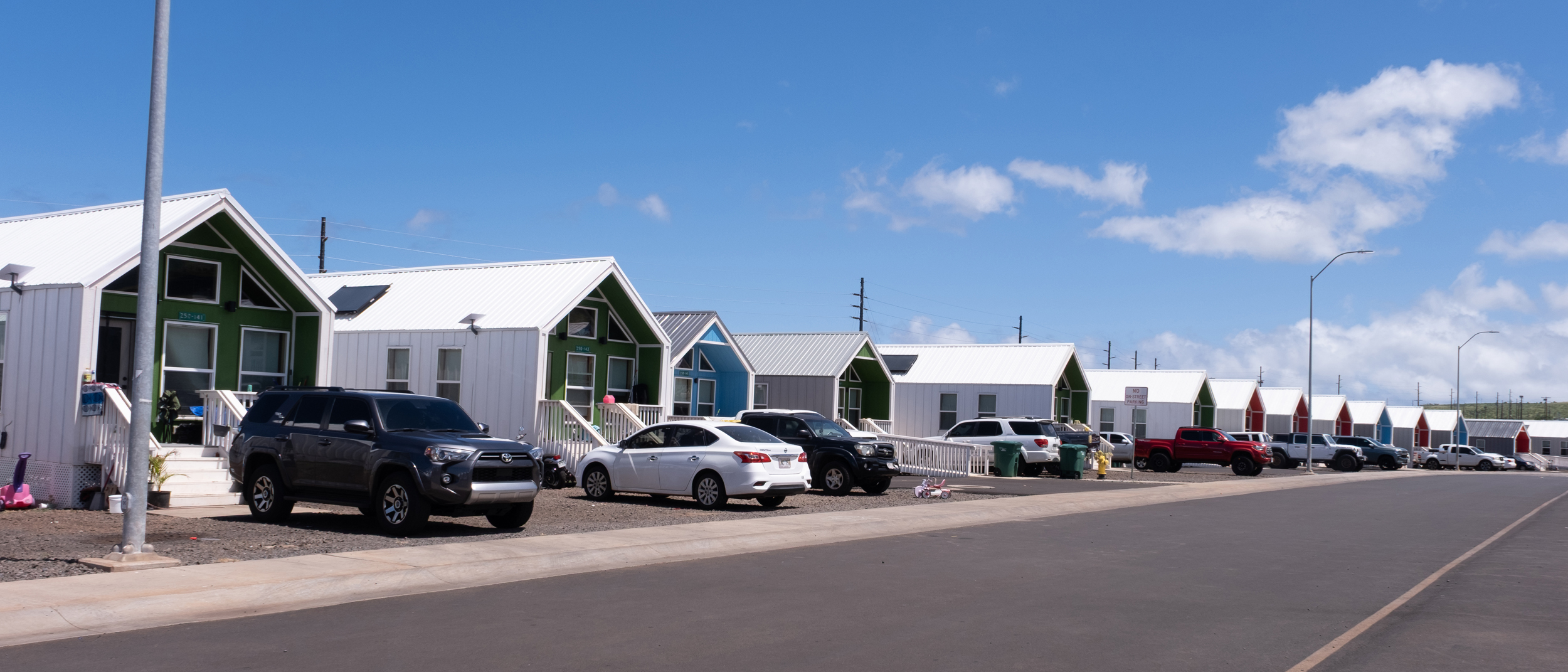
On Aug. 8, 2023, Maui was hit with the deadliest wildfires the U.S. has seen in over a century. They killed at least 102 people, displaced nearly 13,000 residents and destroyed more than 2,200 buildings. Three years later, just 15 percent have been rebuilt.
Juarez, an economist, and Maunakea, a biomedical scientist, never expected to focus on disaster recovery. But after the fires, they were thrust into the space by the overwhelming scale of need. The two University of Hawaiʻi professors dreamed up the Maui Wildfire Exposure Study, or MauiWES, as a form of rapid response: an effort to track the impacts of the fires on survivors’ health.
Three years and 2,500 participants later, the study has blossomed into a combination of research and intervention, a web of community organizations working together to give participants not just free testing but also therapy, food assistance, cash support and help connecting with doctors and insurance. Some even say the study saved their lives.
The researchers hope MauiWES could become a national blueprint for public health response after disasters. Experts across the country are paying attention. One longtime disaster researcher, David Eisenman at the University of California, Los Angeles, said the study’s holistic approach is “singular.”
But critical federal support to keep the effort going for at least a decade was running out, and its renewal was uncertain—grant applications had been met with silence for months. And just two weeks before Juarez and Maunakea landed on Maui, state funding they were counting on fell through.
Now, here they were at what might be their last big event to understand how survivors were doing and what help they needed.
Juarez was distraught: It felt like the end. But Maunakea, usually the pessimist of the pair, refused to believe it. He felt the study had to continue. The need was too great. They would find a way.
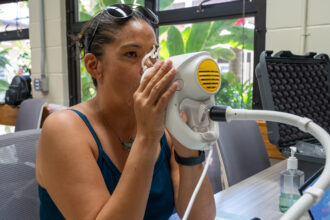
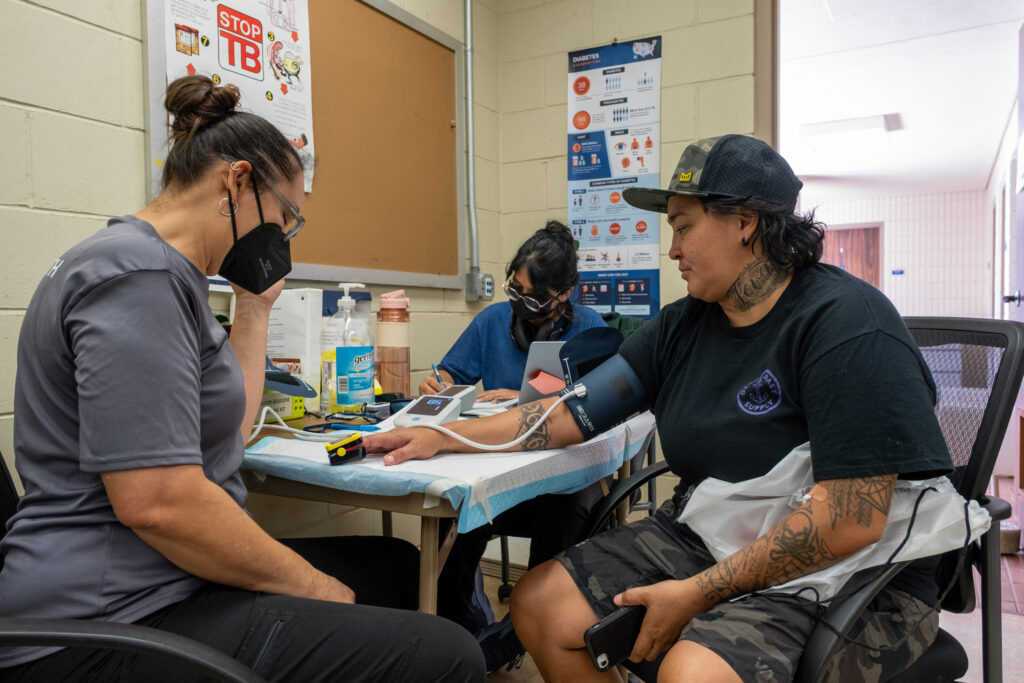
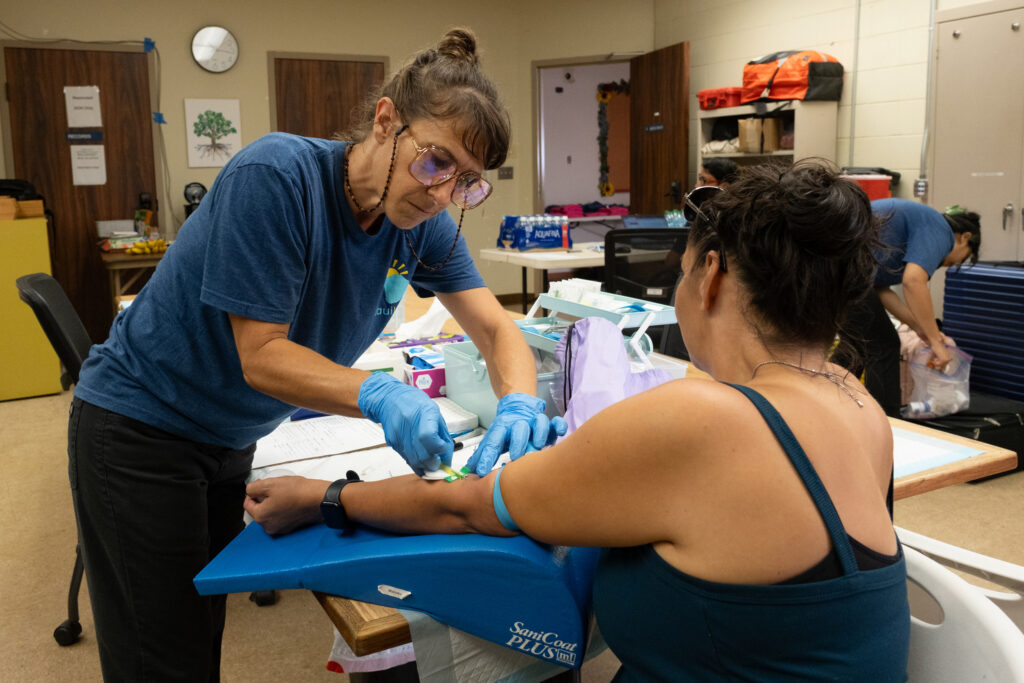
At the health center that Saturday morning, Maunakea greeted Lisa and Nilsson Panis, a pair of siblings born and raised in Lahaina. As he checked them into the study, he explained what they’d do that day. Urine samples to track environmental exposures. Saliva collection for biomarkers of stress and aging. Blood tests for metabolic function. Two assessments of lung health. Recordings of blood pressure, height and weight. A mental health screener.
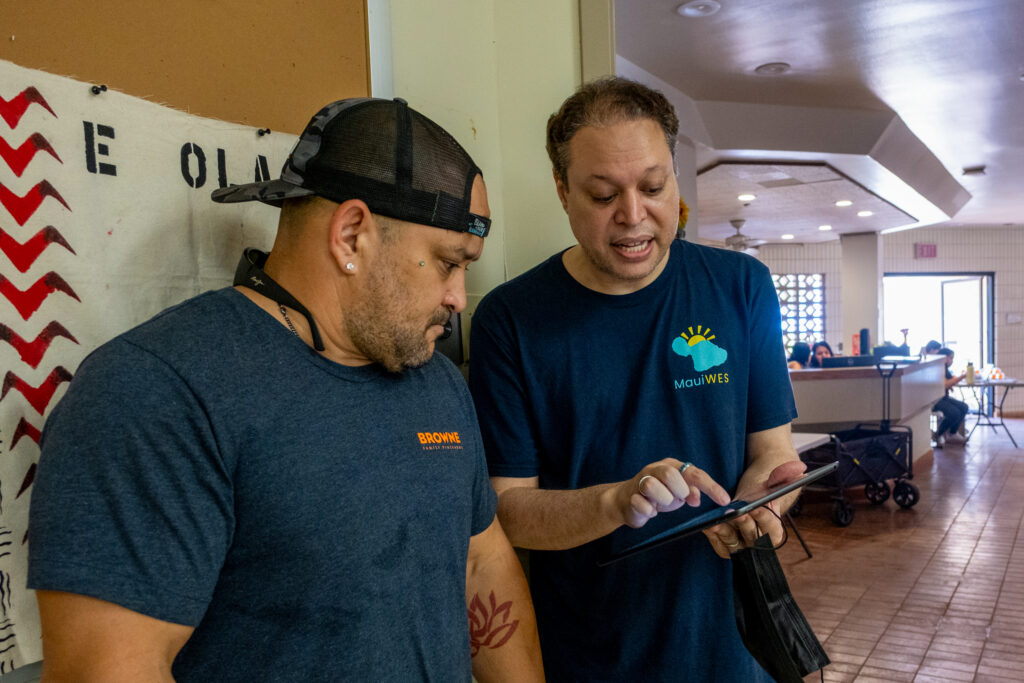
At the end of it all, they’d meet with a volunteer physician who would help them understand their test results, and they’d each walk away with $100, compensation for their time.
“We’re trying to do this every year,” Maunakea told the Panises.
He was determined to make that happen.
A Different Kind of Research Study
The lobby of the health center had a dark stain on its ceiling where water had leaked in just a month before.
The building—run by the state’s Department of Health and loaned to MauiWES for the weekend—sits near the base of the sprawling West Maui mountains. That weekend, the foothills above the center were covered in dry, yellowing grass that was nonetheless much greener than usual, courtesy of recent Kona low storms.
The storms swept water damage into construction sites and homes that had just been rebuilt. They busted up highways and caused torrential flooding, triggering millions of dollars in damage across the county. They also kicked off an unusually verdant spring, with flowers blooming on the trees outside the center and along the highway below. Wetness that early can heighten the fire risk later in the year, fueling grass and brush growth that dries out and becomes plentiful tinder, susceptible to heat and strong winds.
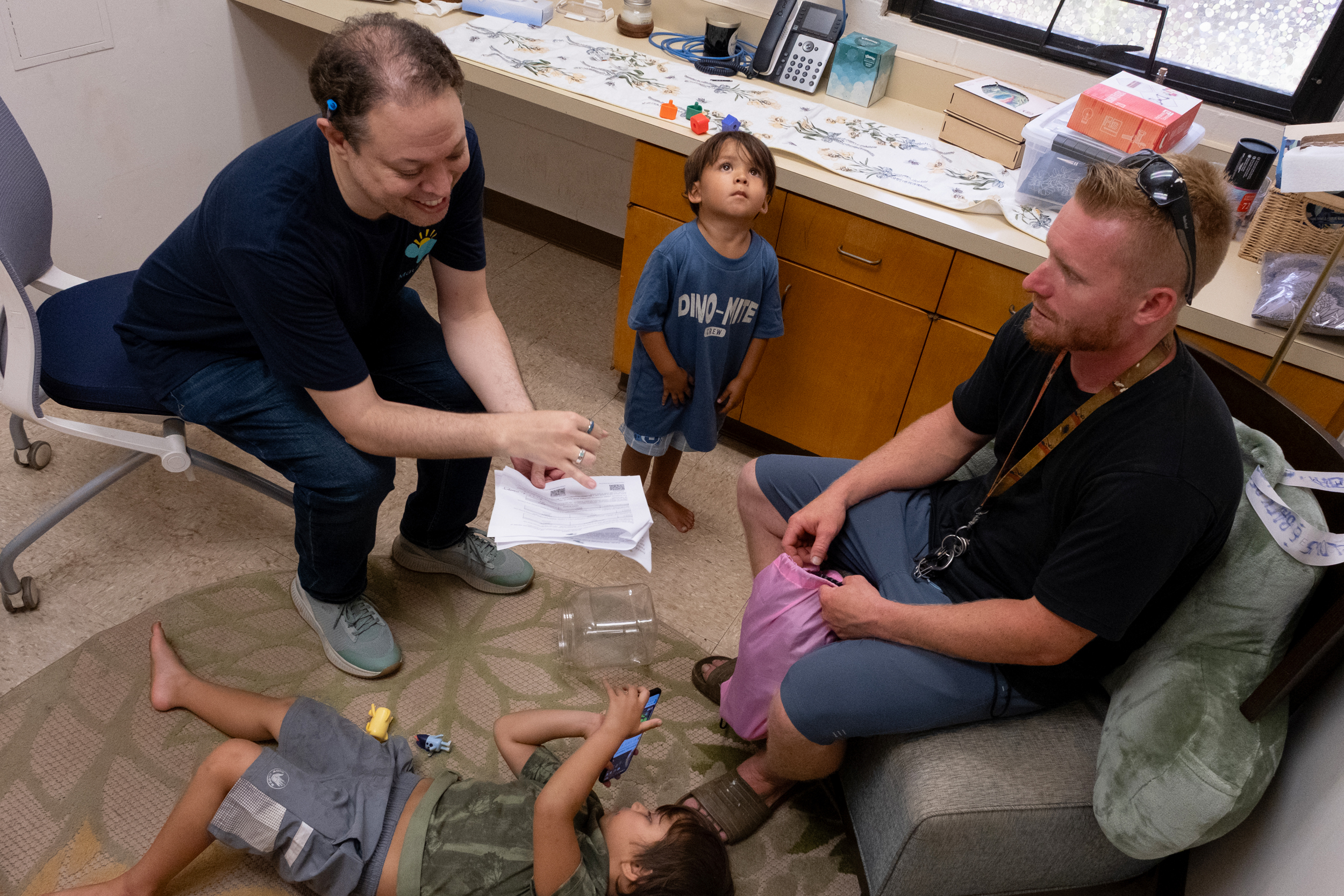
Lisa Panis had an appointment with MauiWES that day, but she was hoping they’d have room for her older brother, too. In a fluorescently lit room just beside the center’s main lobby, she introduced Nilsson to Maunakea and explained that he had been a first responder after the wildfires, cleaning up debris in the burn zone. Maunakea immediately instructed the Ph.D. students working the check-in desk to sign him up, along with Nilsson’s girlfriend, another survivor.
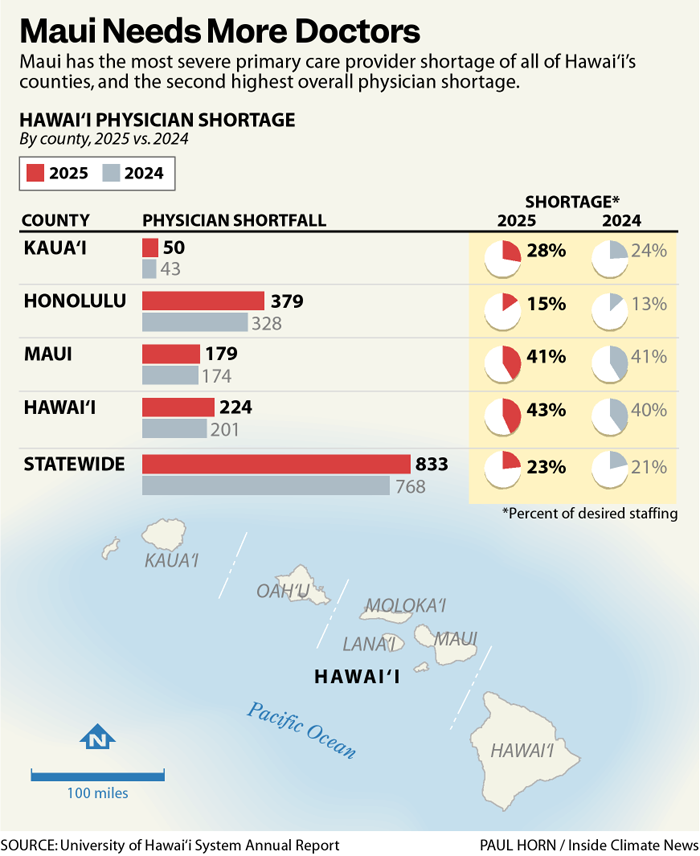
MauiWES had limited resources, especially with funding so up in the air. But on an island already suffering from a severe healthcare provider shortage, Maunakea and Juarez didn’t like turning anyone away.
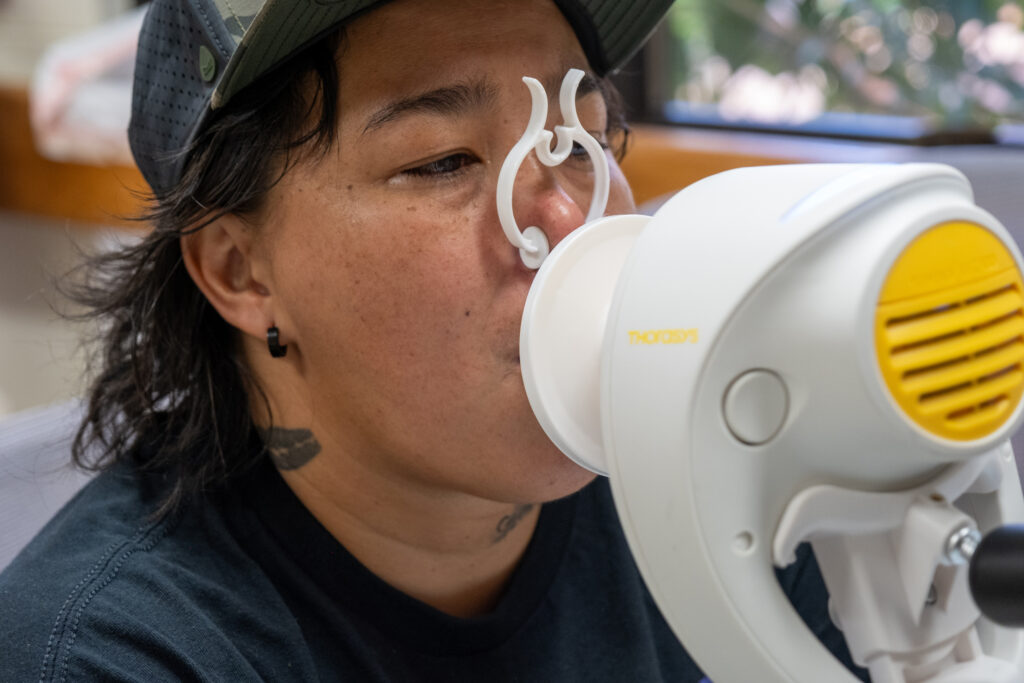
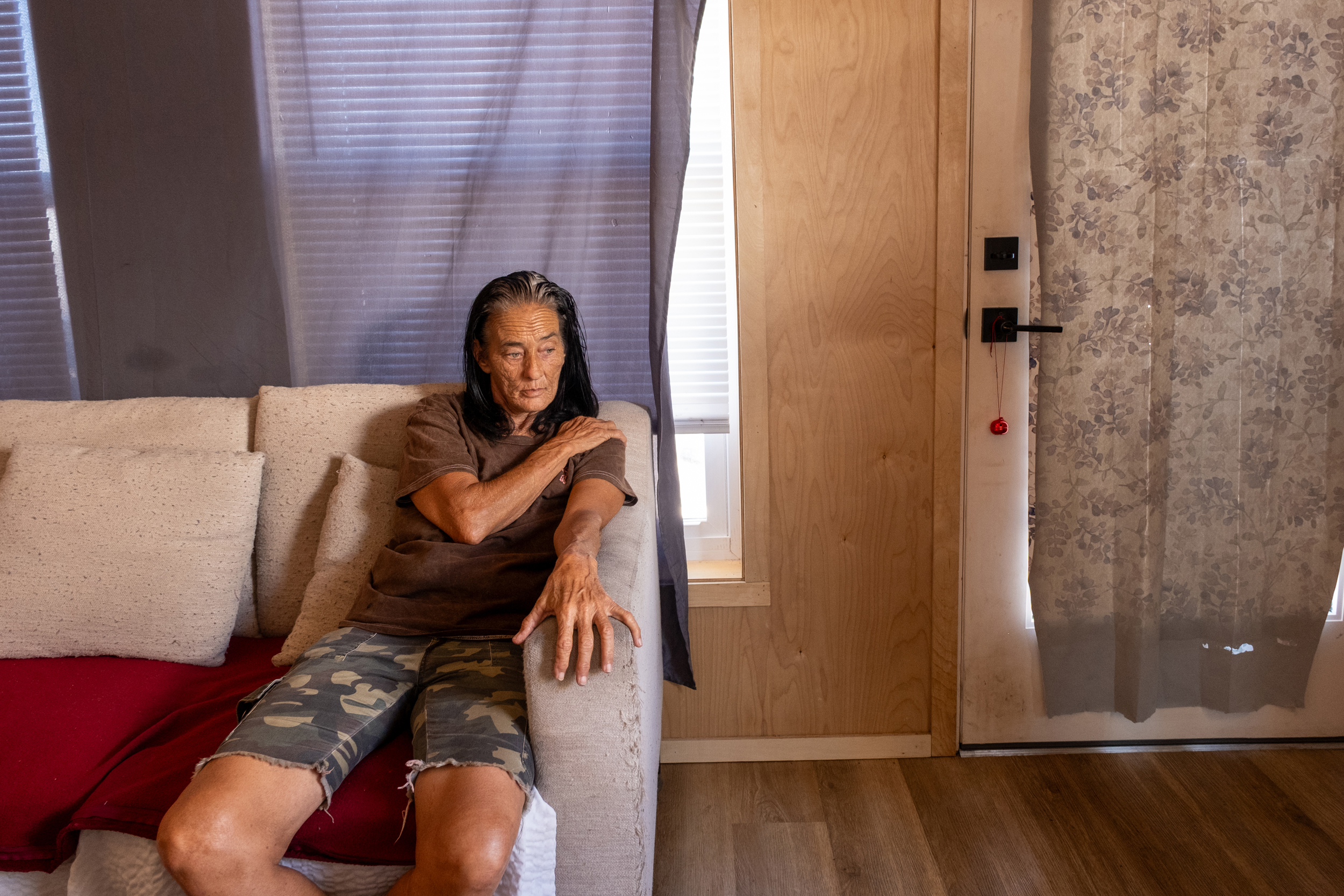
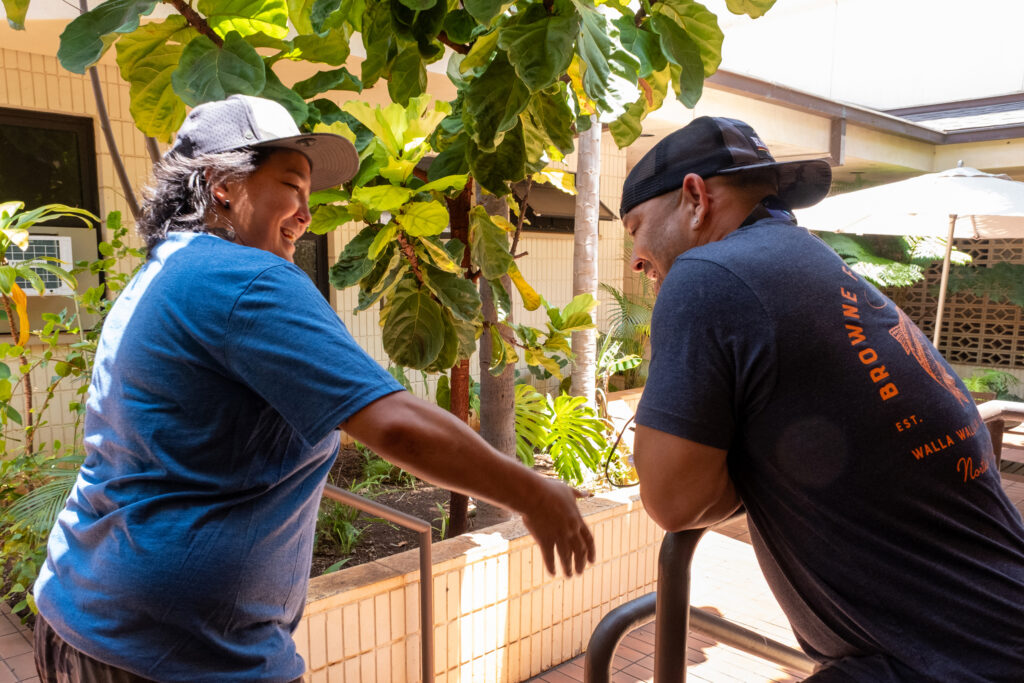
Lisa Panis, a participant in the Maui Wildfire Exposure Study, has struggled with her mental and physical health since the fires, and her family is still in temporary housing.
Maunakea listened to Nilsson explain what his life looked like in the months after the fires: 12-hour days, seven days a week, clearing the burn zone for a construction company. He wore full-body gear to keep as much of the dust out as possible, but he still ended each day coated in grime. Though he’d never been tested, Nilsson felt confident the constant inhalation of ash and the debris that covered his body as he worked had impacted his health.
“We tried to push all the dust down with water,” Nilsson said to Maunakea, describing the cleanup. “But you cannot get everything.”
“Are you still doing that, or pau?” Maunakea asked.
“Pau,” Nilsson replied. Finished. Now he was working as a mason, bringing his sister on whenever he could. It wasn’t steady. He hoped jobs would pick up in the summer.
The Panis siblings’ father is descended from Filipino immigrants who came to the island to work on the sugar plantations more than a century ago, during a period when American and European companies brought indentured laborers from the Philippines to work under brutal conditions for extremely low pay. The plantations, established before Hawaiʻi’s illegal annexation by the United States and continuing another century after, sucked water out of Lahaina’s once green and fertile hills.
That set the stage for modern-day wildfire risks, now worsened by climate change, and cemented a pattern of local disenfranchisement that continued as the tourism industry took hold.
For years, the Panises had experienced the harder realities of life in Lahaina, like gentrification and unstable housing and employment. On the day of the fires, Nilsson was meant to fly back from Las Vegas to spread the ashes of two siblings who had passed away just weeks apart that spring. Lisa was living with an aunt whose home would not survive. She remembers standing on the field next to the post office where she and her brothers played football as kids, watching as flames engulfed the town above and below her.
After they finished checking into the study, the Panis siblings moved through the stations, a sort of medical assembly line: urine samples, then blood tests, then blood pressure, then spitting into a tube. A few feet away, Juarez coached another participant on how to blow into a spirometer to test lung function.
“Sigue, sigue, sigue,” he said, reminding the man to keep breathing out. Throughout the day Juarez greeted Spanish-speaking participants, acting as one of a handful of interpreters who walked people through the study’s tests in English, Spanish and Tagalog.
Juarez was pulled into Maui’s recovery because of his connections to Lahaina’s abundant immigrant community. One-third of Lahaina residents were born outside the U.S., many in Asia or Latin America. Juarez moved from Mexico to Houston for a doctorate at Rice University, then to Oʻahu for a job at the University of Hawaiʻi. There, he met Maunakea, and as neighbors in the university’s faculty housing, they fell in love.
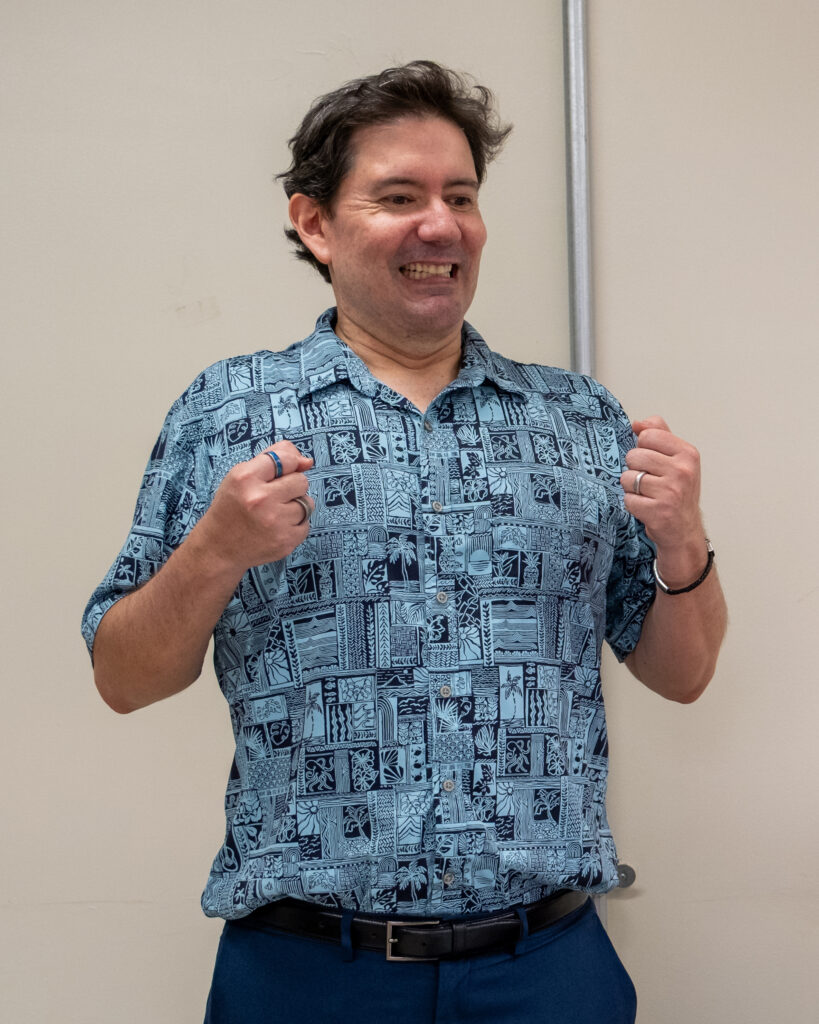
When they met, Juarez’s research was focused on social networks and Maunakea’s on health disparities in disease. After the fires, Maunakea was drawn to Maui by his connections with people working to address the disproportionate public health burdens faced by Native Hawaiians across the islands. Although he lives on Oʻahu, his great-grandmother, a Native Hawaiian healer, was born in Kula, an upcountry Maui community that was also badly impacted by the 2023 fires.
He and Juarez met with community leaders and healthcare workers on Maui soon after the fires. They became part of the MauiWES advisory board, consulting on design and implementation. For many study participants, that grounding made a big difference.
Mikey Burke, a Native Hawaiian mother of four who grew up in West Maui, remembers an influx of mental health practitioners from the continent who swarmed to Maui after the fires. They roamed the lobbies of hotels where she and other displaced families were sheltered. But though they were well-intentioned, they felt largely unapproachable. She gravitated toward local organizations like Maui Medic Healers Hui, which was working with MauiWES. It was something in their mannerisms, the way they spoke to her, the normalcy and familiarity they offered.
In the months after they lost their home, Burke, her husband Rob and their four young sons were shuttled between temporary shelters, family homes and rental properties. She could see that her twin boys, just 8 years old when the fires hit, were struggling. But it wasn’t until they got screened by MauiWES that addressing their mental health shot to the top of her lengthy to-do list. The study team told her that both boys were showing serious signs of post-traumatic stress disorder, and got them connected with a free therapist right away.
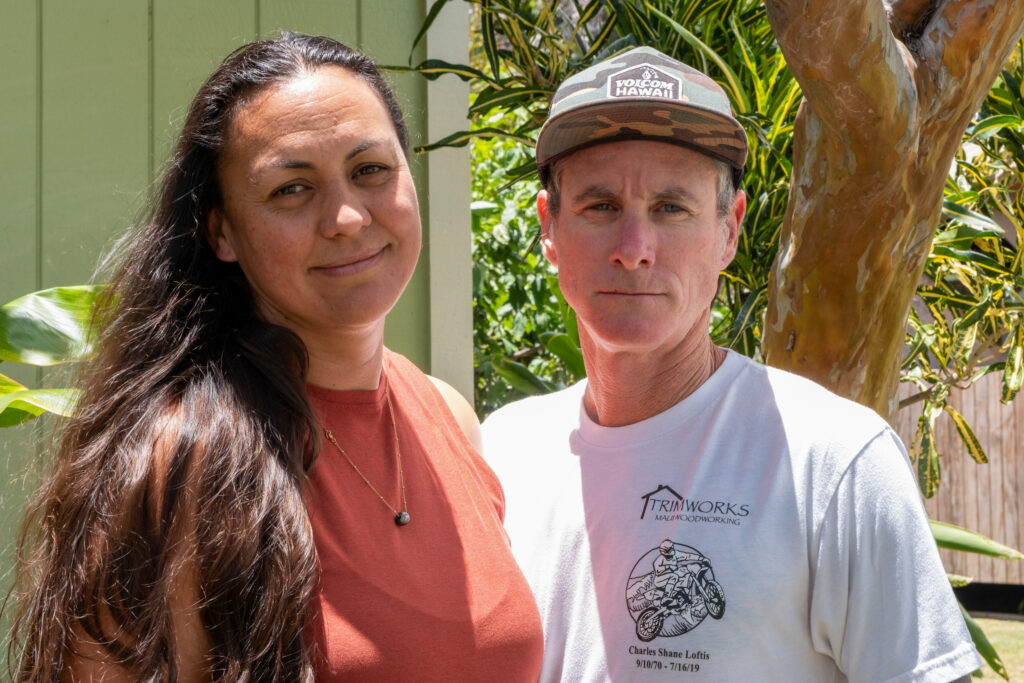
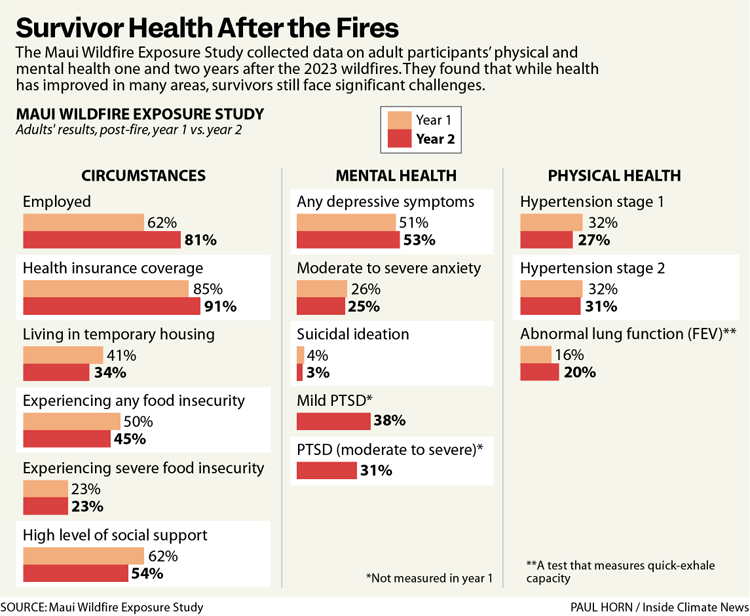
The Burkes aren’t an anomaly. The study found widespread emotional distress and trauma in adults and children, and connected many with therapists.
On an island with a severe shortage of physicians, MauiWES was also most early participants’ first time seeing a doctor after the fires. Over the past three years, the team made some big saves.
In August 2024, one year after the fires, a former trauma nurse named Amy Jackson had such a low hemoglobin count that it wasn’t registering on MauiWES’ testing system. The team urged her to go to the emergency room immediately. Jackson had signed up for the study because the cash would be a good birthday present for her daughter. If it wasn’t for that, she wouldn’t have gotten checked out at all.
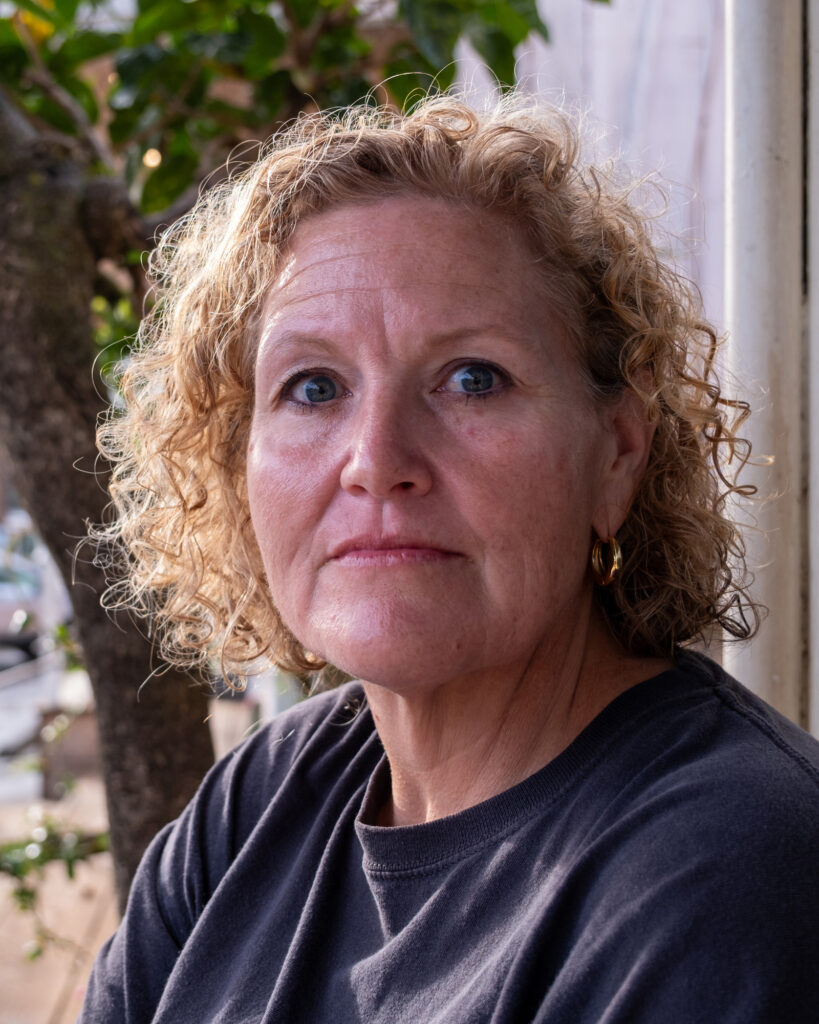
At the hospital, she remembers a doctor telling her he was amazed she was still alive. She was admitted and treated, and she credits MauiWES with saving her life.
In February 2024, another participant presented with symptoms suggesting a serious lung infection. Volunteer physicians were concerned and said she needed medical attention right away. But she was an undocumented immigrant and one of the 10 percent of study participants who had both lost their jobs in the fire and weren’t eligible for state insurance.
Juarez coordinated with Roots Reborn—a local organization supporting Maui’s immigrant community—and reached out the next day to ask an insurer with a charitable health coverage program to consider an emergency enrollment.
She got the insurance and then the treatment she needed. She’s one of more than 200 participants Juarez estimates have been connected with private insurance via Kaiser Permanente because of interventions from MauiWES and Roots Reborn. He was happy to see her now, in good spirits and good health, coming in for her follow-up at the May collection event. He thought the immigrant population had the most to lose from the study ending.
The team still had so much to do.
After her lung test, Lisa Panis stood underneath the stain on the lobby’s ceiling and waited for her brother. The Panis siblings stay strong for one another. But she’s experienced depression since the fires, like many other survivors, and her tests revealed elevated levels of several toxic metals in her body.
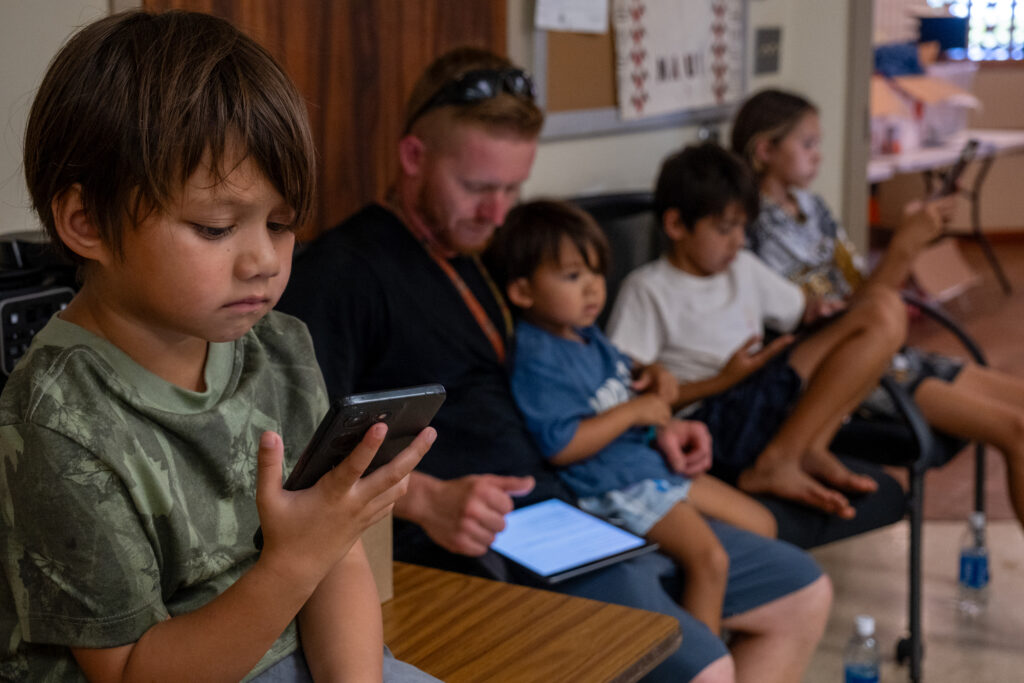
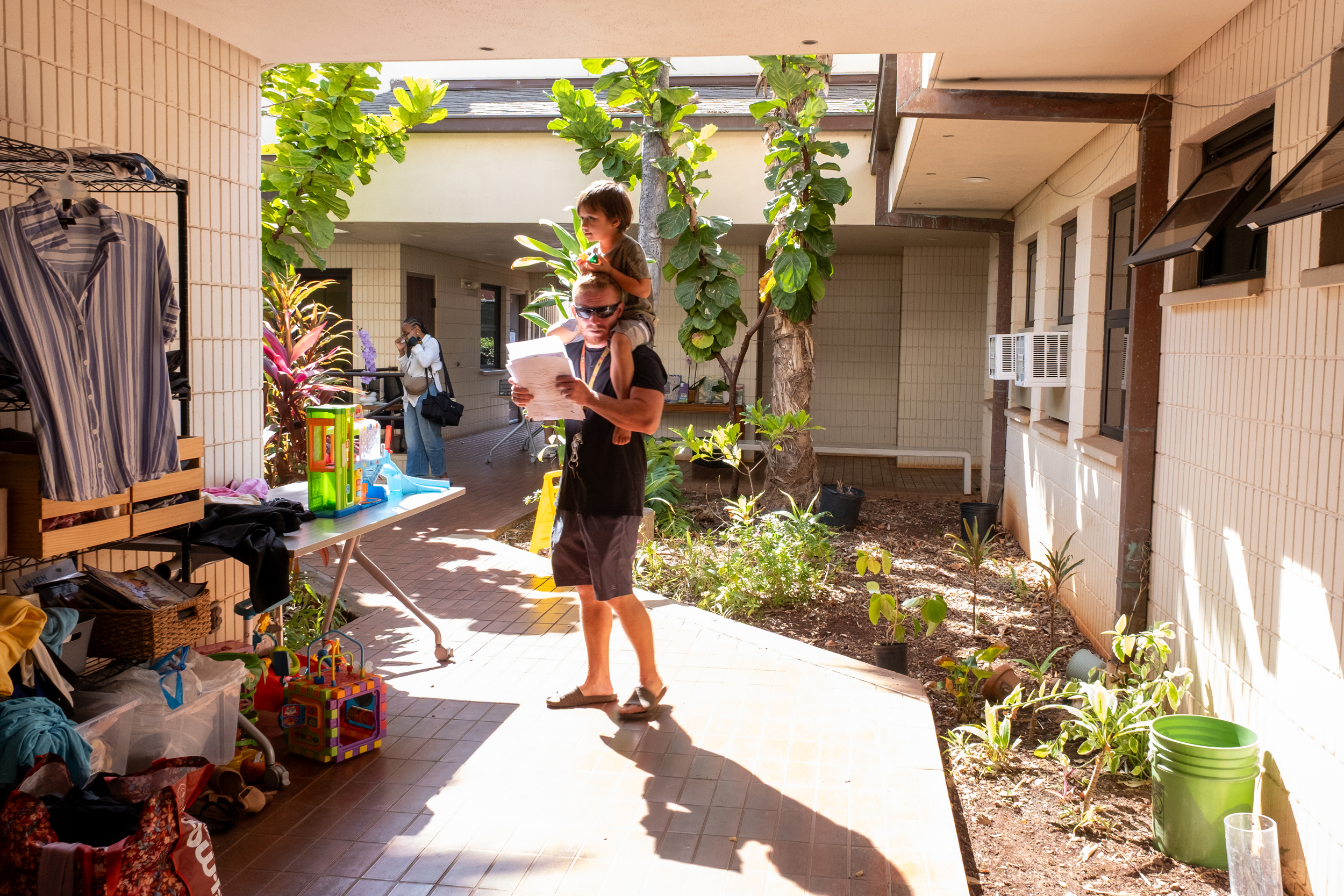
In their first, smallest cohort, about six months after the fires, Juarez, Maunakea and their colleagues found that about half of study participants were experiencing breathing problems that suggested ongoing, residual impacts from wildfire smoke. They’ve also found that poor lung function was linked to elevated levels of heavy metals in participants’ urine, including some of the same metals the health department found in the burn zone.
After looking at so many test results, Maunakea can guess with considerable accuracy what neighborhood a participant lives in just by seeing the distribution of metals in their body. Some of that contamination may predate the fires. But the health implications are the same.
Before Nilsson Panis left for the day, Juarez gave him a T-shirt with the MauiWES logo—a sun rising behind the island—and a hundred-dollar bill. Then he ushered him over to the front desk, where a case manager who works for the Department of Health was waiting.
She asked Nilsson if there was anything he might need help with.
He paused for a moment before answering. Maybe some assistance with food, he said. He also asked about opportunities to volunteer and help other survivors.
The case manager took down his email.
A Split From the State
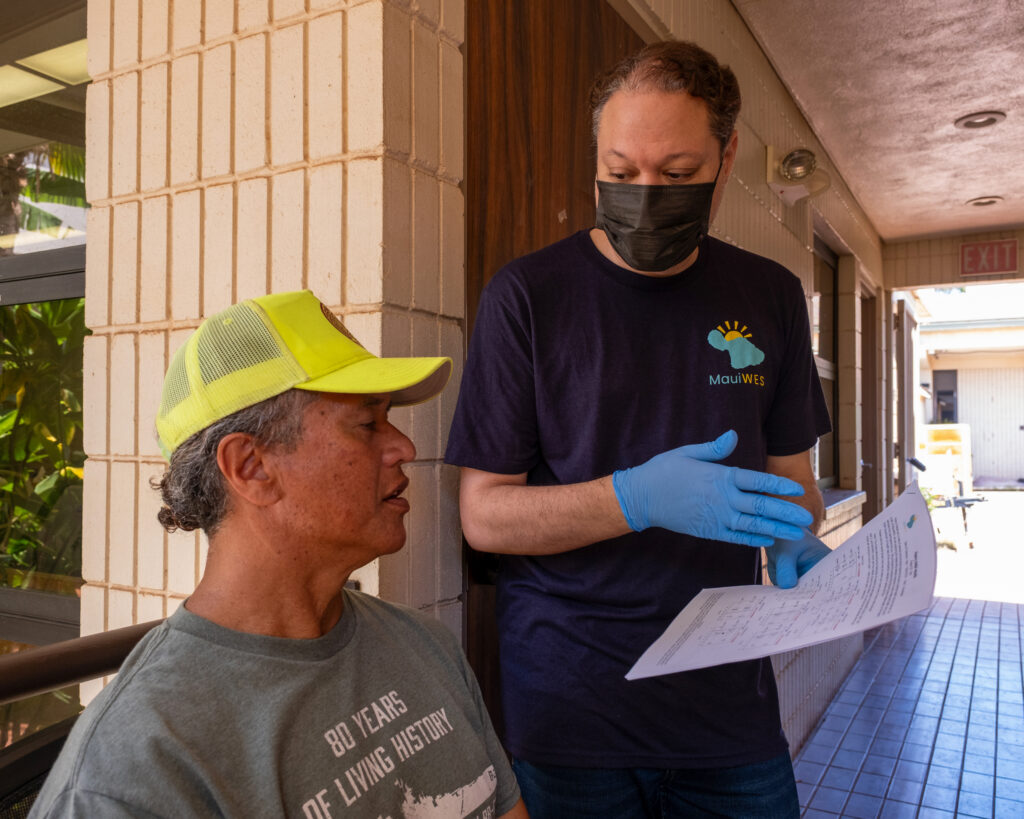
The next day Maunakea supervised a group of staff and volunteers administering lung function tests. A participant wearing a neon-yellow baseball hat and flower-patterned shorts walked in and took a seat.
“It’s unfortunate that you guys didn’t get more additional funding from the legislative session this time,” Ekolu Lindsey said to Maunakea as he took a break from breathing hard into a plastic mouthpiece.
It had been MauiWES’ most recent funding attempt: A bill sponsored by the state senator for West Maui, Angus McKelvey, would have allotted $3 million to keep the study going and expand the number of children it could serve. But at the last minute, the bill failed to make it through.
“I get it, they went for the bigger-ticket items, but the health part is also a big-ticket item that didn’t take precedence,” continued Lindsey, who is the president of a grassroots land trust organization on Maui. “I don’t think they understood, because probably none of them went through it.”
Maunakea agreed. He had thought that public health would be more of a priority in the wildfire recovery, especially in a state with a doctor as a governor. But funding MauiWES has been an ongoing challenge.
The study’s first cohort, in early 2024, began with charitable funding from the Hawaiʻi Community Foundation and Kaiser Permanente, while the researchers pursued government support. That summer, they got $2.3 million from the state. And almost one year after the fires, they received a $1.4 million grant from the National Institutes of Health’s minority health disparities program.
That support quickly turned precarious after Donald Trump retook office and slashed funding for programs focused on diversity or health disparities, along with a wide swath of academic research.
The MauiWES researchers hoped to renew their federal funding and keep the study going for at least a decade. But heading into the May event, applications they submitted to the agency had been languishing without a decision for more than a year. By that time, the NIH had lost 23 percent of its staff under the Trump administration, almost double the reduction across the entire federal government, according to an analysis by Inside Climate News.
The MauiWES researchers started getting national recognition in the disaster recovery space, speaking on panels and presenting at conferences on the mainland, hoping that might drum up more cash. But private funding wasn’t enough to keep the study going, and the speaking engagements had yet to pay off. More state funding seemed like Juarez and Maunakea’s best hope.
Initially, the team had strong backing from the state’s Department of Health, which wrote enthusiastic letters of support for federal grants. But as the study progressed and the researchers began publicizing their results, the agency pushed back.
The Department of Health had earlier screened 557 West Maui residents for lead in their blood, saying in May 2024 that so few had elevated levels that it was not necessary to screen the general population for toxic substances identified in the burn zone.
“On the basis of these results with lead as an indicator of exposure, we do not expect to find health impacts caused by toxins in the wildfire ash,” agency director Kenneth Fink said in a statement at the time.
But lead is just one of the toxic substances the department found at elevated levels in burn zone ash, and it’s undetectable in people’s blood relatively quickly after exposure, unlike some other substances found in the burn zone. Environmental health experts questioned why the department used a limited sampling of lead to draw broad conclusions about the burn zone as a whole.
Then MauiWES found elevated levels of heavy metals associated with heart and lung issues and cancer risks in a cohort of more than 1,200 fire survivors.
The findings seemed to contradict the Department of Health’s assertion that the burn zone was safe. Emails and letters Inside Climate News obtained through public records requests suggest that agency staff quickly moved into damage-control mode.
The day after Honolulu Civil Beat published a story about the preliminary findings last year, a naturopathic doctor on Maui emailed state toxicologist John Jacob for information about the effects of heavy metals like arsenic, nickel, cadmium, mercury and lead on psychological function. Her clients had been tested by MauiWES and registered high levels of those metals, she wrote.
Jacob forwarded the email to colleagues at the Department of Health.
“I don’t want to affirm what UH is stating,” he wrote, referring to the University of Hawaiʻi. “The panic has begun!”
This story is funded by readers like you.
Our nonprofit newsroom provides award-winning climate coverage free of charge and advertising. We rely on donations from readers like you to keep going. Please donate now to support our work.
Donate NowA few days later, agency staff discussed whether to stop assisting MauiWES with data collection. Fink, the director, said staff could continue for now, but he felt the department’s recommendations on study design had been either inadequate or disregarded. “If the latter, I would need to reevaluate our involvement,” Fink wrote to colleagues.
In October, the Department of Health sent a letter to the University of Hawaiʻi, criticizing MauiWES’ reliance on sampling survivors who showed up—as opposed to a randomized cohort—and its findings of elevated heavy metals in their urine.
The university defended the research in its response and explained that MauiWES was not claiming a definitively causal relationship between the fires and the heavy metals.
Although the team remained committed to working with the state, Juarez said he saw the Department of Health’s letter as an attempt to censor their research. Academics not involved with MauiWES told Inside Climate News the exchange seemed unusual for a university and a state agency, and they did not think the health department’s dismissal of burn-zone dangers was warranted based on the limited information it had collected.
The agency’s director said in a statement to Inside Climate News that discussions about the best way to approach research “are a normal and healthy — and often essential — aspect of scientific collaboration.”
“While our perspectives may differ, both DOH and UH remain committed to respectful dialogue and evidence‑based inquiry,” Fink wrote in his statement. “Most importantly, the public needs clear, accurate, and consistent information about how the wildfires may have affected their health. Residents deserve timely communication they can trust — free of speculation and grounded in the best available data.”
In an emailed statement to Inside Climate News, Jacob acknowledged that the researchers’ approach was acceptable but said that not disclosing limitations could “result in confusion among the general public.”
In defense of the agency’s own approach to quantifying post-wildfire health risks, a department spokesperson said in an email that a structured soil sampling technique allowed staff to use the lead screening as a “reasonable indicator for population exposure.”
In internal emails in January, agency staff discussed a bill with funds earmarked to keep MauiWES alive. They agreed to keep a close watch on the effort. “Especially since we are not satisfied with their science,” wrote Jacob, the toxicologist.
In the end, a department subagency was among those submitting testimony in support of the funding. But that wasn’t enough to push it through. When the bill fell short with still no word on federal money, it looked like the end of MauiWES.
Iho Mai Nā Lani
At nearly 5 p.m. on Sunday, the team packed up while finishing tests for the last few stragglers. Most of the staff and volunteers had to catch a flight back to Oʻahu in a couple of hours, but Christopher Knightsbridge, a therapist working on the study’s research team, would stay on Maui a few more days to see patients in person.
Knightsbridge was overcome with pure frustration. All weekend, he’d done mental health check-ins with participants still focused on getting by, day by day. He felt certain the study was having an impact. He saw it every week. And he was still concerned about what he’d been hearing in his sessions. He wanted his patients to wake up and feel like they were living, not simply fighting to survive. For that, they needed more support, not less.
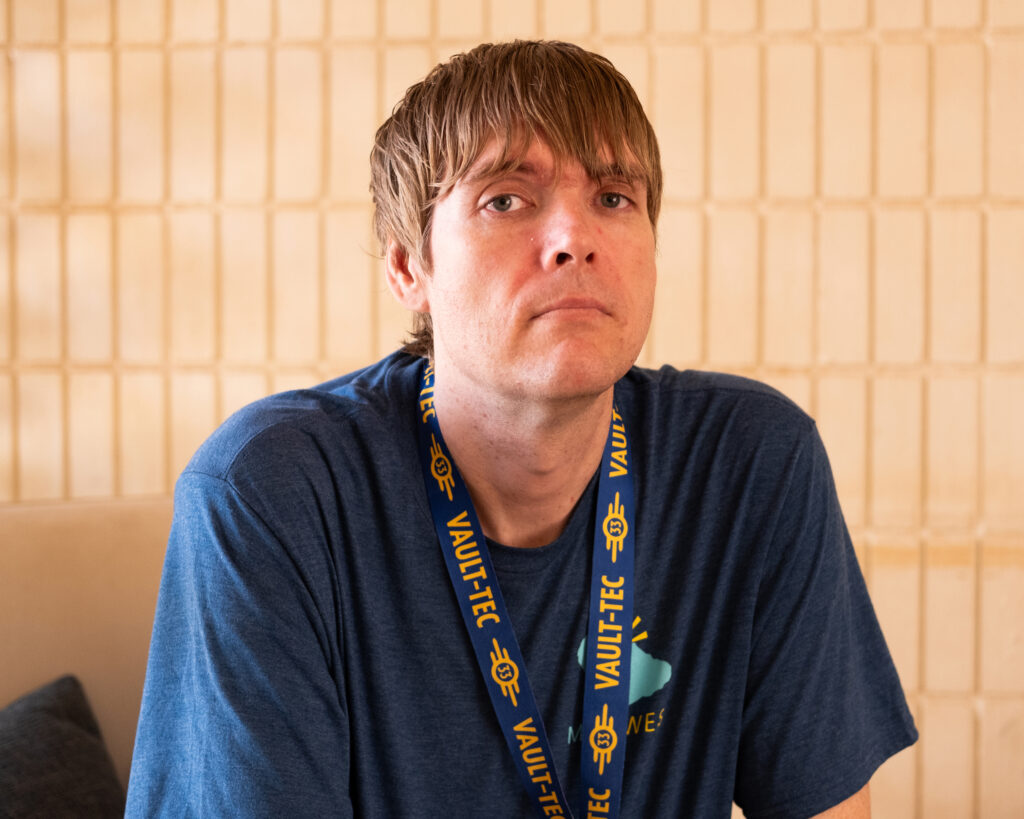
Knightsbridge poured everything he had into supporting survivors’ mental health in recovery. He spent half of most weeks away from his wife and young children on Oʻahu to see patients still dealing with ongoing crises: survivors in temporary housing and unstable employment, people with cancer diagnoses, young children whose lives were turned upside down by the fires. He’s seen serious PTSD symptoms, depression and even suicidal ideation from kids as young as 6.
That same week, he sat in his video gaming group for kids at the health center with two of Mikey and Rob Burke’s sons, the twins dealing with PTSD. Knightsbridge was seeing both boys for therapy and organized the gaming group as another form of support, a low-stakes place for kids to open up. But the federal emergency grant supporting his position—separate from MauiWES’s funding—was also about to run out.
On the other side of the lobby, Juarez stood in a doorway, gutted. The study had made painfully apparent the gaps in healthcare access on the island, and it felt like their work was just beginning. The thought brought him to the brink of tears. Throughout the weekend, he heard from worried participants who asked if the study was going away. He didn’t want to let them down.
Near the entrance to the courtyard, Maunakea carried a table from the hallway back into one of the offices, tired but heartened by how many people had come through. Sitting with returning participants, learning about their recovery journeys and watching how they were putting the pieces back together was energizing for him. Healing is a communal task in Lahaina. The study leaned into that.
Maunakea knew the next disaster was just around the corner. He believed Maui could adapt and offer a model to the rest of the world for building resilience to the steep challenges climate change brings.
Maybe, he thought, that would be the ultimate lesson from the study: that documenting and addressing health inequities in the wake of a disaster helps communities withstand what they cannot escape.
Toward the end of the day, more survivors arrived without appointments after hearing about the study from family and friends. By closing, he estimated the team had turned away more than a dozen new people, taking down their names in case funding came through. Maunakea met people that weekend who said they’d known about the study for several years but hadn’t felt ready to participate until now. It hammered home to him how crucial it was for their work to go on.
The team would find a way to continue the study, Maunakea felt certain. He didn’t know how, but he saw no other choice. If his great-grandmother was alive, she would have said: ‘O ka pono ke hana ‘ia a iho mai nā lani. Continue to do good until the heavens come down to you.
He believed that this study is pono, and that the community wanted and needed this service. So somehow, iho mai nā lani. The heavens would come down.
Inside Climate News’ Peter Aldhous contributed to this story.
Read part two to find out what happened to MauiWES and how the Burkes began to rebuild.
About This Story
Perhaps you noticed: This story, like all the news we publish, is free to read. That’s because Inside Climate News is a 501c3 nonprofit organization. We do not charge a subscription fee, lock our news behind a paywall, or clutter our website with ads. We make our news on climate and the environment freely available to you and anyone who wants it.
That’s not all. We also share our news for free with scores of other media organizations around the country. Many of them can’t afford to do environmental journalism of their own. We’ve built bureaus from coast to coast to report local stories, collaborate with local newsrooms and co-publish articles so that this vital work is shared as widely as possible.
Two of us launched ICN in 2007. Six years later we earned a Pulitzer Prize for National Reporting, and now we run the oldest and largest dedicated climate newsroom in the nation. We tell the story in all its complexity. We hold polluters accountable. We expose environmental injustice. We debunk misinformation. We scrutinize solutions and inspire action.
Donations from readers like you fund every aspect of what we do. If you don’t already, will you support our ongoing work, our reporting on the biggest crisis facing our planet, and help us reach even more readers in more places?
Please take a moment to make a tax-deductible donation. Every one of them makes a difference.
Thank you,

Keerti Gopal
Reporter, Health and Justice
Keerti Gopal covers intersections between climate change, public health and environmental justice at Inside Climate News. Previously, she covered climate activism and movement repression. She is a National Geographic Explorer and has received fellowships from Fulbright, the Solutions Journalism Network, The Lever, and the National Press Foundation.