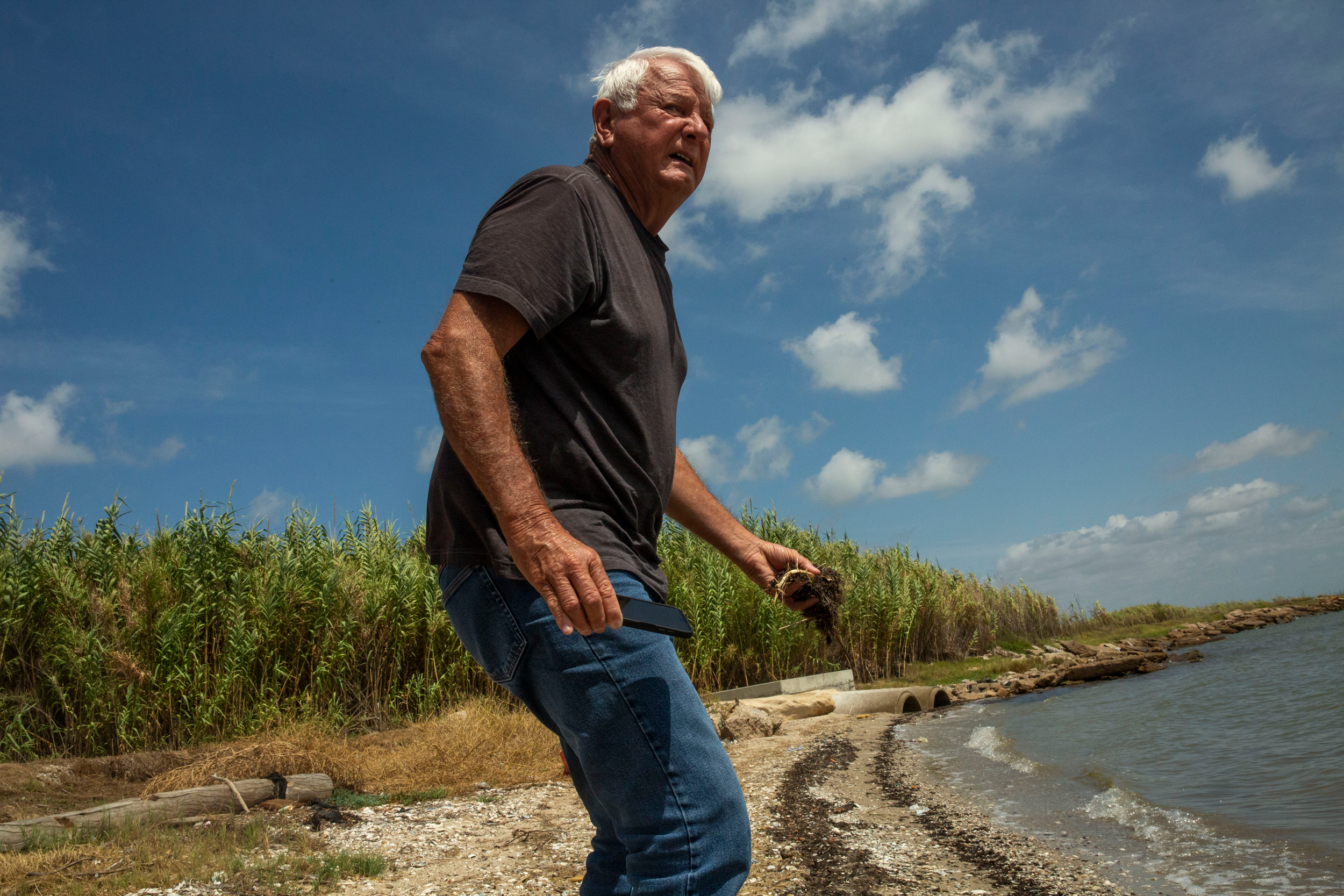


The Resistance, Part 3: A key ally to environmentalist Diane Wilson opposes a move by Texas regulators to issue Formosa Plastics Corp. a new permit without requiring the petrochemical giant to stop discharging plastic waste into Lavaca Bay.
Palm trees surrounded the meeting hall, near the edge of Lavaca Bay in a tiny Gulf Coast town, where about 100 people took their seats one evening last month for a discussion with state authorities.
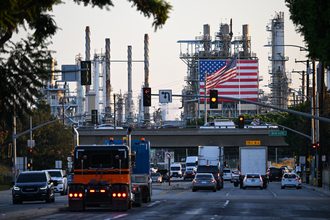
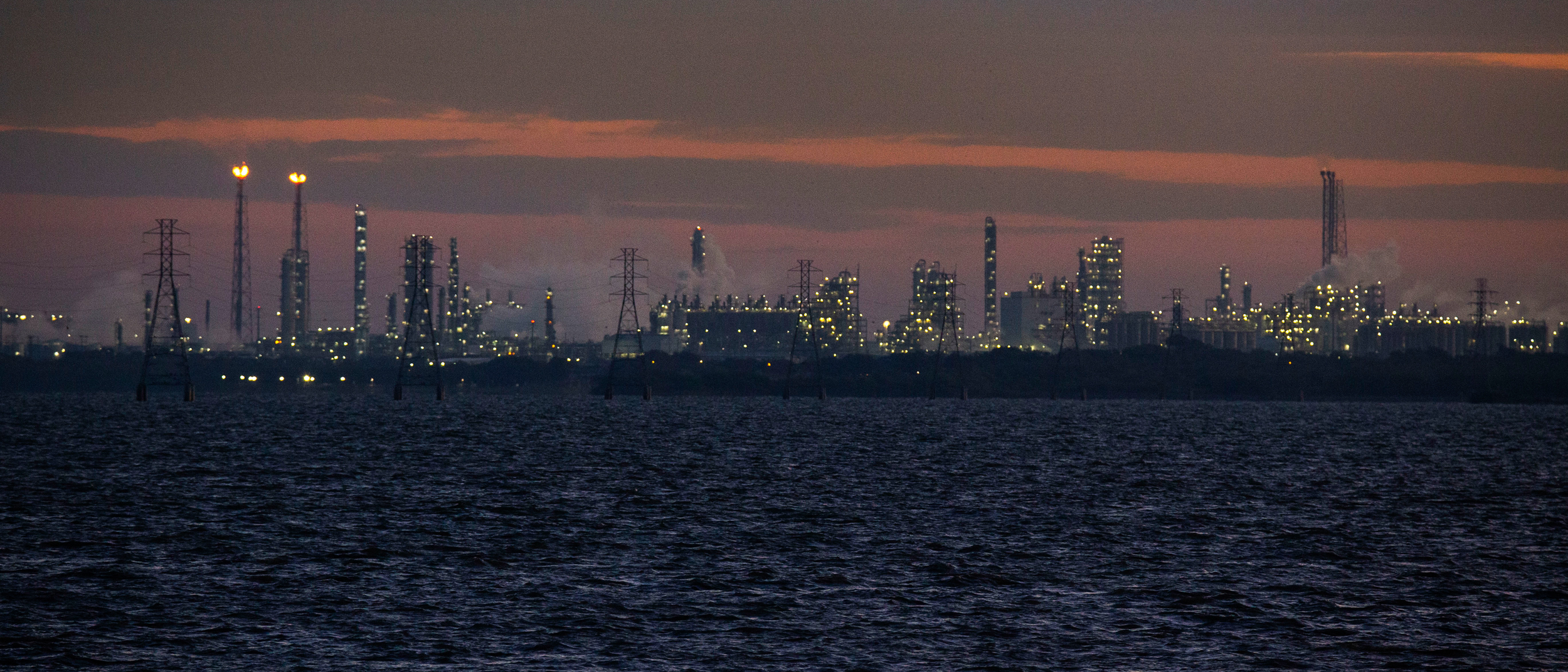
A panel of technical experts from Texas’ environmental regulator had traveled 150 miles from the capital in Austin to talk about industrial wastewater discharges from the sprawling conglomeration of petrochemical infrastructure that loomed across the water, Formosa Plastics’ Point Comfort complex.
The regulator, the Texas Commission on Environmental Quality, had proposed a regular renewal of Formosa’s discharge permit, so agency representatives came to take questions and comments from the public.
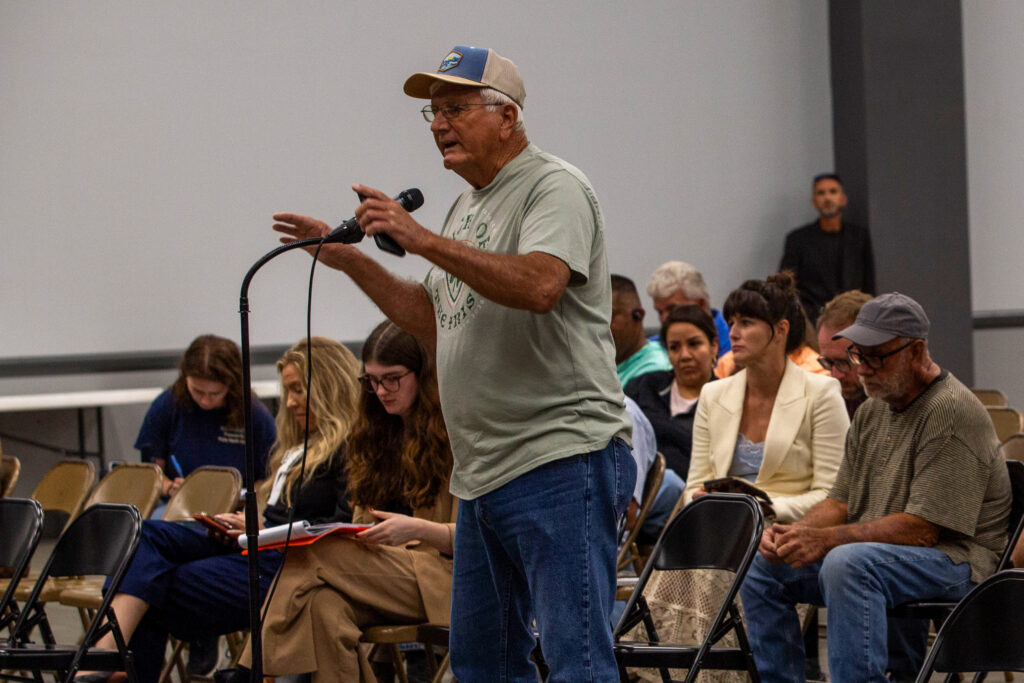
A silver-haired former supervisor at Formosa, Ronnie Hamrick, stepped up to the microphone.
“Why are y’all sitting here saying that you’re going to renew their permit?” he asked indignantly. “You know what they’re doing!”
Hamrick, standing in a baseball cap, jeans and camouflage Crocs, had sacrificed mightily to make sure of it. He had gathered much of the evidence that convinced a federal judge, in 2019, that the Taiwanese plastics giant had chronically violated its wastewater permit for decades, releasing vast amounts of polyethylene pellets and PVC powder into Lavaca Bay.
Hamrick played a critical role in the landmark lawsuit led by one of the most acclaimed environmentalists in Texas, Diane Wilson, who continues to lead campaigns against petrochemical giants on this rural stretch of coastline.
The lawsuit against Formosa led to a $50 million settlement, the largest ever awarded in a citizen lawsuit under the Clean Water Act. In it, Formosa committed to zero discharge of powder or pellets from Point Comfort—the first prohibition on release of plastic material from any plastics manufacturing complex in the world.
But fighting against Formosa cost Hamrick most of his friends and family. It even got him kicked out of church.
Despite what he lost, Hamrick felt that achievement helped redeem him for the 25 years he spent at the plant, and made up for some of the damage he feels he suffered to his central nervous system as a result.
But since the settlement took effect in 2021, records showed, Formosa never stopped releasing plastic and had paid an additional $48 million in penalties into an environmental trust fund under the settlement as a result. Still, TCEQ declined to press the issue earlier this year when it issued its draft permit renewal for Formosa that did not include a ban on plastics discharge.
“They’re still doing it!” Hamrick told the panel of TCEQ staff in Port Lavaca. “We’ve got the proof!”
The meeting moderator interjected. Unless Hamrick had another question, she said, they’d move on to the next speaker. Hamrick tossed his hands up in exasperation and walked back to his seat.
Luke Metzger, executive director of Environment Texas, a nonprofit in Austin, took the microphone. TCEQ had included the zero discharge standard in earlier drafts of Formosa’s wastewater permits, he said. He had obtained documents through records requests showing the regulation in internal TCEQ documents in 2023 and 2025.
“There will be zero (0) discharge of Plastics from Formosa’s Point Comfort Plant,” said a recommendation issued by the TCEQ executive director in June 2025 for the 140-page wastewater permit. But the TCEQ’s final draft, released to the public in March 2026, didn’t include that language.
“Why the 180?” Metzger asked. “Y’all reversed your decision.”
“That provision in the earlier draft permits was more or less put in there as a placeholder,” replied the permit’s lead writer, Michael Sunderlin, a 34-year writer of industrial wastewater permits.
“Our management reviewed it and made a determination that we really could not be in a position to enforce that,” he said. “It also could set a dangerous precedent that we would have to start putting that in other permits.”
Almost a dozen enormous plastics manufacturers operate complexes along the Gulf Coast of Texas, and Formosa isn’t the only one that lets large volumes of plastic waste wash into the sea. Enacting a prohibition here could put the TCEQ under pressure to impose the same rule elsewhere.
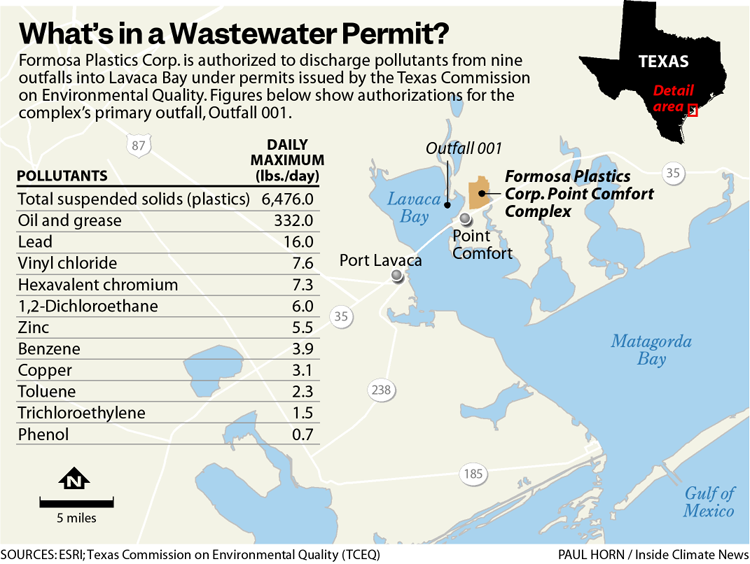
Instead, Formosa’ permit would authorize 3,110 pounds per day of plastic particle discharge from its main wastewater outfall and “trace amounts” from the other eight, along with scores of other chemicals. (Although, if such discharges continued under a new permit, Formosa would still have to pay penalties into the trust fund under the lawsuit settlement).
“Steady and Persistent”
Hamrick, listening from the audience with folded arms, wondered how much these experts from Austin really knew about Formosa’s facility. Not many people knew it like he did.
Hamrick, a 1973 graduate of Port Lavaca High School, worked on a construction crew that built the first plants of the complex. Hamrick went to work there the day it opened, then spent two decades as a shift supervisor in a PVC unit of the complex’s vinyl chloride plant.
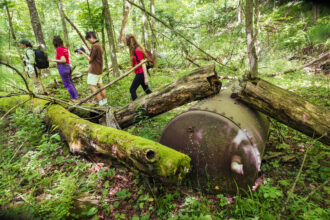
After he quit, in 2005, he joined the resistance that was led by Diane Wilson, the shrimper woman, an environmentalist and notorious local agitator. For three years, Hamrick had spent most of his days skipping and wading around the beaches and marshlands of the bay system, collecting plastic pellets and powder as evidence in support of Wilson’s 2019 landmark lawsuit against Formosa.
Hamrick got to know the outfalls where wastewater and stormwater runoff washed vast volumes of plastics out of Formosa while he volunteered with a small team of other former chemical plant workers.
“He was by far the most steady and persistent,” Wilson later said in an interview. “And he’s got pure hell for doing it.”
As Hamrick looked around the audience at the meeting in Port Lavaca, Wilson was the only one of his former teammates that he saw. The others had moved on or moved away, and most had paid for what they gave to the cause.
“That’s the bad thing about these whistleblowers,” Wilson said. “Their circumstances, many of them have been tragic. It really upsets me how unsupported they are.”
Still, Hamrick was glad to see that so many people had come to the meeting and he liked what most of them said about Formosa. After it ended, he drove his silver pickup home to his trailer outside town where he lives with his Dachshund-Chihuahua mix, Toby.
In an interview at his home late last year, Hamrick recalled his early days at Formosa. It was hard work, with 12-hour shifts, sometimes days and sometimes nights, three to five times a week. But the job paid generously and provided benefits.
“I made a good living for my family,” Hamrick said. “My kids had the best. My wife bought them anything they wanted.”
At the plant, he observed many practices he found troubling. He saw air alarms unheeded, chemical spills under-reported and workers exposed to gases and liquids in ways that Hamrick assumed would harm them.
A recent investigation by Public Health Watch detailed Formosa’s history of chronic workplace accidents and environmental violations, including mismanagement of highly toxic substances like vinyl chloride and ethylene dichloride.
In recent years, the investigation said, more people were injured at Formosa Plastics than at four other large Texas petrochemical complexes combined.
During the time he worked in the plant, Hamrick figured Formosa paid so well to compensate workers for workplace hazards. So he never raised a fuss. As the Point Comfort complex grew through major expansions, Hamrick worked earnestly for 25 years, dreaming of his promotion to a day job with regular working hours. He thought he was waiting in line.
Then, when a position as maintenance coordinator opened, Hamrick didn’t get it. He felt slighted and betrayed.
The last straw came after an explosive release of vinyl chloride at the plant one day. Hamrick estimated it in tons, but was directed to report just a few pounds, he said. His colleagues were instructed to clean up the chemical mess with what Hamrick thought was inadequate protection.
After his shift, he drove 50 miles to a nearby town and saw a doctor, who diagnosed him with damage to his central nervous system from chemical exposure. Hamrick signed up for disability payments and quit his job.
Whistleblowers
His wife called him crazy. He was mad about everything he put up with at Formosa, but no one wanted to hear about it. Formosa put money in a lot of families’ pockets, and most didn’t see fit to complain.
The only one who would listen was Wilson.
“I was the last option for people like Ronnie,” she wrote in her second book, “Diary of an Eco-Outlaw,” published in 2011. “He had gone through the company, OSHA, state and federal investigators, state and federal politicians and he was driving his friends and wife crazy.”
For months, Hamrick spoke to Wilson through anonymous phone calls, she wrote, until he agreed to meet at a cafe by the harbor in a neighboring town. Wilson tried to connect Hamrick with authorities who could follow up on his complaints, but none ever did.
Later, Wilson wrote, Hamrick introduced her to other workers who were angry about chemical exposure and wanted justice. In dark fields and beer joints, they came forward to tell their stories. She went to newspapers, lawyers and every authority she knew, but none offered aid.
One of those workers, Dale Jurasek, first mentioned the plastic in the water. Everyone at Formosa knew about it. That’s what the complex produced: PVC powder and polyethylene pellets called nurdles. Hamrick used to see the plastic waste in piles on the ground, spilled from silos or train cars, waiting for wind or rainfall to sweep it away. But he never thought about where it ended up.
Once Hamrick noticed it in the water, he realized it was everywhere.
Wilson, director of a group called San Antonio Bay Waterkeeper, reported their realization to state environmental regulators but got virtually no response. So Wilson and a handful of former plant workers collected plastic particles and sent pictures as evidence to the state. Still, no real response.
The more the crew looked, the more plastic they discovered. Around 2012, Wilson’s group teamed up with environmental lawyers at the nonprofit Texas RioGrande Legal Aid to prepare a federal lawsuit against Formosa for plastic pollution.
Always Watching
Around that time, Hamrick’s marriage fell apart. Most of his friends stopped talking to him. They asked if he was trying to get Formosa shut down. His pastor asked him not to come back to his church, Grace Community. He had hung the drywall in the sanctuary.
He wasn’t invited to Thanksgiving or Christmas with his family. He lost contact with his daughter, whose husband worked at Formosa, and he didn’t see his grandsons anymore. Missing those boys hurt him most of all, but he understood. He didn’t want his son-in-law to face retaliation at work.
One day, as Hamrick and others collected plastics below Formosa’s outfall at Cox’s Creek, he heard someone call his name. He looked and saw the plant manager, who called him over and asked him to stop what he was doing.
Hamrick might have done it, he thought, if the manager had offered him something: a job, a check, a gift, anything. But he didn’t. That made Hamrick even angrier. He turned the manager down and swore to himself he would do whatever it takes to win.
“I’m gonna beat them,” he thought as he walked away. “I’m gonna beat them, no doubt.”
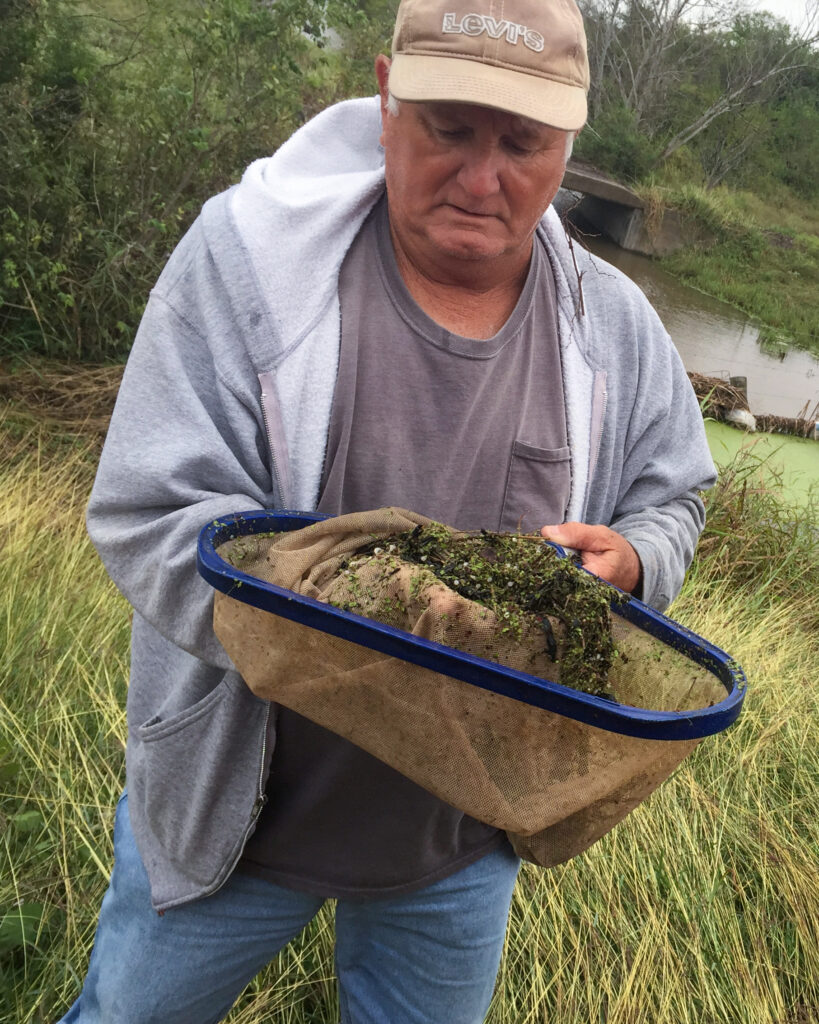
Four, five or six days a week he went out to gather plastic for hours at a time. He found the locations of all Formosa’s outfalls that discharged powder and pellets. He figured out how to spot it quickly, learned where to find it accumulated in the contours of the shoreline and discovered how to sift through floating debris so the hidden plastic rose to the top.
An attorney on the case at the time for the nonprofit Earthjustice, Erin Gaines, was struck by Hamrick’s “passion and dedication” to monitoring Formosa’s outfalls.
“He would go out diligently each week rain or shine, taking samples and writing handwritten notes about each,” Gaines said recently. “Because of his time working at Formosa, he knew about the different types of plastics that Formosa made and could show you which ones were in the creek or the bay.”
By 2019, Wilson’s litigation team collected thousands of samples, which the lawyers rolled into a federal courthouse in Victoria to convince a judge that Formosa had been discharging them into the bay for decades.
After a judge found in their favor, Waterkeeper set the terms for a landmark settlement. Formosa would pay $50 million into an environmental trust fund and would agree to a pollution standard never applied to a plastics plant before—zero discharge of plastics. The company would build a device to test its wastewater outfalls for plastic, then pay more money into the trust fund each time it was detected. (Formosa has paid into this fund three times every week since the settlement as it continued emitting and detecting plastic waste).
Hamrick got a card in the mail from a lawyer in Washington at the National Environmental Law Center. “Couldn’t have done it without you,” it said. Hamrick cherished it as one of his most prized possessions.
But around Calhoun County, he got a lot of dirty looks. Strangers at the grocery store warned him to be careful. Formosa wouldn’t be giving out employee bonuses because of him, others said. People mimed pistols with their fingers and pretended to shoot when he passed by.
Hamrick felt that he was being followed. Trucks parked outside his trailer with their lights on in the middle of the night. When they did, Hamrick would get out of bed, drive to the bay and start collecting plastics with a flashlight, just to show he wasn’t scared.
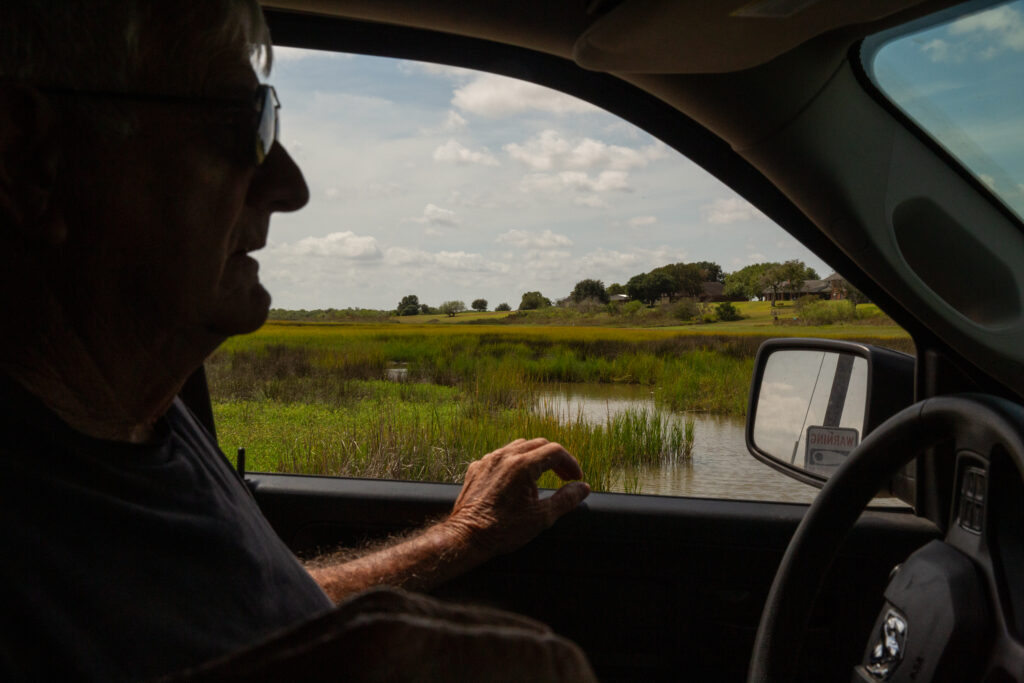
Twice someone cut the power to his trailer at night. After he’d gotten up to fix it, Hamrick would go collect plastic.
He never stopped making his rounds. Sometimes he’d stand in front of the security cameras on Formosa’s fenceline and collect plastic, just so they knew he was still watching.
The Lonely Waterkeeper
Wilson won the prestigious Goldman Environmental Prize in 2023 for the lawsuit against Formosa. Over time the campaign drew more recognition and renown.
The Matagorda Bay Mitigation Trust Fund, which was established in the settlement agreement, began to inject millions of dollars into community projects.
Last year Hamrick appeared in a documentary film about Wilson’s life and lawsuit. He glowed when he saw that the film included a shot of the card he’d received from the lawyer in Washington.
This story is funded by readers like you.
Our nonprofit newsroom provides award-winning climate coverage free of charge and advertising. We rely on donations from readers like you to keep going. Please donate now to support our work.
Donate NowHe also got an invitation in 2025 to the wedding of his grandson, whom he hadn’t seen in eight years. Things were getting better for Hamrick, but he still felt outcast.
“I have nobody that’ll talk with me here,” he said in an interview at his home in October 2025.
Sometimes he wonders if he made the right decision taking part in the fight against Formosa.
“In a way, I wish I wouldn’t have gotten involved,” he said. “But I don’t know if that would have saved my marriage.”
Ultimately, he said, he’s proud to be a waterkeeper, and in his sacrifices he found redemption for the times he lied in emission reports or failed to demand proper safety procedures for the men on his shift.
Formosa’s wastewater permits authorize it to put plastics and a slurry of other chemicals into the bay, but most people in town don’t seem bothered.
“You’ve got citizens here that do care about the environment, but you’ve got a lot that don’t really give a crap,” he said.
Since the settlement agreement took effect in 2021, Formosa has detected plastic in every regular wastewater test, filed scores of reports with the TCEQ and paid tens of millions of dollars of penalty fees into the Matagorda Bay Mitigation Trust Fund, which is independently managed.
Formosa must continue paying into the trust fund for as long as it detects plastic discharge, regardless of what its TCEQ permit says. But Wilson isn’t after the company’s money. She wants the pollution to stop.
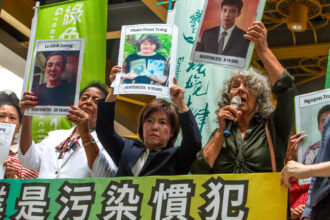
This year, in May, she went as far as Taipei, Taiwan to Formosa’s annual shareholders meeting, to ask the chairman, Kuo Wen-Bee, why the company’s Point Comfort complex continued to release plastic, despite the settlement agreement.
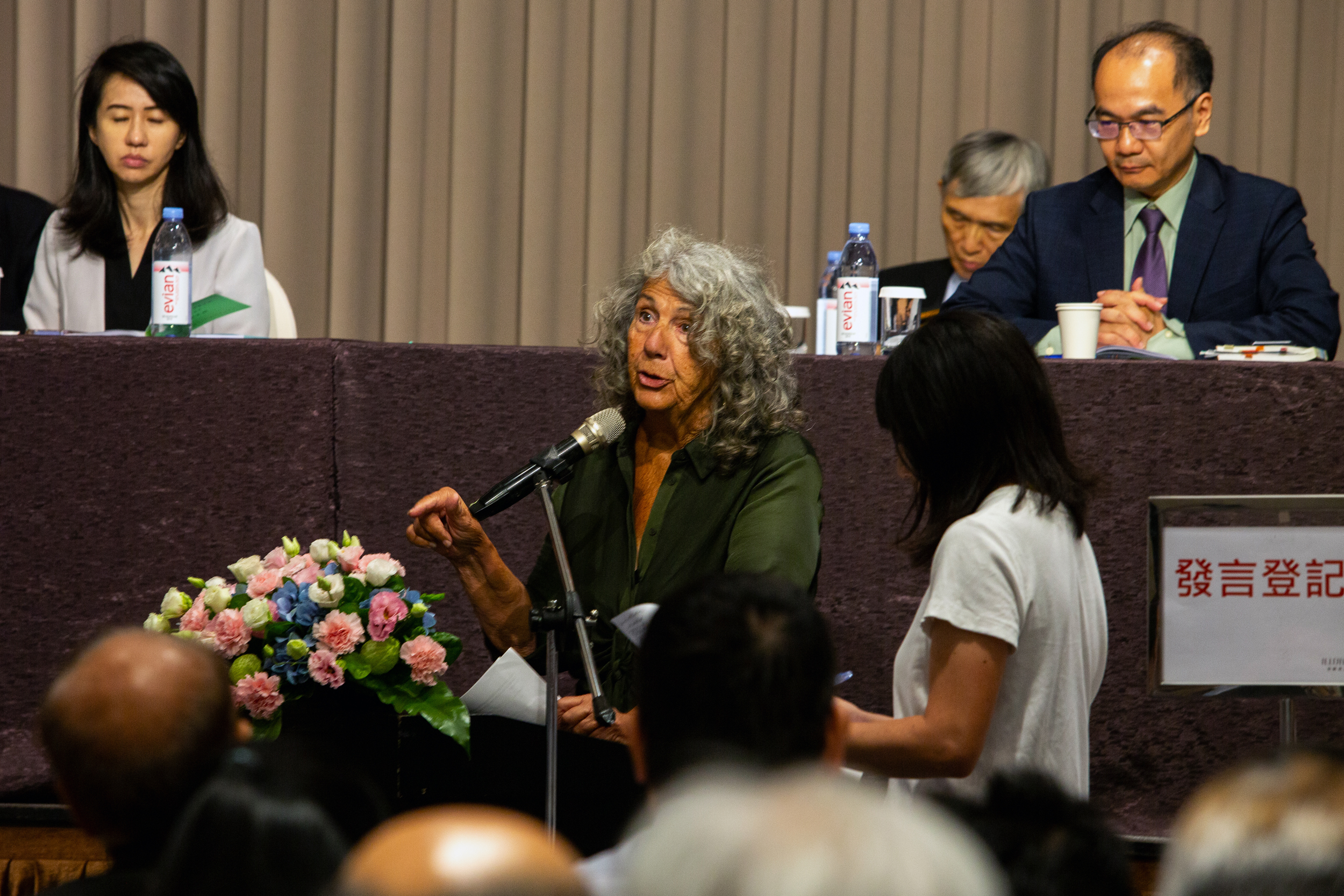
“We are working hard. We have spent hundreds of millions of dollars on this,” the chairman said in response at the meeting. “I don’t think there is any other place in the world with such strict restrictions. We are working hard, and we have worked very hard for a long time to improve the situation.”
When Formosa applied to renew its wastewater permit, it asked to include the strict prohibition on plastic discharge, as required by the settlement agreement. But when the TCEQ posted its draft of Formosa’s renewed permit this year, the agency declined to add that item, saying later that it had no way to enforce it.
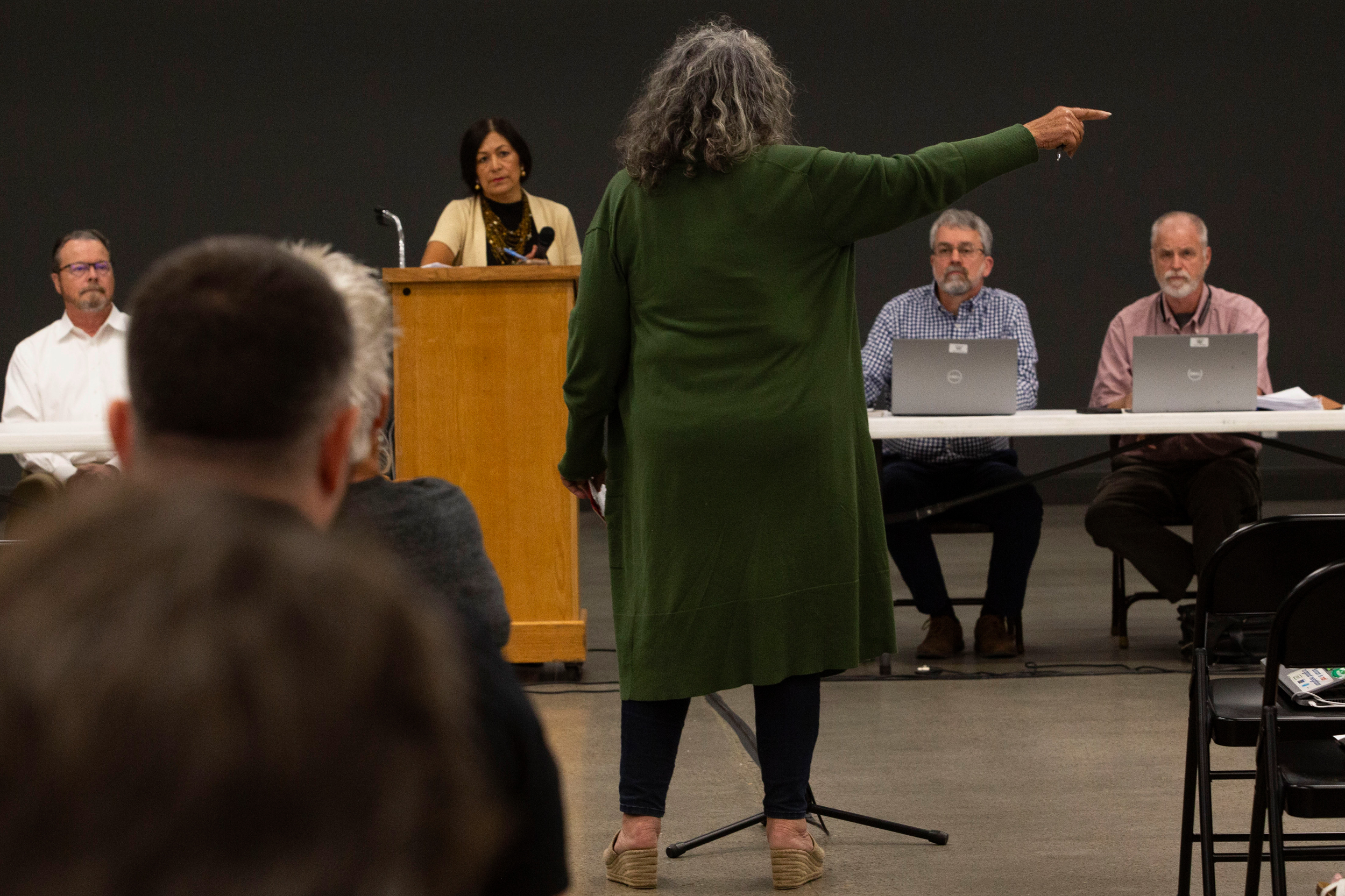
“Somebody up there said it was too difficult,” Wilson said to the panel of TCEQ representatives in Port Lavaca last month. “Quite frankly, I couldn’t believe what I heard.”
Formosa already agreed to it, she said. Making that happen was difficult, too.
“I am a high school graduate, five kids, no money. And we managed to do it,” she said, raising her voice in frustration. “We had injured workers who collected for two years.”
If they could do it, she thought the TCEQ, the second-largest environmental regulator in the country, could do it, too. The agency’s insistence otherwise seemed disingenuous to her.
“Anybody as smart as y’all would say, I cannot believe it,” she said.
On a recent afternoon, Hamrick made his rounds by the bay, stopping in his pickup truck at the spots where he knows from experience that the plastics accumulate.
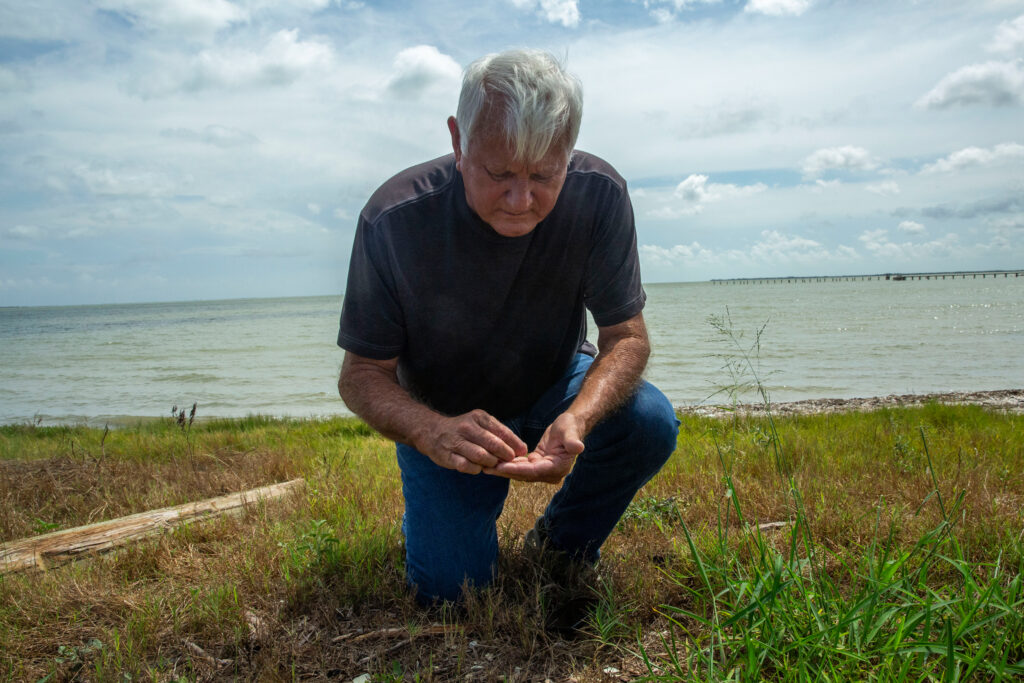
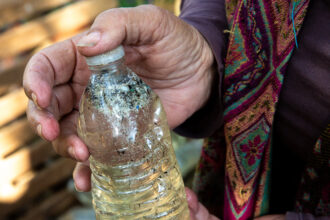
At first they aren’t visible. Then Hamrick moves his fingers through the mud at the edge of the water, and a layer of off-white powder floats to the surface. At another spot, miles away, he combs through some grass and in a few seconds picks out a dozen plastic pellets.
Plastic is now part of the earth that forms the banks of the bay, he realized, deposited consistently for decades. The plastic waste poisons wildlife and ultimately pollutes the food chain with toxic chemicals.
“The citizens, they don’t understand,” he said. “It’s hard to see.”
After all the years he’s put into this, he doesn’t believe that the TCEQ will be able to stand in the way of the ban on plastics discharge from Formosa.
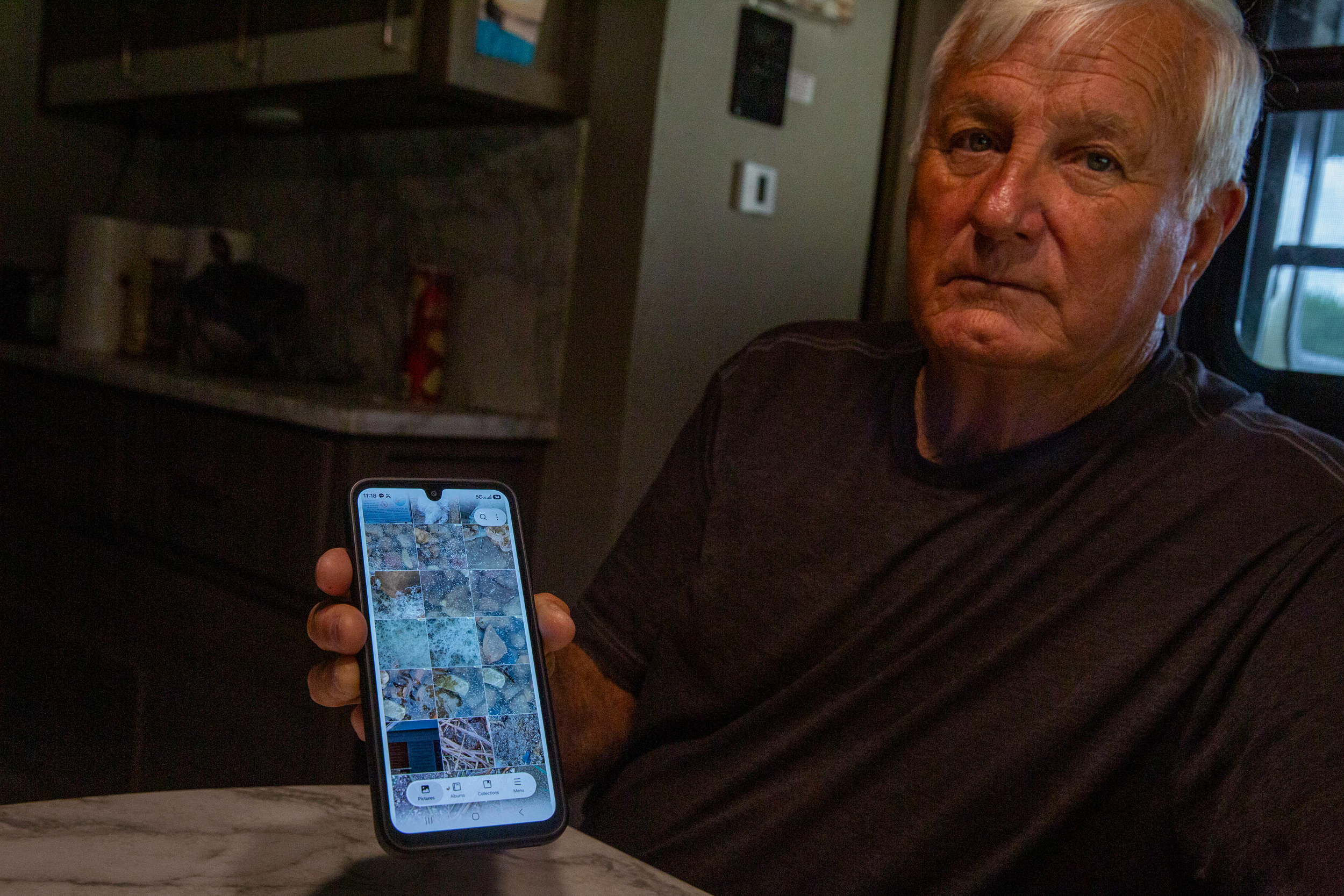
Hamrick still sends hundreds of pictures of the plastics he finds to the lawyers who worked the Formosa case, but they aren’t sure what to do with them. He sends them to Wilson, but she’s turned her focus to another lawsuit over plastics pollution from another nearby chemical giant, Dow.
Hamrick keeps the pictures on his phone and shows them to anyone who is interested to look.
“I’m a waterkeeper,” he said. “I’m the only one here now.”
About This Story
Perhaps you noticed: This story, like all the news we publish, is free to read. That’s because Inside Climate News is a 501c3 nonprofit organization. We do not charge a subscription fee, lock our news behind a paywall, or clutter our website with ads. We make our news on climate and the environment freely available to you and anyone who wants it.
That’s not all. We also share our news for free with scores of other media organizations around the country. Many of them can’t afford to do environmental journalism of their own. We’ve built bureaus from coast to coast to report local stories, collaborate with local newsrooms and co-publish articles so that this vital work is shared as widely as possible.
Two of us launched ICN in 2007. Six years later we earned a Pulitzer Prize for National Reporting, and now we run the oldest and largest dedicated climate newsroom in the nation. We tell the story in all its complexity. We hold polluters accountable. We expose environmental injustice. We debunk misinformation. We scrutinize solutions and inspire action.
Donations from readers like you fund every aspect of what we do. If you don’t already, will you support our ongoing work, our reporting on the biggest crisis facing our planet, and help us reach even more readers in more places?
Please take a moment to make a tax-deductible donation. Every one of them makes a difference.
Thank you,

Dylan Baddour
Reporter, Austin
Dylan Baddour covers the energy sector and environmental justice in Texas. Born in Houston, he’s worked the business desk at the Houston Chronicle, covered the U.S.-Mexico border for international outlets and reported for several years from Colombia for media like The Washington Post, BBC News and The Atlantic. He also spent two years investigating armed groups in Latin America for the global security department at Facebook before returning to Texas journalism. Baddour holds bachelor’s degrees in journalism and Latin American studies from the University of Texas at Austin. He has lived in Argentina, Kazakhstan and Colombia and speaks fluent Spanish.