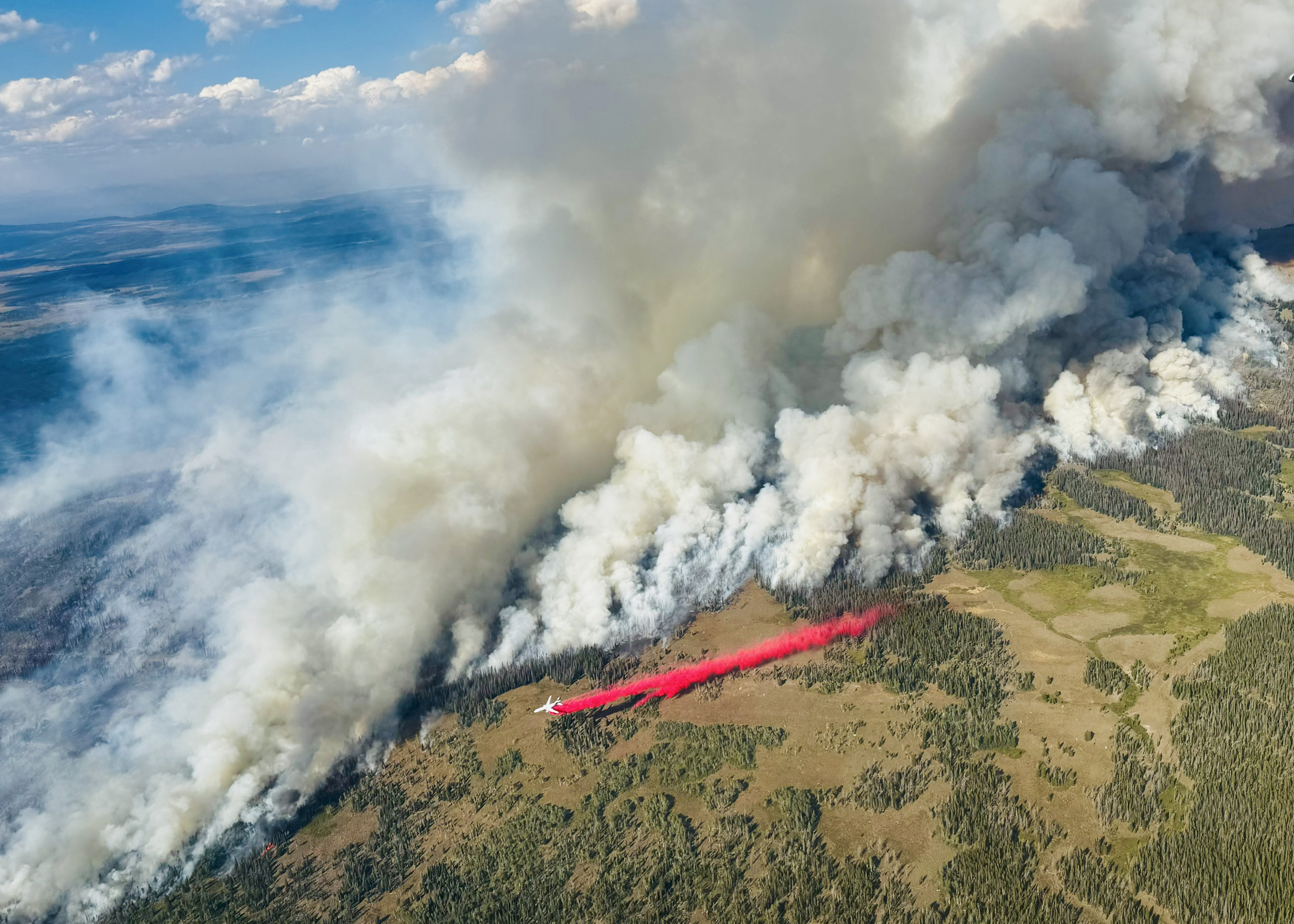


On the heels of one of the warmest and driest winters on record, parts of Wyoming show “significant fire potential” this spring and summer, according to a national forecast released on April 1.
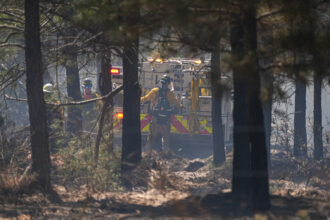
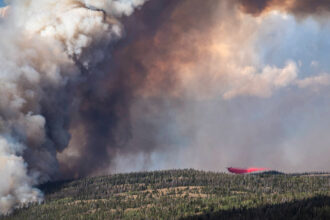
The U.S. has set or is approaching records for the number of wildfires ignited and the acreage burned by March, and Wyoming firefighters and district managers have already responded to blazes across the state. While the National Weather Service forecasts rain and snow for parts of Wyoming this week, many firefighters in the state are nervous about the potential for huge, quickly spreading conflagrations this summer.
“I certainly don’t ever remember a winter quite like this winter,” said J.R. Fox, Campbell County’s fire warden. “Everybody’s definitely nervous about what the fire season will bring.”
The new report, published by the National Interagency Fire Center in Boise, Idaho, rated areas of southern Wyoming as having significant fire potential in April, June and July.
The report identifies “above,” “below” and “near normal fire outlooks” across the country and has been produced in some form by the organization since 2002.
Wildland fire managers in Wyoming say the season’s meager snowpack and high temperatures have left an unprecedented and volatile range of fire conditions across the state. A team of scientists recently determined that the record-shattering heatwave that gripped the West in March would be “virtually impossible” without climate change.
Some firefighters are making tough decisions about when and how to use limited resources, while others are reaching out to communities earlier than they ever have before, urging fire-smart behavior.
“From my 40 years of being here, we’re six plus weeks ahead of time” in terms of fire conditions, said Liz Davy, a co-founder of the Greater Yellowstone Fire Action Network. This March, her organization, which helps areas around Yellowstone prepare for and respond to wildfires, started reminding communities early how best to protect property from wildland fires.
Homeowners should remove firewood from on or underneath porches, sweep up dead leaves and trim vegetation around their property, including grasses and shrubs near structures, Davy said. The Greater Yellowstone Fire Action Network also helps communities and homeowners make evacuation plans in case of a wildfire, and Davy is considering taking such steps this spring.
“I’ve never packed a go kit, but this year I’m kind of thinking about it,” she said.
Some areas of Wyoming have already dealt with wildfires. The Kane fire in Big Horn County was discovered on March 22 but behaved like an “August blaze,” reported the Cowboy State Daily. There have also been a few small starts in Natrona County, said Brian Oliver, chief of the Natrona County Fire District.
In a typical year, Oliver said Natrona County would usually be able to contract out some of its firefighting crews and equipment to other jurisdictions during the spring, a valuable source of income for his department. But now, with the risk of fire so high—on March 26, Natrona joined 10 other counties in Wyoming under fire restrictions—Oliver doesn’t see this as an option.
“I think we’re gonna need everybody here at home,” he said. “The fires this year have the potential to go big and be very dangerous very quick.”
Springtime can be when homeowners and ranchers, accustomed to receiving snow during March and April, use fire to maintain their property or prepare fields for the growing season. But Oliver said he and his department have asked ranchers and some subdivisions to put aside their plans to burn.
Even in areas of Wyoming where snowpack has been closer to average, fire managers are nervous about the coming season.
“The lower elevation snow is significantly less than normal and it’s disappearing earlier than normal,” said Shad Cooper, Sublette County’s fire warden. Cooper said the county has increased its social media messaging about fire danger and stepped up evacuation planning “because we’re seeing fire activity much earlier than normal.”
Last month, Sublette County sent resources over to Lincoln County, where an agriculture burn had gotten out of control, Cooper said.
On the heels of 2024’s record-setting wildfire season in Wyoming, state lawmakers allocated new resources to firefighting during this year’s legislative session. State Forestry will now oversee two 10-person firefighting crews capable of deploying anywhere in Wyoming; lawmakers also improved state firefighters’ benefits.
“That increase in capacity is gonna directly support local response [and] statewide needs,” Cooper said.
With summer still a few months away, firefighters cautioned that it was too soon to know for certain how this year’s season would unfold. Still, the whole state should already be mindful of fire risks, said Jerod DeLay, Wyoming’s assistant state forester and fire management officer.
“Be aware of your surroundings and be mindful of the conditions out there,” he said. “Have a plan for wildfire, because wildfires could wreck your plans.”
About This Story
Perhaps you noticed: This story, like all the news we publish, is free to read. That’s because Inside Climate News is a 501c3 nonprofit organization. We do not charge a subscription fee, lock our news behind a paywall, or clutter our website with ads. We make our news on climate and the environment freely available to you and anyone who wants it.
That’s not all. We also share our news for free with scores of other media organizations around the country. Many of them can’t afford to do environmental journalism of their own. We’ve built bureaus from coast to coast to report local stories, collaborate with local newsrooms and co-publish articles so that this vital work is shared as widely as possible.
Two of us launched ICN in 2007. Six years later we earned a Pulitzer Prize for National Reporting, and now we run the oldest and largest dedicated climate newsroom in the nation. We tell the story in all its complexity. We hold polluters accountable. We expose environmental injustice. We debunk misinformation. We scrutinize solutions and inspire action.
Donations from readers like you fund every aspect of what we do. If you don’t already, will you support our ongoing work, our reporting on the biggest crisis facing our planet, and help us reach even more readers in more places?
Please take a moment to make a tax-deductible donation. Every one of them makes a difference.
Thank you,

Jake Bolster
Reporter, Wyoming and the West
Jake Bolster reports on Wyoming and the West for Inside Climate News. Previously, he worked as a freelancer, covering climate change, energy, and the environment across the United States. He holds a Masters in Journalism from Columbia University.