

A proposed federal logging project in the forests bordering Yellowstone National Park is drawing growing concern from local residents, business owners and conservation advocates who fear it could have lasting impacts on wildlife habitat, recreation and tourism in one of Montana’s most iconic landscapes.
The U.S. Forest Service is using emergency authority to speed the approval of the project, for which public comment closed Monday. Opponents say the agency hasn’t explained what the emergency is.
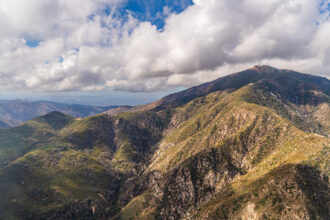
Yellowstone National Park is more than a world-famous tourist destination. Established in 1872 as the first national park in the United States, it serves as the core of the Greater Yellowstone Ecosystem, one of the largest nearly intact temperate ecosystems on Earth. The park and the surrounding public lands provide critical habitat for grizzly bears, wolves, lynx, elk, bison and many other species, as well as reducing the impact of climate-damaging emissions by storing carbon.
Wildlife frequently moves beyond the park’s boundaries into nearby national forests, making those landscapes an important extension of Yellowstone’s ecological network. As a result, decisions about forest management near the park can have implications that reach far beyond local communities, affecting wildlife habitat, ecosystem connectivity and the long-term health in an important North American natural region.
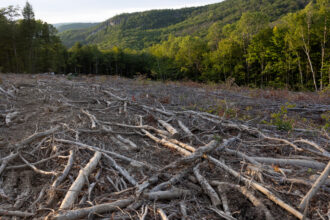
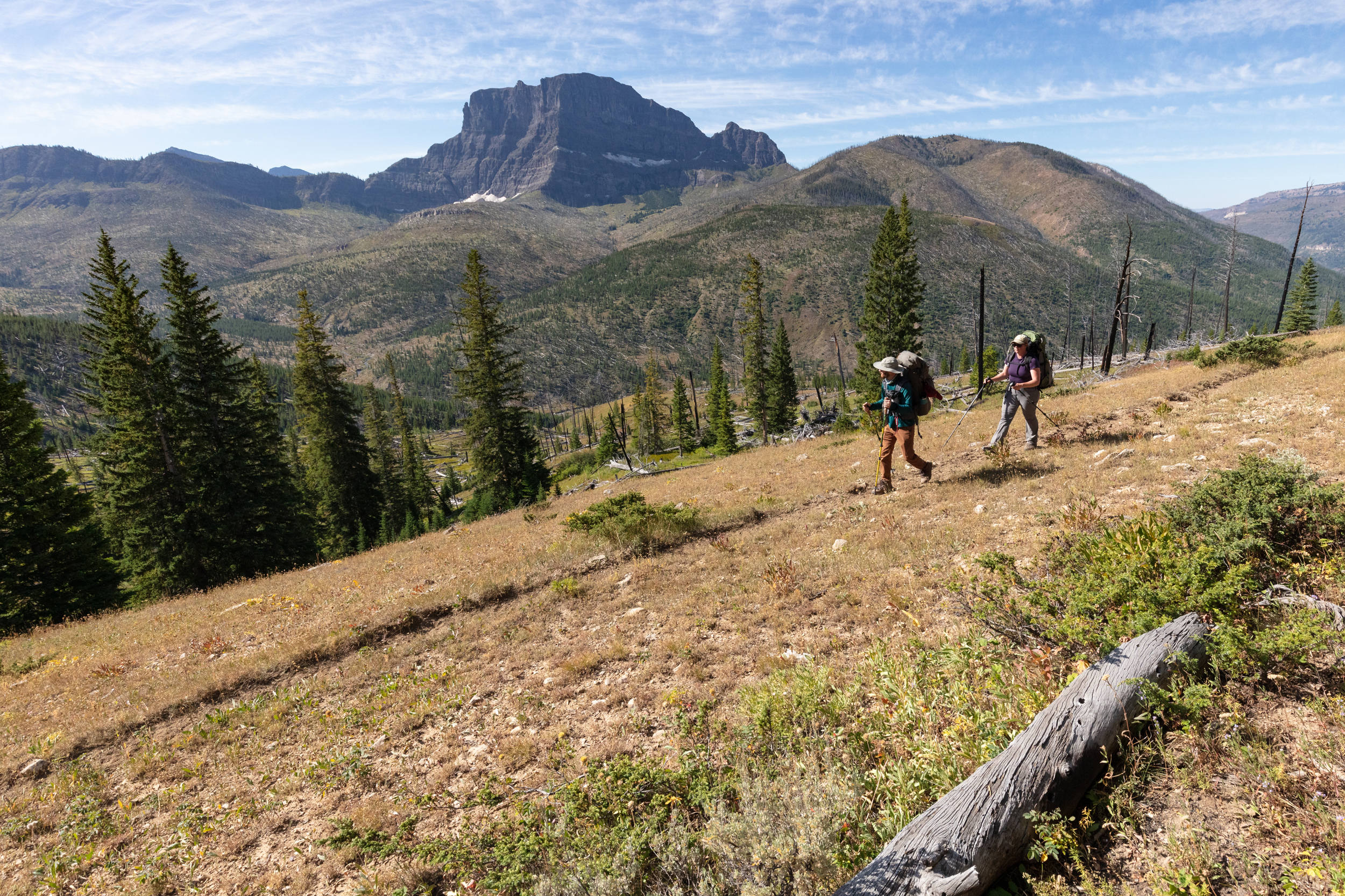
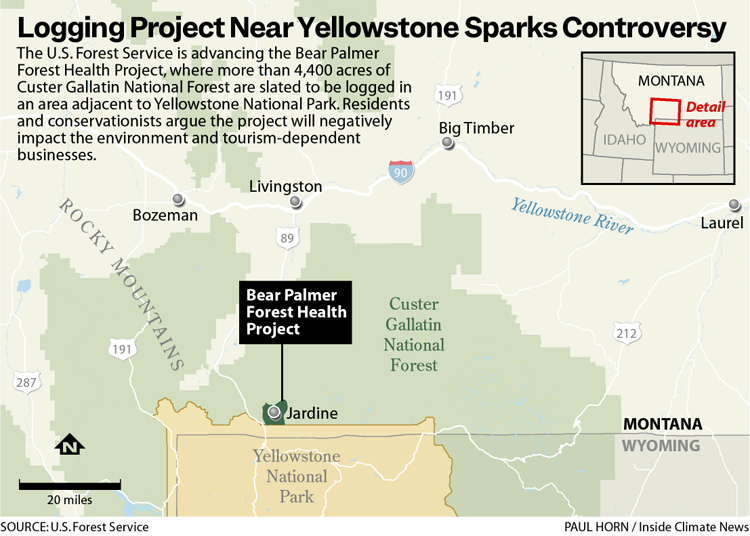
The Forest Service’s proposed Bear Palmer Forest Health Project in the Custer Gallatin National Forest would affect approximately 4,401 acres in the drainages surrounding Jardine, a small community northeast of Gardiner, Montana. The project includes commercial logging, clearcutting, thinning, prescribed burning and temporary road construction.
According to the Forest Service, the goal is to improve forest health and reduce risks from insect infestations, disease and future wildfires. However, critics argue that the scale of the project raises serious environmental and community concerns.
The controversy has been amplified by the project’s approval process. The Forest Service is advancing the proposal under emergency authorities established through the Infrastructure Investment and Jobs Act. As a result, there will be no administrative objection or appeal process that would allow residents or environmentalists to push for reconsideration after the decision is made.
The public comment period was residents’ and environmental activists’ primary opportunity to weigh in on the project. The Forest Service estimates a decision on the project could happen in October, with implementation beginning in May 2028.
The Bear Creek Council, a local conservation and community advocacy organization, opposed the project in public comments, arguing that the Forest Service is using an emergency designation without clearly explaining what the emergency is and that the project deserves a more thorough review. The organization argues the project is too large and complex for an expedited review and should receive a full environmental impact statement.
Scott Brovsky, a Gardiner resident, vice president of the Bear Creek Council and a member of the local Jardine Logging Committee that’s affiliated with the council, said many residents are worried about what the project could mean for the region.
“People are concerned about impacts to wildlife habitat, recreation, tourism, roadless areas and the precedent of large-scale logging adjacent to Yellowstone under emergency authorities,” Brovsky said. Logging, truck traffic, dust, noise and prescribed burning could hurt businesses that depend on Yellowstone visitors, he said.
Gardiner, the northern gateway to the park, is still recovering from a fire downtown in 2020 and a devastating 2022 flood in Yellowstone. Several regional conservation organizations have submitted objections, according to a document Brovsky shared. A letter submitted by the Bear Creek Council last week as a public comment on the project raises concerns about impacts on Canada lynx, grizzly bears, whitebark pine habitat, bumblebees and migratory birds.
Forest Service representatives did not respond to a request for comment or answer questions from Inside Climate News about the project’s goals, wildlife impacts and emergency designation.
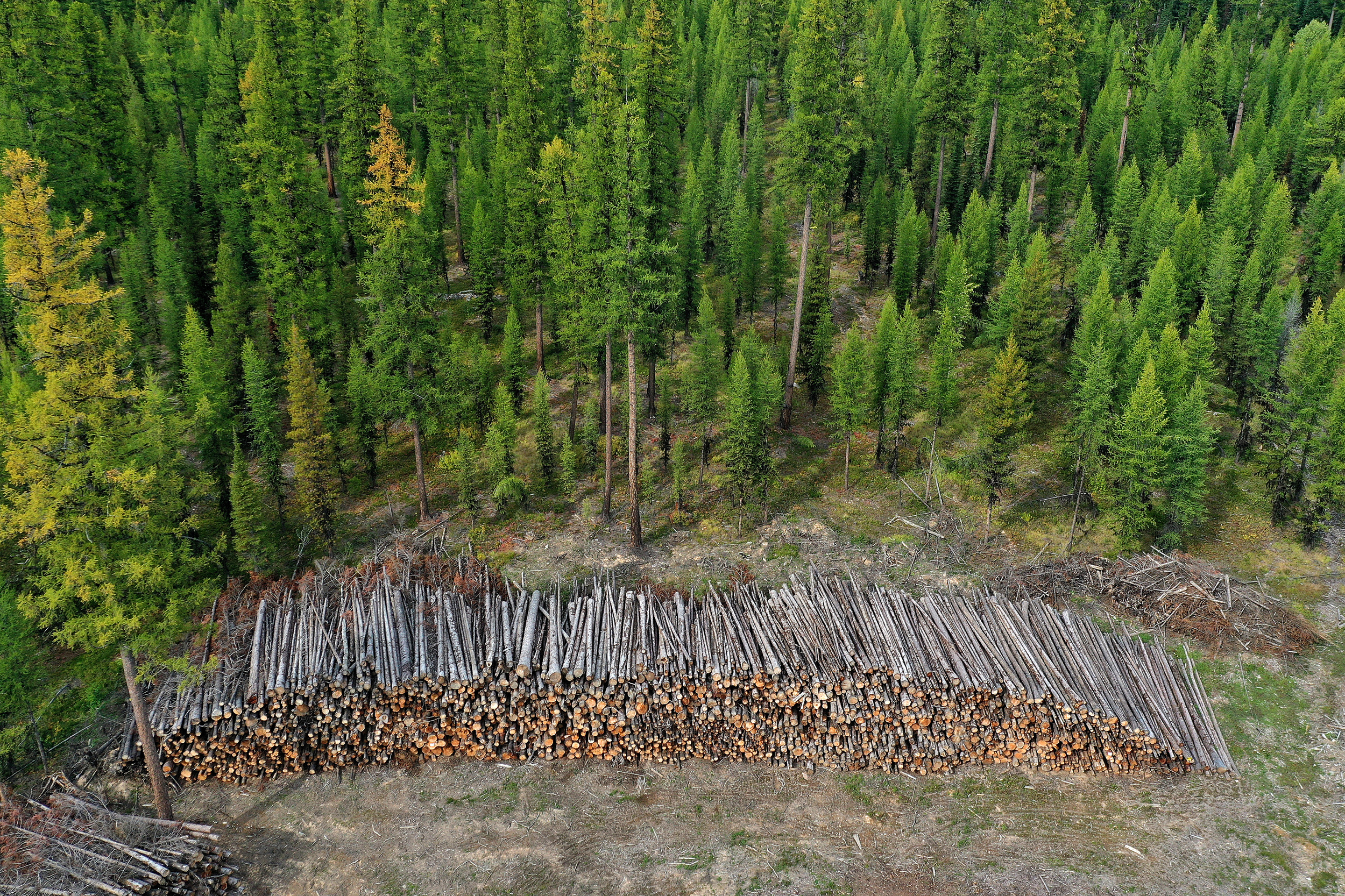
Project documents show that approximately 2,126 acres just outside the park would undergo commercial timber harvest, including 824 acres of clearcutting, 802 acres of commercial thinning and 500 acres on which groups of trees would be selectively harvested. The proposal also includes nearly 17 miles of temporary roads.
This story is funded by readers like you.
Our nonprofit newsroom provides award-winning climate coverage free of charge and advertising. We rely on donations from readers like you to keep going. Please donate now to support our work.
Donate NowWildlife concerns have become a central issue in the debate. The Forest Service’s preliminary analysis states that the project “may affect and will likely adversely affect” Canada lynx and designated critical habitat for the cats. Conservation advocates say the project area serves as an important wildlife corridor in the Greater Yellowstone Ecosystem and fear that extensive logging could fragment habitat and disrupt animal movement.
For many local residents, the debate extends beyond forest management.
Richard Midgette, who submitted a public comment on the project, said the proposal could harm recreation areas and the roads that people use to access them. He argued that clearcutting and prescribed burns near roadways would reduce the value of outdoor recreation in the Custer Gallatin National Forest.
Midgette also warned that removing forest cover could make it harder for trees to recover and create grasslands that burn quickly and intensely. He said the best option would be to selectively remove dead, dying or diseased trees rather than clearcutting large areas.
“Do not clearcut,” Midgette wrote.
Mary Turgeon, another commenter, questioned whether the project truly represents an emergency. Turgeon wrote that the area is important for migration routes, fragile species and the larger ecological web that supports life.
“Food, clean air and livable habitat are emergencies,” Turgeon wrote. “Moving forward on this project sounds like it might actually contribute to an emergency which could be avoided by simply not cutting down the trees.”
Turgeon argued that because questions remain about the project’s impacts, federal officials should delay implementation until they can gather more information.
Another commenter wrote that selective logging is different from clearcutting and warned that cutting forests so close to Yellowstone could destroy the character of the landscape.
“No more logging in our woodlands. Especially when it’s so close and part of the forest surrounding a national park,” the commenter wrote without sharing their name. “Not just any national park, incredible Yellowstone National Park.”
Gerhard Knudsen, an 83-year-old forestry graduate from University of Montana and wildlife photographer who has documented Yellowstone for much of his life, said the project could set a dangerous precedent for future logging near the park.
“I have spent more than 60 years photographing wildlife in and around Yellowstone, and I believe this project would be a dangerous mistake,” Knudsen said in an interview. “The forests surrounding Yellowstone are part of the heart of this ecosystem. If we continue to fragment these habitats, many species will face even greater challenges in the future.”
About This Story
Perhaps you noticed: This story, like all the news we publish, is free to read. That’s because Inside Climate News is a 501c3 nonprofit organization. We do not charge a subscription fee, lock our news behind a paywall, or clutter our website with ads. We make our news on climate and the environment freely available to you and anyone who wants it.
That’s not all. We also share our news for free with scores of other media organizations around the country. Many of them can’t afford to do environmental journalism of their own. We’ve built bureaus from coast to coast to report local stories, collaborate with local newsrooms and co-publish articles so that this vital work is shared as widely as possible.
Two of us launched ICN in 2007. Six years later we earned a Pulitzer Prize for National Reporting, and now we run the oldest and largest dedicated climate newsroom in the nation. We tell the story in all its complexity. We hold polluters accountable. We expose environmental injustice. We debunk misinformation. We scrutinize solutions and inspire action.
Donations from readers like you fund every aspect of what we do. If you don’t already, will you support our ongoing work, our reporting on the biggest crisis facing our planet, and help us reach even more readers in more places?
Please take a moment to make a tax-deductible donation. Every one of them makes a difference.
Thank you,

Mosabber Hossain
Fellow
Mosabber Hossain is an Inside Climate News Fellow and an award-winning climate and environmental investigative journalist from Bangladesh. His reporting focuses on climate change, biodiversity, environmental justice, adaptation and corruption. His work with Reuters and other international outlets has been republished globally, and some of his reporting contributed to discussions featured on the agenda of the World Economic Forum. Mosabber is a graduate student at the University of Montana studying environmental science and natural resource journalism. Previously, he was a fellow with the Institute for Journalism and Natural Resources and Investigative Reporters and Editors. He is a recipient of the South Asian Investigative Journalism Award from the Thomson Foundation and was featured among eight journalists during the organization’s 60th anniversary for the impact of his investigative reporting. Mosabber is also a wildlife and nature photographer whose work has been published internationally.