

Amid fears of a 40 percent cut to Chicago-area public transit services, the Illinois chapter of GreenLatinos mobilized this fall to save the elevated train line that serves two of the city’s predominantly Latino neighborhoods.
The Pink Line is critical to Pilsen and Little Village, both for getting around and for reducing traffic exhaust in areas already overburdened by pollution. The environmental group thought an event would help and teamed up with Little Village Environmental Justice Organization and another Chicago nonprofit, The People’s Lobby, to plan one.
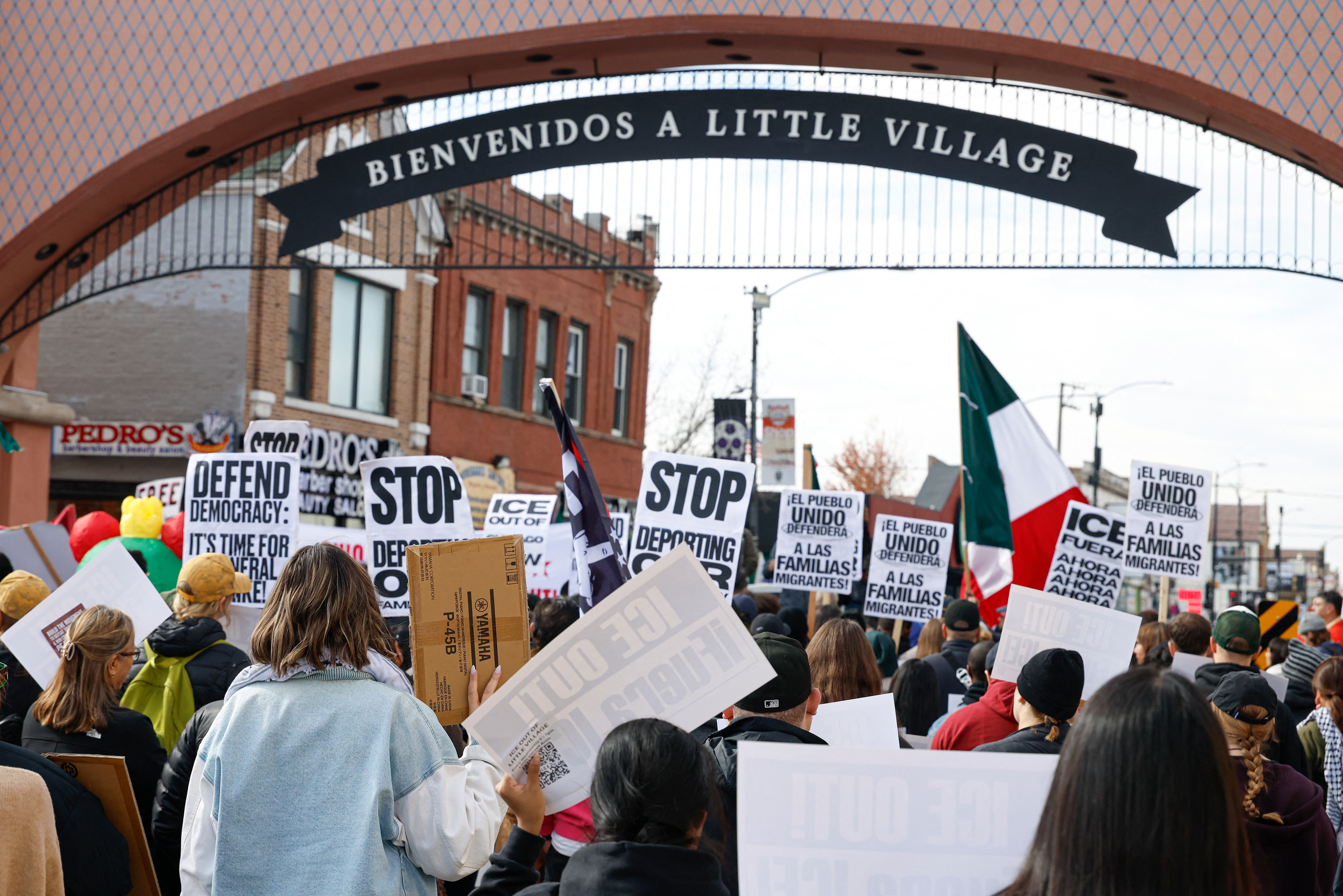
They received more than 100 RSVPs. Then the Trump administration deployed U.S. Immigration and Customs Enforcement and other agents en masse to Chicago and began snatching people, including some Latino U.S. citizens, off the street, at work, and in other locations across the city.
Suddenly, there was a lot more to plan for. The groups lined up rapid responders, community volunteers who could help if people reported ICE activity, to stand outside the building where they were holding the event. Lucy Contreras, GreenLatinos’ Illinois state program director, drove around for half an hour before it started, looking for ICE officers. In the end, only about 30 people showed up.
“It’s obviously really important for us to shift our strategy and meet the moment to ensure that we’re minimizing fear in our communities,” Contreras said. “At GreenLatinos, we really view environmental justice and community safety as inseparable. If people are in fear and being targeted, their ability to advocate for environmental protections is diminished.”
A number of environmental groups in Chicago, including GreenLatinos, have expanded their efforts far beyond the usual as ICE descended on Latino communities and people in the city this fall. Organizations that typically advocate to reduce the disproportionate effects of pollution and climate change on predominantly Black and Latino neighborhoods began hosting “know your rights” events, providing mutual aid and serving as rapid responders when people spotted ICE officers in an area.
It’s a striking example of how immigration and the environment intersect. Activists say it shows how targeting Latinos can harm efforts to reduce the environmental disparities plaguing Chicago, like much of the country. It also increases the odds of burnout.
“This threat in our community really forces us to shift all our attention and resources to helping out our community members,” said Citlalli Trujillo, president of the Pilsen Environmental Rights and Reform Organization (PERRO). “We’re facing these ongoing environmental threats, and people just don’t have the capacity to balance both.”
Communities of color in Chicago, and nationally, are typically exposed to more air pollution, hazardous waste and PFAS, a class of man-made chemicals associated with adverse health effects. Latino communities in the city also have smaller and fewer parks nearby.
Groups fighting environmental injustice work to expand access to green space, reduce pollution in their neighborhoods and address problems such as recurring flooding.
“For us, fighting for environmental justice is also fighting for immigrants, because immigrant communities are disproportionately exposed to pollution and environmental hazards. We really believe that Latino and immigrant communities deserve to live in safe neighborhoods where they can freely access clean air, water and beautiful green public spaces,” said Contreras.
For decades, a coal-fired power plant operated near Little Village, on Chicago’s Southwest Side, and another one operated in Pilsen, a couple of miles east, contributing to asthma attacks, emergency-room visits and early deaths. Both were shuttered after persistent local activism.
But in 2020, a botched implosion of a Crawford Power Generating Station smokestack showered dust all over Little Village. A city inspector general report later stated that Chicago’s oversight of the demolition was negligent, and the company redeveloping the site paid more than $12 million to settle a class-action lawsuit from residents.
This story is funded by readers like you.
Our nonprofit newsroom provides award-winning climate coverage free of charge and advertising. We rely on donations from readers like you to keep going. Please donate now to support our work.
Donate NowThe other retired coal-fired power plant, Fisk Generating Station, is now scheduled for demolition in the Pilsen neighborhood. Environmental groups are trying to ensure that what went wrong at the Crawford plant doesn’t happen again.
Volunteers from PERRO visit the site regularly to monitor what’s going on there and have asked the city for detailed plans for the toxic substances at the site and how they’ll be remediated.
“These things are not just going to halt because of what’s happening with immigration,” said Trujillo. “Having to juggle both of those has been very overwhelming on our team, and people in the organization are definitely facing some burnout and the emotional weight of all that.”
After more than two months in Chicago, federal agents began to leave in mid-November for other cities. Latino-focused environmental groups continue to organize events, such as the one hosted by PERRO on Nov. 21 about the Fisk power plant demolition.
But advocates worry that the chilling effect on activism caused by the presence of federal agents may have long-lasting repercussions, potentially weakening environmental justice efforts. People may be more cautious about going to meetings, attending events or opening their doors to strangers, so GreenLatinos is focusing on outreach efforts in public spaces rather than knocking on doors.
“We’re essentially meeting people where they’re at,” said Contreras.
October brought them a win: The Illinois legislature passed a bill that would keep the Pink Line and other public transportation running without fare increases or service reductions. Gov. JB Pritzker is expected to sign the bill by the end of the year.
Still, environmental groups that pushed for the measure are now concerned that federal terrorism grants awarded to Chicago-area transit authorities could force the agencies to work with ICE. So far, a court has prevented that from happening. A spokesperson for one of the agencies, Metra, said the organization has until the end of the year to accept the grant and has not yet decided whether to do so. The other agency, the Chicago Transit Authority, did not immediately respond to a request for comment.
Environmental groups sent a letter asking Chicago, the state and transit agencies to safeguard the well-being of transit riders and communities by refusing federal funding agreements that mandate coordination with ICE.
“This is a really good example of how environmental justice and immigration issues intersect,” said Contreras.
About This Story
Perhaps you noticed: This story, like all the news we publish, is free to read. That’s because Inside Climate News is a 501c3 nonprofit organization. We do not charge a subscription fee, lock our news behind a paywall, or clutter our website with ads. We make our news on climate and the environment freely available to you and anyone who wants it.
That’s not all. We also share our news for free with scores of other media organizations around the country. Many of them can’t afford to do environmental journalism of their own. We’ve built bureaus from coast to coast to report local stories, collaborate with local newsrooms and co-publish articles so that this vital work is shared as widely as possible.
Two of us launched ICN in 2007. Six years later we earned a Pulitzer Prize for National Reporting, and now we run the oldest and largest dedicated climate newsroom in the nation. We tell the story in all its complexity. We hold polluters accountable. We expose environmental injustice. We debunk misinformation. We scrutinize solutions and inspire action.
Donations from readers like you fund every aspect of what we do. If you don’t already, will you support our ongoing work, our reporting on the biggest crisis facing our planet, and help us reach even more readers in more places?
Please take a moment to make a tax-deductible donation. Every one of them makes a difference.
Thank you,

Susan Cosier
Contributor
Susan Cosier is an award-winning freelance journalist who writes about science and the environment from her home base in Chicago. She covers scientific subjects ranging from the environmental effects of data centers to threats to endangered birds and fish. You can read her work in a variety of publications.