

This story was originally published by The Allegheny Front, a public radio program covering environmental issues in Western Pennsylvania. Listen to the radio version of the piece below.
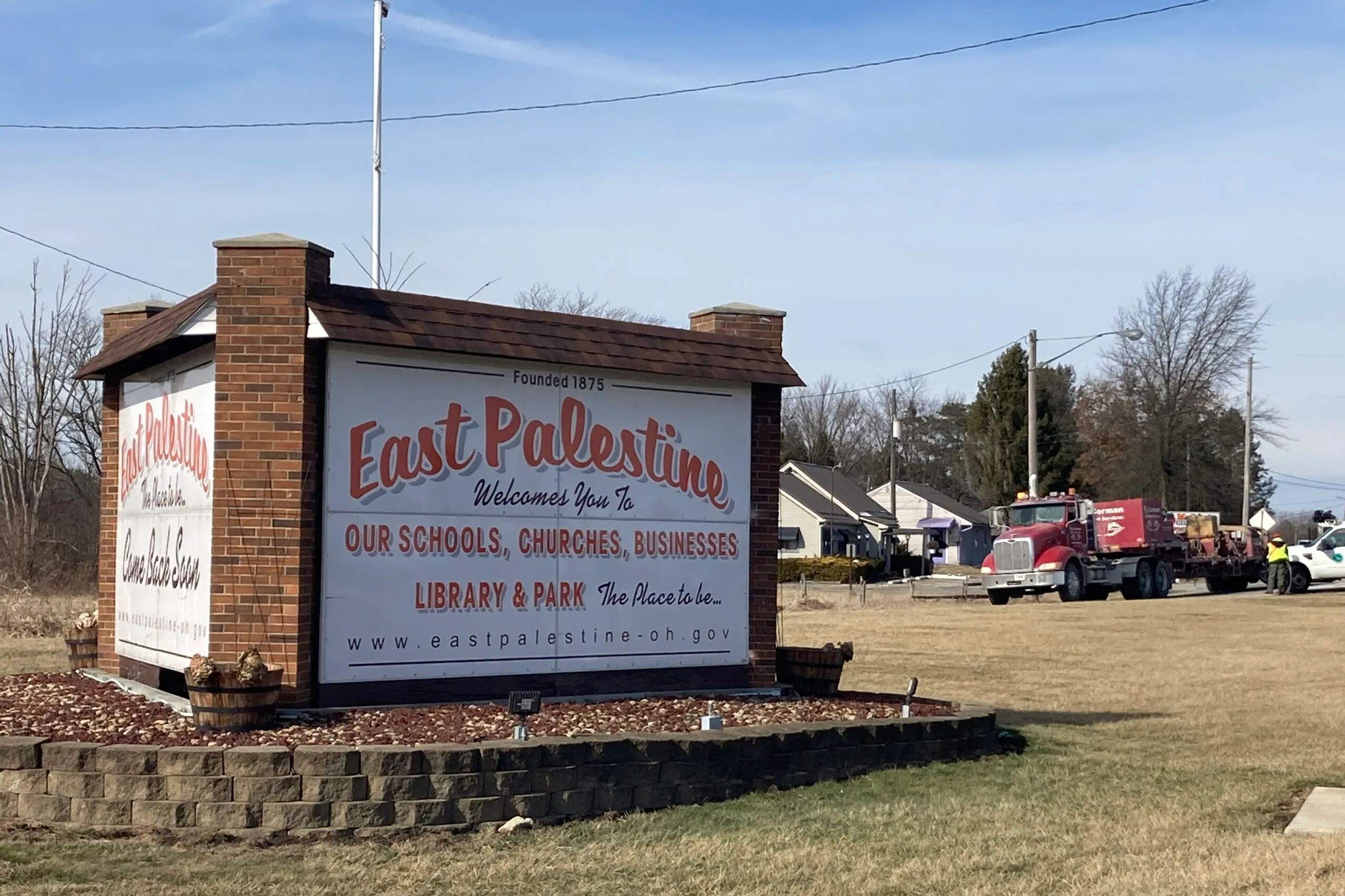
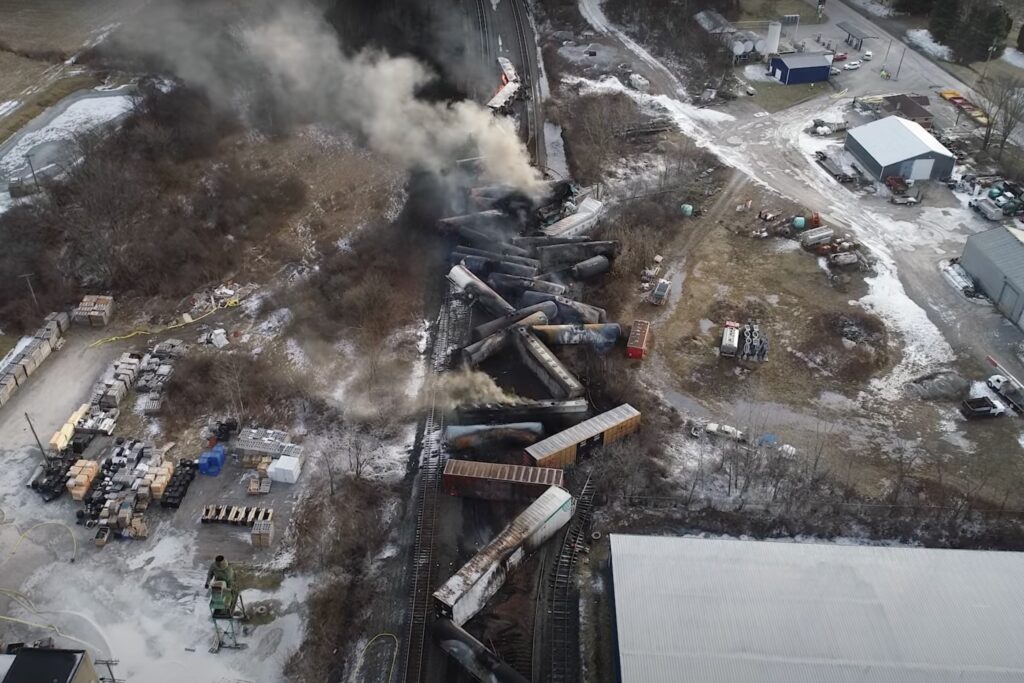
February 3, 2026, marks three years since a massive train derailment and chemical burn in East Palestine, Ohio, released over a million pounds of vinyl chloride, used in making plastic, and other industrial chemicals into the air and water outside, and also inside buildings and homes.
In the weeks that followed, hundreds of people reported health symptoms including headaches, coughs and respiratory issues. Since then, there have been numerous studies looking at the impacts to public health and the environment.
Juliane Beier, an assistant professor of medicine in gastroenterology at the University of Pittsburgh, studies how the liver is affected when it’s exposed to vinyl chloride. The chemical was purposefully vented from five of the tank cars in East Palestine, which exploded and spread throughout the community.
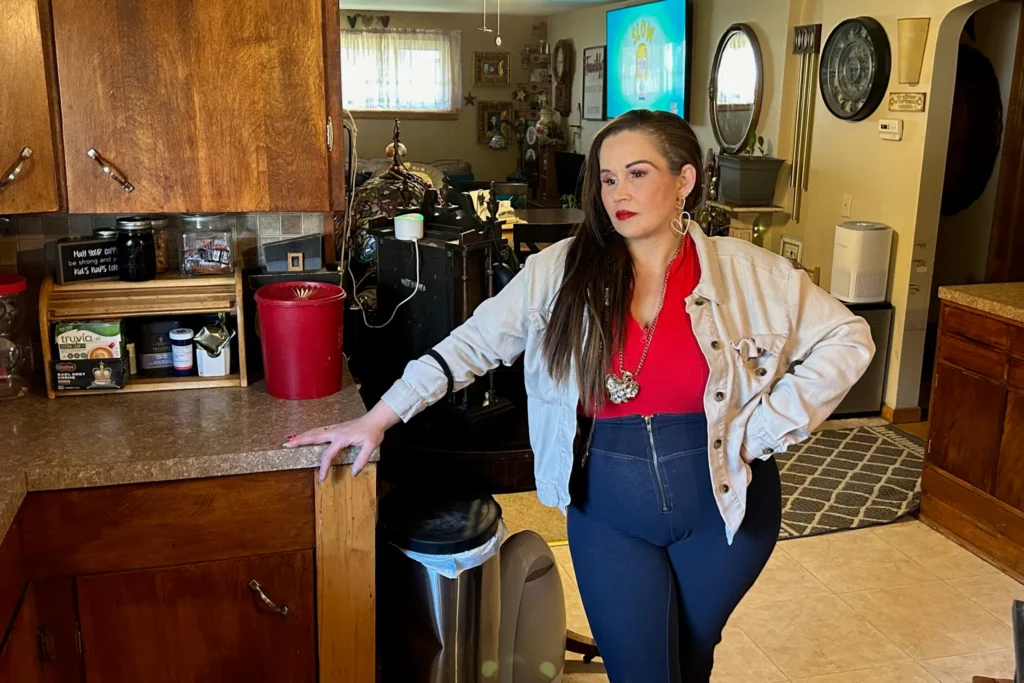
Beier is currently studying 120 people who live within a 10-mile radius of the derailment as part of her second study cohort in the area.
For those who have had liver health tests so far, “we do have about 30-some percent with blood markers of liver damage,” she said.
While that sounds like a lot, Beier said that it’s not necessarily different from U.S. populations in certain areas of the country. Alcohol consumption and obesity are risk factors for liver disease, and these can be especially high in rural areas like East Palestine, according to Beier.
“So at this time, we can’t really say this is due to the derailment,” Beier said. “It could be other risk factors causing this. This is why it’s so important to come in, like every year from now, to look at their progression.”
Beier’s work studying the liver and thyroid function of people in East Palestine is funded through a $2.2 million, five-year grant from the National Institutes of Health.
She said liver cancer can take 10 or 20 years to develop, but exposure to chemicals can speed up its progress. Her team tested indoor air and water in 100 homes close to the derailment site for vinyl chloride and other volatile organic compounds. Details of their findings are not yet available.
Not everyone with liver damage winds up with what she called “end-stage” liver disease, and her effort to track people is meant to help with early identification. Beier said that with behavioral changes, such as reducing alcohol consumption or body weight, early-stage liver damage can be reversible.
“However, the further along they go … the higher the risk for liver failure at the end,” she said.
But behavioral factors don’t explain everything Beier has found so far in East Palestine. She said one person who lives close to the derailment site, and whose home had concerning air quality test results, had a liver scan that shows they “probably ha[ve] advanced liver disease,” even though they are relatively young, had normal blood markers for liver disease, have a “normal” body weight and were not drinking alcohol. “It is concerning,” Beier said.
In the next few weeks, Beier plans to recruit more nearby residents to track their liver and thyroid health.
She also offers advice to people who fear their homes are contaminated: Keep the windows open when possible to release any chemicals that are trapped inside.
Beyond Humans: Health Study of Dogs
Following the derailment, many people were concerned about farm animals, wild animals and pets in the area.
Elinor Karlsson, a computational biologist at the University of Massachusetts Chan Medical School and director of vertebrate genomics at the Broad Institute of Harvard and MIT, and her team, along with a partner lab at Oregon State University, were able to connect with local groups and find dog owners interested in participating in a study.
“We have 75 dog tags from people living everywhere from right next to where the train crash happened to 50 to 100 miles away,” Karlsson said.
Within two months after the chemicals were released in East Palestine, her team sent out what are called passive samplers to interested dog owners in the area.
“You just attach it to your dog’s collar, and it hangs there. You don’t need to interact with it at all. But all it is is a little dog tag made out of silicone,” she said.
Silicone absorbs anything that’s in the air around it, according to Karlsson. “So we actually got that data on what chemicals those dogs were exposed to,” she said.
In the summer of 2024, they sent out another round of samplers for comparison. By then, they expected air quality would be closer to what was normal in the area.
“The dogs that were living closest to the train crash had exposure to chemicals that were different from what they had a year later,” she said. “And also seem to be different from dogs living further away from the train crash site.”
They don’t know yet what that means for the dogs’ health.
The team is exploring other technologies and wants to track the dogs over time, although they don’t have the funding to do so.
Karlsson said health impacts, such as liver disease, don’t take as long to develop in dogs, and that can inform human treatments.
“One of the things that’s the biggest puzzle in human health is how exposures in your environment change your risk of getting diseases like cancer,” she said. “Dogs are a great model for understanding this question because they tend to have shorter lifespans, very sadly, but that means that we can sort of study diseases more quickly in dogs.”
Taking Lessons From East Palestine to Other Disasters
Andrew Whelton, a professor of environmental engineering at Purdue University, and his team have taken what they learned in East Palestine to help people in Los Angeles in the wake of last year’s devastating wildfires.
“We are encountering homes where some people got sick [in L.A.] because of a failure to properly identify health risks,” Whelton said in an email.
His team revealed that when contractors for the railway company, Norfolk Southern, were testing buildings and homes near the derailment site for chemicals, to see if they were safe for people to re-enter, the handheld sensors they were using, called photoionization detectors, were not sensitive enough to detect the levels and types of chemicals that were present.
Many houses and buildings in L.A. were contaminated with fine particulate matter and volatile organic compounds from the fires. Whelton said he has been working with 600 homeowners, reviewing their chemical testing reports, the guidance they’re getting from their insurance companies and the insurance companies’ consultants being sent to test homes.
“Some of the issues that we saw in East Palestine seem to be repeating themselves in L.A., where some companies aren’t actually testing the buildings correctly or using the right equipment,” Whelton said.
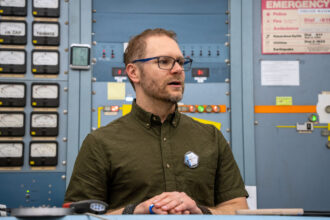
He said in L.A., some contractors were charging up to $10,000 a day to test houses, to determine whether they were safe for people to return, and their testing equipment wouldn’t have been able to detect indoor air quality problems.
“But the odors are overwhelming, and people can’t necessarily be in that building,” Whelton said.
Whelton’s team created a guidance document for homeowners, business owners and local government officials, based on experiences in L.A. and East Palestine.
“So instead of just listening to somebody talk and give their opinion and assume that they know what they’re talking about, we provided some common, plain language kind of information that they can use to get themselves up to speed so that they determine what they need to do … and what things to look out for,” he said.
One thing they noticed was that people in wealthier communities, such as the Palisades, were less likely to return to homes that might be contaminated than those in working-class areas, like those around the Eaton fire in L.A. or East Palestine.
Environmental Justice and Rural Ohio
The idea that some communities are disadvantaged and more likely to experience pollution because of their race or income level, and the effort to provide them with additional assistance, is known as environmental justice.
Researcher Kyle Keeler, an assistant professor of environmental sciences at Lafayette College in eastern Pennsylvania, along with Nicholas Theis, a sociologist at Kenyon College in Ohio, looked at East Palestine through an environmental justice lens. Their article was published in the journal Environment and Planning E: Nature and Space.

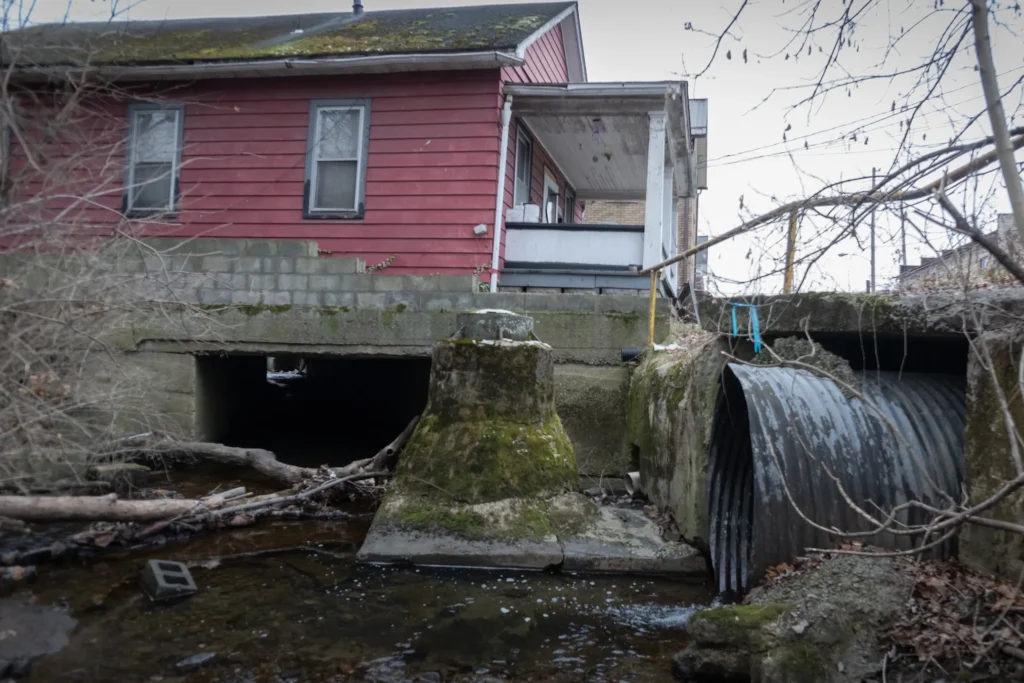
Even though this is a low-income, rural area, Keeler said people in the area around East Palestine don’t necessarily understand that they’re experiencing environmental disadvantages similar to an inner-city neighborhood or a Native American reservation.
“No one is immune to these injustices, and they will continue to happen and continue to ramp up, and the only way to make any sort of difference and any sort of headway against these injustices is not just to look at the injustices in our own communities, but the injustices everywhere, and work towards justice for everyone,” Keeler said. “And that is a huge request, right?”
About This Story
Perhaps you noticed: This story, like all the news we publish, is free to read. That’s because Inside Climate News is a 501c3 nonprofit organization. We do not charge a subscription fee, lock our news behind a paywall, or clutter our website with ads. We make our news on climate and the environment freely available to you and anyone who wants it.
That’s not all. We also share our news for free with scores of other media organizations around the country. Many of them can’t afford to do environmental journalism of their own. We’ve built bureaus from coast to coast to report local stories, collaborate with local newsrooms and co-publish articles so that this vital work is shared as widely as possible.
Two of us launched ICN in 2007. Six years later we earned a Pulitzer Prize for National Reporting, and now we run the oldest and largest dedicated climate newsroom in the nation. We tell the story in all its complexity. We hold polluters accountable. We expose environmental injustice. We debunk misinformation. We scrutinize solutions and inspire action.
Donations from readers like you fund every aspect of what we do. If you don’t already, will you support our ongoing work, our reporting on the biggest crisis facing our planet, and help us reach even more readers in more places?
Please take a moment to make a tax-deductible donation. Every one of them makes a difference.
Thank you,