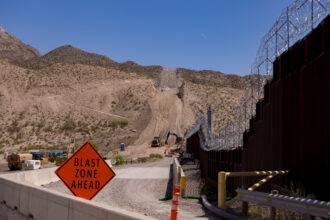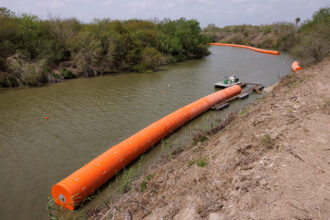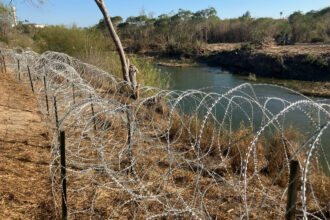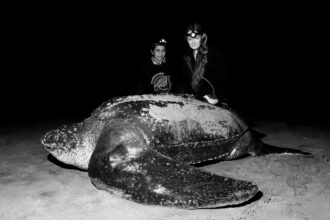


Federal officials have already traced a path for a border barrier through multiple Texas state parks, according to documents obtained by Inside Climate News.
A top Border Patrol official wrote to leaders of the Texas Parks & Wildlife Department (TPWD) on March 6, assuring them that border wall construction at state parks and Big Bend National Park was “on hold.”
But the Border Patrol had already sought access to state parks to lay the groundwork for construction in the weeks prior, those documents show. Letters sent by the Border Patrol to TPWD included detailed maps of where the border barrier would go within Big Bend Ranch, Seminole Canyon and Bentsen-Rio Grande Valley State Parks.
The documents, obtained under the Texas Public Information Act, show that Border Patrol is targeting an area in Seminole Canyon that could restrict access to ancient rock art on the Rio Grande. In Big Bend Ranch State Park, the maps show the barrier project near the Grassy Banks campground and Contrabando Canyon.
Paul Enriquez, the director of the Border Patrol’s infrastructure portfolio, said in an email obtained through the records request that construction on TPWD land and at Big Bend National Park is not a priority, as the agency targets high-traffic areas. But he did not rule out construction at the state parks. He wrote that these areas will eventually be reviewed to determine whether to implement a “barrier, roads, and/or technology.”
Public outcry has mounted since early February, when plans of a border wall through Big Bend became public. Customs and Border Protection (CBP) has since updated an online map to show “detection technology” in the Big Bend national and state parks instead of a physical barrier. But agency leadership in Washington, D.C., has not publicly stated that a wall is off the table. Facing mixed messages from federal sources, Big Bend residents and outdoors enthusiasts remain on high alert. A protest against the border wall in Big Bend is planned outside the Texas state capitol on Saturday, April 4.
“None of these comments are binding in any way. They are just statements,” said Laiken Jordahl, a national public lands advocate with the nonprofit Center for Biological Diversity. “They could show up with bulldozers and dynamite trucks and start building in the state park tomorrow. And nothing could stop them.”
TPWD referred questions about the border wall to CBP. The federal agency did not provide responses to questions about the requests for access to state parks.
Records also indicate that the Border Patrol has offered to buy a parcel in the Kisadee Unit of Las Palomas Wildlife Management Unit in the Rio Grande Valley from the state.
“News to Me”
The first Border Patrol letter to TPWD went out on Feb. 13 requesting access to two parcels in Hidalgo County, one in the Bentsen-Rio Grande Valley State Park and one in the Las Palomas Wildlife Management Area. Congressional carveouts previously protected the state park from the border wall, but those protections were not renewed in last year’s One Big Beautiful Bill.
TPWD executive director David Yoskowitz wrote back to Border Patrol on Feb. 23 asking for more information and saying the agency would execute a “Right of Entry Agreement” for the parcels to expedite access for “surveys, site assessments or appraisals.”
Border Patrol sent the next letter to TPWD headquarters on Feb. 20 identifying 14 parcels within Big Bend Ranch State Park that could be in the path of border barrier construction. The letter was an “initial notification” to discuss easement rights, and leasing or purchasing the property.
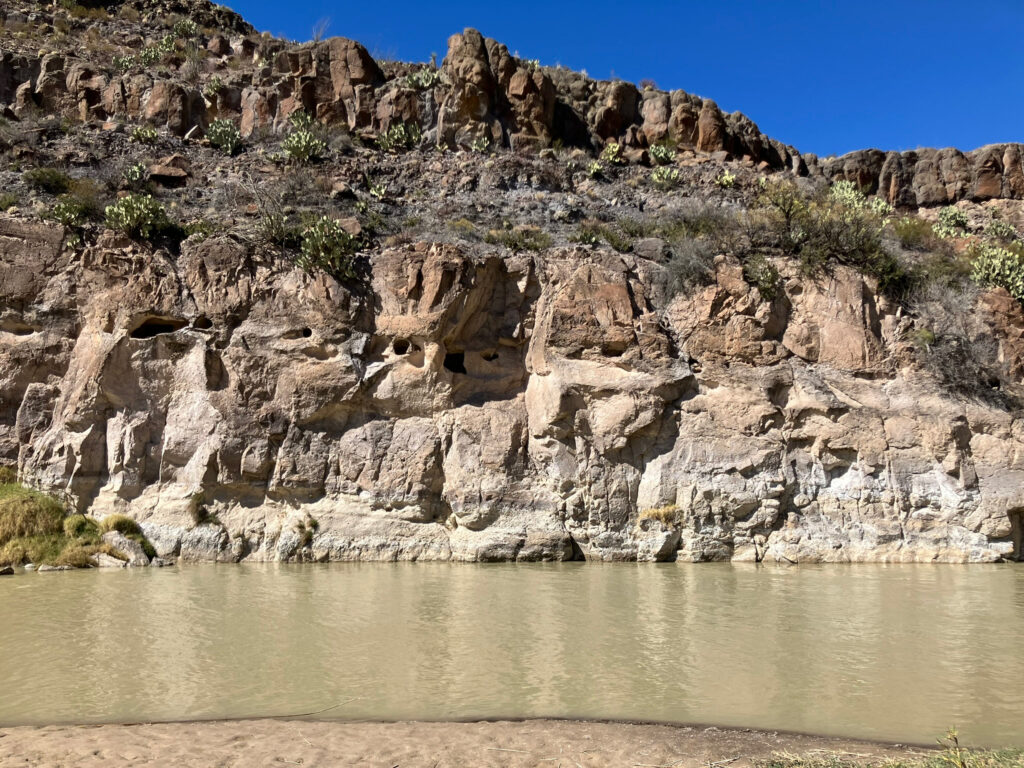
The letter offered $5,000 for a “right of entry for construction,” or the state could negotiate a purchase or easement agreement. Failing those options, CBP would request the Department of Justice take the property through eminent domain.
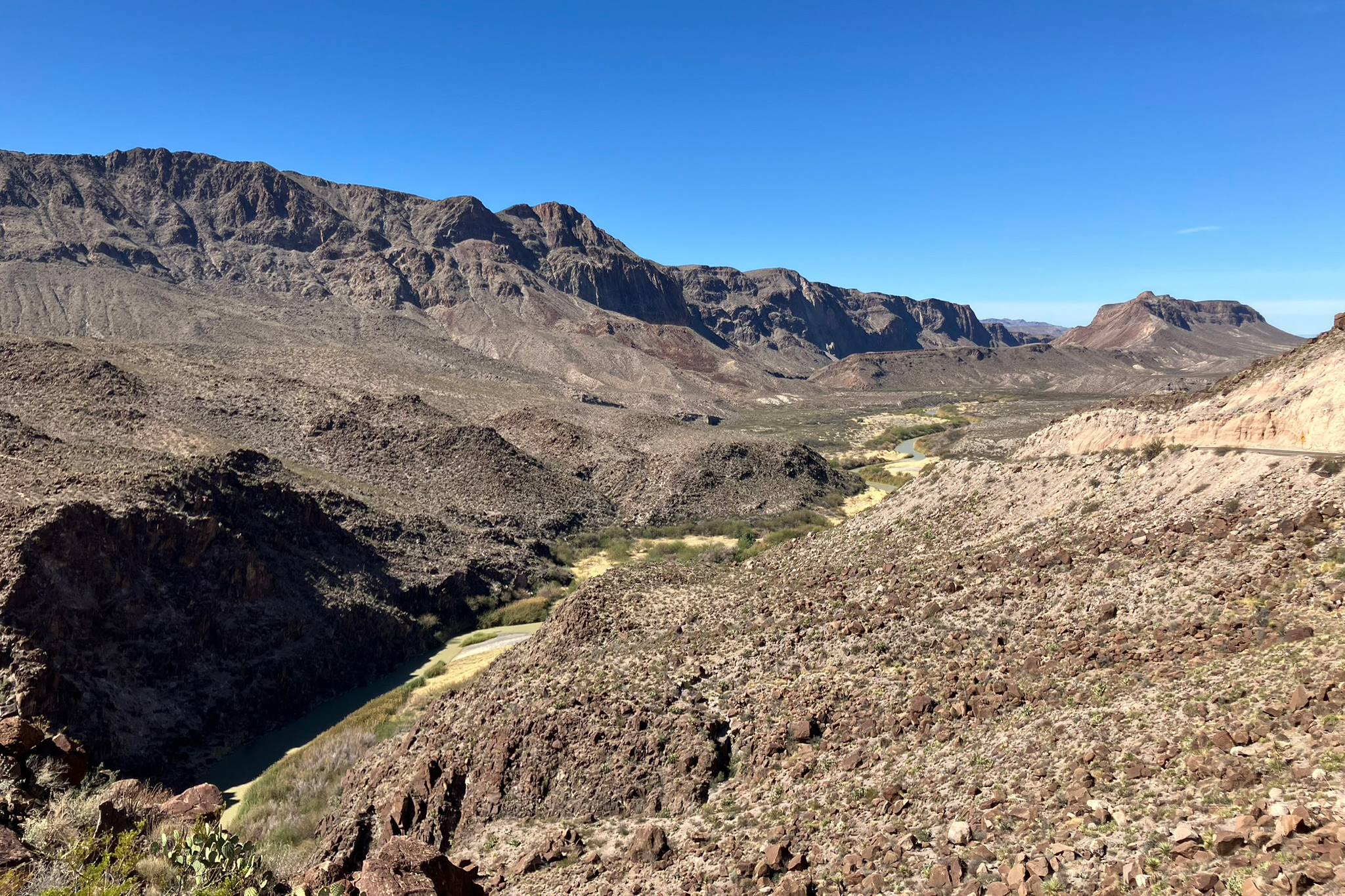
Big Bend Ranch is the largest state park in Texas. Federal environmental laws have already been waived to expedite border wall construction along a section of the Rio Grande in the park that is popular for rafting trips.
FM 170, also known as River Road, follows the river from Presidio to Lajitas through the state park. With its commanding views of the remote canyonlands, it is considered one of the most scenic drives in Texas. A border wall would limit access and transform the views this park is known for. Maps included in the letter shows CBP’s “project area” for the border barrier would separate FM 170 from the Rio Grande.
This story is funded by readers like you.
Our nonprofit newsroom provides award-winning climate coverage free of charge and advertising. We rely on donations from readers like you to keep going. Please donate now to support our work.
Donate NowOn Feb. 27, the Border Patrol wrote TPWD regarding two parcels in Seminole Canyon State Park in Val Verde County.
Ancient rock art is preserved in the canyon walls at Seminole Canyon, a state park along the Rio Grande near its confluence with the Pecos River. Recent carbon dating found the paintings were made over a 4,000-year period. The maps Border Patrol sent to TPWD show the border barrier project reaching the edge of Seminole Canyon and continuing on the other side. A barrier in this location would separate park headquarters from the Panther Cave rock art along the Rio Grande.
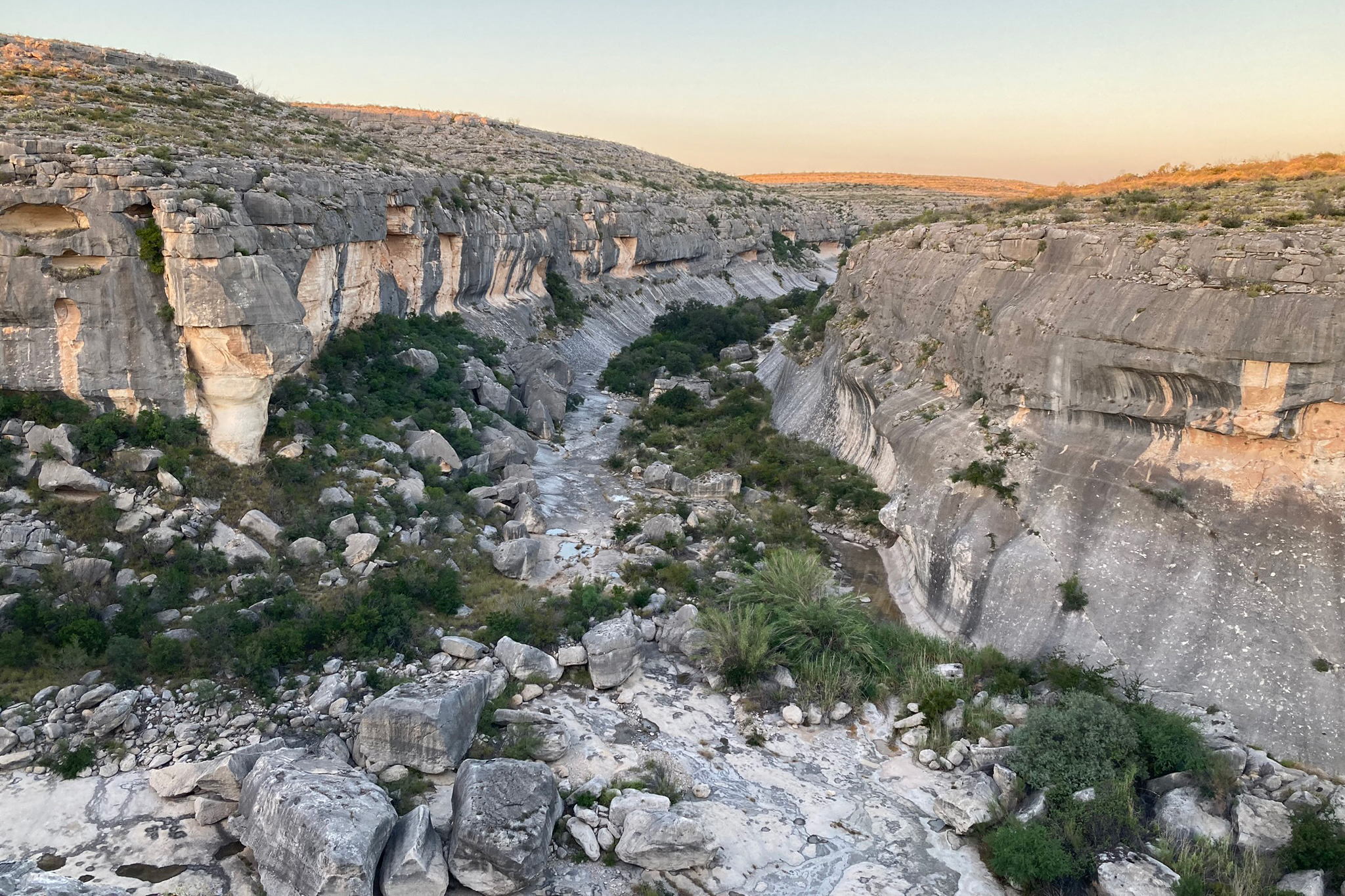
TPWD did not respond to questions about whether the agency has responded to the Border Patrol’s requests for access at Big Bend Ranch State Park and Seminole Canyon State Park. CBP did not respond to questions about these attempts to access the parks.
Internal communications show that TPWD employees had little information about border wall plans as contractors contacted them about construction and residents rallied on social media.
A contractor with Keiwit, a construction company based in Omaha, emailed Big Bend Ranch State Park’s superintendent in January to discuss his bid for border wall construction. The superintendent forwarded the request up the chain of command.
“This is news to me as well,” a deputy director in Austin replied.
“This is quite the surprise,” wrote a program director.
Word spread during February and public pressure mounted. TPWD staff met with the Border Patrol on March 4, according to the email from Enriquez, the director of the Border Patrol’s infrastructure portfolio. When he wrote that construction was on hold at state parks, the message was circulated among TPWD staff.
One staff member responded to the update in a Teams message: “That’s great news!!!!”
A spokesperson for the Big Bend Border Patrol sector told Marfa Public Radio on March 23 there are not currently border wall construction plans in the state park.
But Jordahl, of the Center for Biological Diversity, is circumspect. He has spent the past week in the Big Bend region and observed surveyor’s markings in several locations in the state park. He said residents are reporting seeing trucks belonging to contractors. He said won’t take public statements from the Border Patrol seriously unless existing contracts are amended and the federal waivers rescinded.
“We know that the Department of Homeland Security wants to wall this entire place off,” he said. “It’s clear they have a mandate from the very top to build as many miles of wall as possible.”
He said TPWD’s silence on the border wall has been “deafening.”
“[TPWD] has one responsibility and that is to preserve Texas state parks for Texans, for future generations,” he said. “They owe it to all of us to be actively opposing border wall construction through the state park.”
About This Story
Perhaps you noticed: This story, like all the news we publish, is free to read. That’s because Inside Climate News is a 501c3 nonprofit organization. We do not charge a subscription fee, lock our news behind a paywall, or clutter our website with ads. We make our news on climate and the environment freely available to you and anyone who wants it.
That’s not all. We also share our news for free with scores of other media organizations around the country. Many of them can’t afford to do environmental journalism of their own. We’ve built bureaus from coast to coast to report local stories, collaborate with local newsrooms and co-publish articles so that this vital work is shared as widely as possible.
Two of us launched ICN in 2007. Six years later we earned a Pulitzer Prize for National Reporting, and now we run the oldest and largest dedicated climate newsroom in the nation. We tell the story in all its complexity. We hold polluters accountable. We expose environmental injustice. We debunk misinformation. We scrutinize solutions and inspire action.
Donations from readers like you fund every aspect of what we do. If you don’t already, will you support our ongoing work, our reporting on the biggest crisis facing our planet, and help us reach even more readers in more places?
Please take a moment to make a tax-deductible donation. Every one of them makes a difference.
Thank you,

Martha Pskowski
Reporter, El Paso, Texas
Martha Pskowski covers climate change and the environment in Texas from her base in El Paso. She was previously an environmental reporter at the El Paso Times. She began her career as a freelance journalist in Mexico, reporting for outlets including The Guardian and Yale E360. Martha has a B.A. in Environmental Studies from Hampshire College and a master’s degree in Journalism and Latin American Studies from New York University. She is a former Fulbright research fellow in Mexico. Martha can be reached on Signal at psskow.33.