

Whether people realize it or not, traces of the global wildlife trade are ubiquitous, from expensive reptile-skin boots in department stores to the colorful fish swimming around a tank in your dentist’s office.
This multi-billion-dollar industry is regulated by a global treaty known as the Convention on International Trade in Endangered Species of Wild Fauna and Flora (CITES). Starting last week, representatives from more than 160 countries, conservationists and industry lobbyists have convened in Uzbekistan to negotiate new regulations for the trade of animals and plants, which are increasingly threatened around the world by climate change, poaching and habitat loss.
Though the conference goes through Friday, there have already been some conservation wins, including stronger protections for fish, snakes and mammals. But experts say that stricter regulations can only go so far as the illegal side of the wildlife trade continues to run rampant, fueled by the growing exotic pet market and internet sales.
Regulating Wildlife: Trading wild animals, plants and their parts is big business; a 2022 report suggests that the legal wildlife trade is valued at $220 billion annually, with more than 12,000 species traded regularly. As I reported in February, the U.S. alone has legally imported around 2.9 billion animals over the past two decades. This supplies everything from the pet trade to the medical industry, which has regularly used primates and other animals for research, though scientists in the U.S. Centers for Disease Control and Prevention were recently told to phase out all of their monkey research, Science reports.
Along with the U.S., China, Japan and the European Union are some of the biggest consumers of the global wildlife trade, but nearly every country around the world plays a role in the supply chain.
In the 1960s, growing demand for wild plant and animal products was driving certain species like elephants and tigers toward extinction. CITES launched in 1973 as a mechanism to better regulate this international industry. Today, more than 180 countries have signed on to the treaty, including the U.S. and EU nations.
“There are a lot of species still out there in the wild because CITES governments have agreed there’s no international trade,” Susan Lieberman, the vice president of international policy at the nonprofit Wildlife Conservation Society, told me over the phone on Monday after a long day at the Uzbekistan conference. She pointed to the African elephant as an example of a success story: Their populations have grown significantly in southern Africa and elephant poaching went down across the continent following a CITES ban on the commercial international ivory trade in 1989, which countries voted this week to continue.
Under CITES, species receive different levels of protection, primarily based on their conservation status. Plants and animals on Appendix I are deemed the most endangered, which means CITES prohibits their international trade in nearly all circumstances. Appendix II lists species that are not yet threatened with extinction, but could be if trade is unregulated. International trade of these species may be authorized, though it is regulated through permits and certificates.
While there isn’t technically a CITES-issued penalty if a country violates these terms, there could still be consequences. For example, nearly all commercial trade of CITES-listed wildlife from Laos has been suspended since 2009 due to the country’s poor compliance.
Since last Monday, government representatives have been discussing proposed regulations for dozens of species around the world—from African gazelles to okapis, a unique animal that looks like a mix between a zebra and giraffe. (Search for a photo of this animal. I promise you won’t regret it.)
Countries have made a few decisions so far, including the transfer of Chilean palm trees, manta rays, whale sharks and oceanic whitetip sharks to Appendix I, effectively banning the animals’ trade altogether. CITES members ultimately voted against increased protections for other animals, such as tarantulas, rattlesnakes and Anguillid eels. The freshwater eels, heavily traded to support the sushi industry, have faced steep declines in recent years due to overfishing, poaching, illegal trade and habitat loss.
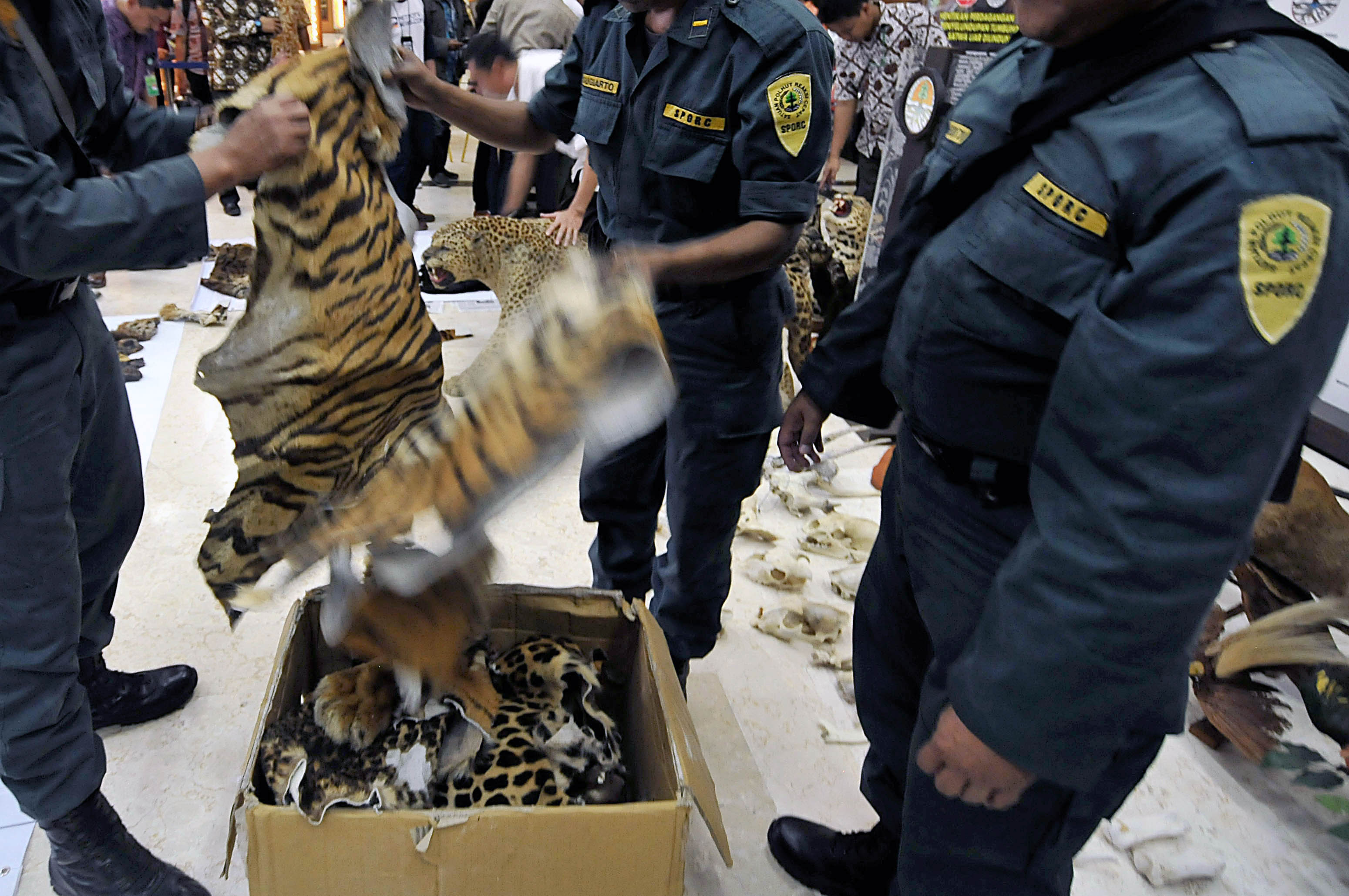
Exotic Pets and Crime Networks: Though more species receive trade protections at each CITES conference, a dark underbelly lurks within the global wildlife trade. Illegal plant and animal trafficking has become “one of the world’s largest criminal activities” over the past decade, according to a 2023 statement from Stephen Kavanagh, then the executive director of police services for INTERPOL. As I reported in February, illegal trade from 2015 to 2021 affected roughly 4,000 plant and animal species, approximately 3,250 of which are listed under CITES.
One of the biggest drivers of this demand is the growing exotic pet trade, according to Lieberman.
A number of recent news reports reflect this trend. Rolling Stone, in partnership with the nonprofit newsroom Wildlife Investigative Reporters & Editors, published a sprawling investigation in November on the illegal trade of wild African grey parrots, birds known for their ability to “talk” by mimicking human speech. Though the commercial international trade for these parrots is banned under CITES, a single one of these birds can sell for as much as $7,000 on the black market, which operates through a complex network of poachers.
It’s similar to other criminal networks like the drug trade but often more appealing because “if you get caught, the consequences aren’t as bad,” Lieberman said. But a new study shows that many crime networks are often practicing an “all-of-the-above” approach by trading illegal wildlife alongside drugs, arms and even people.
Increased globalization and the internet has made it easier for wildlife crime syndicates to operate, experts say. A recent study found that popular websites such as Etsy and eBay are common hubs for illegal endangered species sales. These websites have taken steps to guard against sales in recent years, but listings still slip through the cracks, Mongabay reports.
Illegal trade networks are often linked to legal supply chains, which can enable poachers to launder animals in methods that are particularly difficult to track.
Scientists and governments are working on a number of strategies to combat the illegal wildlife trade, including stricter laws and artificial intelligence tools that can help spot patterns in shipments. Individuals can also play their part in combating the illegal wildlife trade by reducing consumer demand for exotic pets such as rare turtles and birds, Lieberman said.
“Our desire to have beautiful animals in our homes [is] wiping these species out in the wild,” she said. “I wish people would really understand that. Yeah, they’re beautiful—that’s great. You don’t need them in the home.”
More Top Climate News
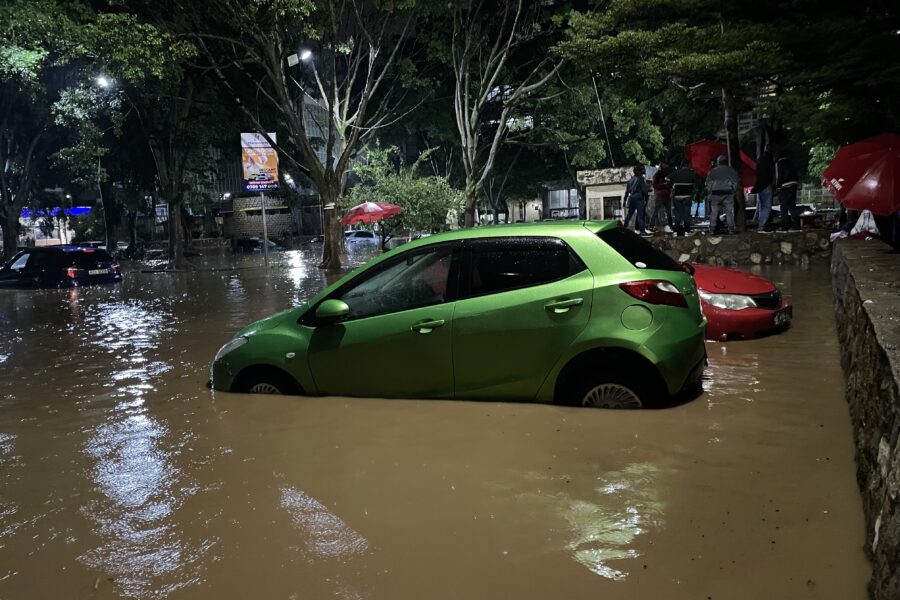
A series of intense storms—including three simultaneous cyclones this week—have nailed South and Southeast Asia over the past month, killing at least 1,350 people, The New York Times reports. It has been an unusually intense year for storms in the region, with increased rainfall, landslides and flooding. Sri Lanka, Indonesia, Vietnam, Thailand and the Philippines have been hit particularly hard, with hundreds of thousands displaced. Scientists say the warm water brought by the La Niña weather pattern and climate change contributed to the storms’ extreme rainfall.
Zillow, the United States’ largest real estate listing site, removed a feature that showed users the current and projected climate risks associated with a property after pushback from the housing industry and some homeowners, Oliver Milman reports for The Guardian. The tool was implemented last year to show potential threats from extreme weather such as floods and wildfire or poor air quality. But critics, including a real estate service that oversees a database Zillow depends on, said the rankings were not backed by enough information. Matthew Eby, founder and chief executive of First Street, the nonprofit that had provided the climate assessment tool to Zillow, told The Guardian the “risk doesn’t go away; it just moves from a pre-purchase decision into a post-purchase liability.” Zillow said the listings now contain an outbound link to First Street.
Just in time for cold weather, five states in New England are launching a $450 million effort to help support the adoption of heat pumps through incentives, outreach and workforce development, Sarah Shemkus reports for Canary Media. New England is largely reliant on fossil fuels for heating homes. While there has been interest in shifting to electric-powered heat pumps, homeowners have been reluctant to try the more climate-friendly option because of upfront costs and misconceptions about the pump’s ability to work well in the cold. The new initiative aims to address these barriers and kickstart the market.
Postcard from … Pennsylvania


This week’s installment of “Postcards From” is courtesy of Kiley Bense, ICN’s Pennsylvania reporter. She sent along a photo of the carrots she grew in her urban garden. She used them in the lovely soup shown above.
“These tiny carrots were grown in a backyard garden in Philadelphia,” she said. “I’m still figuring out how to grow things here (clearly!) but I enjoyed harvesting this small proof of progress.”
About This Story
Perhaps you noticed: This story, like all the news we publish, is free to read. That’s because Inside Climate News is a 501c3 nonprofit organization. We do not charge a subscription fee, lock our news behind a paywall, or clutter our website with ads. We make our news on climate and the environment freely available to you and anyone who wants it.
That’s not all. We also share our news for free with scores of other media organizations around the country. Many of them can’t afford to do environmental journalism of their own. We’ve built bureaus from coast to coast to report local stories, collaborate with local newsrooms and co-publish articles so that this vital work is shared as widely as possible.
Two of us launched ICN in 2007. Six years later we earned a Pulitzer Prize for National Reporting, and now we run the oldest and largest dedicated climate newsroom in the nation. We tell the story in all its complexity. We hold polluters accountable. We expose environmental injustice. We debunk misinformation. We scrutinize solutions and inspire action.
Donations from readers like you fund every aspect of what we do. If you don’t already, will you support our ongoing work, our reporting on the biggest crisis facing our planet, and help us reach even more readers in more places?
Please take a moment to make a tax-deductible donation. Every one of them makes a difference.
Thank you,

Kiley Price
Reporter
Kiley Price is a reporter at Inside Climate News, with a particular interest in wildlife, ocean health, food systems and climate change. She writes ICN’s “Today’s Climate” newsletter, which covers the most pressing environmental news each week.
She earned her master’s degree in science journalism at New York University, and her bachelor’s degree in biology at Wake Forest University. Her work has appeared in National Geographic, Time, Scientific American and more. She is a former Pulitzer Reporting Fellow, during which she spent a month in Thailand covering the intersection between Buddhism and the country’s environmental movement.