

When yarn-maker Anne Choi moved to New Jersey in 2014, she noticed the lack of connection between natural fiber farmers, who raise sheep, alpacas and goats or grow cotton and flax, and fiber artists, who knit, spin and dye the wool or thread into clothing, textiles and other goods.
The linkage between fiber farmers and artisans forms the core of a global climate-focused movement called Fibershed that began in North Central California and now has 79 affiliate organizations in 18 countries.
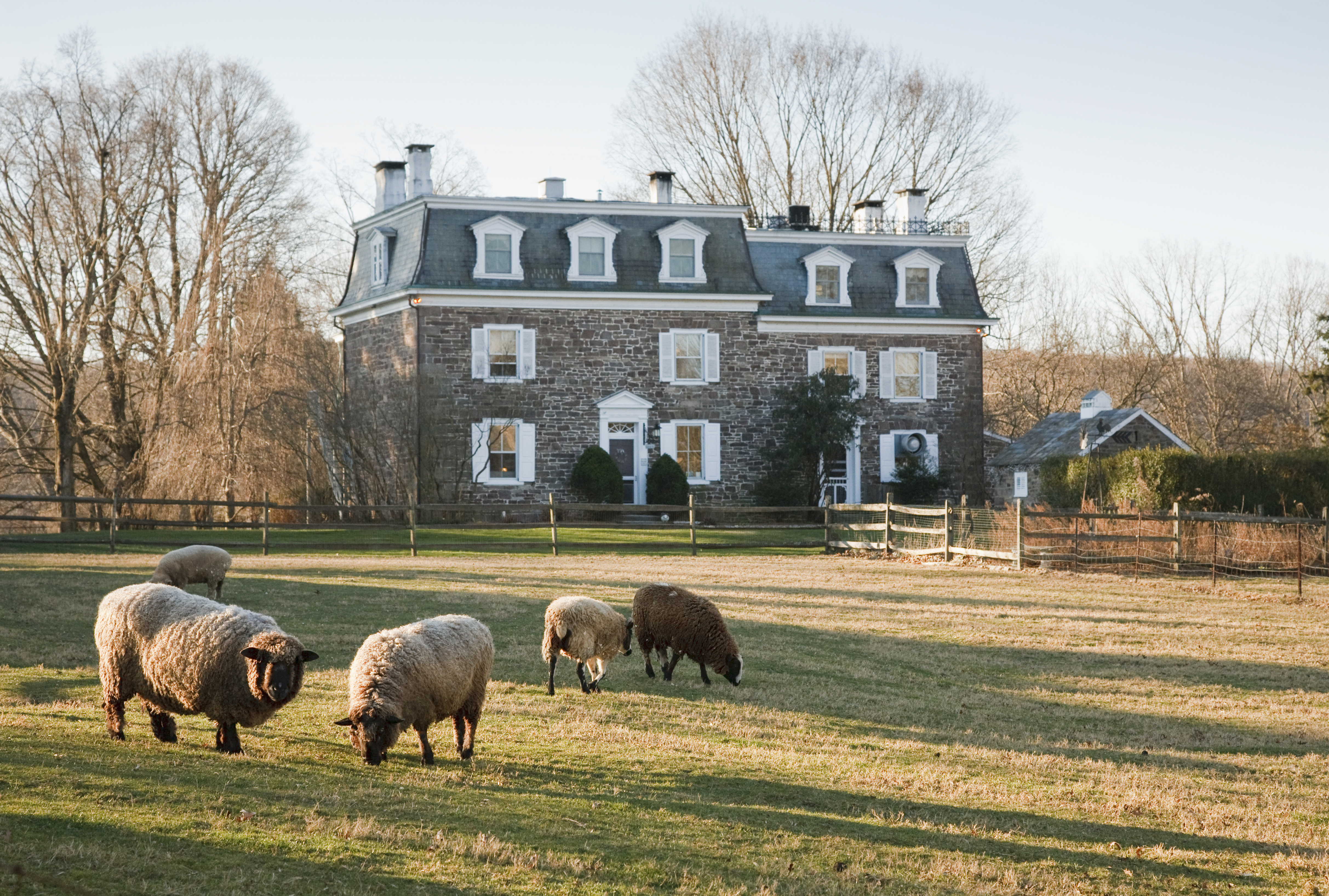
Choi, who lives in Bedminster, N.J., had come from Maryland, where she had started a craft business selling hand-spun and natural dyed yarn. In New Jersey, she joined the Garden State Sheep Breeders Association and, soon enough, started raising her own flock of Shetland sheep.
It was the chasm she found between farmer and artisan that led her to become the founder and director of New Jersey Fibershed in 2019. “In New Jersey, even though we have so many people, so many resources, it’s really hard to find local connections,” Choi said.
As a yarn maker and knitter, Choi had always dreamed of having her own fiber flock one day. But growing up in Seoul, South Korea and then Baltimore, where she and her family moved when she was a child, Choi didn’t have any farming background.
She gained more confidence when starting her flock after a fiber farming friend screamed in fear at the sight of a mouse and got “the willies” at the prospect of tagging her sheep’s ears.
“Hearing those things made me feel like maybe I don’t have to be this tough-skinned, farmy person,” Choi said.
The California Fibershed, with which Choi’s nonprofit is affiliated, was founded in 2010 by Rebecca Burgess, a weaver and natural dyer who wanted to wear clothes sourced only within 150 miles of her home in Northern California.
While all fibersheds share values of ethical sourcing and regenerative farming, each individual fibershed has its own mission and focus. California is currently making efforts to revitalize the state’s textile industry, away from polluting fast-fashion practices, by partnering with bigger apparel brands.
Clothing production accounts for 10 percent of total global carbon emissions, consumes and contaminates large amounts of water, and 85 percent of textiles made end up in landfills. Fibershed said in a recent report that between 1980 and 2014, production of plastic-based polyester increased by nearly 900 percent.
The organization believes clothing can heal the climate, as opposed to harming it, through managed grazing that sequesters and enriches soil; rotating cover crops and no-till agriculture that is also carbon sequestering; and natural cultivation of plants for dyes that contribute to biodiversity, soil regeneration and carbon uptake.
Choi said that while California can tackle larger projects, New Jersey Fibershed is concentrated on personal crafting and does not plan to scale up operations. The various New Jersey fiber farms will also host workshops on fiber crafts and natural dyes.
“We’re not working to bring back the textile industry in New Jersey,” Choi said, mentioning the lack of land, infrastructure, money and mills needed to support larger-scale production. “What we do have is people, a lot of people who are really talented crafters and makers and as individuals, they’re really interested in learning more about making their craft more sustainable.”
Choi said that while there are a few New Jersey fiber farmers that have larger flocks of fiber animals, most are smaller, due to the state’s size and land availability. When she first started New Jersey Fibershed, she said the biggest challenge was finding fiber farmers. Most of the farming was done for personal use and was not advertised.
“There’s a reason why people choose to have sheep, and it’s a special type of person who really enjoys just hanging out with their sheep,” Choi said. “And it doesn’t always go hand in hand with setting up a website or doing social media.”
Choi also said that many fiber farms have been started in New Jersey by families with children participating in a 4-H program.
It took about two to three years of word of mouth and craft sales, mostly done by Jessica Vallee-Vasquez, New Jersey Fibershed’s communications and outreach coordinator, for the Garden State Fibershed to become the hub it is today.
Before starting New Jersey Fibershed, Choi said she knew fiber farmers who would throw their fleece in the woods because they were so overwhelmed and did not know what to do with excess. Fiber artists help with preventing waste when they attend a craft workshop at a fiber farm, where they get to see and connect with the animals whose fleece they’ve been working with.
“It’s so fulfilling,” said Vallee-Vasquez, who has started to spin fibers to make garments. “It’s such an act of self-love and self-care just to do the whole process,” referring to crafting using local fleece.
Vallee-Vasquez also said that she loves to recognize what sheep the fleece came from as she sorts through the fibers.
While the fiber artists have helped with putting excess fibers to use, not all the fleece harvested is usable for textiles. Instead of being thrown away, fibersheds follow a “soil to soil” model.
The remaining fibers can be used as compost, returning to the ground to provide nutrients for animals or plants. Fiber farmers can also use a pelletizer to compress and mold fibers into small pellets that can be stuck into the ground for fertilization.
Although Fibershed affiliates can work to help mitigate climate change, Choi said she and others with New Jersey Fibershed have been noticing its effects. The hotter weather is giving ticks, parasites and mosquitoes that pose threats to fiber animals a longer season to live before freezing temperatures arrive.
This has caused an influx of Cache Valley Virus, transmitted by mosquitoes, which can cause birth defects and miscarriages in pregnant sheep if contracted in the first trimester. The Shetland breeding season usually happens in November, and Choi said CVV was not an issue before. Now, the bugs can last until December, and there has been a rise in cases.
Growing fiber plants is relatively new but is becoming more popular because growing seasons are longer and warmer. The warmer climate has made it possible for some fiber farmers to cultivate cotton in New Jersey, which was not possible 50 years ago, Choi said.
Choi said members of the fiber community are also growing plants, like indigo and marigold flowers, to make natural dyes, which only work and show up on natural fiber materials.
“We can grow a lot of plants together, we can cultivate it together while we exchange our knowledge about it,” Choi said.
New Jersey Fibershed hosts eco-printing classes using a natural dying process where plants are used to create prints on fabrics. Choi said the method is like a “first step” into fiber art because the results are immediate.
This story is funded by readers like you.
Our nonprofit newsroom provides award-winning climate coverage free of charge and advertising. We rely on donations from readers like you to keep going. Please donate now to support our work.
Donate NowNew Jersey fiber farms will hold “open farm” days where interested parties can observe fiber animals and farms. People enjoy attending shearing days, where they can see the fleece get removed from the animals.
Vallee-Vasquez does information tabling at sheep and wool festivals for outreach and education. Recently, the nonprofit has been trying to do more promotion in urban areas like Newark and Jersey City.
“Every single person stops,” Valle-Vasquez said. “I think these people are also in these areas where they’re thirsty for this knowledge.”
New Jersey Fibershed provides education on raising fiber animals and processing fiber. One of their educational programs, “Shed Talks,” is designed for aspiring or beginning fiber farmers.
“I think it’s about creating accessibility where there hasn’t been historically,” Choi said. “That’s what we’re trying to do, just give people a chance, an opportunity to be on a farm, see if it is for them. … I feel like if someone wants to explore that, I want to give them that opportunity.”
About This Story
Perhaps you noticed: This story, like all the news we publish, is free to read. That’s because Inside Climate News is a 501c3 nonprofit organization. We do not charge a subscription fee, lock our news behind a paywall, or clutter our website with ads. We make our news on climate and the environment freely available to you and anyone who wants it.
That’s not all. We also share our news for free with scores of other media organizations around the country. Many of them can’t afford to do environmental journalism of their own. We’ve built bureaus from coast to coast to report local stories, collaborate with local newsrooms and co-publish articles so that this vital work is shared as widely as possible.
Two of us launched ICN in 2007. Six years later we earned a Pulitzer Prize for National Reporting, and now we run the oldest and largest dedicated climate newsroom in the nation. We tell the story in all its complexity. We hold polluters accountable. We expose environmental injustice. We debunk misinformation. We scrutinize solutions and inspire action.
Donations from readers like you fund every aspect of what we do. If you don’t already, will you support our ongoing work, our reporting on the biggest crisis facing our planet, and help us reach even more readers in more places?
Please take a moment to make a tax-deductible donation. Every one of them makes a difference.
Thank you,

Raeanne Raccagno
Fellow
Raeanne Raccagno is a reporting fellow following environmental issues and solutions in New Jersey. She started her journalism career covering community news in Bucks County, Pennsylvania. After writing about the aftermath of a natural disaster, she began using her passion for nature to report on additional environmental concerns. Raeanne is currently a senior at The College of New Jersey, majoring in environmental studies and journalism with a marketing minor.