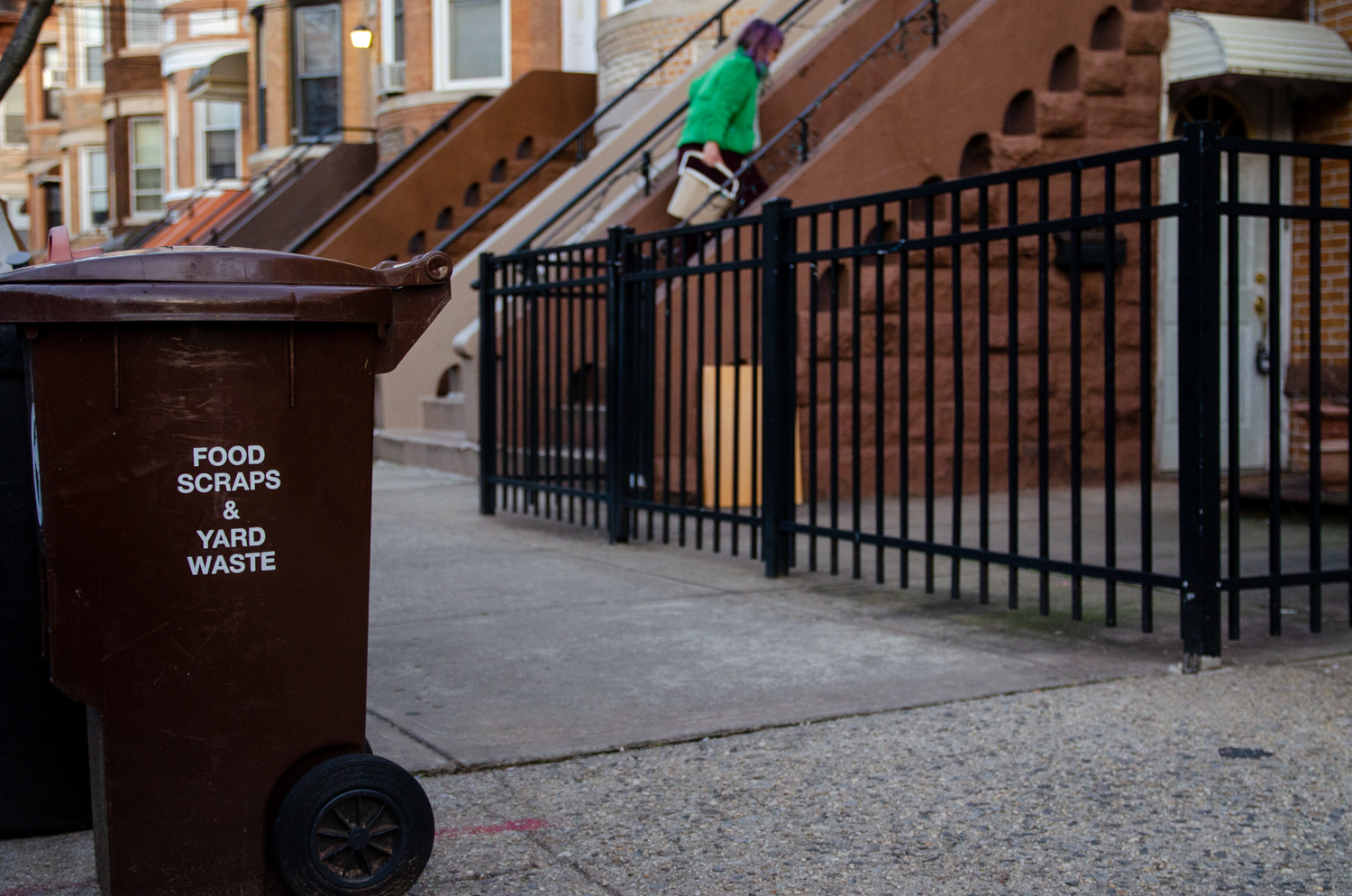


In 2024, New York City’s Department of Sanitation rolled out a mandatory curbside organics collection program, aiming to reduce landfill waste and cut methane emissions by allowing residents to set out their food scraps once a week for collection and composting.
While some collected material is composted—used as fertilizer for gardens and farms—much is sent to plants to be converted into energy to power homes and businesses. The process emits significant amounts of methane, a potent greenhouse gas.
The composting program was set to issue stringent fines last April for non-participation. Within weeks, then-Mayor Eric Adams paused most of them until the end of that year, delaying enforcement, except for large buildings that are repeat offenders. This year, under Mayor Zohran Mamdani, the city has “begun issuing summonses to buildings of all types,” according to Vincent Gragnani, a press secretary for the Department of Sanitation.
The city issued 330 noncompliance summonses related to the program from Jan. 1 through 21, Gragnani said. This is far fewer than the reported 4,000 summonses the city issued during the two-week period before Adams’ pause.
“We know that this involves a significant change in people’s behavior, and that these changes take time,” Gragnani said.
The penalty structure means that buildings with eight or fewer units will be fined $25 for failing to separate organics, eventually increasing to $100 for the third offense and any subsequent offenses. For larger buildings, the fine is $100 for the first offense, increasing to $300 after the second.
Many composting advocates feel that more needs to be done to educate people about the importance of composting and to increase the amount of organic material composted in the city.
According to a city Department of Sanitation report, 7.2 percent of all compostable materials in the city were placed in the correct bin last fiscal year. Though that number seems small, the share was 4.2 percent the previous year.
Samantha MacBride, a former director of research and operations at the city’s sanitation department who now teaches at Baruch College, says New York City needs to hit at least 30 percent for the program to be economically viable. Otherwise, the city spends a lot of money sending trucks across the five boroughs that are not being filled.
“There’s a lot more than just writing tickets that needs to be done to make this program solid and work in the long run,” MacBride said.
MacBride worries that, if New Yorkers don’t actively change how they dispose of waste, building maintenance workers may be saddled with the burden of sorting some organics in the property’s bins.
Christine Datz-Romero, a veteran composter who co-founded the Lower East Side Ecology Center, a nonprofit organization that composts New Yorkers’ waste for free, has been frustrated by the city’s unpredictable rollout, especially when it comes to educating residents on why they should participate.
Datz-Romero’s organization provides hands-on education for New Yorkers about the benefits of composting through events like tree planting. Nonprofits like hers, which are often partially funded by the city, are at the mercy of the local budget. In 2024, the former mayor cut funding to these composting programs, though much of that money was eventually restored by the City Council.
“Adams cut this funding, and sort of pulled the rug from underneath our feet with really no good reason,” said Datz-Romero.
MacBride believes the city should study individual community districts to understand how waste moves through each neighborhood and develop a plan that would “integrate outreach, education, enforcement, but also the lived experience of the sanitation workers who service the district.” This would require the sanitation department to visit buildings in person, speak with landlords and work with community-based organizations to connect with residents.
This story is funded by readers like you.
Our nonprofit newsroom provides award-winning climate coverage free of charge and advertising. We rely on donations from readers like you to keep going. Please donate now to support our work.
Donate Now“The best way to share the positive benefits of separating your organics and the positive motivations that come with that, in my opinion, is through community-based experiences with composting,” MacBride said. “A person brings their food scraps to drop off, they see the compost process, they see kids and young people gaining skills that can be very marketable.”
Composting advocates will be watching to see how fines for the city’s composting program will ultimately be structured under Mamdani, and whether his administration restricts the program to producing fertilizer or continues to use compost to heat homes.
“It’s a natural resource that, if managed properly, can turn right back into a very productive cycle here in the city,” said Datz-Romero.
About This Story
Perhaps you noticed: This story, like all the news we publish, is free to read. That’s because Inside Climate News is a 501c3 nonprofit organization. We do not charge a subscription fee, lock our news behind a paywall, or clutter our website with ads. We make our news on climate and the environment freely available to you and anyone who wants it.
That’s not all. We also share our news for free with scores of other media organizations around the country. Many of them can’t afford to do environmental journalism of their own. We’ve built bureaus from coast to coast to report local stories, collaborate with local newsrooms and co-publish articles so that this vital work is shared as widely as possible.
Two of us launched ICN in 2007. Six years later we earned a Pulitzer Prize for National Reporting, and now we run the oldest and largest dedicated climate newsroom in the nation. We tell the story in all its complexity. We hold polluters accountable. We expose environmental injustice. We debunk misinformation. We scrutinize solutions and inspire action.
Donations from readers like you fund every aspect of what we do. If you don’t already, will you support our ongoing work, our reporting on the biggest crisis facing our planet, and help us reach even more readers in more places?
Please take a moment to make a tax-deductible donation. Every one of them makes a difference.
Thank you,

Lauren Dalban
Reporter, New York City
Lauren Dalban is a New York City-based reporter with a background in local journalism. A former ICN fellow, she now covers environmental issues in all five boroughs. Originally from London, she earned a B.A. in History and English from the University of Virginia, and an M.S. from Columbia Graduate School of Journalism.