

Just over a year ago, the Trump administration gutted staff across the National Park Service, triggering a series of protests around the country, a signal of the public’s deep passion for America’s “crown jewels.”
Since then, the service has been in flux. Though a federal judge required the administration to rehire much of the staff laid off in that February 2025 purge, gaping holes still exist across the agency following firings, loss of seasonal workers, buyouts and forced retirements. The National Park Service lost 2,750 employees in the first 11 months of the second Trump administration, a 15 percent drop, according to an analysis of federal workforce data from the Office of Personnel Management by my colleague Peter Aldhous.
On top of this, a recent series of changes—from the pending appointment of a new director to the mandated elimination of certain park exhibits that discuss racism and climate change—could fundamentally reshape the future of the National Park Service, experts say.
Many conservation groups, elected leaders and outdoor enthusiasts have pushed back. These shifts, they say, threaten the long-term future of the parks—and rewrite the American legacy they represent.
New Leadership: After more than a year without an official director of the National Park Service, President Donald Trump in February nominated hospitality executive Scott Socha to head the agency, which oversees more than 85 million acres of land and water. Socha is the president of parks and resorts at Delaware North, a food, venue and hotel management company that operates across the U.S. and in Australia. The company provides services for several national parks, according to its website.
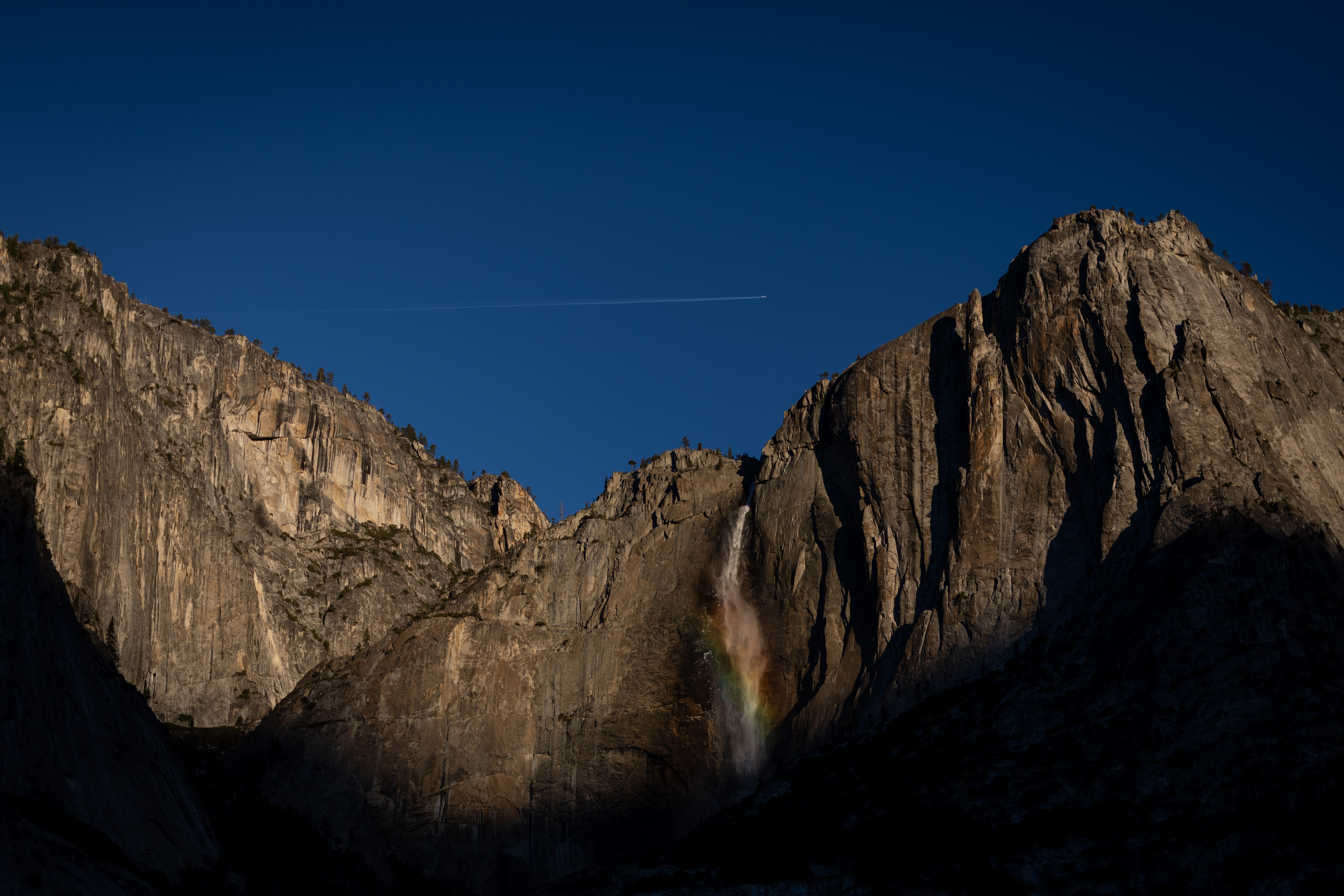
However, Delaware North’s relationship with the service hit a major bump in 2015, when it lost a contract to operate concessions inside Yosemite National Park, the Guardian reports. The company sued the National Park Service over costs related to the trademark rights of names and logos, and the agency eventually settled for $12 million after a yearslong court battle.
Trump’s choice of Socha falls in line with the administration’s push to privatize U.S. public lands, and it doesn’t sit well with some advocates.
“The private park concessionaire executive, Socha, has zero experience in public service or conservation,” Jayson O’Neill, spokesperson for the Save Our Parks campaign, told SFGATE. “Instead, he’s made a career out of extracting maximum profit from our national parks, not protecting them, making it abundantly clear he’ll be doing the bidding of special interests and corporate interests.”
The National Parks Conservation Association, which said the new director “must reverse course on the damage that’s been done to parks and park staff over the last year,” put out a statement that reserved judgment.
“Our national parks need strong, sensible leadership now more than ever before,” the group’s president and CEO, Theresa Pierno, said in the statement. “Given Mr. Socha’s years of experience working with the Park Service, we hope he will be that leader.”
An August investigation by The New York Times found that at least a fifth of the country’s 433 national parks had been significantly strained due to Trump-related cuts. I spoke with former National Park Service Director Jonathan Jarvis in May about the cascading impacts the job cuts could have on the country’s public lands. Another former director, Charles F. Sams III, echoed these concerns, along with other former park staff and recreation experts, Blaine Harden reported for ICN in January.
Meanwhile, U.S. Customs and Border Protection intends to build border barriers throughout the Big Bend region of southwest Texas, which plans show will cut through part of the popular Big Bend National Park, as my colleague Martha Pskowski reported. Scientists and conservationists have condemned the project.
“One of our most beloved national parks and our state’s largest park will be scarred beyond repair,” David Keller, a noted archaeologist of the region, told ICN.
Revision or Censorship? Last March, Trump issued an executive order titled “Restoring Truth and Sanity to American History,” which directed the Department of the Interior to ensure that exhibits, installations and signs across the national parks system do not “inappropriately disparage Americans past or living.” Interior is the park service’s parent agency.
A May order from Interior Secretary Doug Burgum doubled down on this effort, requiring staff to report signage that catalogues negative parts of history and the environment for potential removal.
A new analysis of an internal government database reviewed by The Washington Post found that staffers have filed a number of inquiries from across the country that indicated confusion over what would fall into the category of disparaging American history, but nonetheless flagged signage discussing everything from climate impacts at Arches National Park to segregation in the South.
The Trump administration in January took down an exhibit at the President’s House historical site on Philadelphia’s Independence Mall that detailed the lives of nine people enslaved by President George Washington. Intense public outcry followed. The city of Philadelphia sued. In February, a federal judge ordered the exhibit to be reinstalled as the court battle continues, PBS reports.
In her opinion brief, Senior U.S. District Judge Cynthia Rufe wrote that the federal government does not have the power “to dissemble and disassemble historical truths.”
I reached out to the Department of the Interior to get the agency’s response to all of this. I asked about the criticism of its signage removal efforts and advocates’ concerns about Trump’s choice to lead the National Park Service. A spokesperson sent this reply right before publication: “Your story is full inaccuracies but that should come as no surprise seeing this is a far-left blog, funded by well known liberals, with an agenda to push the Green New Scam and DEI initiatives meant to divide Americans.”
Adding to the administration’s legal fights, the National Parks Conservation Association and a coalition of scientists, historians and advocates filed a federal lawsuit two weeks ago to “cease all unlawful efforts to remove up-to-date and accurate historical or scientific information from the national parks.”
“We want Americans to know that their parks actually hold this powerful history, and that parks are a place that they can … go learn that history,” David Lamfrom, the vice president of regional programs at the National Parks Conservation Association, told me. “We don’t want people to feel like when they go to parks, that history is going to be edited, and it’s going to be edited by the government because the government doesn’t believe that Americans can handle or manage that truth.”
More Top Climate News
The National Oceanic and Atmospheric Administration announced a “possible deregulatory action” Tuesday that would modify a regulation requiring vessels along the East Coast to slow down during certain times of the year to protect endangered North Atlantic right whales. In place since 2008, the rule was developed to reduce collisions between boats and whales, one of the leading causes of death for the species. The agency said in the Federal Register that it intends to “reduce unnecessary regulatory and economic burdens on the regulated community by replacing current seasonal speed restrictions with alternative management areas and advanced, technology-based, strike-avoidance measures.”
Environmental groups are skeptical this still-developing technology will be as effective as speed limits. The current speed limit “meaningfully lowers the odds that a collision turns deadly, and it’s widely recognized as a best practice for protecting whales by scientists and the shipping industry,” Francine Kershaw, a senior scientist at the nonprofit Natural Resources Defense Council, said in a statement. She added, “It’s reckless to gamble with the future of one of our nation’s most endangered species.”
According to a new study, relief workers after a hurricane are vulnerable to a different weather risk: extreme heat. Analyzing the aftermath of Hurricane Beryl in Texas in July 2024, the researchers found that 14 people died due to post-storm heat, though it’s unclear whether they were helping with recovery at the time, Emily Jones reports for Grist. But the study’s authors thought it was important to flag the risks for disaster workers specifically, given that they are often most exposed in the wake of a hurricane, and doing physical labor that can exacerbate dehydration threats.
It may not feel like it right now, but winters across most major U.S. cities are getting shorter in the face of climate change, according to data released by nonprofit science group Climate Central. Winters from 1998 to 2025 were an average of nine days shorter across 195 American cities compared to 1970 to 1997, and only around 15 percent of the analyzed cities saw longer winters, Sara Braun reports for the Guardian. Juneau, Alaska, saw the greatest shrinking of its winters in this timeframe.
A recent study found that researchers described more than 16,000 new species per year from 2015 to 2020—the highest rate in nearly three centuries of modern taxonomy, Bryan Walsh reports for Vox. Part of the reason for this era of discovery is technology; advances in genome sequencing have made the process far cheaper and more accessible, new equipment has helped open windows to deep sea life and smartphone apps have mobilized citizen scientists around the world, including some who have discovered new species accidentally. However, the researchers stressed that species are also declining at rapid rates, and expanding our knowledge of life on Earth could be crucial in the fight to stem these losses.
Postcard From … New York
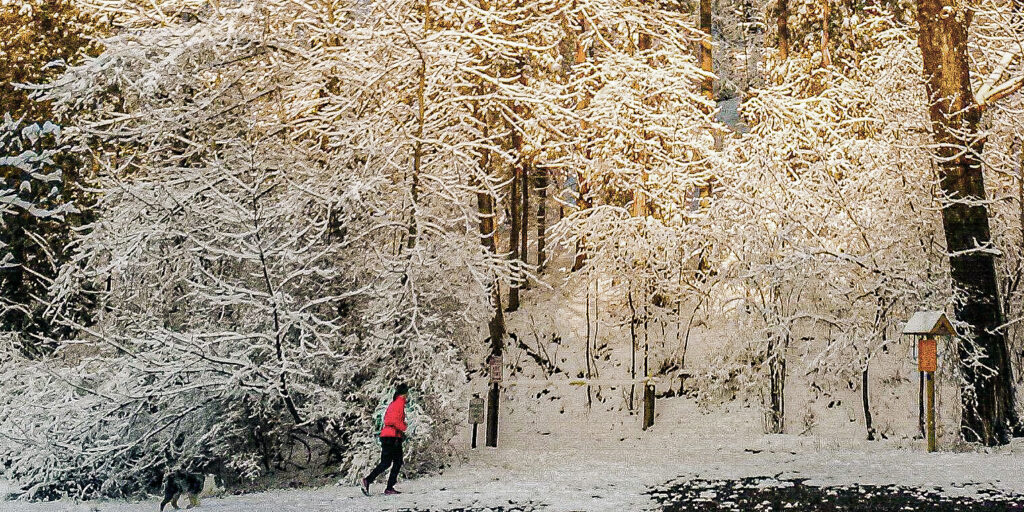
This week’s installment of “Postcards From” is courtesy of ICN reader Dan Hucko, who sent a photo of January snow in New York.
“We live in the woods beside a county park outside of Rochester, NY and are privileged to share this beautiful space with a lot of good people,” he said over email. “I captured this image in the park to illustrate how humans cope with our frigid upstate [New] York winters. As I always say, ‘You can’t beat the WINTER here – you have to join it.’”
Correction: This story has been updated to correct the park that was the subject of a trademark dispute. It was Yosemite National Park, not Yellowstone.
About This Story
Perhaps you noticed: This story, like all the news we publish, is free to read. That’s because Inside Climate News is a 501c3 nonprofit organization. We do not charge a subscription fee, lock our news behind a paywall, or clutter our website with ads. We make our news on climate and the environment freely available to you and anyone who wants it.
That’s not all. We also share our news for free with scores of other media organizations around the country. Many of them can’t afford to do environmental journalism of their own. We’ve built bureaus from coast to coast to report local stories, collaborate with local newsrooms and co-publish articles so that this vital work is shared as widely as possible.
Two of us launched ICN in 2007. Six years later we earned a Pulitzer Prize for National Reporting, and now we run the oldest and largest dedicated climate newsroom in the nation. We tell the story in all its complexity. We hold polluters accountable. We expose environmental injustice. We debunk misinformation. We scrutinize solutions and inspire action.
Donations from readers like you fund every aspect of what we do. If you don’t already, will you support our ongoing work, our reporting on the biggest crisis facing our planet, and help us reach even more readers in more places?
Please take a moment to make a tax-deductible donation. Every one of them makes a difference.
Thank you,

Kiley Price
Reporter
Kiley Price is a reporter at Inside Climate News, with a particular interest in wildlife, ocean health, food systems and climate change. She writes ICN’s “Today’s Climate” newsletter, which covers the most pressing environmental news each week.
She earned her master’s degree in science journalism at New York University, and her bachelor’s degree in biology at Wake Forest University. Her work has appeared in National Geographic, Time, Scientific American and more. She is a former Pulitzer Reporting Fellow, during which she spent a month in Thailand covering the intersection between Buddhism and the country’s environmental movement.