

Reporting supported with a grant from The Water Desk at the University of Colorado Boulder.
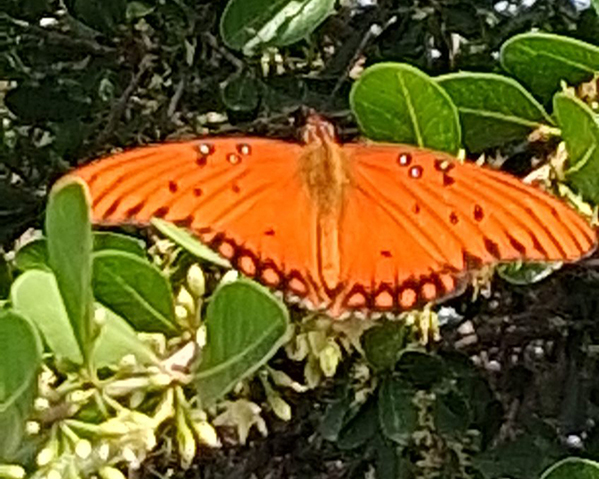
ROMA, Texas—When Juan Moreno thinks of the islands in the Rio Grande, his mind goes to collecting pitaya cactus fruit with his father as a boy, or looking for Mexican blue wing butterflies with his own son.
But to Customs and Border Protection (CBP) and Texas officials, these small islands in the Rio Grande near the town of Roma are nothing more than “hotspots” of illegal border entries and a “smuggler’s paradise.”
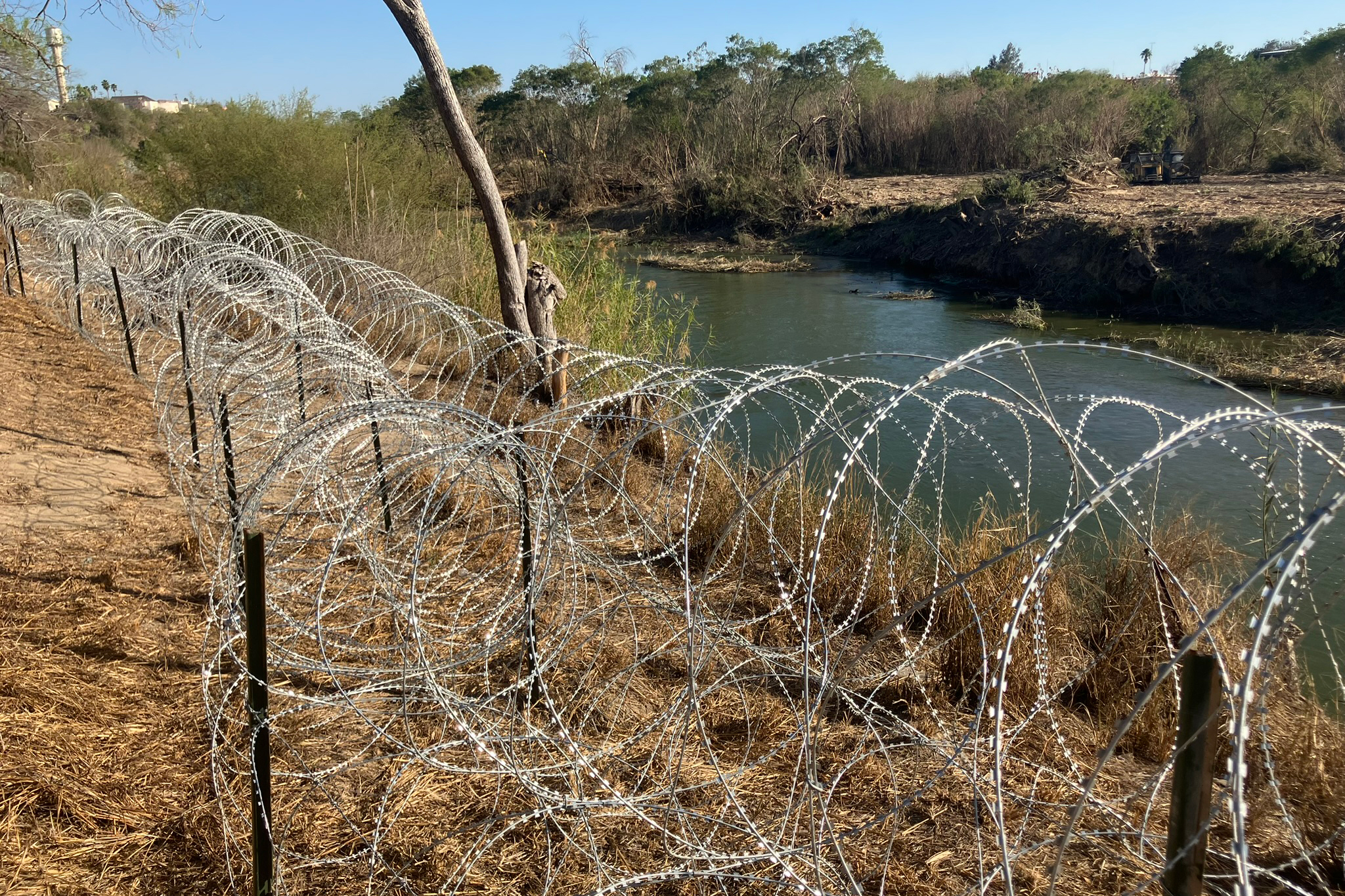
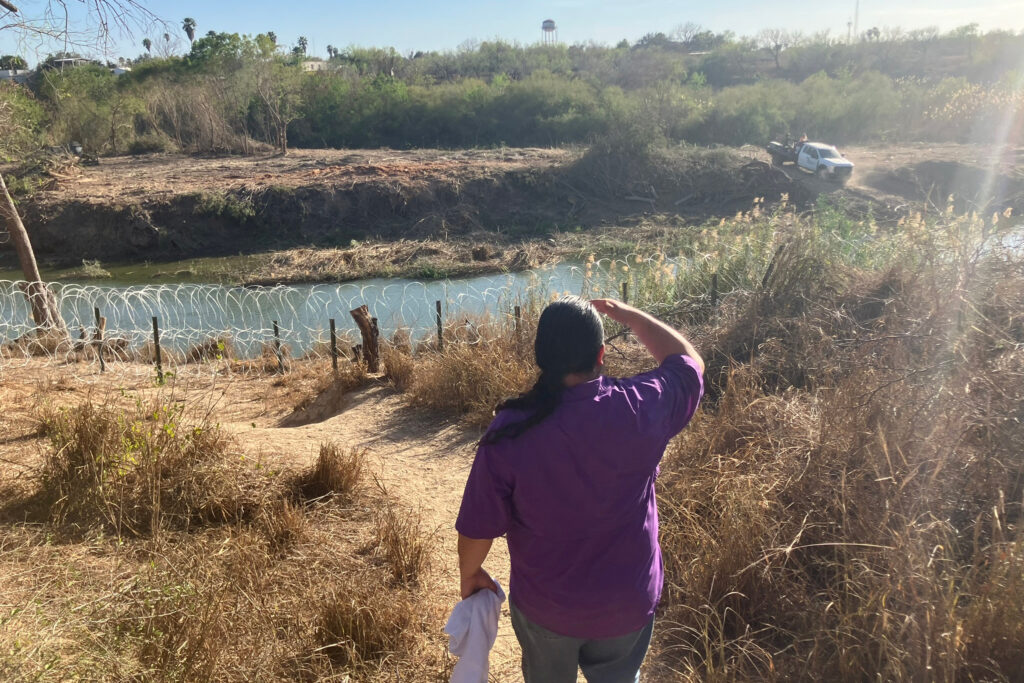
Moreno, a high school math teacher, has watched over the last month as contractors cleared vegetation on the islands that provide habitat to birds, butterflies and native plants. On Feb. 15, he walked down a path from his house to put his kayak in the river. He was stopped in his tracks by concertina wire blocking the way.
Moreno is determined to continue kayaking, fishing and observing wildlife along the Rio Grande and pass these hobbies on to his son. But he worries that border security operations will take those opportunities away.
“I would hate to lose access to the Rio Grande,” Moreno told Inside Climate News.
Roma, Texas, sits in rural Starr County in the Rio Grande Valley. High numbers of unauthorized border crossings under the Biden administration have made the area a priority for border wall construction under the second Trump administration. Construction is progressing rapidly as billions of dollars in federal funding flow to private contractors. CBP is planning to build a border barrier through Roma and place buoys in the river to block people from crossing, according to online maps.
A National Defense Area was created along the Rio Grande in Cameron and Hidalgo Counties in June and was extended to cover Starr County on Feb. 6. Land previously managed by the International Boundary and Water Commission was transferred to the Secretary of the Air Force.
Residents are raising the alarm that border wall construction and border buoys will irrevocably change the landscape, harm wildlife and violate the rights of property owners. All this occurs as CBP reports record-low levels of migrant apprehensions. President Donald Trump touted the “strongest and most secure border in American history, by far,” during his Feb. 24 State of the Union address.
“The federal government right now is trying to orchestrate a massive transfer of [land] into the hands of the U.S. government,” said Tricia Cortez, executive director of the Rio Grande International Study Center on the border in Laredo. “There is no way we can allow for the federal government to seize land and install all sorts of militarized structures in and along a living, dynamic river system.”
Customs and Border Protection did not respond to questions from Inside Climate News.
Border Construction Comes to a Historic Small Town
Moreno walked down to the Rio Grande on an unseasonably warm February afternoon, pointing out houses where members of his extended family live. His grandfather was a fisherman on the river and his relatives live on both sides of the border.
Roma dates to the 1700s, when Spanish ranchers first settled the area. Later a part of Mexico, the town entered the United States with the Treaty of Guadalupe Hidalgo in 1848.
The historic downtown includes an outpost of the World Birding Center, which attracts birders from around the country. The Rio Grande Valley is an important flyway zone where more than 500 bird varieties have been documented.
Moreno is more partial to butterflies. He can rattle off the varieties he has seen around Roma, like the question mark butterfly and the great purple hairstreak.
As he walked down to the river, a National Guardsman with a long gun strapped across his chest questioned him. Moreno explained that he was going to document what was happening on the islands. The guardsman stepped aside.
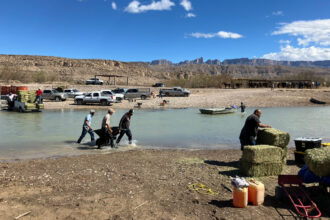
The buzz of machinery broke the quiet afternoon as contractors cut vegetation on the edges of the island. A pickup truck had driven across the shallow river onto the island. Moreno said he had never seen a vehicle on the island before.
“This is so disheartening to me,” he said. “Every branch, even a dry one, could have a butterfly cocoon or bird nest on it.”
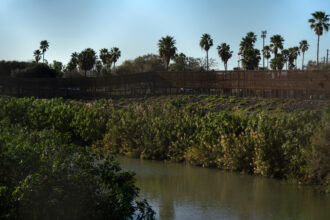
Contractors have also cleared vegetation on the river banks under the international bridge. Moreno worries when it rains the exposed soil will erode.
He started posting on social media and contacting local politicians, many of whom he grew up with.
“My nature getaways are now a National Defense Area Military Zone,” he wrote on Feb. 16.
Roma city manager Alejandro Barrera told Inside Climate News that the city has no jurisdiction over the islands. He was told the concertina wire along the river is a temporary measure.
“We have told Border Patrol we don’t want any wire here in our bluffs, or under our bridge,” he said.
“As far as an actual border wall, we’re not aware,” Barrera said. But he added that CBP plans to install “eight-foot panels” in Roma.
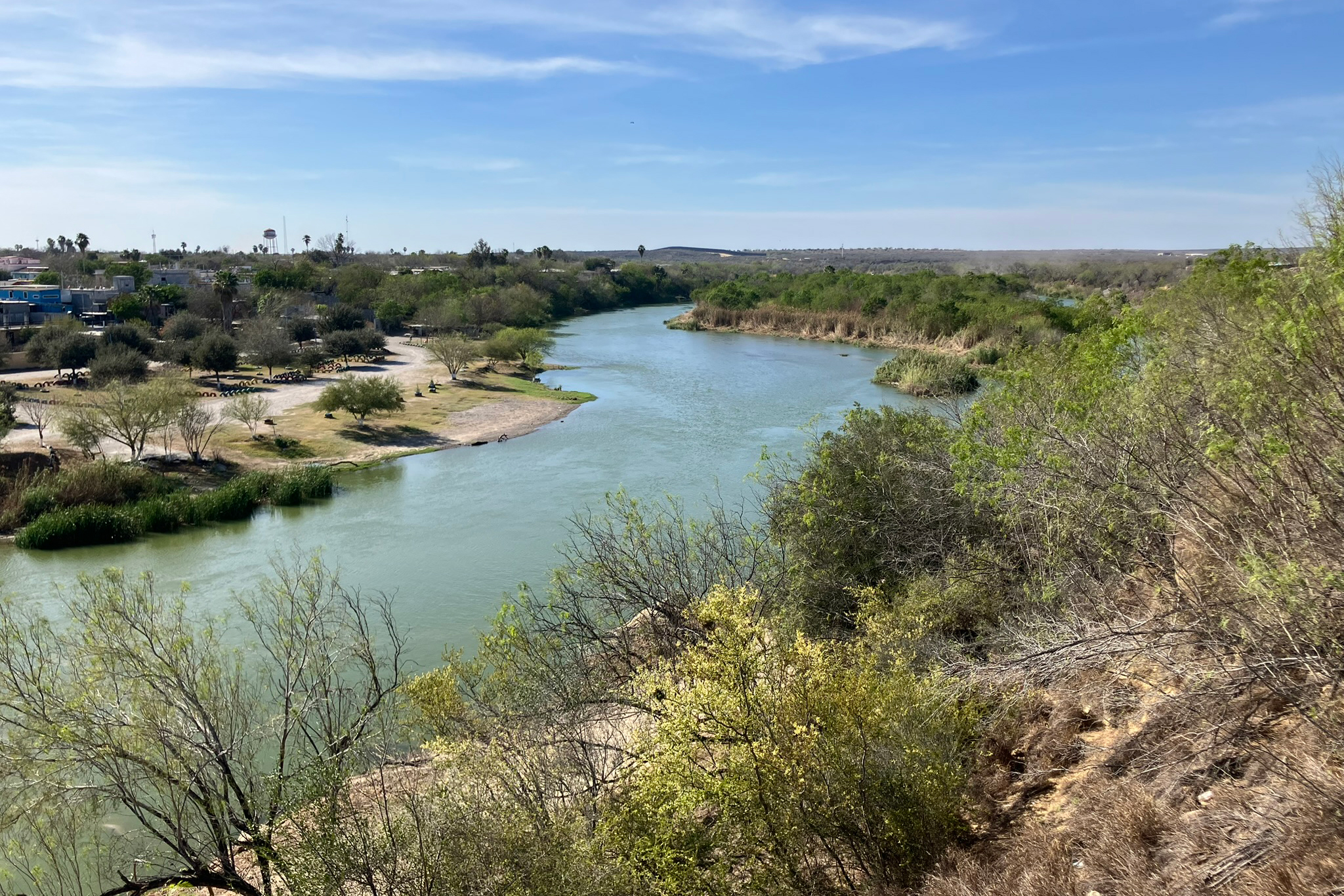
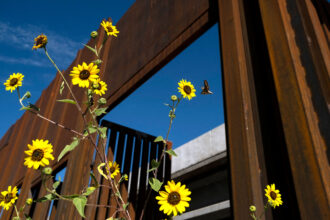
CBP maps show plans for “Smart Wall” construction along the waterfront in Roma, as did a call for public comments the agency posted last year.
Earlier in February, Moreno was kayaking when he said a Border Patrol agent started yelling at him to get off the river. He filed a complaint with a supervisor. Since the path near his house has been closed off, Moreno now has to travel further to put his kayak in the river.
Moreno is not opposed to all border wall construction. But he says the construction must take into account environmental impacts and preserve river access for residents.
During the Biden administration, Texas Gov. Greg Abbott focused much of his border security efforts on Starr County. In 2023, Texas Land Commissioner Dawn Buckingham determined that Fronton Island, slightly upstream of Roma, was state-owned land. Texas proceeded to clear vegetation from the island to deter drug trafficking and unauthorized immigration.
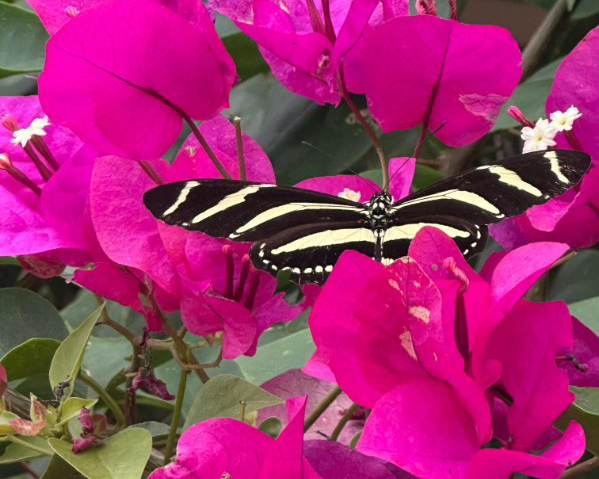
Moreno said he used to see many zebra heliconian butterflies on Fronton Island. Not anymore.
This story is funded by readers like you.
Our nonprofit newsroom provides award-winning climate coverage free of charge and advertising. We rely on donations from readers like you to keep going. Please donate now to support our work.
Donate NowIn November 2024, Donald Trump became the first Republican presidential candidate to win Starr County in more than a century, with more than 57 percent of the vote.
Last year, Buckingham called on Trump to clear the islands near Roma. By last month, the work had begun.
Border barriers are restricting access to the Rio Grande at other points in Texas, including in Eagle Pass, where Abbott ordered buoys to be placed in the river in 2023.
Kayak guide Jessie Fuentes sued the state after the large cylindrical buoys with serrated plates blocked his access to the river. Fuentes now has to ask for access to kayak ahead of time.
“The most beautiful river I have ever been on is the Rio Grande,” he said at a rally to oppose the federal border buoys in Brownsville on Feb. 26. “It really hurt me when I saw bulldozers in the middle of the river. It really hurt me when I saw animals scurrying all over the place because their homes were being bulldozed.”
Adriana Martinez, a geomorphologist at Southern Illinois University Edwardsville, has studied the impact of border fencing and buoys on the environment and flooding in her hometown of Eagle Pass.
She said that there could be disastrous consequences if the Rio Grande experiences flooding with the buoys in place.
“With that flooding comes more erosion in the places where they have removed vegetation,” she said.
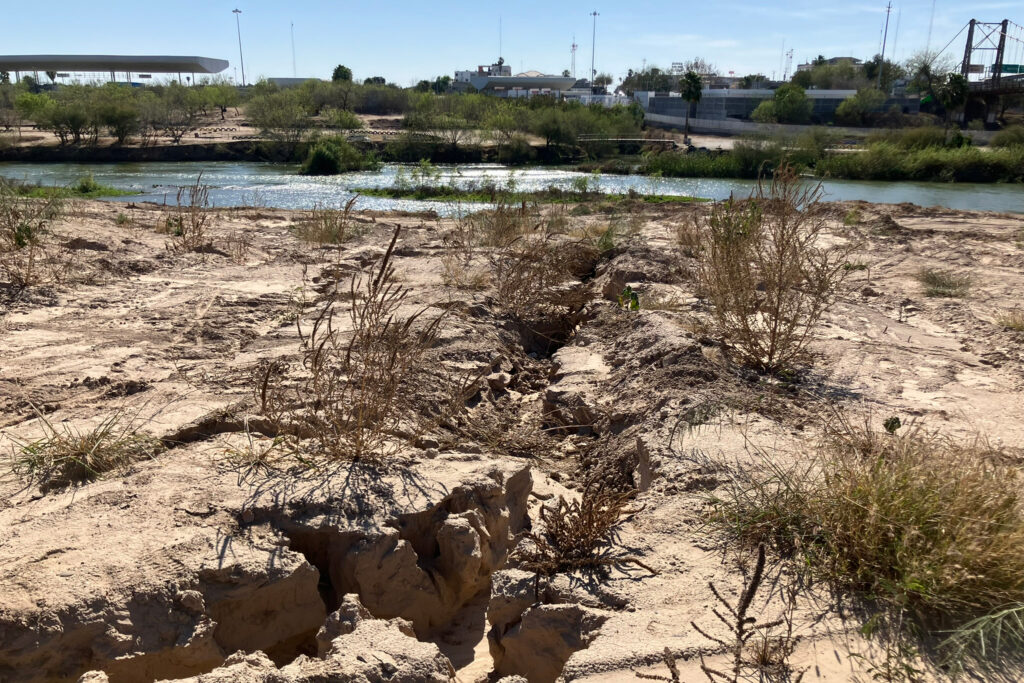
Martinez is equally concerned about how restricting access to the river impacts communities. She said sampling water from the Rio Grande as a high school student in Eagle Pass inspired her to become an environmental scientist.
“We’re going to grow up with a generation that has not had any access to the river,” she said. “Kids are not going to know that you can grow up and [become an environmental scientist] because now it’s just completely walled off.”
Back in Roma, Moreno heads to a tract of the Lower Rio Grande National Wildlife Refuge. He points out where contractors have cleared a path to the river.
Last year the federal government issued waivers of environmental and historical preservation laws to expedite construction in this tract of the refuge and others spread across the valley.
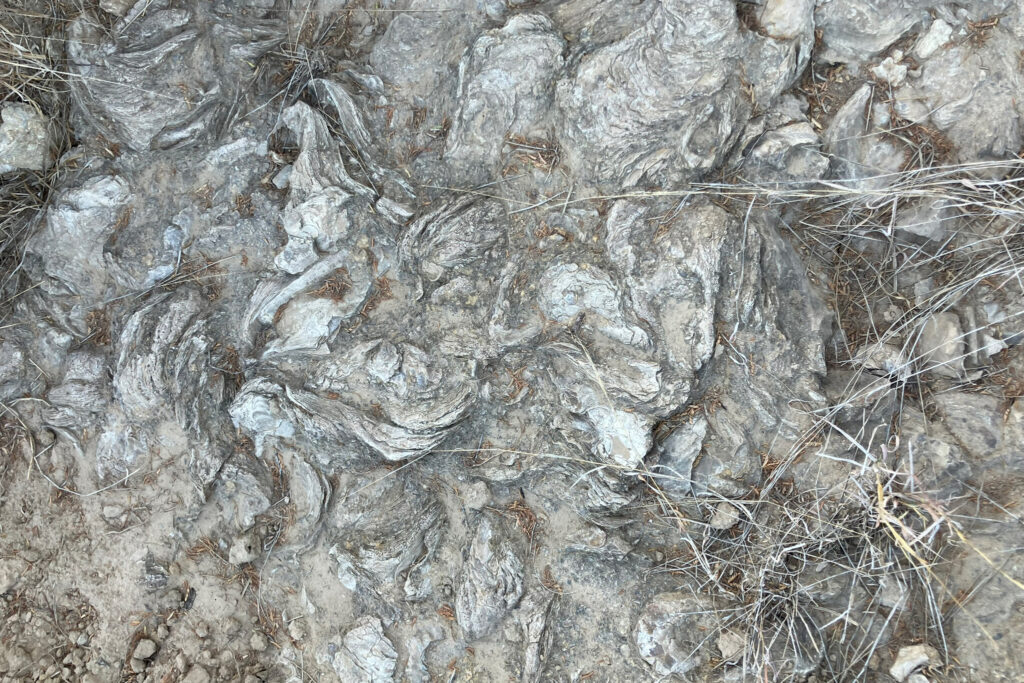
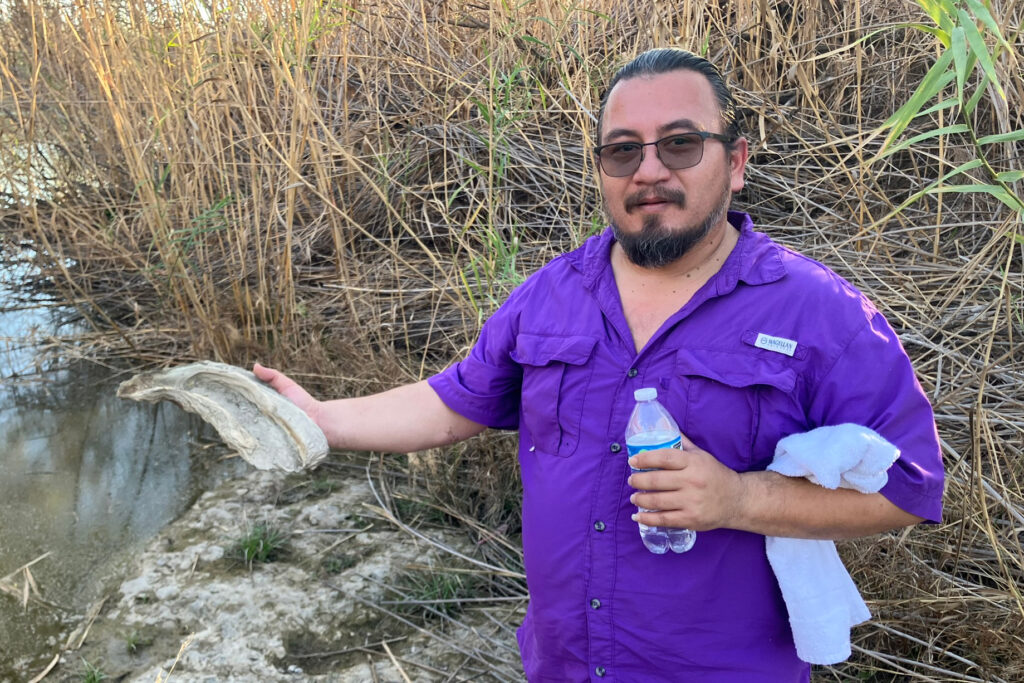
Fossilized giant oysters form a reef along the Rio Grande in Roma, Texas, near a tract of the Lower Rio Grande Valley National Wildlife Refuge. Juan Moreno holds one of the fossils during a walk on the river. Credit: Martha Pskowski/Inside Climate News
Moreno picks up a fossilized giant oyster—Crassostrea gigantissima—from the river bank. The oyster shells formed a reef along the river that he worries construction could now damage.
Moreno said the river has provided sustenance for generations of his family. When money was tight, they could catch fish or forage for wild plants. But now accessing the Rio Grande requires passing a gauntlet of armed federal agents and navigating concertina wire. But he isn’t giving up.
“I’m enjoying it to the fullest and ensuring my 11-year-old son continues to walk the steps our ancestors walked,” he said.
About This Story
Perhaps you noticed: This story, like all the news we publish, is free to read. That’s because Inside Climate News is a 501c3 nonprofit organization. We do not charge a subscription fee, lock our news behind a paywall, or clutter our website with ads. We make our news on climate and the environment freely available to you and anyone who wants it.
That’s not all. We also share our news for free with scores of other media organizations around the country. Many of them can’t afford to do environmental journalism of their own. We’ve built bureaus from coast to coast to report local stories, collaborate with local newsrooms and co-publish articles so that this vital work is shared as widely as possible.
Two of us launched ICN in 2007. Six years later we earned a Pulitzer Prize for National Reporting, and now we run the oldest and largest dedicated climate newsroom in the nation. We tell the story in all its complexity. We hold polluters accountable. We expose environmental injustice. We debunk misinformation. We scrutinize solutions and inspire action.
Donations from readers like you fund every aspect of what we do. If you don’t already, will you support our ongoing work, our reporting on the biggest crisis facing our planet, and help us reach even more readers in more places?
Please take a moment to make a tax-deductible donation. Every one of them makes a difference.
Thank you,

Martha Pskowski
Reporter, El Paso, Texas
Martha Pskowski covers climate change and the environment in Texas from her base in El Paso. She was previously an environmental reporter at the El Paso Times. She began her career as a freelance journalist in Mexico, reporting for outlets including The Guardian and Yale E360. Martha has a B.A. in Environmental Studies from Hampshire College and a master’s degree in Journalism and Latin American Studies from New York University. She is a former Fulbright research fellow in Mexico. Martha can be reached on Signal at psskow.33.