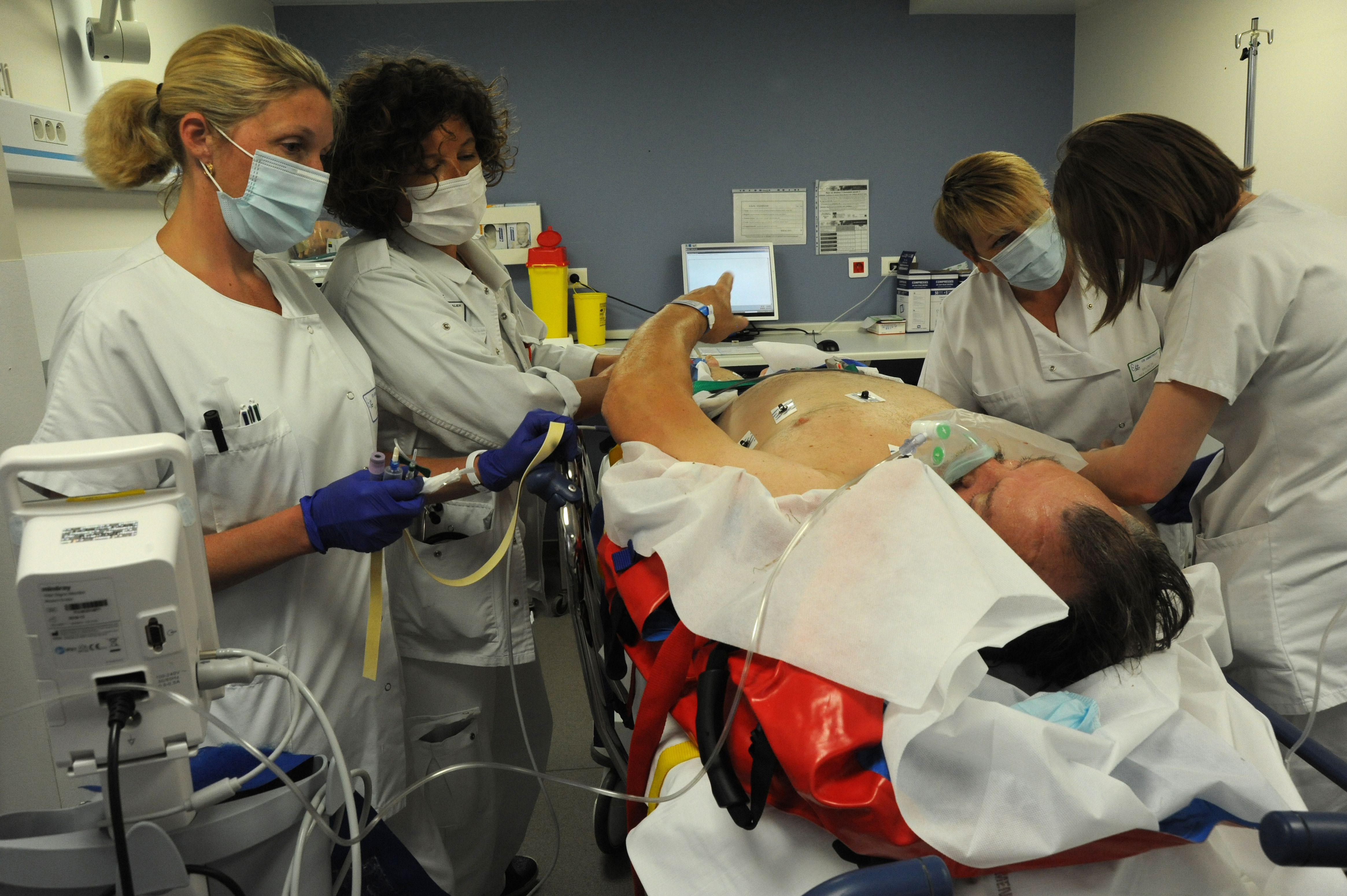


Desflurane is a common anesthetic used in hospital operating rooms worldwide. It’s also a climate super pollutant. Now, several decades after the drug was first introduced, a growing number of U.S. hospitals have stopped using the anesthetic because of its outsized environmental impact. On January 1, the European Union went a step further, prohibiting its use in all but medically necessary cases.
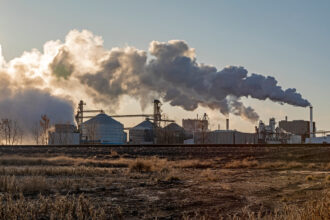
Desflurane is more than 7,000 times more effective at warming the planet over a 20-year period than carbon dioxide on a pound-for-pound basis. However, curbing its use alone won’t solve climate change. The anesthetic contributes only a small fraction of total global warming, which is driven by far larger volumes of carbon dioxide and methane emissions.
Still, emissions of the drug add up. Approximately 1,000 tons of the gas are vented from hospitals and other health care facilities worldwide each year. The emissions have a near-term climate impact equivalent to the annual greenhouse gas emissions from approximately 1.6 million automobiles.
For Jodi Sherman, an anesthesiologist at Yale University and medical director of sustainability for the Yale New Haven Health System, the decision to discontinue use of desflurane is clear.
“It has a relatively significant impact in health care delivery in a hospital on the ground and it’s something where we have easy fixes,” said Sherman.
Health care accounts for 8.5 percent of U.S. greenhouse gas emissions, a figuretwice the global average for the sector. At the hospital level, approximately 5 percent of climate pollution comes from anesthesia gases. At the same time, less than 5 percent of inhaled anesthetics are metabolized in patients. The vast majority of the gas is simply vented into the atmosphere.
Medical professionals are increasingly viewing health care, and anesthesia in particular, as an opportunity to lead in reducing emissions.
“We have a huge role to play in not just contributing to greenhouse gas emissions, but also to be leaders in decreasing U.S. greenhouse gas emissions,” said Shaneeta Johnson, professor of surgery and global health at the School of Global Health at Meharry Medical College in Nashville. “Small changes make a big difference.”
In 2013, the Yale New Haven Health System became the first health care provider in the U.S. to stop using desflurane and the first to eliminate a drug based on its climate impact.
“At our flagship hospital, it was the equivalent of [taking] 360 cars off the road,” Sherman said. “There are 6,000 hospitals in the United States.”
Instead of desflurane, the Yale New Haven Health System now relies primarily on sevoflurane, an anesthetic that is 10 times less potent as a greenhouse gas and approximately half as expensive. The health care system saved $1.2 million annually on anesthesia medications after making the switch, Sherman said.
Other hospitals and health care providers have since followed suit. Those that have eliminated or reduced their use of desflurane include the University of California’s health care system, Providence health care system, OhioHealth, the University of Vermont Medical Center and Kaiser Permanente, one of the largest managed-care organizations in the United States.
Richard Dutton, chief quality officer for U.S. Anesthesia Partners, one of the nation’s largest anesthesia providers, estimates that changes made by his company since 2017 have reduced their greenhouse gas emissions from anesthesia by about 90 percent. A decade ago, USAP used desflurane in approximately half of all procedures. Now, the group’s doctors use the drug in less than 1 percent of all cases, Dutton said.
Anesthesiologists increasingly use low-flow anesthesia, limiting the flow of gas to only when the patient is inhaling it. This reduces the amount of medicine required and the amount of gas vented to the atmosphere.
“If we can deliver the same safe and effective anesthesia using less greenhouse gases, that’s just on the face of it, better, and something we should do,” Dutton said.
USAP physicians and others are also using less nitrous oxide or “laughing gas,” a mild anesthetic and potent greenhouse gas. Nitrous oxide is commonly distributed throughout hospitals via a centralized, leak-prone pipe network. Pipe networks at U.S. hospitals can leak up to 99.8 percent of the gas before it reaches patients, according to a study published in 2024 in the British Journal of Anaesthesia. Using small, portable tanks can reduce losses by 98 percent.
One of the challenges for reducing emissions from anesthesia is a lack of monitoring and reporting. The U.S. doesn’t require detailed greenhouse gas emissions reporting from the health care sector.
“You need to count and know where the opportunity is to be able to implement solutions,” Sherman said.
This story is funded by readers like you.
Our nonprofit newsroom provides award-winning climate coverage free of charge and advertising. We rely on donations from readers like you to keep going. Please donate now to support our work.
Donate NowBased on her ongoing research, anesthesiologist Seema Gandhi, the medical director of sustainability at the University of California San Francisco Health, said the use of desflurane and nitrous oxide for anesthesia in the U.S. has declined since 2018.
Gandhi chairs the American Society of Anesthesiologists’ Committee on Environmental Health, which publishes guidelines for greenhouse gas emissions reductions. The group has helped raise the profile of anesthesia’s climate impact and the potential for emissions reductions.
However, not everyone agrees. A paper published in the academic journal Anesthesia & Analgesia in July argued that the climate impact of desflurane emissions was not significant and suggested that more harm may come from withholding the drug from patients. The paper’s lead author acknowledged receiving “speakers and consultancy honoraria” from Baxter International, a pharmaceutical company that manufactures desflurane.
“It is important to highlight that there is no universal anesthetic agent which suits the needs of all patients,” a spokesperson for Baxter said in a written statement to Inside Climate News. “Anesthesiologists recommend the best anesthesia option for each patient, depending on state of health, other medical conditions and the type of surgery–and so protecting availability and choice of anesthetic agents is important to maintain high-quality patient care.”
Sherman, of Yale University, said there is nothing unique about desflurane that can’t be accomplished with other medications. “There really is no medical necessity,” Sherman said.
The EU regulation follows similar measures in Scotland and England in recent years.
Gandhi said that implementing regulations may be more effective for the U.S. as well, given the urgent need to address climate change.
“Top-down policy-driven initiatives can have a much larger impact in a much shorter duration of time,” Gandhi said.
About This Story
Perhaps you noticed: This story, like all the news we publish, is free to read. That’s because Inside Climate News is a 501c3 nonprofit organization. We do not charge a subscription fee, lock our news behind a paywall, or clutter our website with ads. We make our news on climate and the environment freely available to you and anyone who wants it.
That’s not all. We also share our news for free with scores of other media organizations around the country. Many of them can’t afford to do environmental journalism of their own. We’ve built bureaus from coast to coast to report local stories, collaborate with local newsrooms and co-publish articles so that this vital work is shared as widely as possible.
Two of us launched ICN in 2007. Six years later we earned a Pulitzer Prize for National Reporting, and now we run the oldest and largest dedicated climate newsroom in the nation. We tell the story in all its complexity. We hold polluters accountable. We expose environmental injustice. We debunk misinformation. We scrutinize solutions and inspire action.
Donations from readers like you fund every aspect of what we do. If you don’t already, will you support our ongoing work, our reporting on the biggest crisis facing our planet, and help us reach even more readers in more places?
Please take a moment to make a tax-deductible donation. Every one of them makes a difference.
Thank you,

Phil McKenna
Reporter, Boston
Phil McKenna is a Boston-based reporter for Inside Climate News. Before joining ICN in 2016, he was a freelance writer covering energy and the environment for publications including The New York Times, Smithsonian, Audubon and WIRED. Uprising, a story he wrote about gas leaks under U.S. cities, won the AAAS Kavli Science Journalism Award and the 2014 NASW Science in Society Award. Phil has a master’s degree in science writing from the Massachusetts Institute of Technology and was an Environmental Journalism Fellow at Middlebury College.