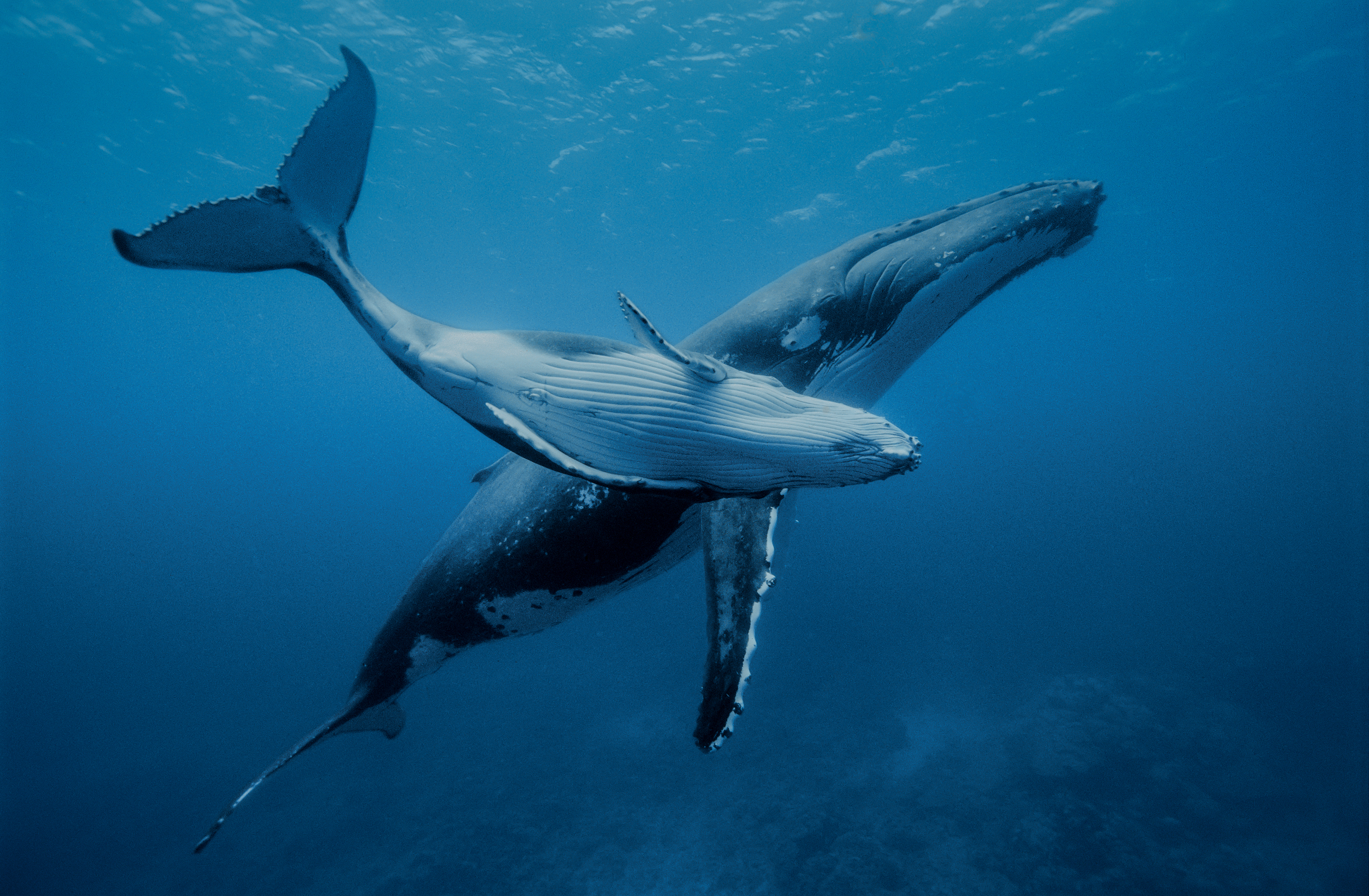


As governments struggle to halt biodiversity loss and protect the world’s oceans using legal systems largely built by and for nation-states, Indigenous leaders are advancing a radically different vision—one that treats whales not as resources to be managed, but as living ancestors with rights of their own.
On Thursday, Indigenous leaders from across Polynesia released the text of a landmark treaty recognizing whales as legal persons and ancestral beings, a move that supporters say could reshape global debates over ocean governance, conservation and Indigenous sovereignty.
The treaty, He Whakaputanga Moana, was signed in March 2024 in the Cook Islands by Māori and Polynesian leaders, including the late Māori King Tūheitia Pōtatau Te Wherowhero VII, but its contents were not made public until now.
Grounded in Indigenous legal and cultural traditions, the agreement establishes whales as rights-holders and calls for their protection through laws and management systems inspired and led by Indigenous peoples.
“Whales, as legal persons, possess inherent rights essential for their existence, thriving, and flourishing in healthy marine ecosystems,” the declaration says. Among the rights it enumerates: freedom of movement and migration; development of natural behaviors; cultural expression; a healthy environment; and restoration and regeneration.
The declaration—part of the growing global rights-of-nature movement—also establishes a whale protection fund, outlines a pathway for implementation and sets out measures to protect whales through marine protected areas and management strategies that integrate Indigenous knowledge and scientific data. Polynesian nations and “other interested parties” are invited to adopt the declaration and help carry out its objectives.
“We stand united by our shared responsibility to protect whales for generations to come, fulfilling our role as kaitiaki (guardians) of the ocean and honoring the ancient wisdom that binds us to these magnificent creatures,” the treaty says.
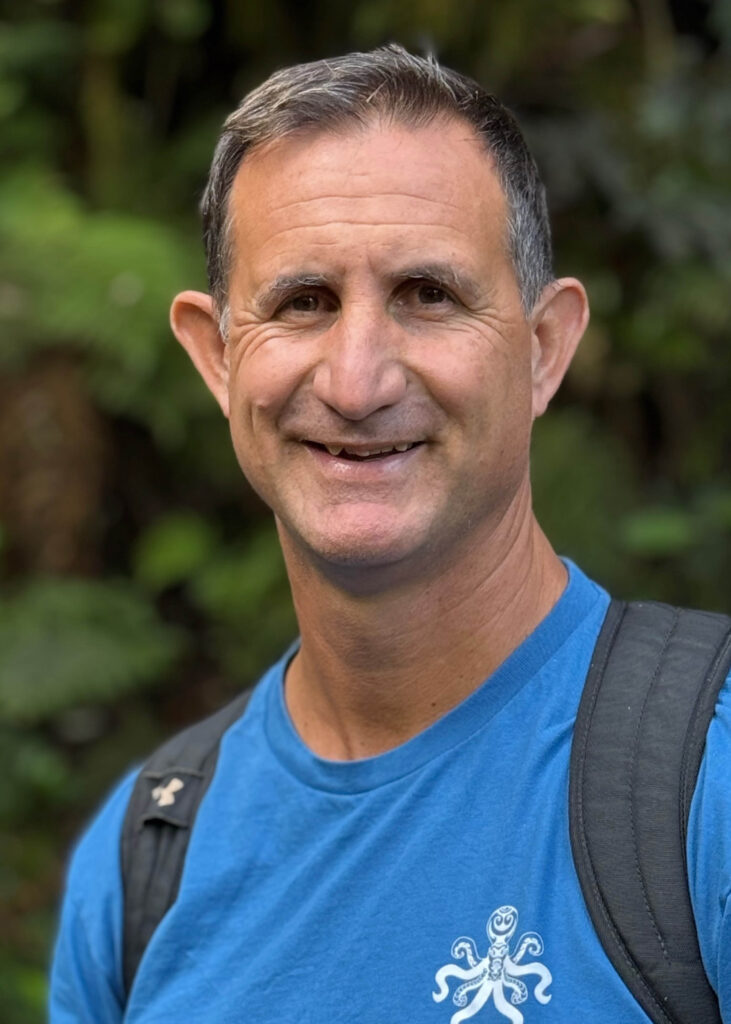
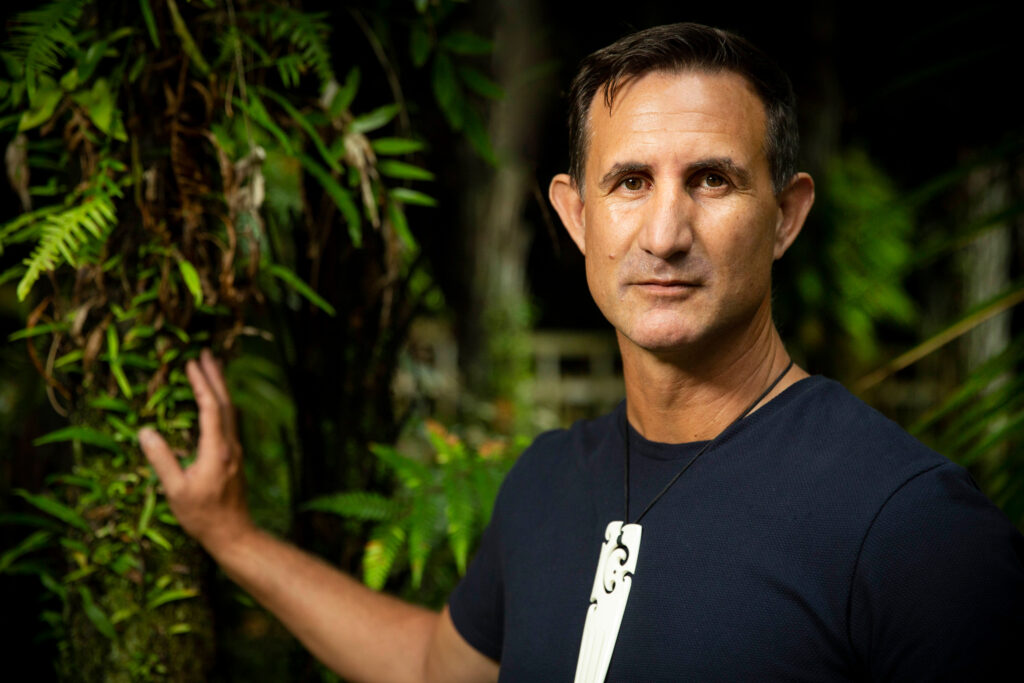
Inside Climate News talked with Daniel Hikuroa, a Māori scholar and Earth systems scientist, about the treaty’s broader implications for environmental governance, humans’ relationship to the rest of the natural world and Indigenous sovereignty.
Hikuroa, who is an associate professor of Māori studies at the University of Auckland, spoke with Inside Climate News before the text of the treaty was released and was not involved with its creation. This interview has been lightly edited for length and clarity.
KATIE SURMA: In 2024, Indigenous leaders from the Pacific region signed a treaty—the Declaration for the Ocean (He Whakaputanga Moana)—recognizing whales as legal persons with rights. What is the significance of this?
DANIEL HIKUROA: You had what many refer to as tribal leaders—but who see themselves as Indigenous sovereign nation leaders, and I use those words intentionally—signing up to something drawn entirely from within an Indigenous worldview. Many of the tribal leaders who signed are associated through being from the Māori cultural group.
Many of the signatories to the He Whakaputanga Moana trace their ancestry back through kinship connections. New Zealand, the Cook Islands, Tahiti, wider French Polynesia, Rapa Nui and Hawaiʻi have language and customs that all come from the same root.
The treaty is not meant to be exclusive. It kicked off with tribal leadership from the Māori world, but it was never intended to be exclusively Māori.
Its importance lies in Indigenous leadership operating as sovereign nations—not presidents or prime ministers. It began with kinship connections and expanded outward. That’s what distinguishes it from other biodiversity frameworks. It’s both its strength and its vulnerability.
At a minimum, it offers a powerful vision. The mission will be harder. The question becomes: how does this practically contribute to better outcomes for whales? Ultimately, it’s about healthy oceans—without that, you don’t have healthy whales.
But without vision, there’s nothing to buy into. At a workshop in Tahiti, an elder spoke about finding unity of purpose while maintaining uniqueness. That really stuck with me—celebrating unity and diversity together.
SURMA: That treaty followed a series of national laws in New Zealand recognizing ecosystems as legal persons. Is the treaty related to those developments?
HIKUROA: In concept the treaty aligns with New Zealand’s legal personhood work—for a forest, Te Urewera; the Whanganui River, Te Awa Tupua; and more recently a mountain, Taranaki Maunga (Te Kāhui Tupua).
The idea of personhood as granted by a government is an imperfect expression of Indigenous worldviews and aspirations, but it’s far better than anything we had before. Politics is the art of what’s possible—how you take a beautiful idea and bring it into reality.
It comes down to where authority lies. From a Māori perspective, a river’s authority to be a river comes from the river itself. Tupua (from Te Awa Tupua Act) are more ancient and powerful than people. In a legal framework, that authority comes from the government. That’s the simplest way to explain it.
“Ultimately, it’s about healthy oceans—without that, you don’t have healthy whales.”
Still, the legal personhood framework has empowered people. Communities are absolutely in a better place than before. But there’s still a tension. People know the river is their ancestor. That understanding predates the law. “I am the river, and the river is me.”
We have a similar saying where I’m from. “Noo taatou te awa, noo te awa taatou”—we, and the “we” includes the river, are the river, and the river is us. On balance, yes, we’re better off. But it’s still a stepping stone. We’re on a journey.
SURMA: Do you see the Declaration for the Ocean treaty—being entirely between Indigenous nations—as different?
HIKUROA: Yeah, I believe it is. They’re not seeking recognition from nation-states in the usual way. As Indigenous peoples, we draw our identity from place. We are that river; that river is us. We are that mountain, that mountain is us. We are that whale, that whale is us.
So when we draw from that sovereign nation framing, it’s about being part of nature rather than apart from nature. The declaration is trying to speak on behalf of the whales.
Arguably, the greatest strength of the declaration—and its greatest weakness—is that it operates outside the current geopolitical nation-state system. That’s where lawyers start asking, “What’s the legal precedent for this?”
We could respond by saying that the United Nations Convention on the Law of the Sea was fundamentally based—though never explicitly—on the principle of mare nullius: the idea that the ocean was empty. That framing comes from a particular worldview.
Another worldview says the ocean is the great marae that connects us all. It’s an ancestor. It’s living. For most, if not all, peoples in the Pacific, the ocean was never empty. For many Māori, Tangaroa is the deity of ocean life. The physical ocean is Te Moana-nui-a-Kiwa. The personification of the ocean is Hinemoana.
So the idea of the ocean as a person has existed for a long time. This isn’t borrowing from a Western legal tradition—it’s expressing how we see the world. That worldview doesn’t have boundaries, exclusive economic zones or nautical miles—no one told the whales about those lines on maps.
That’s what makes it exciting: It draws from a fundamentally different worldview. But it’s also the challenge—breaking through the invisibility of the assumptions behind ocean governance that’s framed from the land.
It’s a bit absurd, really, to name a planet Earth, that’s actually 70 percent water as if land is the defining feature. But you get my point.
SURMA: Some Indigenous communities in the Amazon are pushing for a rights-of-the-Amazon declaration among Amazonian governments. Part of what’s so interesting about that is that they are getting people to stop thinking of the forest as sliced into countries and to start seeing it as a biome. What you just said reminded me of that.
HIKUROA: Yes. The first task is challenging the idea that the legal system we have is the only one we should have. That’s job one.
The second is recognizing that other systems of knowing, being and doing—and relating to whales and oceans—have existed for a very long time. If we can accept the first point, we can then ask whether the systems we rely on now might actually be part of the problem.
SURMA: What is the place of whales in Māori culture?
HIKUROA: For some groups in New Zealand, whales are ancestors.
On the East Cape of the North Island, some tribes see humpback whales as ancestors—manifestations of Paikea, one of their eponymous chiefs. That’s one form of relationship.
Where this aligns well is with whales as charismatic megafauna. Conservation organizations have leveraged that effectively—Save the Whales campaigns, Project Jonah, WWF. It’s a fortunate overlap with Indigenous perspectives.
There’s also that recent David Attenborough ocean film—cinematically beautiful and message-wise deeply depressing.
SURMA: We’ve been talking about legal expressions, but are you seeing other dimensions of system change—economic or otherwise—where Indigenous worldviews are being expressed?
HIKUROA: Yes. For nearly a decade I’ve worked loosely with groups across New Zealand, the Pacific and Australia around the idea of rights for the ocean—though I’m more comfortable with “voice of the ocean.”
Indigenous approaches don’t usually speak in terms of rights. We think in terms of responsibilities and speaking for.
In New Zealand, we talk about enjoying the bounty of land and sea through user privileges—never ownership. Those privileges immediately come with responsibilities.
Rights language overlaps, but responsibilities often get lost or reduced to compliance. We’ve just seen that with freshwater regulations here—they’ve set us back decades, in our view.
The idea emerging from Te Awa Tupua is that first, a river has the right to be a river—clean water, seasonal flow. Then we can talk about user privileges, and only later about industrial or commercial use. That hierarchy has been flipped back around, and experience shows that it leads to degradation.
“The value of weaving systems together starts with acknowledging that Western science exists within a worldview—something I was never taught during my scientific training.”
Another thing is the renaissance of traditional navigation in the Pacific. These voyagers were among the first to notice ocean change and have been vocal in calling attention to it. There are Polynesian voyaging societies across the Pacific, including in Hawaiʻi. Many groups built their own waka hourua ocean-going double-hulled canoes, and a philanthropist funded seven. Immense work is going in navigator training. Those waka hourua are now spread across the Pacific. Their work aligns strongly with ocean personhood ideas, even if it’s not framed that way.
SURMA: Your work has also focused on weaving together Indigenous traditional knowledge with Western science. Do you see rights of nature as a manifestation of that?
HIKUROA: Absolutely. Western science provided the rationale for colonization and imperial dominion—the great chain of being, human dominance over nature. That worldview underpins both legal systems and scientific framing.
The value of weaving systems together starts with acknowledging that Western science exists within a worldview—something I was never taught during my scientific training.
Once you recognize that, you can accept that others have different worldviews. When someone says, “I am the river,” it sounds like nonsense unless you recognize your own assumptions.
The question shouldn’t be who’s right or wrong, but how different ways of knowing can help us understand the river—especially in today’s context.
Sometimes the weaving works; sometimes it doesn’t. That’s OK. The key is being clear about when and why it does or doesn’t.
Earth systems science and environmental humanities strongly support rights- or voice-of-nature thinking.
I once gave a talk in Adelaide and was invited afterward to help launch an environmental humanities program in Stockholm. I’d never heard the term—but it turns out my work matched it exactly. I understood it as Earth systems science. Different disciplines, same framing.
This story is funded by readers like you.
Our nonprofit newsroom provides award-winning climate coverage free of charge and advertising. We rely on donations from readers like you to keep going. Please donate now to support our work.
Donate NowSURMA: What do you mean by Earth systems science?
HIKUROA: After we went to the moon and looked back at Earth, we began to see it as an interconnected system.
Universities are structured by disciplines, which has value—but what was missing was systems thinking. Earth systems science looks at interactions among atmosphere, biosphere, hydrosphere, geosphere and so on.
The point isn’t the number of “spheres,” but the mindset: how changes in one part ripple through the whole. Environmental humanities shares that framing, just with different tools.
SURMA: Does that connect back to whales’ legal personhood?
HIKUROA: Yes. The conceptual framework for legal personality for whales fits beautifully within Earth systems and environmental humanities framings—seeing whales, oceans and ecosystems as interconnected.
SURMA: Different countries have different legal contexts. In some places the idea has taken off; in others, like the United States, it’s been blocked. How much does a country’s legal structure matter for advancing rights of nature-style laws?
HIKUROA: Legal contexts matter enormously. When we hosted people from Hawaiʻi to discuss land back, I was clear: Our experience isn’t a template.
What is transferable are principles—what arguments created space, what leverage points enabled change. That balance between vision and mission is crucial.
People need vision first. Many don’t realize they even have a worldview. Indigenous thinking isn’t anti-science or anti-technology—it draws from everything available, but with a different conceptual foundation.
Our democratic systems reward short-term thinking. For example, water infrastructure needs a 300-year vision, yet elections run on three-year cycles.
Indigenous governance centers long-term, collective thinking—being a good ancestor. That idea underpins the whale declaration, even if it’s not explicit.
“People need vision first. Many don’t realize they even have a worldview.”
Being a good ancestor is a deeply rooted concept in many Indigenous cultures that emphasizes intergenerational responsibility, environmental guardianship and spiritual connection to the natural world.
The concept is expressed in this whakataukī (proverb):
Toitu te marae o Tāne
Toitu te marae o Tangaroa
Toitu te iwi
If the realm of Tāne, deity of the forests, is healthy and intact
And the realm of Tangaroa, deity of oceans and waters, is healthy and intact
Then so to will the realm of people be healthy and intact
In the Māori worldview, humans are not separate from nature but part of it, bound by whakapapa (kinship)-based relationships to everything. Those relationships link people to the land, ancestors and future generations.
Being a good ancestor means making decisions today that honour these connections and protect the integrity of the environment for those yet to come. This includes understanding ancestral stories and cultural patterns that inform how we relate to nature and instruct us how to be good ancestors.
About This Story
Perhaps you noticed: This story, like all the news we publish, is free to read. That’s because Inside Climate News is a 501c3 nonprofit organization. We do not charge a subscription fee, lock our news behind a paywall, or clutter our website with ads. We make our news on climate and the environment freely available to you and anyone who wants it.
That’s not all. We also share our news for free with scores of other media organizations around the country. Many of them can’t afford to do environmental journalism of their own. We’ve built bureaus from coast to coast to report local stories, collaborate with local newsrooms and co-publish articles so that this vital work is shared as widely as possible.
Two of us launched ICN in 2007. Six years later we earned a Pulitzer Prize for National Reporting, and now we run the oldest and largest dedicated climate newsroom in the nation. We tell the story in all its complexity. We hold polluters accountable. We expose environmental injustice. We debunk misinformation. We scrutinize solutions and inspire action.
Donations from readers like you fund every aspect of what we do. If you don’t already, will you support our ongoing work, our reporting on the biggest crisis facing our planet, and help us reach even more readers in more places?
Please take a moment to make a tax-deductible donation. Every one of them makes a difference.
Thank you,