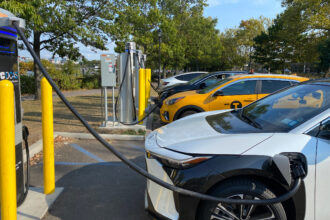


After a year in which the Trump administration rolled back electric-vehicle rebates and funding programs, the largest electric utility in Illinois announced an additional rebate program of nearly $70 million to fund electric-vehicle infrastructure projects in northern Illinois.
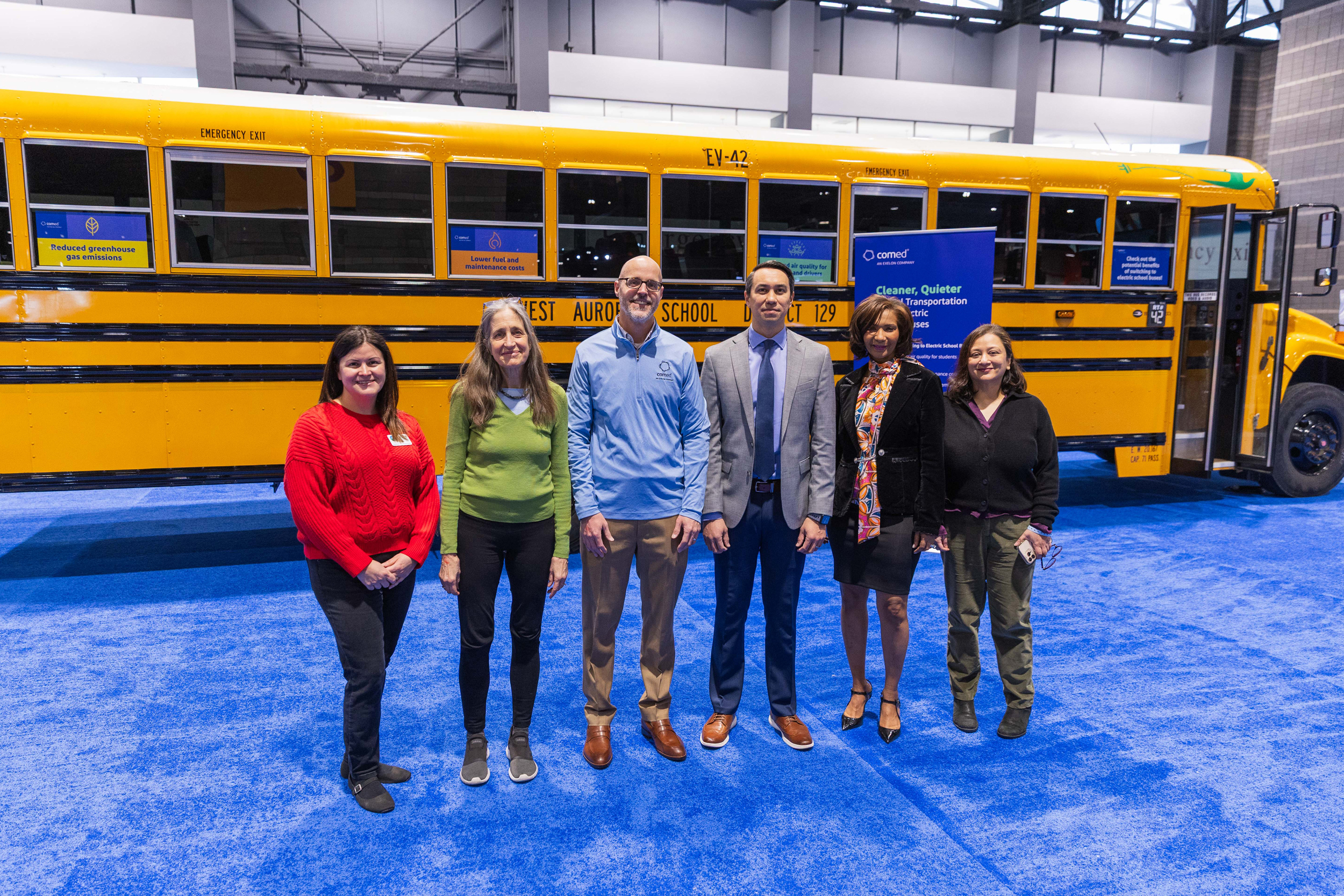
Leaders of the Commonwealth Edison Co. (ComEd) promoted the program at a press conference ahead of the opening of the Chicago Auto Show last month.
The 2026 program is part of a total investment of $168 million in ComEd’s second Beneficial Electrification (BE) Plan, spanning 2026 to 2028. In February, ComEd announced nearly $70 million in EV rebates this year, following the $100 million spent in 2025.
For 2026, $89 million in funding is available, with $69 million designated for rebates that customers can claim this year. Disbursement of those funds began at the start of the year.
The remaining $20 million is allocated for ComEd’s Customer Education and Awareness Program, Research and Development Program and Portfolio Program.
The BE plan funds were approved last year by the Illinois Commerce Commission, following the first BE plan that covered 2023 to 2025. In 2021, Illinois passed the Climate and Equitable Jobs Act, which required all major utilities to establish a BE plan.
“The vast majority of funds are for rebates for customers, both residential and non-residential across three programs,” said Cristina Botero, senior manager for beneficial electrification at ComEd.
The three programs include the residential EV charger and installation rebate program, which makes approximately $4 million available for rebates of up to $2,500 per household to support the purchase and installation of residential EV chargers; the business and public sector EV purchase rebate program, which has about $35 million available for rebates supporting the purchase or lease of new and pre-owned fleet EVs of all weight classes; and the business and public sector make-ready rebate program, $29 million available for rebates to cover costs to make sites ready for public and private charging.
ComEd made a similar announcement last year, committing to funding EV rebate programs, specifically in Equity Investment Eligible Communities (EIEC), which are areas throughout Illinois that would most benefit from equitable investments by the State designed to combat discrimination.
Last year, their goal was for 50 percent of the funds to go to those communities; they exceeded that target, with almost 80 percent claimed by those target communities, Andy Plenge, vice president of strategy and energy policy at ComEd, said at a Feb. 6 press conference. ComEd has set the same 50 percent goal this year.
The 2026 plan will place a greater emphasis on electric school buses—which have also been targeted by Trump’s Environmental Protection Agency (EPA)—to advance ComEd’s vehicle-to-grid electric school bus pilot program. The program, rolled out last year with three Chicagoland school districts equipped with electric school buses, tests the functionality of bidirectional chargers that could make energy cheaper for customers and reduce grid load.
Botero said there is no shortage of demand for these rebates, and ComEd reserves funds for low- income and EIEC customers to ensure they can reach those communities.
This is a continuation of Illinois’ commitment to meeting EV and greenhouse gas reduction goals, even amid federal changes. On Feb. 10, the U.S. Department of Transportation (DOT) announced a proposal requiring federally funded electric vehicle chargers to be fully U.S.-made, raising the threshold to 100 percent domestic manufacturing from 55 percent.
Additionally, Congress has proposed defunding a 5-year-old program designed to expand electric-vehicle charging stations. The National Electric Vehicle Infrastructure, or NEVI, program got off to a slow start and had spent only a small portion of its budget when the Trump administration took office a year ago and sought to claw back funding.
Now, NEVI faces a $500 million reduction, part of a larger package totaling about $900 million in proposed cuts related to electric transportation.
Botero emphasized that, similar to the first BE plan, “we are not impacted by the federal changes, because our programs are not being funded by the federal government.” Federal funding threats, she said, “make state support and leadership even more important.”
But that doesn’t mean that these programs have gone entirely unaffected.
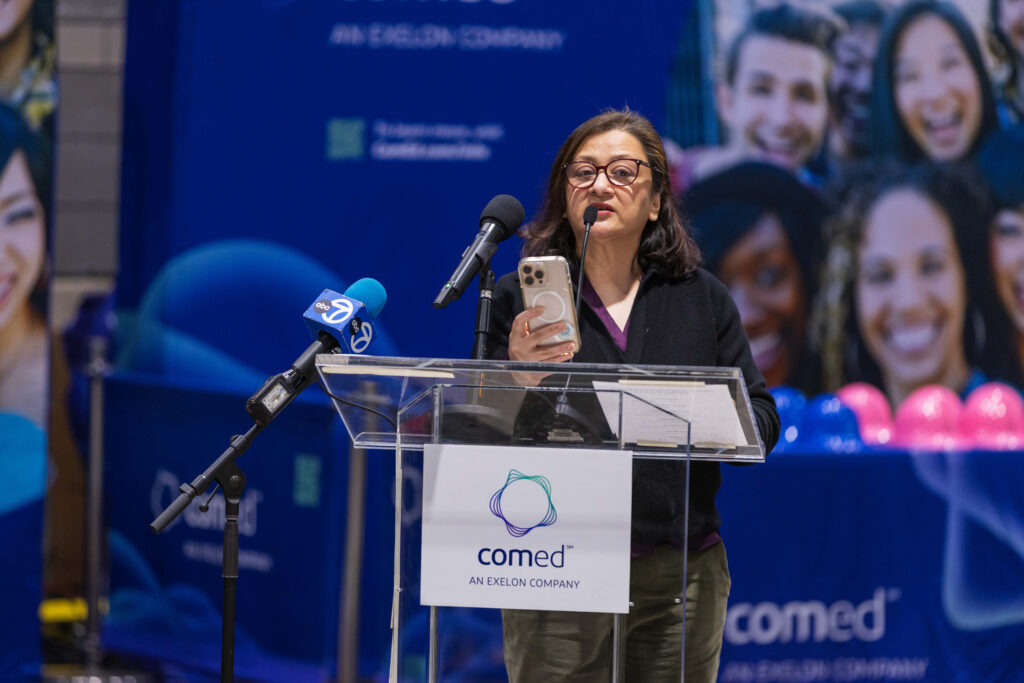
State of Illinois Electric Vehicle Officer Megha Lakhchaura, who works across state agencies to get grants for EV project funding, said that the grants that previously funded certain projects have “all gone away” due to Trump’s cuts.
While funding is secure until 2028, a notable change will occur when that funding pot shifts in 2029. Last November, Illinois passed the Clean and Reliable Grid Affordability (CRGA) Act, which will add battery storage to community solar projects and fund improvements to energy grid infrastructure that advocacy groups say would help the state meet its goal of transitioning to renewable energy by 2050.
Notably, CRGA involves developing a state-integrated resource plan (IRP), which could help Illinois reduce skyrocketing wholesale power costs through rigorous energy modeling and consumer analysis.
The Illinois Commerce Commission would oversee the IRP in consultation with the Illinois Power Agency, Illinois Finance Authority, Illinois Environmental Protection Agency and utilities.
CRGA funds kick in at $85 million per year starting in 2029, the same year that ComEd’s BE plan ends. This shifts the role of administering funds from ComEd to the Illinois Department of Transportation (IDOT).
A notable shift that will occur in 2029 is a change in the responsibility of investments managed, shifting from ComEd to state agencies.
This story is funded by readers like you.
Our nonprofit newsroom provides award-winning climate coverage free of charge and advertising. We rely on donations from readers like you to keep going. Please donate now to support our work.
Donate NowBotero said that these details are “still being fleshed out” as part of ComEd’s multi-year grid plan. The utility is working with the Illinois EPA (ILEPA) on what the investments look like after 2029, but “CRGA says the ILEPA will continue investing the average annual funds that ComEd adds,” she said.
Although how those investments will be managed has yet to be determined, Botero emphasized that when the BE plan ends, CRGA establishes a path for the ILEPA to continue investing the average annual funds that ComEd adds, which is approximately $85 million to continue EV program funding even if who manages it changes.
“It creates a strong role for utilities. Utilities are instructed to put out rate-ready programs [to] provide support for all the electric infrastructure and provide rate design. So the state has passed this legislation, and continues to have rebates for electric vehicles,” Lakhchaura said.
She added that while funding is currently stable, her office has felt the impacts of funding cuts from the Trump administration, leading to lawsuits and more competitive grant applications.
Notably, the state sued the DOT over NEVI, and in January, a federal judge issued a final ruling that the DOT illegally withheld approximately $1 billion in funding for the NEVI Formula Program from Illinois, along with 19 other states and the District of Columbia.
The state is currently about to close the third round of NEVI for $65 million. Although that money is secure, Lakhchaura said the Trump administration has also tried to take back money already awarded to states, such as the federal tax credit for EVs: “Funding has actually dried up,” she said.
However, the money they won “before the administration changed, through the Bipartisan Infrastructure [Law] and through the Inflation Reduction Act … came through.”
In January, the U.S. House passed an appropriations bill that cuts funding for NEVI and reallocates those funds to other transportation uses. But Lakhchaura said that even if that bill passes, “we don’t expect to lose a significant portion of what was allocated.”
Lakhchaura said despite funding challenges, the state is still successful in implementing its goals compared to other states, a success rate her office will continue to strive toward.
“We grew at 32.5 percent last year, the number of EVs that we outpaced the national average. The residents here are more likely and more willing to adopt clean transportation, and we provide the infrastructure.”
About This Story
Perhaps you noticed: This story, like all the news we publish, is free to read. That’s because Inside Climate News is a 501c3 nonprofit organization. We do not charge a subscription fee, lock our news behind a paywall, or clutter our website with ads. We make our news on climate and the environment freely available to you and anyone who wants it.
That’s not all. We also share our news for free with scores of other media organizations around the country. Many of them can’t afford to do environmental journalism of their own. We’ve built bureaus from coast to coast to report local stories, collaborate with local newsrooms and co-publish articles so that this vital work is shared as widely as possible.
Two of us launched ICN in 2007. Six years later we earned a Pulitzer Prize for National Reporting, and now we run the oldest and largest dedicated climate newsroom in the nation. We tell the story in all its complexity. We hold polluters accountable. We expose environmental injustice. We debunk misinformation. We scrutinize solutions and inspire action.
Donations from readers like you fund every aspect of what we do. If you don’t already, will you support our ongoing work, our reporting on the biggest crisis facing our planet, and help us reach even more readers in more places?
Please take a moment to make a tax-deductible donation. Every one of them makes a difference.
Thank you,