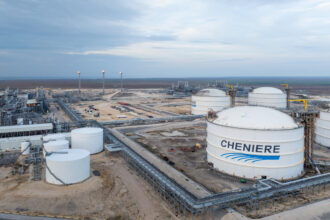


Seven Democratic U.S. senators have launched a probe into a $370 million “alternative fuel” payout to Cheniere Energy, made earlier this year by the IRS, that critics say the liquefied natural gas export company never should have received.
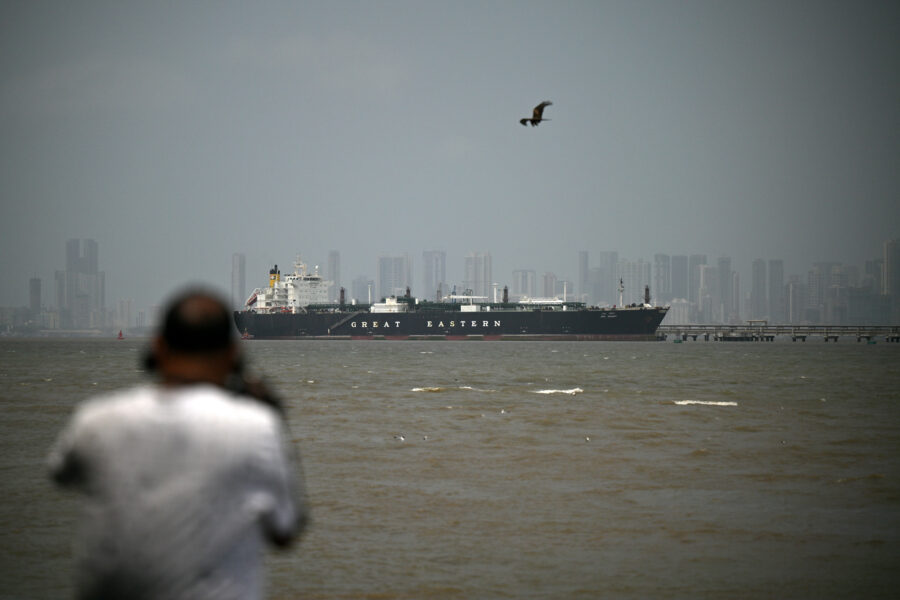
An earlier Inside Climate News investigation into the company’s push to get that tax credit for using LNG to power its tankers noted that such fuel is standard in the industry, not an alternative. The incentive is also intended for motor vehicles or motorboats, the latter of which are defined in federal shipping regulations as no more than 65 feet long. LNG vessels are typically 1,000 feet in length.
“We write to clarify whether the Internal Revenue Service has determined that companies using liquefied natural gas (LNG) for propelling LNG tankers qualify for credits under the Alternative Fuel Excise Tax (AFET),” the senators wrote to Scott Bessent, the IRS acting commissioner, on Tuesday. “Providing tankers with AFET credits would unnecessarily waste taxpayer money while doing nothing to protect the environment, reduce costs for everyday Americans, or lessen the United States’ dependence on oil.”
U.S. Sen. Jeff Merkley (D-Ore.)—the top Democrat on the Senate Budget Committee—along with Senate Minority Leader Chuck Schumer (D-N.Y.), Elizabeth Warren (D-Mass.), Edward J. Markey (D-Mass.), Sheldon Whitehouse (D-R.I.), Peter Welch (D-Vt.) and Chris Van Hollen (D-Md.) announced the probe into the agency’s handling of tax subsidies for LNG exporters.
The investigation follows Cheniere Energy’s February announcement that it received a retroactive cash payment for using LNG as an alternative fuel in its export vessels prior to the credit’s expiration in 2024. The company is the largest producer and exporter of LNG in the United States.
Shipping experts and tax specialists questioned the tax credit when it was made public earlier this year, arguing that the money was never intended for LNG tankers.
President George W. Bush signed the alternative fuel excise tax credit into law in 2005. It incentivized the use of fuels other than gasoline and diesel for use in motor vehicles. The credit applied to the use of LNG and other alternative fuels “in a motor vehicle or motorboat.”
In their letter to the agency, the senators questioned whether the IRS “determined that LNG tankers are motorboats.” Also at issue is whether the use of LNG by an LNG vessel should be considered an alternative to other potential fuels.
“This is the standard fuel they use, and it’s been the standard from the very beginning,” Kirsten Sinclair Rosselot, an environmental performance analyst and consultant, said of the use of liquefied natural gas by LNG vessels. Rosselot was the lead author of a 2023 study that assessed fuel use and emissions from LNG vessels.
Rosselot noted that LNG vessels continuously “boil off,” or evaporate, a portion of the LNG in their holds to keep the liquefied fuel cold. If the gas that is boiled off isn’t used to fuel the ship, it would have to be flared, vented or reliquefied back into LNG.
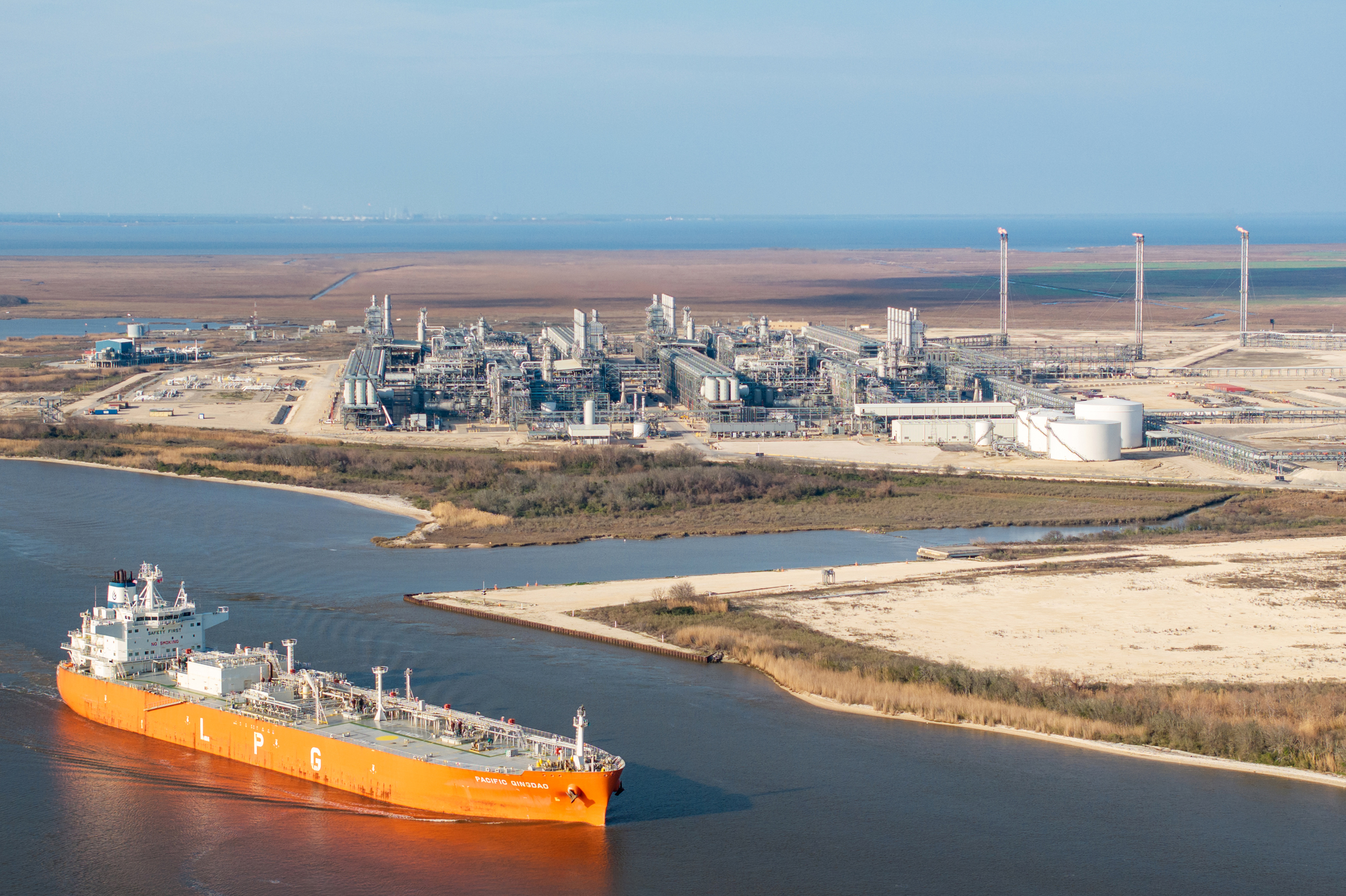
“Qualifying LNG tankers for the AFET credit would allow companies to claim a tax credit for an activity they would have done regardless, on vessels that seemingly should not have qualified,” the senators wrote in their letter to Bessent.
William Henck, a former IRS tax attorney, said outside influence can overpower tax laws. “It doesn’t matter what the regulations are,” Henck said. “If they get inside access to the top decision makers, it’ll go down any way they want.”
Bernardo Fallas, a spokesperson for Cheniere Energy, said in a written statement that “Cheniere’s pursuit of alternative fuel credits spans multiple administrations, both Democratic and Republican, culminating in IRS approval following a detailed and multi-year review by career IRS personnel specializing in tax credit eligibility.”
Friends of the Earth, an environmental organization that has monitored Cheniere’s tax credit claim, is also seeking information from the IRS about its interpretation and application of the alternative fuel tax credit. The organization filed a public records request to the agency on March 30.
The senators gave Bessent 45 days to respond to a list of queries about the tax credit. Included in the list were questions about whether Bessent or his staff had communicated about the credit with any affected party or anyone in the White House, including President Donald Trump.
Cheniere Energy CEO Jack Fusco attended a private meeting at Mar-a-Lago in April 2024, where then-presidential candidate Trump encouraged oil and gas executives to donate $1 billion to his campaign, The Washington Post reported. Trump said the money would more than pay for itself in saved taxes and reduced regulations, the Post reported.
Two months later, Fusco donated nearly $500,000 to a Trump-affiliated political action committee and the Republican National Committee, according to Federal Election Commission data.
Neither the IRS nor the White House responded to requests for comment.
Raena Garcia, a senior energy campaigner for Friends of the Earth, said Bessent and the IRS may dismiss the senators’ letter. However, if they do so, they could be subpoenaed by Congress next year, depending on the outcome of the midterm elections, Garcia said.
About This Story
Perhaps you noticed: This story, like all the news we publish, is free to read. That’s because Inside Climate News is a 501c3 nonprofit organization. We do not charge a subscription fee, lock our news behind a paywall, or clutter our website with ads. We make our news on climate and the environment freely available to you and anyone who wants it.
That’s not all. We also share our news for free with scores of other media organizations around the country. Many of them can’t afford to do environmental journalism of their own. We’ve built bureaus from coast to coast to report local stories, collaborate with local newsrooms and co-publish articles so that this vital work is shared as widely as possible.
Two of us launched ICN in 2007. Six years later we earned a Pulitzer Prize for National Reporting, and now we run the oldest and largest dedicated climate newsroom in the nation. We tell the story in all its complexity. We hold polluters accountable. We expose environmental injustice. We debunk misinformation. We scrutinize solutions and inspire action.
Donations from readers like you fund every aspect of what we do. If you don’t already, will you support our ongoing work, our reporting on the biggest crisis facing our planet, and help us reach even more readers in more places?
Please take a moment to make a tax-deductible donation. Every one of them makes a difference.
Thank you,

Phil McKenna
Reporter, Boston
Phil McKenna is a Boston-based reporter for Inside Climate News. Before joining ICN in 2016, he was a freelance writer covering energy and the environment for publications including The New York Times, Smithsonian, Audubon and WIRED. Uprising, a story he wrote about gas leaks under U.S. cities, won the AAAS Kavli Science Journalism Award and the 2014 NASW Science in Society Award. Phil has a master’s degree in science writing from the Massachusetts Institute of Technology and was an Environmental Journalism Fellow at Middlebury College.