An Inside Climate News series that showed the often-hidden environmental impacts of China’s trillion-dollar global development push is a finalist for the John B. Oakes Award for Distinguished Environmental Journalism.
With reporting from Indonesia, Ecuador, Argentina, Peru, Zambia, Zimbabwe and Hungary, the “Planet China” stories showed how a country working to repair the ecological and public-health damage from its own industrialization is now wreaking similar harms beyond its borders.
“This trailblazing series connects the dots and unfurls a roadmap for environmental reporting in a globalized economy,” the judges wrote.
The Oakes prize, administered by Columbia Journalism School, honors reporting that makes an “exceptional contribution to the public’s understanding of environmental issues.” This year’s winners are The Examination and The New York Times for a project about the health consequences of the global trade of recycled lead, with The Washington Post receiving the other finalist nod for a series about the way disrupted ecosystems affect people.
“Katie Surma, Nicholas Kusnetz and Georgina Gustin seized on China’s central role in the climate story and brought it to life around the world,” said Vernon Loeb, ICN’s executive editor. “The series was brilliantly edited by Managing Editor Jamie Smith Hopkins, and our publisher, David Sassoon, wasn’t deterred from supporting their reporting on four continents.”
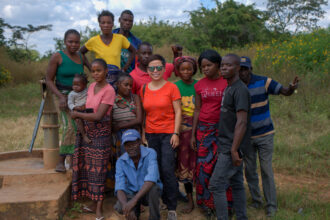
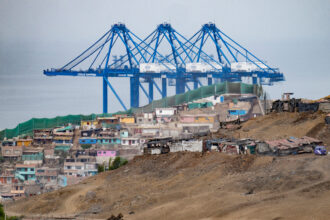

Much of the recent media attention China is receiving for environmental matters focus on its major renewable energy investments, a plus for the climate. But through its Belt and Road Initiative, Beijing is also constructing and financing a vast network of dams, mines, ports, railways and other infrastructure beyond its borders.
Chinese officials have described the investments as win-win partnerships with countries long oppressed by Western exploitation. Inside Climate News found devastating impacts on the environment and public health, while journalists in Belt and Road countries have faced intimidation when they reported on the problems.

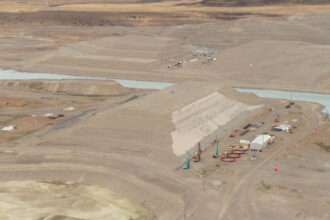
Chinese-built dams threaten one of Earth’s largest glacial ice fields in Patagonia and the world’s most endangered great ape in Indonesia. In Zambia, villagers whose livelihoods were wiped out by a Belt and Road mine’s waste-pit spill were restricted from seeing their lawyers and pressured to sign away their rights. In Peru, a new Chinese-backed megaport could tip the Amazon rainforest over the edge, and a fleet of Chinese coal plants built around the world is a huge hurdle for governments trying to meet climate pledges.
Much of the on-the-ground reporting by Inside Climate News’ Surma, Kusnetz and Gustin took place in remote regions where both safety and surveillance risks are high.
“These were not easy stories to do,” the Oakes Award judges wrote. They added, “Importantly, their reporting went beyond showing specific impacts of specific projects. … Instead, it showed the larger systems of policies and practices that emphasize speed over caution as bulldozers charge forward, despoiling fragile environments and displacing local communities.”
About This Story
Perhaps you noticed: This story, like all the news we publish, is free to read. That’s because Inside Climate News is a 501c3 nonprofit organization. We do not charge a subscription fee, lock our news behind a paywall, or clutter our website with ads. We make our news on climate and the environment freely available to you and anyone who wants it.
That’s not all. We also share our news for free with scores of other media organizations around the country. Many of them can’t afford to do environmental journalism of their own. We’ve built bureaus from coast to coast to report local stories, collaborate with local newsrooms and co-publish articles so that this vital work is shared as widely as possible.
Two of us launched ICN in 2007. Six years later we earned a Pulitzer Prize for National Reporting, and now we run the oldest and largest dedicated climate newsroom in the nation. We tell the story in all its complexity. We hold polluters accountable. We expose environmental injustice. We debunk misinformation. We scrutinize solutions and inspire action.
Donations from readers like you fund every aspect of what we do. If you don’t already, will you support our ongoing work, our reporting on the biggest crisis facing our planet, and help us reach even more readers in more places?
Please take a moment to make a tax-deductible donation. Every one of them makes a difference.
Thank you,