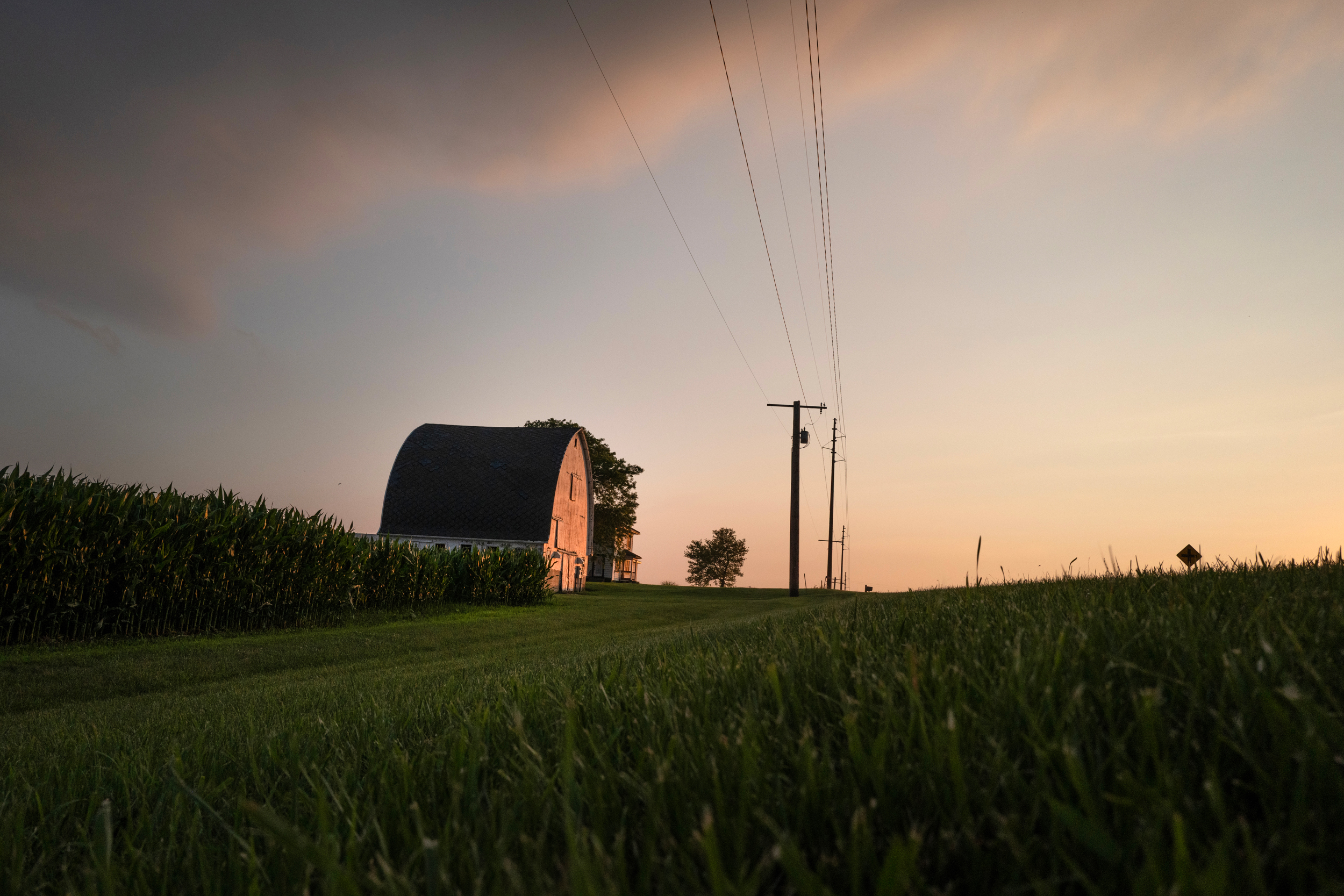


In the Driftless Area of Wisconsin, food and beverage businesses are partnering with organic farms in a small but growing effort to promote regenerative agriculture practices across the unique region, known for its uneven landscape of steep hillsides and deeply carved river valleys.
State Line Distillery in Madison partners directly with farms in a grain-to-glass method, sourcing grains and ingredients locally to promote community farms through a closed-loop, small-batch distilling process in which none of the raw product is wasted.
“The name State Line came from this idea of, how can we source things as locally as possible, whenever possible, and highlight the rich kind of agricultural aspects of our state and those partnerships?” said John Mleziva, founder of State Line Distillery, who grew up in the Midwest.
With these sustainable grain-sourcing practices, State Line and the farmers it works with are engaging in a cross-industry, cross-purpose effort to promote sustainability and drive climate action on a community scale.
“It’s part of a movement towards thinking about how we’re farming, especially farming crops in a way that is actually beneficial for the soil,” said Mleziva. He said the goal is to “source things as locally as possible, whenever possible, and highlight the rich kind of agricultural aspects of our state” in partnerships with farmers.
Mleziva emphasized the importance of regenerative agriculture practices to promote soil and water conservation following soil erosion resulting from decades of large-scale corn growing.
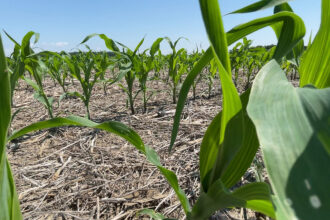
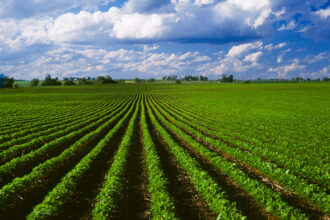
In the Midwest—specifically the Corn Belt, which spans from Ohio to Nebraska and produces 75 percent of corn in the U.S.—large-scale corn growing has caused agricultural, environmental and financial consequences.
Growing corn, which is already a crop farmers don’t make much profit from, also results in large amounts of the pollutant nitrous oxide, mostly from synthetic nitrogen fertilizer applied to fields. Decades of conventional farming practices causes fertile, nutrient-dense topsoil, which contains dense layers of carbon required to grow crops, to degrade. Roughly 35 percent of the region has lost its topsoil completely, leaving soil depleted of nutrients.
In January, the U.S. Department of Agriculture (USDA) released its 2026 Crop Production report, confirming that a record-breaking national corn yield, combined with a lower corn price, places a financial burden on Midwestern farmers.
Mleziva said that working with local organic farms in a closed-loop grain sourcing system promotes regenerative agriculture practices by using crops that thrive in the Driftless Area.
The closed-loop process, Mleziva explained, starts with State Line, which identifies local, organic farms to work with. State Line currently partners with Meadowlark Organics, a farm located in Ridgeway, Wisconsin, to source the grains used in its distilling, namely soft red winter wheat and barley.
After Meadowlark confirmed with its network of organic farmers that they could produce the amount of grain needed by State Line, the partnership was made official. State Line places the grain order with the farmers, then Meadowlark processes those grains to prepare for distilling and delivers it directly to the distillery weekly.
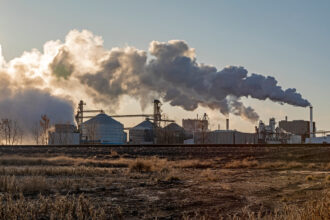
Finally, State Line ferments, mashes and distills the grains and stores them until they are fit for sale and consumption, making spirits like vodka, gin and whiskey.
Instead of the waste from the distilling process being thrown out, all of the leftover product is then sent back to farmers to be used for feeding livestock, Mleziva said. By the end of the process, no waste has been produced from the raw materials, and all resources and benefits are kept within communities in the Driftless Region.
“It’s not going down the drain, it’s going right back to those farmers,” Mleziva said.
This process is different from placing an order with a national grain vendor, where most distilleries get their grains from, for a number of reasons, according to Mleziva.
“To be grain to glass is a small club of distilleries in the U.S.,” he said, explaining that most distilleries are not actually taking the source grain and fermenting, mashing and distilling it like State Line is. Instead, it is more common for distilleries to buy a “neutral grain spirit” that is 95 percent alcohol, then diluting it down to about 40 percent to be sold. That ratio varies depending on the type of alcohol being produced.
Farmers, too, financially benefit from the glass-to-grain process. State Line offers a way for farmers to grow a crop that would normally be considered a cover crop, which are planted to manage soil erosion, fertility and quality, among other purposes, instead of for sale and consumption.
Instead of losing money from planting these cover crops, which are often sold at the lowest possible price, farmers are able to sell them to distilleries like State Line, which buys it at a fair market price, and make better margins.
This provides an incentive for organic farmers to grow crops that are more sustainable for the soil in the Driftless Area as opposed to crops like corn and soybeans.
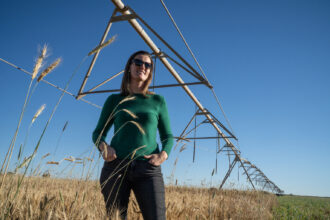
“State Line and other distilleries and bakers that buy our wheat, that allows us that diversity and rotation, that allows us to be more sustainable,” said John Wepking, co-owner of Meadowlark. “It’s not just that we choose to grow wheat because it’s not corn. It’s because it’s planted in the fall and it lives through the winter and greens up really early in the spring, and we harvest it in July. It totally breaks up the calendar of corn [and] soy agriculture. That gives us a tremendous leg up in terms of trying to farm in a way that’s improving soil.”
Instead of strictly growing corn or soy every year like many farms do, the system allows farms like Meadowlark to have diversity in the crops they grow, which promotes better topsoil and overall soil health.
“For me personally … so much of the importance of what we’re doing goes beyond just environmental sustainability. It goes to like the health of rural communities,” Wepking said. “All farmers want to take care of their soils, but if your back’s against the wall and you have to grow corn at a price that you don’t set, it becomes really difficult to stay in business and stay profitable and still do the right thing from a stewardship and conservation perspective.”
This story is funded by readers like you.
Our nonprofit newsroom provides award-winning climate coverage free of charge and advertising. We rely on donations from readers like you to keep going. Please donate now to support our work.
Donate NowSome breweries have also adopted these practices as well, such as Giant Jones Brewing Company in Madison.
Opened in 2018, Giant Jones initially sourced organic malted barley from Europe. However, after years of frustrations with the supply chain, Giant Jones founder Jessica Jones found ways to source organic malter grains within the U.S.
“I was increasingly frustrated with the organic scraps from commodity supply chains, but I am increasingly desperate to make local beer instead of locally preparing beer with things from other places. So we figured out how to use large portions of raw grain,” Jones said.
While most of her grains are sourced from organic farms in California and Colorado, Jones is moving toward getting them in Wisconsin and currently sources some of her grains from Meadowlark. She is working on getting malt from the Hughes Farms in Janesville, Wisconsin.
These methods are becoming increasingly important as climate change threatens crops like barley. Jones explained that while barley used to be a cash crop in the Midwest, climate change and other factors, such as diseases brought by industrial corn growing that jumped to barley crops, have shifted the ability to successfully grow barley.
Her business and State Line are part of the Artisan Grain Collaborative, a network of farmers, brewers, distillers, researchers and others that aims to create a grainshed in the Upper Midwest built upon regenerative agricultural practices.
Although sourcing organic grains and malts locally has challenges, such as lack of infrastructure, cost of equipment and maintaining the standards required for an organic certification, the people using this sustainable practice see direct impacts within their communities.
“It becomes this really nice, cyclical, beneficial environment where the more consumer behavior moves towards wanting or things that are certified organic, or at least using organic ingredients, then there’s more businesses that want to use that, and then that drives the need for product to be grown,” said Mleziva. “Any farmer that I’ve ever met wants to grow things in a way that’s beneficial for the land and water. There’s a passion there around what they do.”
And although the technique is often difficult for large-scale crop growers to adopt, Wepking said the small movements toward sustainability like the one he’s part of make a difference.
“Those are the ones that are really going to move the needle. It’s a really tough uphill battle, but it’s what gets us all out of bed in the morning.”
About This Story
Perhaps you noticed: This story, like all the news we publish, is free to read. That’s because Inside Climate News is a 501c3 nonprofit organization. We do not charge a subscription fee, lock our news behind a paywall, or clutter our website with ads. We make our news on climate and the environment freely available to you and anyone who wants it.
That’s not all. We also share our news for free with scores of other media organizations around the country. Many of them can’t afford to do environmental journalism of their own. We’ve built bureaus from coast to coast to report local stories, collaborate with local newsrooms and co-publish articles so that this vital work is shared as widely as possible.
Two of us launched ICN in 2007. Six years later we earned a Pulitzer Prize for National Reporting, and now we run the oldest and largest dedicated climate newsroom in the nation. We tell the story in all its complexity. We hold polluters accountable. We expose environmental injustice. We debunk misinformation. We scrutinize solutions and inspire action.
Donations from readers like you fund every aspect of what we do. If you don’t already, will you support our ongoing work, our reporting on the biggest crisis facing our planet, and help us reach even more readers in more places?
Please take a moment to make a tax-deductible donation. Every one of them makes a difference.
Thank you,