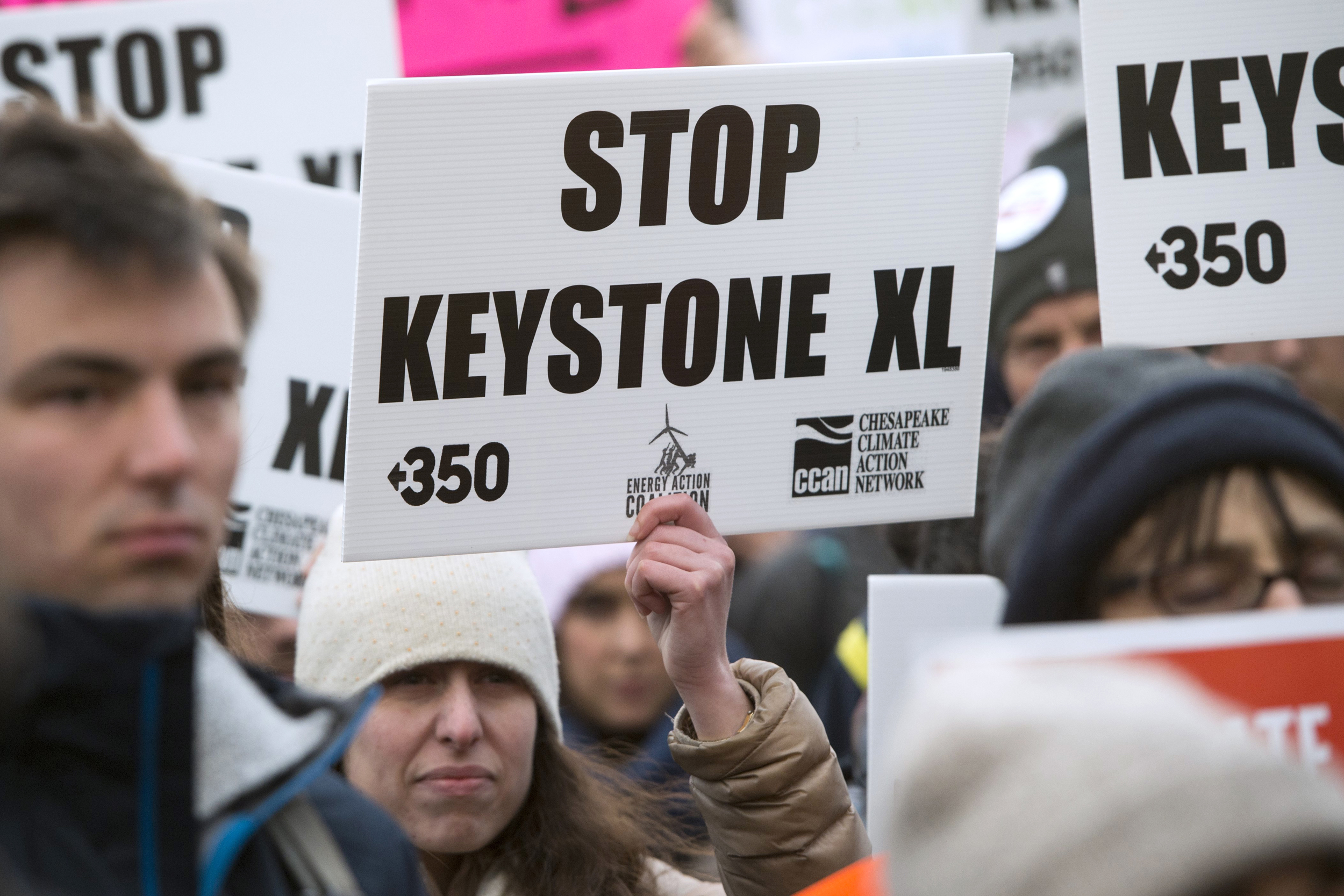


No project better embodies the nation’s wild swings in climate and energy policy than the Keystone XL pipeline.
Proposed in 2008 to carry Canadian oil to the U.S. Gulf Coast, the conduit was killed by President Barack Obama and then revived by Donald Trump in his first term, only to be snuffed out again by Joe Biden when he entered the White House.
Now, the zombie pipeline might be rising from the dead again with a different name and form.
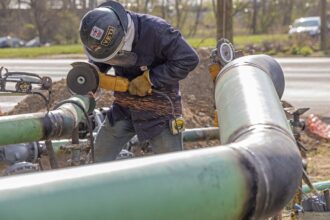
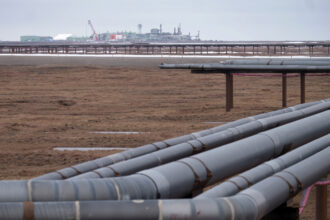
Federal and state authorities in Montana are seeking public comments on a proposed 647-mile, 36-inch wide crude line from the Canadian border—in the same area where Keystone XL would have crossed—through Montana and into Wyoming. Bridger Pipeline, the company behind the proposal, said it expects the project would carry 550,000 barrels per day under “current operating assumptions” but that it would be capable of moving 1.13 million barrels per day to its terminus in Guernsey, Wyoming.
Environmental advocates say the project as proposed makes little sense and the more likely plan is to connect with other pipelines linking to the Midwest or Gulf Coast, the destination of the original Keystone XL pipeline. That route would allow oil companies to reach major Gulf Coast refineries and export Canadian oil beyond the United States.
Multiple news organizations reported that Trump and Canadian Prime Minister Mark Carney discussed reviving the Keystone XL pipeline at a meeting last year.
South Bow, a Canadian company that was spun off from the developer of the Keystone XL pipeline and owns sections of that project that were built in Canada, announced an “open season” in March to seek commitments from buyers to send oil from Alberta to multiple sites in the United States, including the Gulf Coast.
How to Comment on the Pipeline Proposal
The Bureau of Land Management is accepting public comments by May 1 on a proposed pipeline from the Canadian border through Montana and Wyoming. It will also hold two meetings in Montana, one in Wyoming and one virtually in mid-April. Instructions for how to submit comments and where to attend are available at this site.
Bridger Pipeline also held an open season with another pipeline company that has a link between Guernsey and Cushing, Oklahoma, a major oil hub along the former route of the Keystone XL line.
“It’s just a kind of bait and switch,” said Jane Kleeb, founder and executive director of Bold Alliance, an advocacy group founded in 2010 to fight Keystone XL.
Kleeb helped organize a broad coalition of farmers and ranchers, Indigenous leaders, environmentalists and others across the Plains and Gulf Coast who pushed Obama to reject that pipeline. Since then, she said, companies have begun to break up their projects to try to avoid facing as much opposition.
“When pipeline companies do this, when they basically don’t put all their cards on the table, they’re not flaring up lots of communities,” Kleeb said.
Bill Salvin, a spokesperson for Bridger Pipelines, said he could not comment on what the pipeline might connect to in Canada or beyond Wyoming, but he said the open season connecting to Oklahoma was not related to the new proposal, called the Bridger Pipeline Expansion. He added that his company expects pipelines between Canada and the United States to reach capacity within a few years.
“We believe that there is a market for Canadian oil to be brought down into the United States,” Salvin said, and that is what the proposal is designed to do.
Solomiya Lyaskovska, a South Bow spokesperson, said in an email that the company “is evaluating an expansion that would leverage existing infrastructure and permitted corridors in Canada and could connect to downstream pipelines in the United States.”
The Bridger expansion would require permits from multiple state and federal agencies, including a “presidential permit” for crossing the border with Canada.
While the company’s application to Montana does not specify what type of oil the pipeline would carry, most Canadian oil comes from its tar sands, also called oil sands, huge deposits of a heavy hydrocarbon called bitumen that can be diluted or refined into a synthetic crude oil. The process is expensive and energy intensive, releasing more climate pollution than conventional oil production. It is also environmentally damaging, with much of the extraction coming from vast open-pit mines accumulating toxic waste that sometimes leaches into waterways.
“This is a tar sands pipeline even though the company is doing everything it can to not utter those words,” said Derf Johnson, deputy director of the Montana Environmental Information Center, an advocacy group.
Johnson said his group is concerned about environmental impacts from all stages of the oil’s production, transportation and refining. Spills of bitumen can be harder to clean than conventional crude.
The U.S. Bureau of Land Management is the lead agency handling the pipeline review and is accepting written comments by May 1 before it prepares an environmental impact statement. The agency is holding a series of public meetings next week in Montana, Wyoming and virtually.
About This Story
Perhaps you noticed: This story, like all the news we publish, is free to read. That’s because Inside Climate News is a 501c3 nonprofit organization. We do not charge a subscription fee, lock our news behind a paywall, or clutter our website with ads. We make our news on climate and the environment freely available to you and anyone who wants it.
That’s not all. We also share our news for free with scores of other media organizations around the country. Many of them can’t afford to do environmental journalism of their own. We’ve built bureaus from coast to coast to report local stories, collaborate with local newsrooms and co-publish articles so that this vital work is shared as widely as possible.
Two of us launched ICN in 2007. Six years later we earned a Pulitzer Prize for National Reporting, and now we run the oldest and largest dedicated climate newsroom in the nation. We tell the story in all its complexity. We hold polluters accountable. We expose environmental injustice. We debunk misinformation. We scrutinize solutions and inspire action.
Donations from readers like you fund every aspect of what we do. If you don’t already, will you support our ongoing work, our reporting on the biggest crisis facing our planet, and help us reach even more readers in more places?
Please take a moment to make a tax-deductible donation. Every one of them makes a difference.
Thank you,