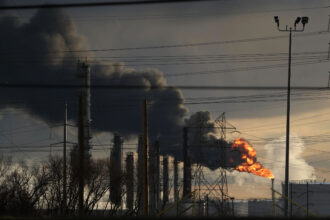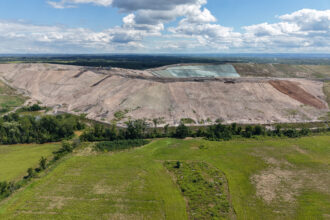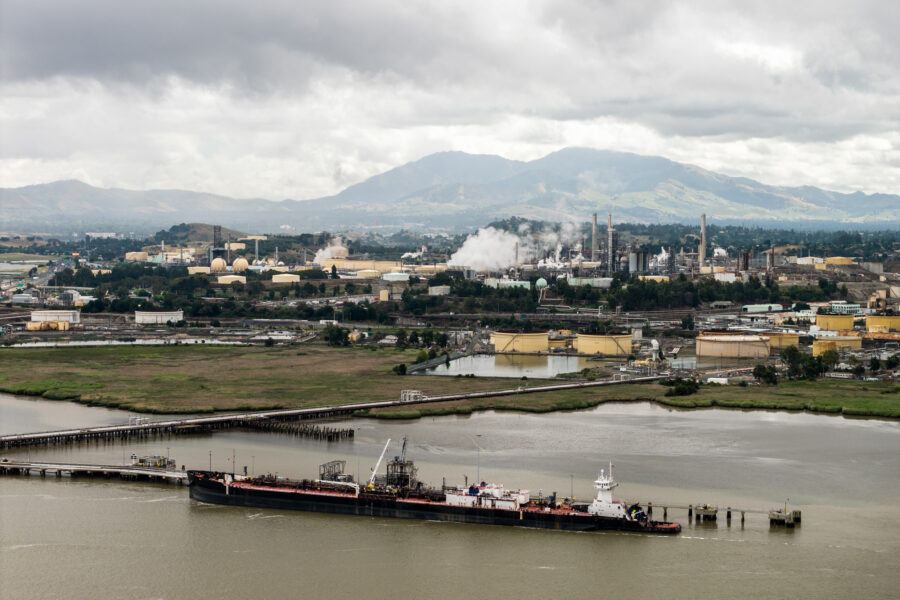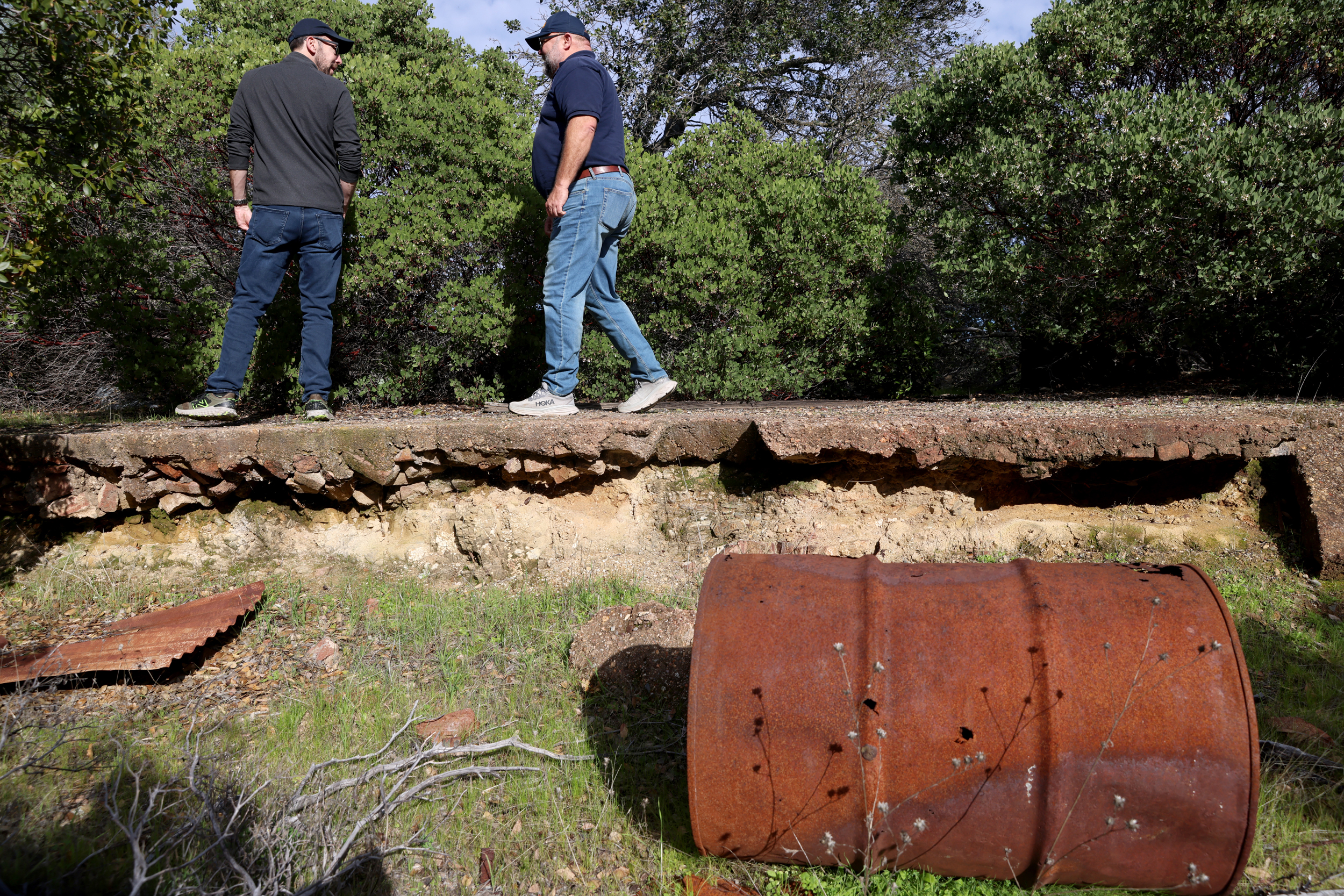


New Jersey is home to nearly 9 percent of the nation’s Superfund sites—more than any other state. They range from chemical plants with toxic byproducts leached into the soil, to oil-filled lagoons, open fields rife with septic waste and rivers polluted with toxic chemicals. Many have remained contaminated for decades.
In January, President Donald Trump signed a bill allocating $8.8 billion for the Environmental Protection Agency for the 2026 fiscal year. Within that budget, congressional appropriations specifically for the Superfund Program were set at $282.75 million—a 47 percent reduction from the previous year.
“It certainly warrants concern,” said Jim Woolford, former director for the EPA Superfund Remedial Cleanup Program. “This puts that program in competition with all the other parts of EPA. You’re dividing the pie, if you will, into smaller slices.”
In early April, Trump released his budget proposal for fiscal 2027, which begins Oct. 1, cutting EPA spending in half and slashing agency grants by $1 billion. Congress rejected similar spending cuts proposed by Trump last year.
An Inside Climate News analysis of federal workforce data released by the Office of Personnel Management shows that EPA lost more than 4,000 employees in 2025, the first year of Trump’s second term, reducing its workforce to 12,849, its lowest level since the Reagan and Bush administrations in the 1980s. The 24 percent reduction was more than double the rate of losses across the entire federal government in 2025.
The Superfund program—which relies on many different income streams—may be entering a new period of financial uncertainty just as cleanup momentum has begun to rebuild. Former agency officials and current lawmakers warn that staff and funding reductions are beginning to affect how the agency pursues polluters and moves contaminated sites toward cleanup. In New Jersey, the consequences could stretch cleanups even longer and keep communities at risk.
To see how those reductions ripple through the program, it helps to look at how Superfund is funded and how that structure has changed over time.
The Comprehensive Environmental Response, Compensation, and Liability Act of 1980, or CERCLA, is federal law allowing the EPA to identify hazardous waste sites, compel responsible parties accountable to pay for cleanups and draw from the Superfund Trust Fund when no viable polluter can pay. When the law was enacted, taxes on petroleum and chemicals fed that trust fund, employing the “polluter pays” principle.
Those taxes expired in 1995, and for decades the Trust Fund was then largely supported by general Treasury funds and fines. Only in 2022 did Congress under the Biden Administration reinstate some of the “polluter pays” taxes, bringing chemical industry contributions back, and oil and petroleum in 2023 with the Inflation Reduction Act.
The oil and petroleum taxes do not expire, and the chemical taxes are set to run through 2031.
But they haven’t yet lived up to expectations. The EPA’s budget documents show roughly $1.2 billion in total Superfund tax receipts in 2024—less than half of the $2.5 billion estimated in the 2024 budget request. In 2025, tax receipts amounted to $1.6 billion—26 percent below the administration’s original budget projections.
That revenue is now also being targeted. On February 12, Republicans introduced a new bill that aims to cut the “polluter pays” tax on petroleum and oil that Superfund relies on, even as the Trump Administration sought in its 2026 budget proposal to fully transition from Congressional appropriations to the polluter taxes only. Since the bill was introduced, there have been no hearings or votes scheduled. Prospects for passage are uncertain.
Separately, an infusion of critical funding is nearly exhausted. Under the Infrastructure Investment and Jobs Act, the Biden Administration also allocated $3.5 billion to the Superfund Remedial program to work through and eliminate a backlog of 49 unfunded Superfund projects—at least seven of them located in New Jersey.
As of October 16, 2024, the EPA has spent or allocated most of the money—$3.296 billion of the funds is spoken for.
Together, coinciding with the reductions the EPA is already facing, the program entered the 2026 fiscal year with few expendable dollars and tax revenue that hasn’t met projections—raising questions about how new cleanups can be launched and how quickly older ones will be addressed. Even so, while tax revenues haven’t met expectations, revenue should still top a billion dollars in 2026, enough to keep the Superfund Trust solvent for now.
“If you’re on a tight budget,” Woolford said, “what do you do? You don’t do all the things you’re planning on doing. You pinch pennies.”
The EPA is already buckling, holding fewer polluters accountable—likely due to staff cuts.
The EPA disputes claims that its Superfund work is slowing. In a statement, the agency said staffing levels fluctuate due to “normal workforce dynamics, including retirements, voluntary departures, internal mobility, and scheduled hiring,” and that it remains “fully capable of accomplishing our mission of cleaning up Superfund sites to protect human health and the environment.”
The agency said that there have been no delays in cleanup progress thus far, and that it is working to accelerate Superfund projects. U.S. Rep. Frank Pallone Jr., a New Jersey Democrat and longtime environmental policy leader, however, said the situation on the ground tells a different story.
“Trump’s EPA has already reduced the regional staff responsible for New Jersey by one third, making the progress we need nearly impossible,” Pallone said. “Delaying cleanups only makes them more expensive. We should be speeding up Superfund cleanups, not slowing them down.”

The Passaic River site in Newark—polluted by numerous companies, including a chemical company that made Agent Orange and other herbicides—has been on the National Priorities List, a register of the country’s most contaminated sites, for over 40 years, with no end in sight for remediation on the lower end of the river. Delays in testing the river’s sediment have taken so long that areas of site needed to be retested, according to Michele Langa, staff attorney at NJ/NY Baykeeper. The samples are only good for a limited time. She estimates five to eight years before results are expired and tests would need to be repeated for accuracy.
The Ringwood Mines in Passaic County, polluted by paint sludge and other waste from a Ford Motor Co. car plant that closed in 1980, became a Superfund site in 1983. It was deleted in 1994, and re-opened in 2006 after more pollution was discovered. The EPA has only now a blueprint for cleanup as of October 2025.
The Superfund Program, Woolford said, hasn’t been totally financially stripped. One funding stream comes from the Superfund Special Accounts, which are funded entirely through settlements with responsible parties—not by annual Congressional appropriations or by the Superfund Trust Fund. Unspent settlement funds remain in site locations and can be used for future cleanup work at those locations.
This story is funded by readers like you.
Our nonprofit newsroom provides award-winning climate coverage free of charge and advertising. We rely on donations from readers like you to keep going. Please donate now to support our work.
Donate NowHowever, any funding uncertainty—whether from expiring taxes or fluctuating appropriations—trickles down to staffing, slowing investigations or delaying enforcement against polluters and extending cleanup timelines. Over time, Woolford said, that erosion could become more visible.
One indicator, he suggested, would be changes to the National Priorities List itself. The list is designed to help the EPA determine what areas require further investigation and long-term cleanup plans. There are 115 active sites currently in New Jersey, and 1,343 nationwide—a three-site increase from 2024.
If any completed projects return to the list, Woolford said, that’s an indication of some internal funding or staffing challenges. At the same time, he warned that the agency may move to remove sites from the list prematurely.
“Expect a lot of EPA-sponsored press and focus on NPL site deletion or partial deletion,” he said.
According to the EPA, deleting a site from the NPL is appropriate when the agency determines it is no longer a significant threat to human health or the environment. But Woolford said deletion does not necessarily mean contamination has been entirely removed. With Superfund sites stretching across New Jersey, and some projects left for decades, Woolford said the responsibility now falls on communities, tribes, states and local governments.
“This administration appears to be proposing and adding fewer releases or sites on the National Priority List,” Woolford said. “Communities are still being exposed to pollution, and fewer will see action from the federal government.”
He urged locals to ask more questions: about optimal funding levels and expected project timelines, so they can independently assess benchmarks and ensure projects are moving forward as planned.
“New Jersey has the most Superfund sites in the country, so when Trump talks about cutting funding for this program, our communities hear one thing: more years living next to toxic contamination that should have been cleaned up already,” Pallone said.
About This Story
Perhaps you noticed: This story, like all the news we publish, is free to read. That’s because Inside Climate News is a 501c3 nonprofit organization. We do not charge a subscription fee, lock our news behind a paywall, or clutter our website with ads. We make our news on climate and the environment freely available to you and anyone who wants it.
That’s not all. We also share our news for free with scores of other media organizations around the country. Many of them can’t afford to do environmental journalism of their own. We’ve built bureaus from coast to coast to report local stories, collaborate with local newsrooms and co-publish articles so that this vital work is shared as widely as possible.
Two of us launched ICN in 2007. Six years later we earned a Pulitzer Prize for National Reporting, and now we run the oldest and largest dedicated climate newsroom in the nation. We tell the story in all its complexity. We hold polluters accountable. We expose environmental injustice. We debunk misinformation. We scrutinize solutions and inspire action.
Donations from readers like you fund every aspect of what we do. If you don’t already, will you support our ongoing work, our reporting on the biggest crisis facing our planet, and help us reach even more readers in more places?
Please take a moment to make a tax-deductible donation. Every one of them makes a difference.
Thank you,