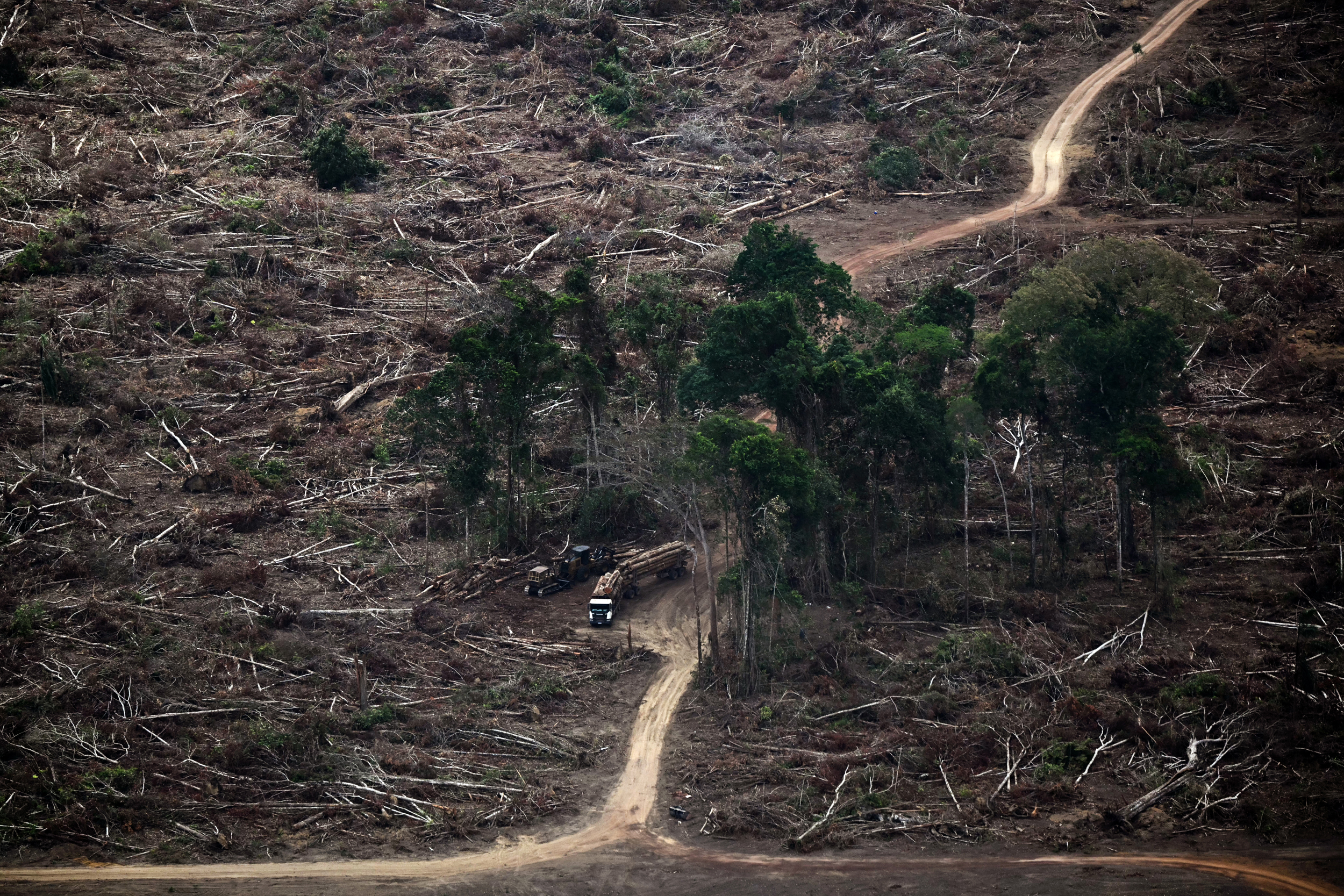


Despite claims of environmental leadership and promises to preserve the Amazon rainforest ahead of COP30, Brazil is stripping away protections for the region’s vital ecosystems faster than workers dismantled the tents that housed the recent global climate summit in Belém.
On Nov. 27, less than a week after COP30 ended, a powerful political bloc in Brazil’s National Congress, representing agribusiness and development interests, weakened safeguards for the Amazon’s rivers, forests and Indigenous communities.
The rollback centered on provisions in an environmental licensing bill passed by the government a few months before COP30. The law began to take shape well before, during the Jair Bolsonaro presidency from 2019 to 2023. It reflected the deregulatory agenda of the rural caucus, the Frente Parlamentar da Agropecuária, which wielded significant power during his term and remains influential today.
Bolsonaro’s government openly supported weakening environmental licensing. His environment minister, Ricardo Salles, dismissed licensing as “a barrier to development” and pushed for broad deregulation.
Current President Luiz Inácio Lula da Silva vetoed many of its most controversial provisions in August, citing risks to Indigenous rights and environmental oversight. But in late November, the legislature overturned those vetoes and reinstated the contested sections.
“This is neither improving nor modernizing, it is simply deregulation,” said Sarah Sax, who analyzes Brazil’s climate and human rights policies as a researcher with Climate Rights International, a California-based nonprofit advocating for climate justice.
“It’s happening in Brazil in ways that mirror what you’re seeing around the world. These are proxy fights over democracy, human rights and institutional power,” she said, noting a broader global pattern of industrial and political blocs pushing deregulation and weakening institutions designed to protect communities and ecosystems.
According to analyses by the Brazilian Academy of Sciences and other organizations, the provisions at issue will enable many projects to get permits by self-declaring compliance, without undergoing complete environmental impact assessments or third-party review.
Under the law, deforested properties or land cleared without a license can be retroactively legalized without restoring the land or ecological conditions, which rewards illegal deforestation. Larger projects, like irrigation, dams and sanitation works, as well as roads and energy infrastructure, can proceed with minimal environmental scrutiny, risking more forest fragmentation and habitat destruction. And the licensing changes narrow who must be recognized and consulted during reviews, which could exclude communities without formal land titles.
A Human Rights Issue
It’s alarming that the legislature overrode the vetoes, said Astrid Puentes Riaño, the United Nations special rapporteur on the human right to a healthy environment. As it stands now, the law may violate Brazil’s international environmental committments, she added.
“What is at stake is [whether] Brazil, as a country, is able to effectively protect the environment, including all their fundamental resources,” she said.
She noted that Brazil is not facing this problem alone.
“I think that we, unfortunately, are seeing a wave of regressions globally toward weakened environmental impact assessments, because they’re seen as obstacles for development and investment,” she said.
But cutting reviews when science clearly shows that the planet is facing a “triple crisis of climate change, biodiversity loss and toxic contamination” is a huge step in the wrong direction.
“Environmental impact assessments are not a checklist in a supermarket,” she said. “They are an essential element for states to prevent environmental, climate, human rights, and social impacts.”
She emphasized that weakening environmental review isn’t a technocratic tweak or political win for one side. It undermines the foundations of public health, Indigenous rights, and climate safety.
“This is not about politics, it’s about survival,” she said. “Some of these impacts on water, on air, on biodiversity, on people’s health, are irreversible. These are not things you can fix later.”
Climate Backlash Is Scientifically Unfounded
The fight over Brazil’s environmental licensing law can be seen as a microcosm of global climate policy tensions, with governments performatively signaling climate ambition at international meetings, such as COP30, while doubling down on economic nationalism by claiming there is no money for climate action at home and instead financing measures to boost development and growth.
Claudio Angelo, with Brazilian NGO Observatório do Clima, said that this false-choice paradigm was “certainly an underlying theme” in the debates over the law.
“It has appeared in the speeches of most Congressmen who voted for the new legislation and to overturn Lula’s vetoes,” he said. “But, more worryingly, there was a lot of sheer disinformation.”
The two lobbying groups that pushed for the law that weakens environmental reviews repeatedly said that the existing licensing process is too slow and thus hampers economic progress. They claimed, without proof, that thousands of projects were stuck in the permitting process.
“But in the end, this may have been more about hubris than anything,” Angelo said. “Congress did that because it could. And because the private interests most Congressmen serve don’t want any regulation of any kind.”
Even without a complete analysis, it’s clear that cutting environmental reviews conflicts indirectly with Brazil’s climate plans, making it more difficult to stop deforestation.
Angelo expects some environmental groups will challenge the new law. Parts of it are subject to a 180-day waiting period, he said, so the final outcome is unclear. But a companion measure that passed as an executive order just this week, creates a fast-track permitting process for projects the government deems strategic, and it is effective immediately.
Puentes Riaño said recent advisory opinions from the International Court of Justice and the Inter-American Court of Human Rights make it clear that states must “use all means at their disposal to prevent actions that cause significant harm” to the Earth’s climate.
A growing body of research in ecological economics shows that such false choices are mainly a political narrative used by special interest groups to justify deregulation, despite evidence showing that degrading ecosystems undermines both climate goals and economic resilience.
Mainstream science and climate reports, including the Sixth Assessment Report from the Intergovernmental Panel on Climate Change and the Intergovernmental Science-Policy Platform on Biodiversity and Ecosystem Services, directly contradict the idea that countries must choose between protecting ecosystems and achieving economic development.
The studies show that intact forests, healthy rivers and secure Indigenous and local land rights are among the most effective and cost-efficient climate mitigation strategies available, delivering carbon sequestration, ecosystem resilience, public health and long-term economic stability. The IPCC explicitly recognizes community-led stewardship and ecosystem protection as core pillars of climate action, not afterthoughts.
Those scientific realities also underpinned the 2015 Paris Agreement, which ignited more public pressure for climate action, including youth-led mass demonstrations like the Fridays for Future marches that swelled in 2019. For a short time after COP21 in Paris, climate ambition rose worldwide, pushing governments to adopt stronger targets and framing ecosystems and community rights as essential to mitigation.
This story is funded by readers like you.
Our nonprofit newsroom provides award-winning climate coverage free of charge and advertising. We rely on donations from readers like you to keep going. Please donate now to support our work.
Donate NowBut the COVID-19 pandemic and Russia’s invasion of Ukraine unleashed overlapping economic shocks that reset priorities. Governments focused on energy security, food security supply chains and inflation, creating openings for industrial and agricultural lobbies to argue that environmental rules hindered economic recovery.
Those pressures dovetailed with persistent strains of economic nationalism and identity politics, strengthening political forces that frame environmental safeguards as constraints on sovereignty and growth. The result was global regulatory rollbacks, from the U.S. and Canada to mining regions in Indonesia and Australia, each framed as necessary to speed development, stabilize supply chains or simply acting out of economic self-interest.
Germany, for example, arrived at COP30 emphasizing its commitment to ambitious climate action. But weeks later, its new government under Chancellor Friedrich Merz pressed the European Union to weaken or delay the bloc’s 2035 phaseout of gas- and diesel-fueled cars.
The move mirrored Brazil’s own post-COP30 reversal. In both cases, political leaders under pressure from domestic industries framed their actions as necessary to defend national interests amid economic uncertainty.
Why It Matters
Brazil’s post-COP30 shift toward deregulation in the name of economic development has far-reaching implications because Amazon forests influence global climate and weather patterns, circulating vast amounts of heat and water with effects that ripple far beyond the Amazon Basin.
Moisture from the rainforests creates a belt of rising, humid air that shapes rainfall patterns from the Andes to the U.S. Gulf Coast. Research shows that when large areas of the Amazon are cleared or degraded, the system weakens, shifting precipitation patterns in ways that can amplify droughts in South America and intensify rainfall extremes elsewhere.
Drier Amazon conditions also warm the tropical Atlantic and can change winds that shape Atlantic hurricane formation, potentially boosting the frequency or intensity of storms that strike the Caribbean and North America. Research on long-distance links in the climate system shows that Amazon drying can also reduce summer rainfall across the U.S. Midwest and Southern Plains, regions that depend on predictable precipitation for agriculture.
And the Amazon’s role as a critical carbon sink is also at risk. Its vegetation and soils store about 150 billion to 200 billion metric tons of carbon, equivalent to about 70 to 90 years of annual U.S. fossil-fuel carbon dioxide emissions.
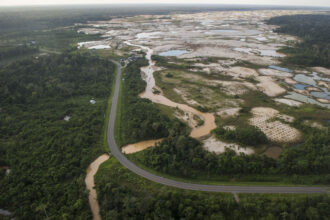
Brazil’s land-use sector is already one of the world’s largest sources of climate-warming pollution. Deforestation, fires and forest degradation in the Amazon and Cerrado savanna account for 700 million to 800 million metric tons of climate-warming gases annually, equal to Germany’s yearly emissions.
Research shows that additional degradation enabled by the licensing law increases the risk of rainforest dieback, which could convert large tracts of rainforest to drier savanna-like conditions, pushing the region closer to a tipping point beyond which the Amazon would drive accelerated warming rather than helping to stabilize the climate.
Brazil’s reversal lands at a moment when the world can least afford mixed signals, and COP30 ended with Indigenous leaders warning that “our land is not for sale” and that “we can’t eat money,” reminding delegates that protecting forests is not an abstraction but a matter of survival.
Brazil’s decision to weaken environmental protections so soon after COP30 captures the larger crisis facing global climate policy: the widening gap between international promises and domestic political choices. And the Amazon can’t withstand much more waffling, Sax said.
“There is no planet B,” she said. “This is the fight.”
About This Story
Perhaps you noticed: This story, like all the news we publish, is free to read. That’s because Inside Climate News is a 501c3 nonprofit organization. We do not charge a subscription fee, lock our news behind a paywall, or clutter our website with ads. We make our news on climate and the environment freely available to you and anyone who wants it.
That’s not all. We also share our news for free with scores of other media organizations around the country. Many of them can’t afford to do environmental journalism of their own. We’ve built bureaus from coast to coast to report local stories, collaborate with local newsrooms and co-publish articles so that this vital work is shared as widely as possible.
Two of us launched ICN in 2007. Six years later we earned a Pulitzer Prize for National Reporting, and now we run the oldest and largest dedicated climate newsroom in the nation. We tell the story in all its complexity. We hold polluters accountable. We expose environmental injustice. We debunk misinformation. We scrutinize solutions and inspire action.
Donations from readers like you fund every aspect of what we do. If you don’t already, will you support our ongoing work, our reporting on the biggest crisis facing our planet, and help us reach even more readers in more places?
Please take a moment to make a tax-deductible donation. Every one of them makes a difference.
Thank you,

Bob Berwyn
Reporter, Austria
Bob Berwyn is an Austria-based reporter who has covered climate science and international climate policy for more than a decade. Previously, he reported on the environment, endangered species and public lands for several Colorado newspapers, and also worked as editor and assistant editor at community newspapers in the Colorado Rockies.