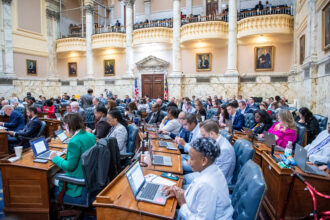



In its most recent energy affordability legislation, the Maryland Senate has reversed key utility accountability proposals passed by the state House and added new ways for utility companies to earn profit, including by reviving a billion-dollar gas subsidy that requires all ratepayers to cover the cost of running new gas pipelines to housing developments.
The state’s top Democrats must now resolve differences in the two energy bills before the legislative session ends on April 13.
The Senate’s move to restore utilities’ profits has irked environmental leaders and advocates, who believe the process lacked transparency and did not allow for a robust debate on the bill.
The current sentiment stands in sharp contrast to March 13, when Gov. Wes Moore, flanked by Senate President Bill Ferguson and House Speaker Joseline Peña-Melnyk, announced the Utility RELIEF Act, framing it as a unified response to spiking electricity bills. The legislation aimed to generate more in-state energy and hold utility companies accountable while guaranteeing customers at least $150 in annual savings on their energy bills.
As of December 2025, the average electricity bill in Maryland was around $183 per month, or roughly $2,200 annually.
In emailed remarks, Rhyan Lake, a spokesperson for Gov. Moore said that the governor and the state’s political leadership are finalizing the Utility RELIEF Act, “that will generate more energy in the state and hold big companies accountable while saving Maryland families at least $150 on their energy bill every year.”
Specifically, the Utility RELIEF Act, as passed in the House, included two provisions consumer advocates said were particularly critical. The first proposal prohibited forecasted ratemaking, a billing practice that allows utilities to seek rate increases based on projected spending rather than actual accrued costs supported by receipts. The second proposal required utilities to return unspent ratepayer money in full rather than keeping it for themselves.
A recent analysis by the Office of People’s Counsel found that a BGE customer using 900 kilowatt-hours per month saw annual costs rise to $164 over the past six years under forecasted ratemaking, compared to $55 over the previous six years of traditional ratemaking. The gap was wider for Pepco customers, the analysis found, estimating $323 annually under forecasted rates as opposed to $157 under traditional ratemaking.
The House version also kept intact a Public Service Commission decision that ended the decades-old practice requiring all ratepayers to subsidize the cost of new gas line extensions to housing developments. The OPC estimated that the subsidy costs ratepayers more than $1 billion over 10 years.
But both the House and Senate bills include cuts to EmPOWER Maryland, the state’s flagship energy efficiency program. That includes dropping its annual energy savings goal from 2.5 percent to 1.75 percent of kilowatt-hour sales and delaying the return to the full target until 2036. The cuts would reduce the monthly surcharge customers pay, lowering their bills by between $6 and $12 a month, but environmental and consumer advocates believe the changes will also shrink the efficiency benefits those customers receive.
The EmPOWER program, created in 2008, has returned $2.21 in benefits for every dollar spent, according to the state’s own analysis.
The House bill approved in mid-March also proposed drawing down the Strategic Energy Investment Fund (SEIF)—meant for clean energy financing—to plug the state’s budget shortfall.
In emailed comments, Heather Mizeur, a spokesperson for Speaker Peña-Melnyk said “the House version of the bill is the strongest posture for ratepayer protection” and that the speaker “advocated for restoration of these provisions in the final agreement.” Reacting to whether the House received any official analysis of the bill’s likely impact on the state’s greenhouse gas emissions targets, Mizeur said: “This session we have worked to close a budget deficit and have exercised restraint in requesting costly studies. This is an issue we can revisit in the future.”
The Senate bill that passed this week kept the EmPOWER cuts but reversed the utility accountability measures the House had endorsed. It also restored forecasted ratemaking and replaced the full-refund requirement the House had recommended with a performance incentive mechanism that allows utilities to keep a share of unspent ratepayer money as a bonus for spending less than projected.
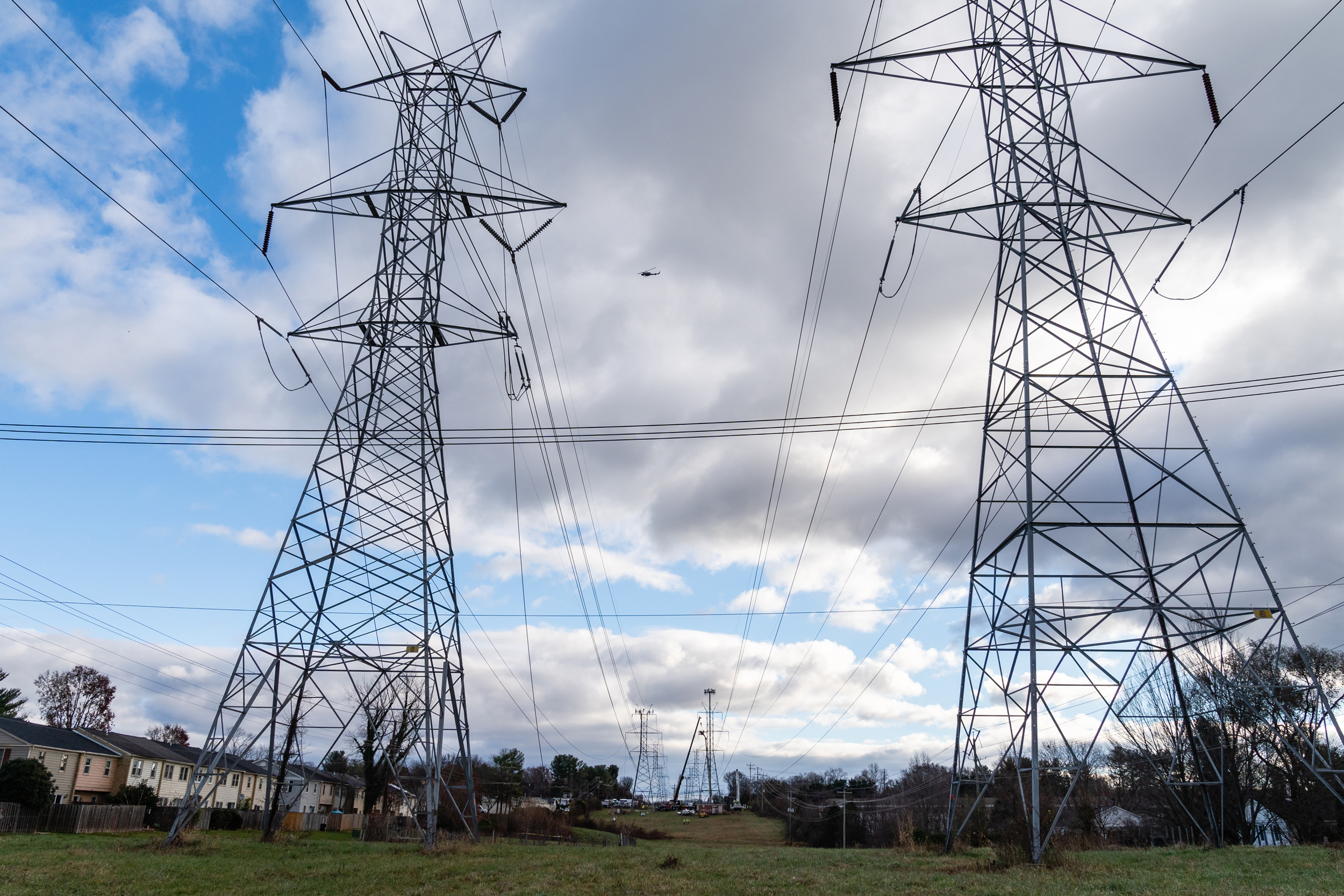
The Senate also passed an amendment overriding the PSC’s decision on gas line subsidies, allowing the cost of new extensions to be collected from ratepayers. How and why the bill changed so dramatically remains unclear.
“The utilities profit more if they spend more, and now apparently they profit more if they spend less. So these sort of profit incentives, when they’re already raking in record profits, don’t help customers at all,” said Emily Scarr, senior advisor at Maryland PIRG, a consumer advocacy group.
Scarr called the Senate’s amendments an “unappetizing smorgasbord of bad amendments that reward the utility companies that are driving our high bills.” She was equally critical of what the two bills meant for ratepayers. “The House absolutely took bold action to rein in utilities’ wasteful spending and bring down costs to customers,” she said. “The Senate has undermined or rolled back a lot of those provisions and even added some to add new opportunities for utilities to profit at customers’ expense.”
Josh Tulkin, director of the Sierra Club’s Maryland chapter, said legislators had fundamentally misread what EmPOWER actually does. “The entire ratepayer relief that is being promised in the short term that they can quantify is coming from cutting the state’s energy efficiency program,” he said. “They seem to think that because of the way everything is structured, energy efficiency is some sort of hippie-dippie surcharge. They don’t seem to understand that it is just a different way to get people less expensive energy. You buy efficiency or you buy power. Right now efficiency is cheaper, and they are cutting the cheaper option—they are literally requiring utilities to purchase the more expensive thing.”
Justin Barry, director of energy initiatives at the Green & Healthy Homes Initiative, said the damage from cutting EmPOWER ran deeper than what the reduced savings target suggested.
“By reducing total electrical demand, the program lowers the shared electrical system costs, and by incentivizing emerging technologies like heat pump water heaters and geothermal systems, it helps make sure that highly efficient appliances are stocked by distributors and offered by contractors,” Barry argued. He also noted EmPOWER met its goals in recent cycles, making the cuts harder to justify on performance grounds.
The House and the Senate versions preserved funding for low-income efficiency programs administered through the state Department of Housing and Community Development. But Barry said moderate-income households that don’t qualify for those programs and cannot afford rooftop solar would lose access to appliance rebates and weatherization incentives that the scaled-back EmPOWER would no longer fund.
The workforce consequences were equally serious, he said, adding that home performance requires certified auditors trained in building science and retrofit installation. “It’s not [a] workforce that can come and go quickly,” he said, warning that scaling back the program could make fewer contractors available to homeowners and lead to job losses at small businesses.
This story is funded by readers like you.
Our nonprofit newsroom provides award-winning climate coverage free of charge and advertising. We rely on donations from readers like you to keep going. Please donate now to support our work.
Donate NowAn analysis from the University of Maryland Center for Global Sustainability found that Maryland is on track to achieve only roughly 40 to 45 percent emissions reduction by 2031—well short of its 60 percent statutory mandate—with major gaps in the transportation and electricity sectors identified as the primary drivers of the shortfall. The nine-year EmPOWER delay will further compound the existing gap the state has yet to account for.
Asked about the bill’s likely impact on Maryland’s climate targets, a spokesperson for the Maryland Department of the Environment said in an emailed statement: “We remain committed to our climate goals, and the Maryland Department of the Environment is advancing complementary policies—such as the forthcoming Clean Heat Standard, which Gov. Moore directed the Department to do in a climate executive order—specifically designed to reduce emissions and promote clean energy.”
The statement sidestepped the question about whether the agency has evaluated, or plans to evaluate, the greenhouse gas implications of the energy package, such as how the gas subsidies will lock in new fossil fuel buildout for decades, and if the proposed changes to EmPOWER will affect the emissions trajectory under Maryland’s Climate Pollution Reduction Plan.
The Senate also passed a provision that allows utilities to count projected greenhouse gas reductions from electric vehicle adoption toward their EmPOWER targets indefinitely. Two advocates Inside Climate News interviewed described the change as an apparent drafting error that could further weaken EmPOWER in unintended ways.
“With EV adoption, you’re moving from a fuel that’s paid at the pump to a fuel that can be paid at home. It’s not clear that other ratepayers should be the ones funding this shift through the EmPOWER surcharge,” Barry said, arguing that emissions reductions through EVs have nothing to do with the programs utilities offer under EmPOWER and cannot be attributed to it. On the other hand, SEIF was a more appropriate vehicle for such accounting because it already funds clean energy and transportation programs.
He believes the Senate had approved the language without appearing to consider its consequences. Under existing rules, utilities are required to file their EmPOWER plans by Sept. 1 and there are no limits in the current language on how much of their obligations could be replaced by EV incentives, he said, leaving the program’s core mission to reduce electricity consumption effectively unprotected.
Advocates said the manner in which the Senate passed consequential amendments such as gas subsidies reflected a pattern that had persisted from the start.
“The process of getting to this legislation, the decision to combine a bunch of bills into a single bill, the self-inflicted timeline, is a choice,” Tulkin said. “The legislature has chosen a path that significantly hurts transparency and participation in the process, and given the complexities of these issues, that is not a good long-term strategy.”
Kim Coble, executive director of the Maryland League of Conservation Voters, said the compression of the legislative process had shut out the voices most needed. “When these amendments and new policies are getting proposed on the floor and we haven’t had a chance to review them, it’s concerning, it’s really concerning,” she said. “When you compress an average of 15 bills into one, they’re not benefiting from the input from Marylanders, from specialists, from advocates, from everybody. Those policies need to be discussed and debated at a much deeper depth than was done this year.”
Reacting to the advocates’ concerns, Peña-Melnyk’s spokesperson wrote: “Every bill that was folded into this omnibus package received a full bill hearing in the House. The House-passed package received a hearing in the Senate. The Utility RELIEF Act benefited from the same transparency and public engagement that all bills receive in the legislative process”
About This Story
Perhaps you noticed: This story, like all the news we publish, is free to read. That’s because Inside Climate News is a 501c3 nonprofit organization. We do not charge a subscription fee, lock our news behind a paywall, or clutter our website with ads. We make our news on climate and the environment freely available to you and anyone who wants it.
That’s not all. We also share our news for free with scores of other media organizations around the country. Many of them can’t afford to do environmental journalism of their own. We’ve built bureaus from coast to coast to report local stories, collaborate with local newsrooms and co-publish articles so that this vital work is shared as widely as possible.
Two of us launched ICN in 2007. Six years later we earned a Pulitzer Prize for National Reporting, and now we run the oldest and largest dedicated climate newsroom in the nation. We tell the story in all its complexity. We hold polluters accountable. We expose environmental injustice. We debunk misinformation. We scrutinize solutions and inspire action.
Donations from readers like you fund every aspect of what we do. If you don’t already, will you support our ongoing work, our reporting on the biggest crisis facing our planet, and help us reach even more readers in more places?
Please take a moment to make a tax-deductible donation. Every one of them makes a difference.
Thank you,

Aman Azhar
Reporter, Washington, D.C.
Aman Azhar is a Washington, D.C.-based journalist who covers environmental justice for Inside Climate News with focus on Baltimore-Maryland area. He has previously worked as a broadcast journalist and multimedia producer for the BBC World Service, VOA News and other international news organizations, reporting from London, Islamabad, the United Arab Emirates and New York. He holds a graduate degree in Anthropology of Media from University of London’s School of Oriental and African Studies (SOAS) and an MA in Political Science from the University of the Punjab, and is the recipient of the Chevening scholarship from the UK government and an academic scholarship for graduate studies from the Australian government.