

Minneapolis activists are escalating a decades-long fight by going on a hunger strike to demand that local officials shut down a polluting trash incinerator.
Residents have long opposed the Hennepin Energy Recovery Center, which burns waste to generate energy, for adding to toxic air pollution in a predominantly Black community with high rates of asthma. Local activists who began their strike on Friday say they won’t eat until owner Hennepin County takes concrete steps toward shuttering the facility.
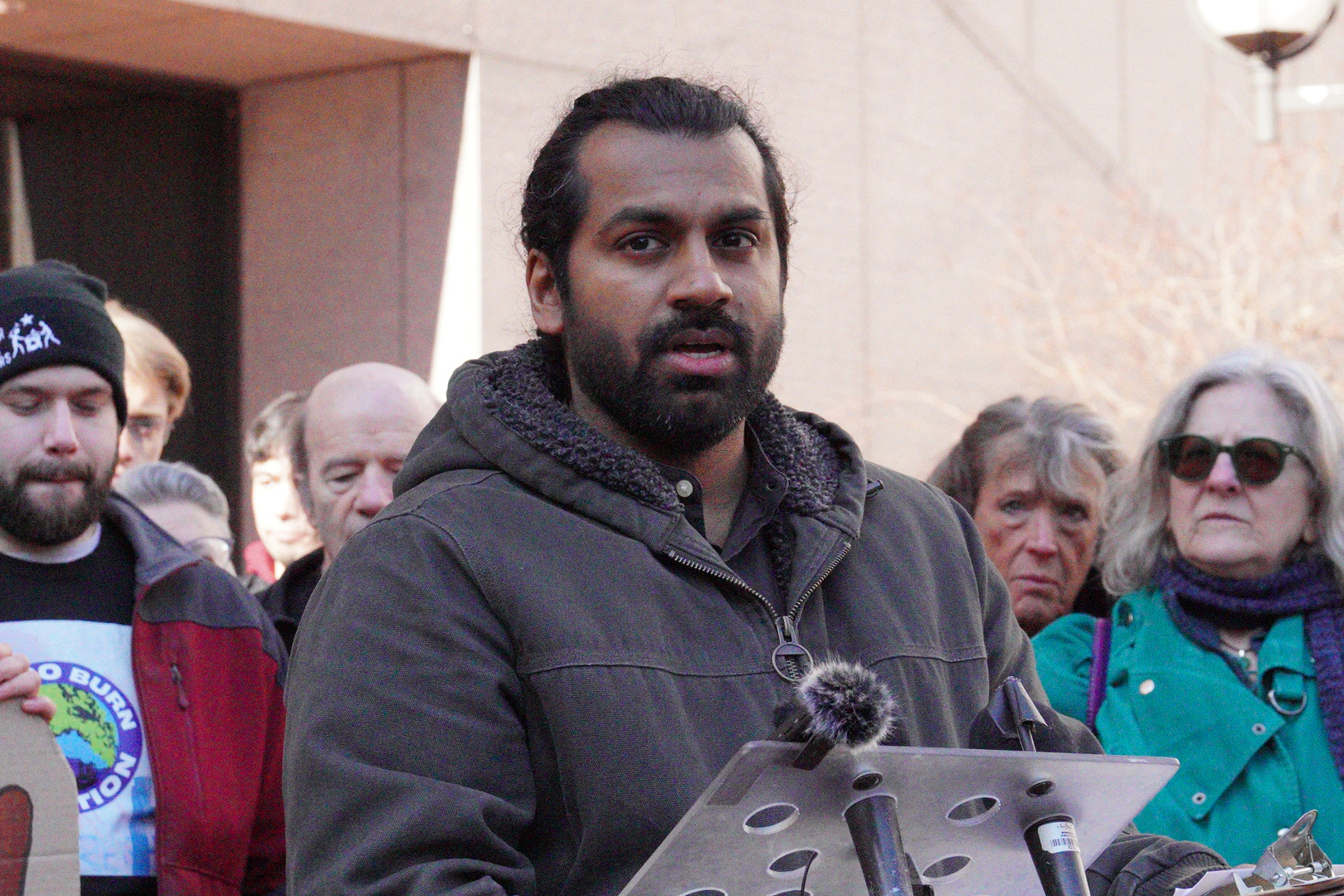
“This is part of the climate emergency,” said Nazir Khan, co-founder of the Minnesota Environmental Justice Table and one of three who began hunger-striking on Friday. “Waste is literally killing our neighbors.”
On Friday morning, Khan and other environmental justice advocates with the Zero Burn Coalition held a rally at a building near Minneapolis City Hall and delivered a letter to the Hennepin County Board of Commissioners with their demands: Hold a public vote to close the trash burner, set a closure date and establish a community-led task force to advance zero-waste alternatives.
The area surrounding HERC, also bisected by Interstate 94, has some of the state’s highest rates of emergency room visits for asthma. In 2022, researchers used a U.S. Environmental Protection Agency tool to estimate that just one type of the facility’s pollution, fine particles laced with a grab bag of chemicals, could be responsible for one to two early deaths every year.
After years of meeting with board commissioners and county staff, coalition members say they’ve exhausted all official avenues to push for closure. Natasha Villanueva, a striker, said she wishes it hadn’t come to this.
“It’s very disheartening that we have to take this step, but it seems necessary,” Villanueva said. “They’re disregarding our well-being every day that HERC keeps burning.”

None of the seven county board commissioners responded directly to requests for comment, but Carolyn Marinan, Hennepin County’s chief public relations officer, wrote in an email that the county is “committed to zero waste to accelerate the closure and repurposing of HERC.”
Marinan cited initiatives on paper and packaging reduction, food waste prevention and recycling as examples of the county’s commitment to zero waste, and pointed to a February resolution that reaffirmed its 2023 intention to close HERC between 2028 and 2040. County representatives have met frequently with the hunger strike organizers, she added, and are open to continued discussions about how to responsibly close HERC.
“Simply shifting waste to landfills is irresponsible and would be a step backward,” Marinan wrote. “The county believes that the real solution is to produce less waste in the first place by providing policies, programs, and infrastructure that support a zero-waste future.”
But nearly three years after the original commitment, activists say the county has failed to make tangible progress toward closure.
“There is still no date, no vote, no process and no plan,” coalition member Audua Pugh said at a March 24 press conference announcing the hunger strike. “When the authority to act exists, inaction is a decision, delay is harm.”
The History of HERC
The HERC incinerator burns trash from Minneapolis and its surrounding suburbs to generate electricity through steam. While the county says it helps reduce waste in landfills and produces energy, opponents argue that it is piling pollution onto an overburdened neighborhood and creating toxic ash that gets landfilled.
Trash incinerators can release a variety of harmful substances linked to heart disease, lung problems, neurological dysfunction, cancer and other miseries. In addition to fine particles, they can emit heavy metals like lead and mercury, “forever chemicals” and highly toxic dioxins. The complexes also pump out climate-damaging greenhouse gases.
According to the EPA, 75 such facilities operate across the country, including eight in Minnesota. A 2019 report from The New School found that nearly 80 percent are located in environmental justice communities, where more than a quarter of the population are people of color, live below the federal poverty level or both.
In 2024, after activist pressure, the Minneapolis City Council passed a resolution in support of closing HERC “as early as” 2028.
The resolution acknowledges that the city, county, state and country have committed “historical and ongoing acts of environmental racism,” including polluting communities of color, and that HERC is one of the largest permitted sources of fine particles, lead, nitrogen oxide and other dangerous pollutants in the county.
A 2017 Zero Waste Plan from Minneapolis also stated that the facility’s waste-to-energy function was “not an applicable method” for its goals.
This story is funded by readers like you.
Our nonprofit newsroom provides award-winning climate coverage free of charge and advertising. We rely on donations from readers like you to keep going. Please donate now to support our work.
Donate NowAccording to reporting from the Sahan Journal last summer, a county compliance manager said in a 2024 email to a company that buys energy from HERC that the county “will operate HERC into the future with no plans to terminate operation.”
Marinan, from the county, declined to comment on that.
Khan said efforts to engage with county officials have not resulted in concrete action. That’s why he’s joining the hunger strike.
“We’ve reached a point where it’s like, what else are we supposed to do?” he said.
A Polluted Community Pushes Back
Pugh, executive director of the Jordan Area Community Council, was diagnosed with breast cancer in 2024 and believes pollution from HERC may have contributed to her illness.
“I need this board to understand what it means to carry the community’s air in your body for decades and then get a diagnosis that changes your life forever,” Pugh said at the March press conference.
Pugh’s community is burdened by multiple sources of pollution, including other facilities and the interstate, and the county claims the incinerator isn’t the most harmful. Activists argue that’s no justification for inaction.
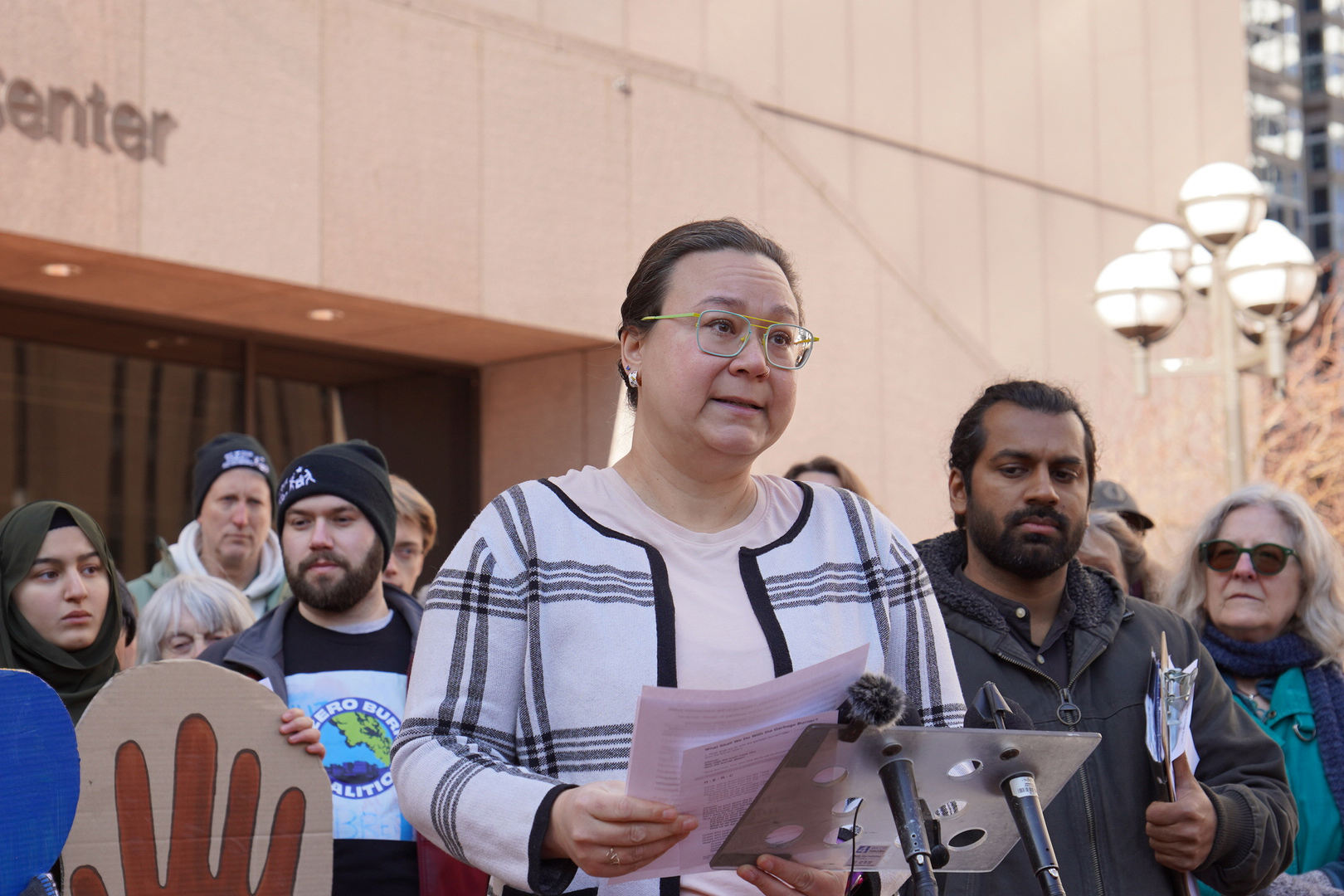
“We know HERC isn’t the only source of harm,” Pugh said. “But we also know that cumulative harm is not an excuse to avoid action on things you can control right now, especially the things you already promised to do.”
A hunger strike is an escalated action with a long history in social movements. Climate and environmental activists have employed the tactic in recent years when they felt other methods weren’t working.
Before their strike, Minneapolis advocates consulted with Diane Wilson from Texas, a longtime activist who recently completed a 30-day strike to push the chemical manufacturer Dow to stop discharging plastic waste and halt plans for new nuclear reactors.
“You don’t take it lightly, doing a hunger strike,” Wilson said. “There are risks.”
Wilson has done about 15 hunger strikes in her life, she said, and she believes the practice can tip balances of power. She said she was heartened to speak with the Minneapolis group.
“Hunger strikes are a very honorable and powerful way of doing civil disobedience,” Wilson said. “I think they work, and that’s why I continue to do them.”
Khan said the coalition is willing to work with the county to develop a plan to shut down the facility and move toward a zero-waste future.
“What we’re asking is to take this thing off our backs, off of our lungs, so that we can set an example for the world,” he said.
About This Story
Perhaps you noticed: This story, like all the news we publish, is free to read. That’s because Inside Climate News is a 501c3 nonprofit organization. We do not charge a subscription fee, lock our news behind a paywall, or clutter our website with ads. We make our news on climate and the environment freely available to you and anyone who wants it.
That’s not all. We also share our news for free with scores of other media organizations around the country. Many of them can’t afford to do environmental journalism of their own. We’ve built bureaus from coast to coast to report local stories, collaborate with local newsrooms and co-publish articles so that this vital work is shared as widely as possible.
Two of us launched ICN in 2007. Six years later we earned a Pulitzer Prize for National Reporting, and now we run the oldest and largest dedicated climate newsroom in the nation. We tell the story in all its complexity. We hold polluters accountable. We expose environmental injustice. We debunk misinformation. We scrutinize solutions and inspire action.
Donations from readers like you fund every aspect of what we do. If you don’t already, will you support our ongoing work, our reporting on the biggest crisis facing our planet, and help us reach even more readers in more places?
Please take a moment to make a tax-deductible donation. Every one of them makes a difference.
Thank you,

Keerti Gopal
Reporter, Health and Justice
Keerti Gopal covers intersections between climate change, public health and environmental justice at Inside Climate News. Previously, she covered climate activism and movement repression. She is a National Geographic Explorer and has received fellowships from Fulbright, the Solutions Journalism Network, The Lever, and the National Press Foundation.