

DURHAM, N.C.—Acetone and ethanol, 1,4-dioxane and “mucilaginous goo.”
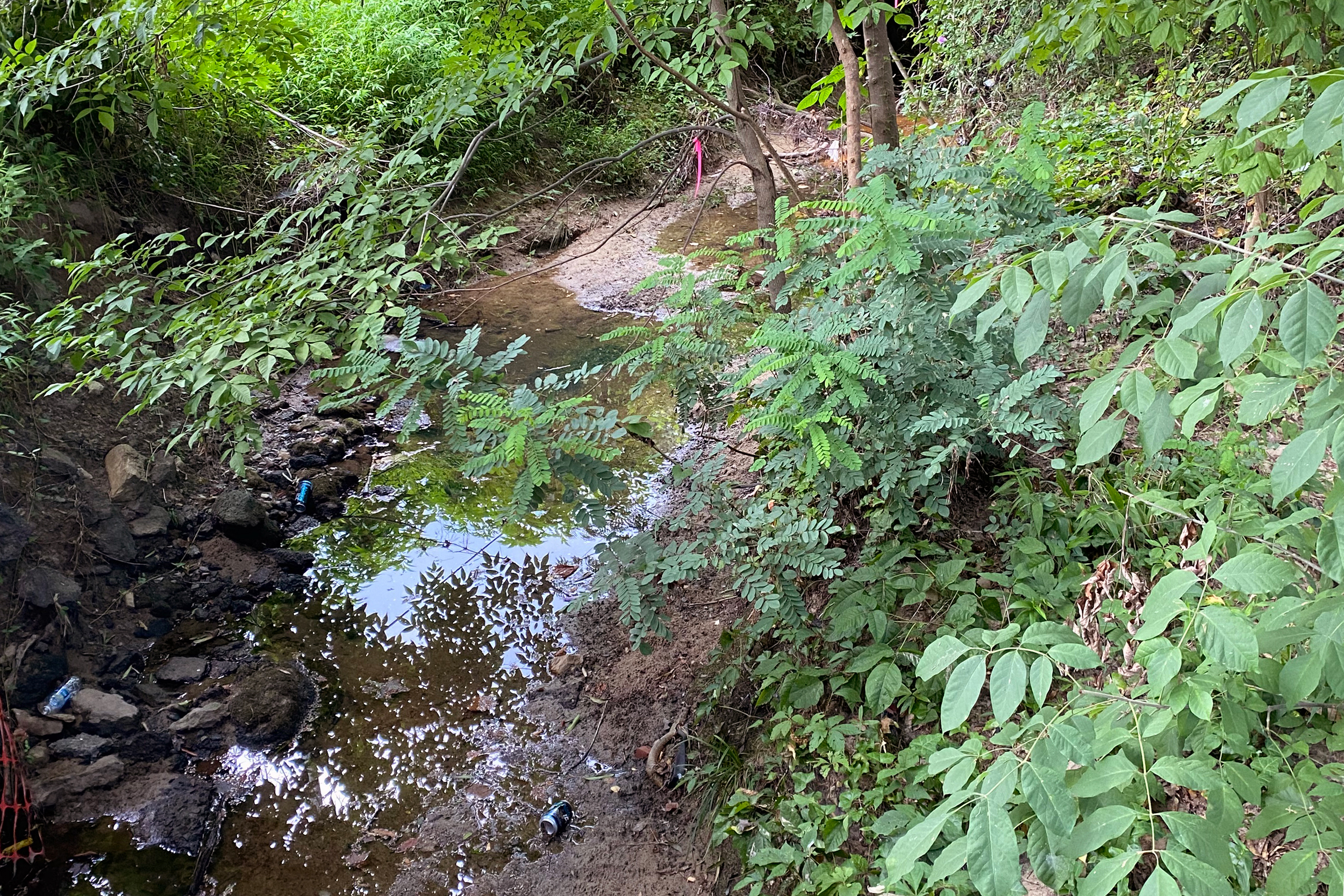
For decades, state regulatory documents show, a chemical repackaging and distribution company in Durham has discharged high levels of toxic chemicals, as well as other unknown substances, into a neighborhood creek that flows behind an elementary school, through a public park in a predominantly Black neighborhood, and into a major drinking water supply.
Now, the North Carolina attorney general is suing Brenntag Mid-South on behalf of state regulators over the alleged illegal releases, according to a complaint filed Monday in Durham Superior Court.
The complaint alleges that Brenntag is violating North Carolina’s water quality laws. The state is asking the court to require the company to submit a plan to eliminate the discharge and clean up previous contamination within 30 days.
“I’m thrilled that the attorney general is intervening in this longstanding environmental injustice in Durham,” said City Councilman Nate Baker. “The residents living around Burton Park and further downstream have suffered too long from the negligence of a large corporate neighbor, and it is time the harms rendered be repaired.”
A company spokesperson told Inside Climate News that Brenntag does not generally comment on ongoing litigation. Earlier this year the spokesperson provided a statement: “Brenntag Mid-South is committed to collaboration in this investigative process and continues to expend internal and external resources and expertise in coordination with local authorities.”
Brenntag Mid-South is a subsidiary of a global chemical company based in Germany. That company, Brenntag, reported $1 billion in gross profits in the first quarter of the year, according to public financial documents.
Brenntag purchased the Durham property and its corporate owner, Southchem, in 2001.
Over the last year the state Department of Environmental Quality, or DEQ, has repeatedly cited Brenntag for multiple violations related to water quality and reporting. Yet the company has failed to improve on both counts, according to the complaint. It has yet to file several required documents, including a plan to eliminate the discharge, the state said.
Instead, the company has asked for extensions and then blown those deadlines, the complaint said.
“Residents of Durham, and across this state, deserve clean water,” DEQ Secretary Reid Wilson said in a prepared statement. “It’s our job as the state environmental agency to ensure that companies are following the law, and today we take another step toward ensuring that for those living downstream of this facility.”

Based on testing data, state and city officials believe the groundwater is the source of the contamination, which then discharges into the creek through a pipe at the property line. Groundwater monitoring conducted in March by a Brenntag contractor showed that levels of more than a half-dozen chemicals exceeded state standards, including known carcinogens benzene and trichloroethene, also called TCE.
Brenntag has long known about groundwater contamination at the site. The property at 2000 E. Pettigrew St. is a former cotton mill, which operated from the late 1800s through the 1930s and had its own lagoon.
A Brenntag spokesperson told Inside Climate News last year that the issues affecting the creek “are complex and may be the result of multiple sources that are not yet known with certainty. Brenntag has taken numerous steps in close coordination with the City of Durham to help address these issues.”
Some of the polluting groundwater leaving the Brenntag site could originate from previous industrial processes. However, the plant has a long history of poor housekeeping: State records show inspectors have repeatedly found leaking and rusted barrels of chemicals, including as recently as November.
This story is funded by readers like you.
Our nonprofit newsroom provides award-winning climate coverage free of charge and advertising. We rely on donations from readers like you to keep going. Please donate now to support our work.
Donate NowRegardless of the source, the company is still responsible for keeping contaminants from leaving the property. Since the city issued a no-discharge order in 2023, Brenntag has collected and shipped its water off-site and installed a remediation system to treat the groundwater. However, the company shut off the system two years ago without explanation, state records show.
“There is stuff buried under there,” Durham stormwater quality manager Michelle Woolfolk told the City Council last month. She said city officials had required Brenntag to test and identify a black material found in the creek, which the company had yet to do.
Since 2023, the city of Durham has fined Brenntag $157,000 for various violations but has yet to collect the penalties in hopes the company would fix the problem. But Brenntag hasn’t done so, according to Woolfolk’s presentation to the City Council last month.
“The contamination is getting worse,” Haw Riverkeeper Emily Sutton, who routinely samples the creek, told the City Council. “It’s an ongoing public health and environmental crisis. It’s time to collect the penalties and accrue new ones until the discharge stops.”
Testing conducted by Brenntag contractors in April showed levels of acetone at 19,400 parts per billion, nearly 10 times the state surface water standard. Concentrations of ethanol have ranged from 25,000 to 144,000 parts per billion—five to almost 30 times the maximum allowed in surface water.
The chemical 1,4-dioxane, which the Environmental Protection Agency concluded has the potential to cause cancer, consistently exceeded the agency’s health advisory goals.
“These are not historical readings,” Sutton said. “It’s what’s in the water right now.”
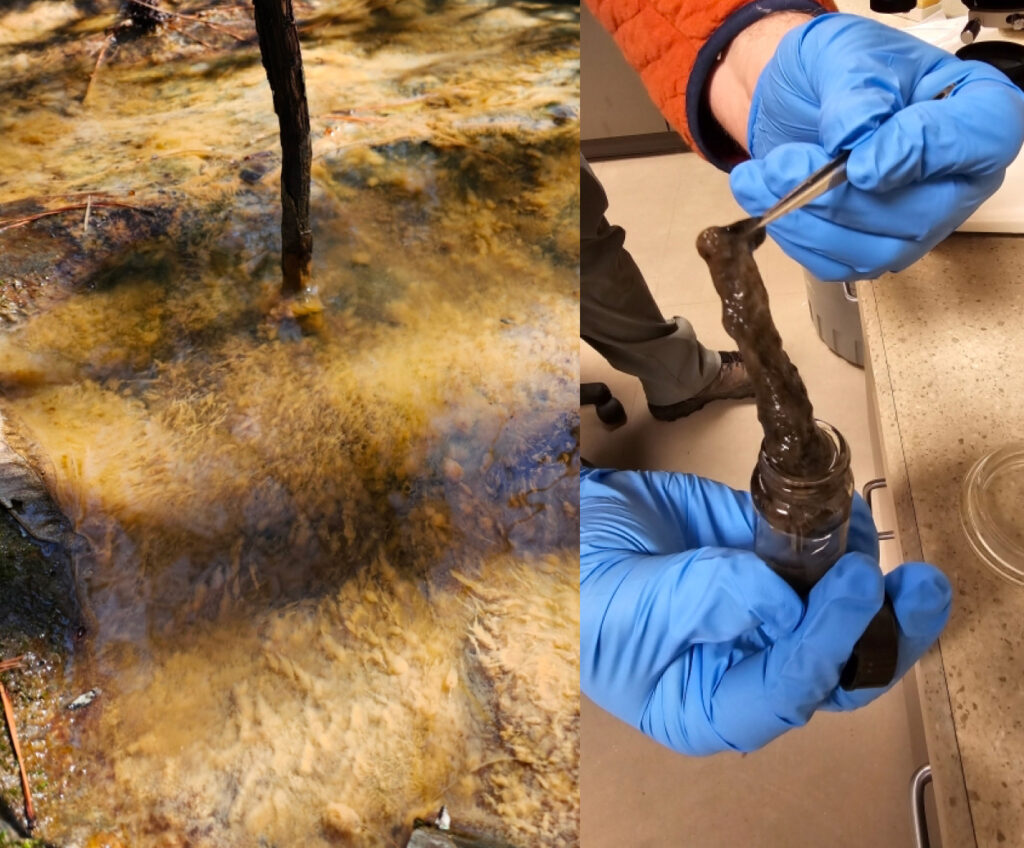
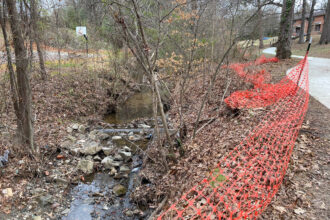
In August 2023, the city fenced off the creek after Brenntag contractors detected high levels of acetone, toluene and ethanol in water at its property edge a half-mile upstream. City officials also collected what Woolfolk described as a ropy, brown “mucilaginous goo” from the creek.
Since then, the creek, which runs through Durham’s oldest and largest public housing community, has been off-limits.
However, there are gaps in the plastic fencing, and it is easy to get into the creek.
“I played in creeks all the time growing up,” said City Councilwoman Javiera Caballero. “What are the kids in the neighborhood doing? It’s hot. People will play in the creek.”
The contamination problem has persisted since at least the mid-1990s, state records show, when high levels of at least a dozen chemicals were detected in the groundwater and in stormwater runoff at the property.
At times the creek has reeked so badly, a state environmental specialist wrote in 2004, that “Durham police have been called in to look for dead bodies.”
Brenntag owns two other facilities in North Carolina, in Greensboro and Charlotte.
The Greensboro plant has a groundwater remediation system, installed by a previous owner, to treat contamination caused by spills and leaks that occurred before Brenntag purchased the property as part of a merger in 2000.
DEQ has fined the Charlotte plant $83,000 since 2022 for improperly storing hazardous waste, failing to have an adequate evacuation plan and incomplete recordkeeping.
About This Story
Perhaps you noticed: This story, like all the news we publish, is free to read. That’s because Inside Climate News is a 501c3 nonprofit organization. We do not charge a subscription fee, lock our news behind a paywall, or clutter our website with ads. We make our news on climate and the environment freely available to you and anyone who wants it.
That’s not all. We also share our news for free with scores of other media organizations around the country. Many of them can’t afford to do environmental journalism of their own. We’ve built bureaus from coast to coast to report local stories, collaborate with local newsrooms and co-publish articles so that this vital work is shared as widely as possible.
Two of us launched ICN in 2007. Six years later we earned a Pulitzer Prize for National Reporting, and now we run the oldest and largest dedicated climate newsroom in the nation. We tell the story in all its complexity. We hold polluters accountable. We expose environmental injustice. We debunk misinformation. We scrutinize solutions and inspire action.
Donations from readers like you fund every aspect of what we do. If you don’t already, will you support our ongoing work, our reporting on the biggest crisis facing our planet, and help us reach even more readers in more places?
Please take a moment to make a tax-deductible donation. Every one of them makes a difference.
Thank you,

Lisa Sorg
Reporter, North Carolina
Lisa Sorg is the North Carolina reporter for Inside Climate News. A journalist for 30 years, Sorg covers energy, climate environment and agriculture, as well as the social justice impacts of pollution and corporate malfeasance.
She has won dozens of awards for her news, public service and investigative reporting. In 2022, she received the Stokes Award from the National Press Foundation for her two-part story about the environmental damage from a former missile plant on a Black and Latinx neighborhood in Burlington. Sorg was previously an environmental investigative reporter at NC Newsline, a nonprofit media outlet based in Raleigh. She has also worked at alt-weeklies, dailies and magazines. Originally from rural Indiana, she lives in Durham, N.C.