

Battery storage facilities and solar farms powered virtually all capacity growth in Texas’ electric grid throughout 2025, as the home of the nation’s oil and gas industry created almost twice as much new solar power as California.
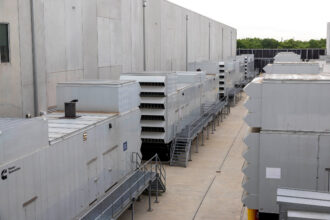
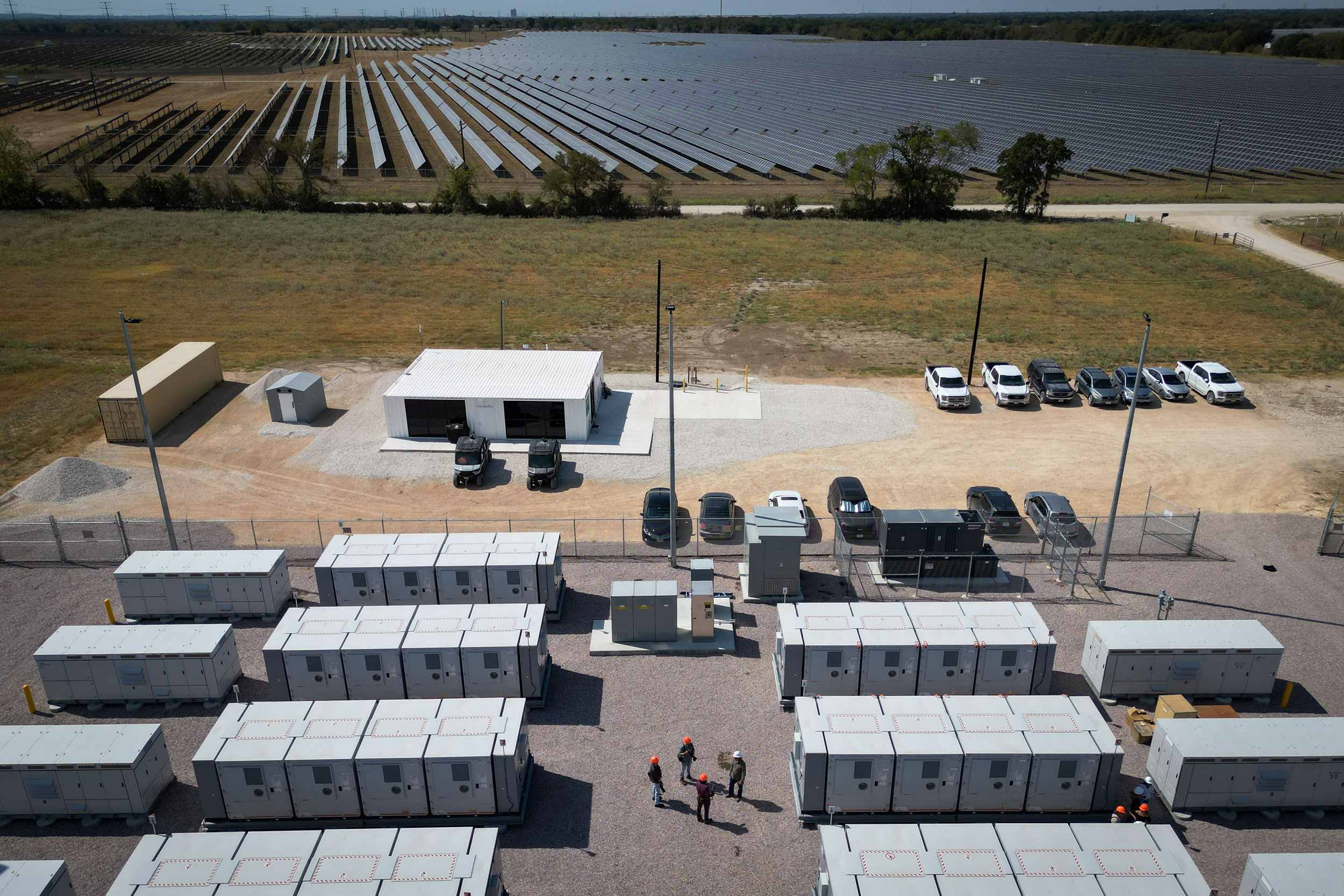
More than 5,200 megawatts, or approximately 10,500 megawatt hours, of new battery storage made up the largest share of the more than 11,000 megawatts of new capacity, according to the Electric Reliability Council of Texas (ERCOT), operator of Texas’ electric grid. Solar power accounted for the second-largest capacity addition, with more than 4,500 megawatts installed.
Pablo Vegas, ERCOT’s president and CEO, said during a board of directors meeting Tuesday that the new solar power represented “high” growth in intermittent power, while he characterized the new battery storage as “very rapid growth” of short-duration power supply.
“It’s a significant shift in operational requirements, and it represents an opportunity to create a more resilient and cost-effective grid,” Vegas said.
Wind power and natural gas trailed far behind solar and storage additions, adding more than 860 megawatts and 520 megawatts, respectively.
Vegas said the market continues to see low numbers of natural gas connections to the grid, despite the state’s $10 billion loan and grant fund to build more natural gas power plants. But he said there are “significant improvements” in interest among developers exploring natural gas connections to the grid.
Texas is leading the country in new solar capacity. The state added more than three gigawatts of solar power in the third quarter, making it the second-largest quarter for solar additions, according to a joint report by Wood Mackenzie and the Solar Energy Industries Association (SEIA). The U.S. solar industry installed 11.7 gigawatts of capacity nationally during the third quarter, a 20 percent increase from the same period last year.
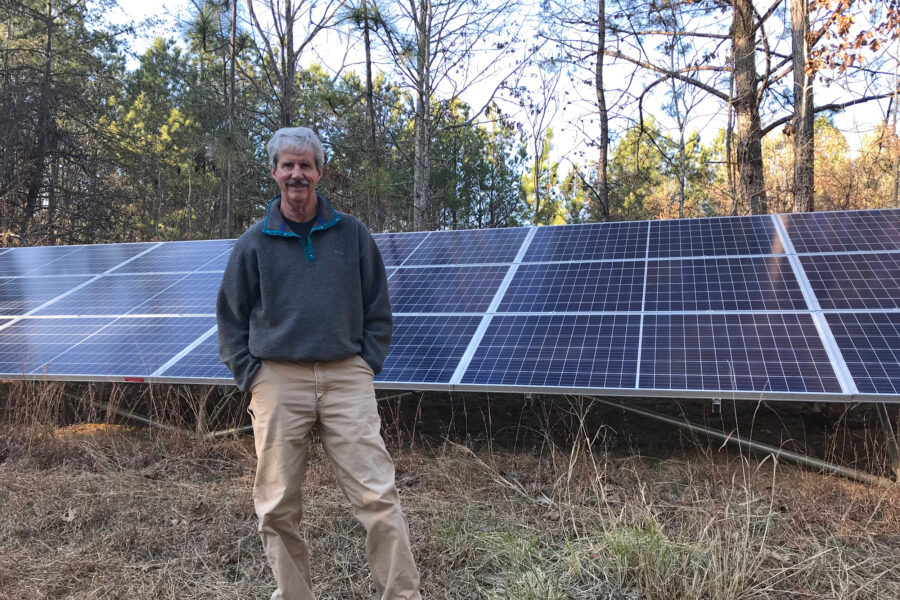
Over the first nine months of 2025, Texas installed 7.4 gigawatts of solar, almost double the capacity of California’s newest additions. This comes despite the Trump Administration’s efforts to roll back renewable energy development in the U.S.
“This record-setting quarter for solar deployment shows that the market is continuing to turn to solar to meet rising demand,” said Abigail Ross Hopper, SEIA president and CEO.
The meaningful additions of solar and battery storage have positioned Texas’ grid to handle summer demand peaks well, with large amounts of solar generating electricity during the day and batteries helping the grid transition into the evening, Vegas said.
But winter continues to represent a higher risk period for ERCOT, Vegas said. Solar and storage capacity are limited during the most critical periods during winter, such as early in the morning before sunrise or in the evening just after sunset. But even then, the chance of rotating outages during the riskiest morning hours is around 1 percent, according to ERCOT reports.
That’s better than last year, when ERCOT predicted a 7 percent chance of rotating blackouts during last winter’s peak hours.
But ensuring the grid stays balanced during the winter months remains a concern, as ERCOT tries to innovate quickly to accommodate the growing variety of energy resources and to accommodate large energy users, like data centers and crypto mines, seeking to connect to the grid.
Vegas said both the state and ERCOT have worked hard since Winter Storm Uri, when blackouts across the state left many Texans without power or heating for days and at least 246 people died, to regain public trust that the state’s grid will hold up in Texas’ extreme weather.
ERCOT’s models show that if Texas experienced a winter storm like it did in February 2021 and demand exceeded record levels, the risk of rotating outages would increase 54 percent.
The forecast accounts for the state’s growth in recent years, projects that if Texas were to be hit by similar weather conditions to the 2021 storm, power demand would exceed 97 gigawatts. That’s far more than the current demand record of 85.5 gigawatts set during a scorching summer heat wave in 2023.
But the likelihood that demand will reach more than 97 gigawatts is less than one percent, according to the report.
About This Story
Perhaps you noticed: This story, like all the news we publish, is free to read. That’s because Inside Climate News is a 501c3 nonprofit organization. We do not charge a subscription fee, lock our news behind a paywall, or clutter our website with ads. We make our news on climate and the environment freely available to you and anyone who wants it.
That’s not all. We also share our news for free with scores of other media organizations around the country. Many of them can’t afford to do environmental journalism of their own. We’ve built bureaus from coast to coast to report local stories, collaborate with local newsrooms and co-publish articles so that this vital work is shared as widely as possible.
Two of us launched ICN in 2007. Six years later we earned a Pulitzer Prize for National Reporting, and now we run the oldest and largest dedicated climate newsroom in the nation. We tell the story in all its complexity. We hold polluters accountable. We expose environmental injustice. We debunk misinformation. We scrutinize solutions and inspire action.
Donations from readers like you fund every aspect of what we do. If you don’t already, will you support our ongoing work, our reporting on the biggest crisis facing our planet, and help us reach even more readers in more places?
Please take a moment to make a tax-deductible donation. Every one of them makes a difference.
Thank you,

Arcelia Martin
Reporter, Texas Renewables
Arcelia Martin is an award-winning journalist at Inside Climate News. She covers renewable energy in Texas from her base in Dallas. Before joining ICN in 2025, Arcelia was a staff writer at The Dallas Morning News and at The Tennessean. Originally from San Diego, California, she’s a graduate of Gonzaga University and Columbia University Graduate School of Journalism.