

The Trump administration is moving to open federal waters surrounding American Samoa to deep-sea mining despite widespread opposition from leaders and environmental advocates from the U.S. territory.
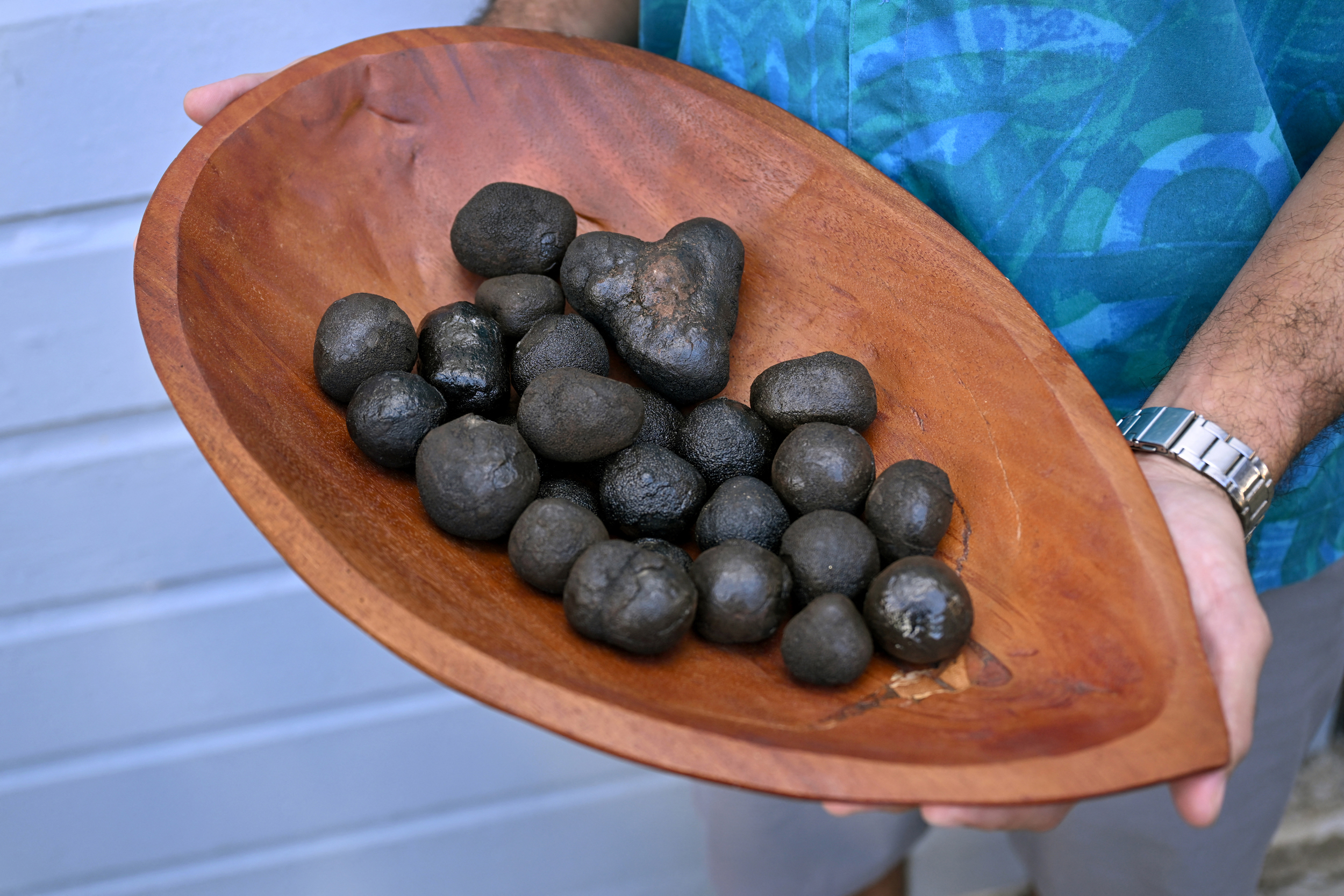
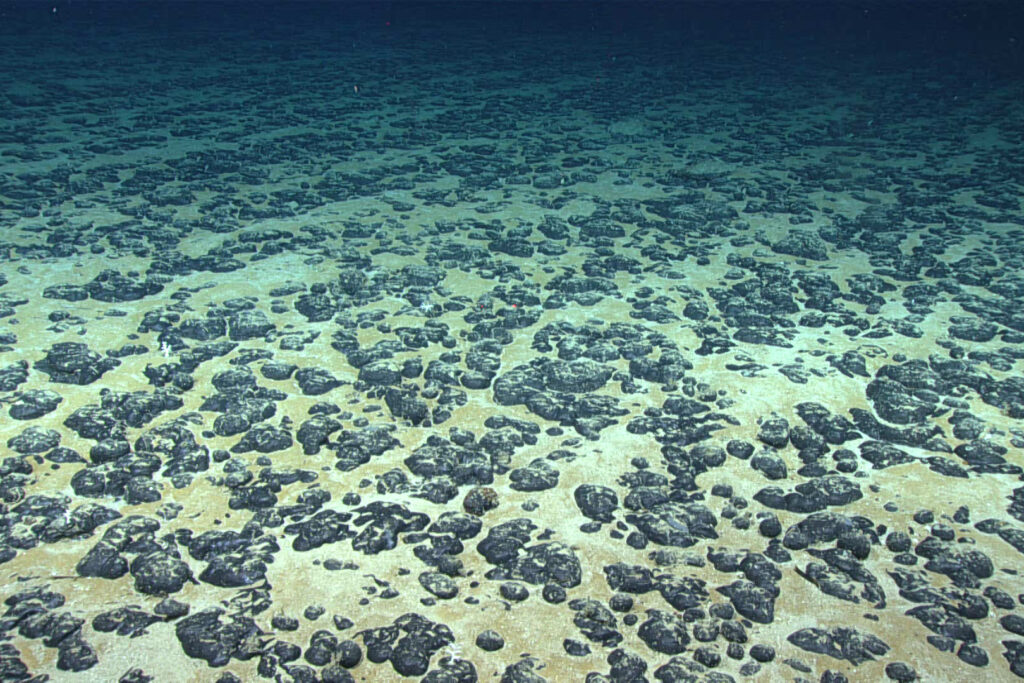
Last month, the National Oceanic and Atmospheric Administration began mapping more than 30,000 square nautical miles of the territory’s seabed, surveying the ocean floor for deposits of manganese, nickel, cobalt and copper found in potato-sized, rock-like formations called polymetallic nodules.
“Even though there is overwhelming local opposition—global opposition because of our allies around the world—they continue to move forward,” said Sabrina Suluai-Mahuka, founder and executive director of Finafinau, an environmental advocacy nonprofit in American Samoa.
Meanwhile, the Department of Interior’s Bureau of Ocean Energy Management (BOEM) is advancing the federal leasing process that could eventually allow private companies to mine those mineral deposits.
Together, the two federal agencies are helping carry out President Trump’s 2025 executive order, “Unleashing America’s Offshore Critical Minerals and Resources,” a mandate that directs officials to identify and accelerate access to seabed minerals, claiming the minerals are “vital to our national security and economic prosperity.”
These minerals, which have only been industrially mined on land to date, are used in military defense systems, such as fighter jets and missiles, electric vehicle batteries, smartphones and some medical devices.
American Samoa is not the only place being targeted for its minerals. In recent months, BOEM has expressed interest in issuing leases to mine seabed minerals in several offshore areas, including waters near other U.S. Pacific territories such as the Commonwealth of the Northern Mariana Islands and Guam. Areas off Alaska and Virginia are also under review.
BOEM and NOAA each have distinct roles in regulating seabed mining—a nascent and highly controversial industry.
While federal officials argue that seabed minerals are needed to strengthen national security and support green technologies, critics say many of those metals could be recovered by recycling batteries and electronics already in circulation.
Many environmental advocates are also worried about the environmental risks the industry poses and the speed at which the Trump administration is moving to pave the way for an industry that has not yet operated at scale anywhere else in the world.
“No one has done commercial-scale deep-sea mining,” said Becca Loomis, a staff attorney at the Natural Resources Defense Council, where she promotes ocean health by working to prevent offshore fossil fuel development and deep sea mining.
“This would be brand new, and they’re kind of forging ahead,” she said. “Rushing ahead with this industry is really scary for the ocean, the ocean ecosystem, for people who rely on fisheries.”
Under the 1953 Outer Continental Shelf Lands Act, BOEM is authorized to issue leases and permits for extracting minerals from the seafloor in U.S. federal waters, as it does for oil and gas. NOAA is in charge of overseeing permits for deep-sea mining activities by U.S. companies looking to mine in international waters.
But, in the case of American Samoa, NOAA is also playing a direct role domestically by mapping and sampling the deep ocean floor around the territory. The agency says the data will help scientists better understand the marine environment generally, but it will also be used to identify areas where valuable mineral deposits may exist—information that could help guide future industry decisions about deep-sea mining in federal waters.
“NOAA is proud to play a leading role in the President’s plan unlocking access to critical minerals for domestic supply chains,” said Neil Jacobs, a NOAA administrator who oversees deep-sea exploration. “This project highlights NOAA’s strong impact on economic resilience as we invest in research that supports sustainable deep sea mining practices and allows partners to better understand their marine environments.”
Local Opposition Emerges
Opposition to deep sea mining in American Samoa began well before NOAA’s survey vessels arrived in February.
In early 2024, when a California-based technology company, Impossible Metals, expressed interest in mining polymetallic nodules in American Samoa’s waters, alarm spread quickly among local leaders, fishers and community groups, Suluai-Mahuka said.
In response, former Gov. Lemanu Peleti Mauga issued an executive order establishing a moratorium on deep-sea mining, prohibiting all exploration and exploitation activities within their waters. But that ban applies to only around 3 miles of water offshore of American Samoa’s islands.
Beyond that boundary, authority shifts to the federal government, which controls waters farther offshore, including areas of the outer continental shelf that extend up to roughly 200 nautical miles from the islands.
Typically, federal agencies still consult with and consider the views of nearby states or territories when deciding whether to allow offshore development, including projects involving oil, gas or wind, said Arlo Hemphill, who leads Greenpeace USA’s campaign against deep-sea mining.
Florida, he noted, offers a well-known example.
“Florida is famous for not having offshore oil because the people were against it to preserve the sanctity of the Florida Keys and the fishing and the tourism and so the federal government didn’t force Florida to do it,” Hemphill said. “The Trump administration is not giving American Samoa that same respect.”
Ignoring the territory’s opposition, he warned, could threaten both the island nation’s marine life and economy.
“Deep sea mining poses significant risks to marine biodiversity, including the potential for habitat destruction, pollution and the disruption of critical ecological processes,” Mauga, American Samoa’s former governor, wrote in his order to ban seabed mining.
More than 1,000 marine science and policy experts from more than 70 countries have also signed a statement calling for a precautionary pause on deep-sea mining related activities until—and if—independent research demonstrates the industry can operate without causing serious or irreversible harm to ocean ecosystems.
Tuna fishing and processing make up the backbone of American Samoa’s economy, supporting thousands of jobs. While some proponents say deep-sea mining could bring new economic opportunities, Suluai-Mahuka said many residents worry it could instead undermine the industry the islands depend on most.
Scientists warn that much of the equipment deep sea mining companies are proposing to extract seabed minerals, up to 4 miles deep, could generate sediment plumes that travel long distances, potentially smothering coral reefs which provide critical coastal protection against storm surge and rising seas for American Samoa’s coastal communities. They also provide vital habitat for healthy fish populations.
“If those corals die, our fish may not have anything to live off, and not even just our fish, but the whole ecosystem that we rely on,” said Suluai-Mahuka. “Our families might not have food on the table because their families can’t catch anything anymore.”
Fish that are caught, she said, could also eventually become contaminated if metals released from seabed mineral deposits during mining enter the marine food chain and accumulate in the fish American Samoans eat.
Over the past year, Suluai-Mahuka has organized a series of town halls and virtual forums to help American Samoan residents better understand the federal government’s efforts to pave the way for deep-sea mining in their waters and to hear directly from industry representatives, including Oliver Gunasekara, co-founder and CEO of Impossible Metals.
This story is funded by readers like you.
Our nonprofit newsroom provides award-winning climate coverage free of charge and advertising. We rely on donations from readers like you to keep going. Please donate now to support our work.
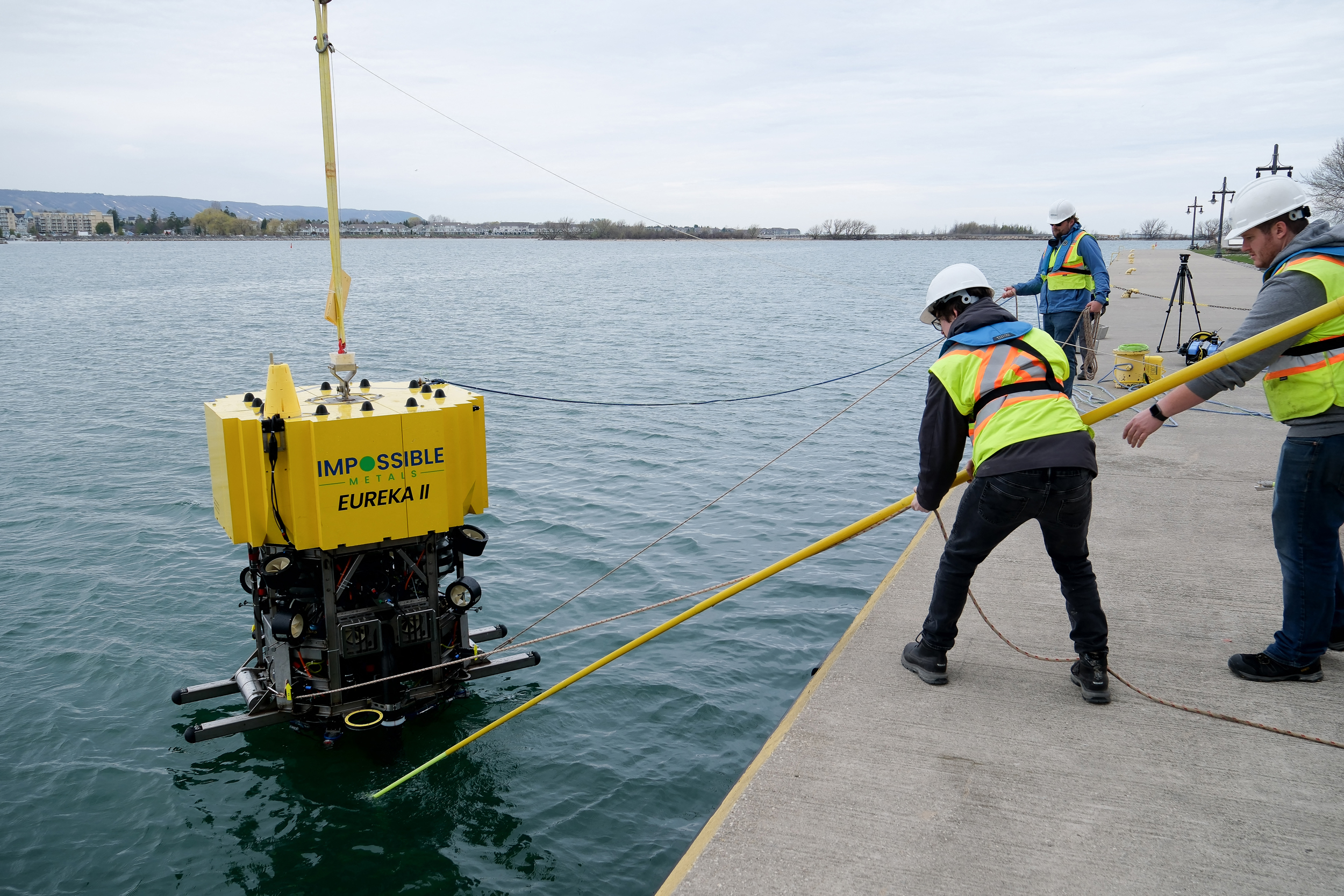
Donate NowLast spring, the company submitted an unsolicited request to BOEM to mine polymetallic nodules off American Samoa. According to Gunasekara, the technology his company is developing would avoid producing the toxic sediment plumes often cited as one of the primary environmental risks of deep-sea mining. “We don’t have any sediment plumes,” he said.
Instead, he said, his company is developing a fleet of underwater robots that would hover just above the seabed, using cameras and sensors to locate polymetallic nodules and collect the mineral deposits without disturbing marine life.
Federal Leasing Process Advances
Since the company made its request, BOEM has initiated a six-step process for awarding deep sea mining leases in the U.S. territory.
“Developing a domestic supply of critical minerals will strengthen U.S. supply chains, bolster economic and national security, and reduce reliance on China and other foreign nations for domestically available materials vital to energy technologies, advanced manufacturing, and defense systems,” said a BOEM spokesperson. Environmental and cultural considerations will “guide every decision on potential future leasing activity,” the spokesperson added in an email.
But Suluai-Mahuka said the federal process tells a different story.
In response to Impossible Metals’ request, BOEM initiated a six-step process that could lead to leasing parts of the seabed for mineral extraction. First, they published a Request for Information and Interest (RFI) in the Federal Register last summer, seeking input from the public, scientists and industry on possible commercial seabed mineral extraction within American Samoa’s outer continental shelf.
The area of interest borders the National Marine Sanctuary of American Samoa and the Rose Atoll Marine National Monument—federally protected waters known for their unique ecosystems and rich biodiversity—as well as the Cook Islands’ exclusive economic zone, prompting concerns about potential transboundary impacts.
More than 75,000 comments were submitted during a 30-day public comment period that closed in August, most in opposition.
According to BOEM’s own summary of the public comment period, several commenters emphasized that American Samoa’s moratorium on deep-sea mining remains in full force and has been reaffirmed by the territory’s current governor, Pulaali’i Nikolao Pula, and other leaders.
Others pointed to growing international momentum to stop the industry from moving ahead. At least 40 countries have expressed their support for a global moratorium on deep sea mining.
Many commenters called for respect of Indigenous rights and sovereignty in decision-making about ocean resources in territorial waters, including Andrew Pati Ah Young, a founding member of Fa’asao Amerika Samoa, a community organization comprised of local fishers, chiefs, faithleaders and other residents, as well as members of the Samoan diaspora.
In his submission, Ah Young wrote: “We wish to register our strong opposition to any federal action that would authorize or advance deep-sea mining in or near American Samoa’s waters.
“Safeguarding the oceans is a core part of Samoa’s cultural identity and economic practice. The Samoan proverb ‘A logo tai ua logo uta’ teaches that what is felt in the ocean is also felt on land. Our lives, culture, and sustenance are tied to the health of the sea—when the ocean suffers, the land and its people inevitably share that pain.”
In spite of these comments, BOEM completed the second stage of the leasing process, which involves identifying the area of interest. In this case, the agency also significantly expanded the area under consideration for mining.
“After receiving about 76,000 comments in opposition, the administration went ahead and essentially doubled the potential lease area [originally 73,222 square kilometers] to over 130,000 square kilometers,” said JV Langkilde, an American Samoan associate attorney at Earthjustice, an environmental law organization based in the U.S.
More recently, Suluai-Mahuka said, the agency moved to the third stage of the leasing process by launching an environmental analysis of the potential impacts of offering mineral leases in the identified areas.
But for residents of American Samoa, she said, the debate is not just about what happens miles below the surface; it’s about the future of the communities that depend on the ocean above it.
“For the industry, it’s seen as a lottery ticket. They could potentially make so much money,” Suluai-Mahuka said. “But for us, it’s a gamble on our livelihoods.”
About This Story
Perhaps you noticed: This story, like all the news we publish, is free to read. That’s because Inside Climate News is a 501c3 nonprofit organization. We do not charge a subscription fee, lock our news behind a paywall, or clutter our website with ads. We make our news on climate and the environment freely available to you and anyone who wants it.
That’s not all. We also share our news for free with scores of other media organizations around the country. Many of them can’t afford to do environmental journalism of their own. We’ve built bureaus from coast to coast to report local stories, collaborate with local newsrooms and co-publish articles so that this vital work is shared as widely as possible.
Two of us launched ICN in 2007. Six years later we earned a Pulitzer Prize for National Reporting, and now we run the oldest and largest dedicated climate newsroom in the nation. We tell the story in all its complexity. We hold polluters accountable. We expose environmental injustice. We debunk misinformation. We scrutinize solutions and inspire action.
Donations from readers like you fund every aspect of what we do. If you don’t already, will you support our ongoing work, our reporting on the biggest crisis facing our planet, and help us reach even more readers in more places?
Please take a moment to make a tax-deductible donation. Every one of them makes a difference.
Thank you,

Teresa Tomassoni
Oceans Correspondent
Teresa Tomassoni is an environmental journalist covering the intersections between oceans, climate change, coastal communities and wildlife for Inside Climate News. Her previous work has appeared in The Washington Post, NPR, NBC Latino and the Smithsonian American Indian Magazine. Teresa holds a master’s degree in Journalism from the Craig Newmark Graduate School of Journalism. She is also a recipient of the Stone & Holt Weeks Social Justice Reporting Fellowship. She has taught journalism for Long Island University and the School of the New York Times. She is an avid scuba diver and spends much of her free time underwater.