

PHILADELPHIA—Sitting on a dais at the private Fitler Club for what was billed as a discussion about “the Path to a Clean Energy Future,” former Philadelphia Mayor Michael Nutter played to his audience.
“We have seven, eight seasons of an incredible comedy with some really great actors. You know, ‘It’s Always Sunny in Philadelphia,’” he said. “Well, it’s not actually always sunny in Philadelphia, and it’s not always windy either, right?” The crowd laughed.
Energy “has to be reliable, it has to be affordable,” he added, one theme of an argument made throughout the evening that the path to a clean energy future should be built on gas. “It has to be there when people need it. It’s not a sometime thing.”
That messaging is favored by the event’s sponsor, Natural Allies for a Clean Energy Future, a coalition formed in 2020 to “educate and inform about the central role natural gas and natural gas infrastructure play in the clean energy future and as a partner to renewables.” Natural Allies’ goal is to redefine gas as “the most affordable and reliable energy source.”
Natural Allies—whose funders include the fracking company EQT, gas utility Enbridge and Venture Global, a liquefied natural gas provider—woos left-leaning and moderate voters in blue and purple states by hiring Democratic leaders like Nutter to share their message. Nutter’s advisory firm was paid $240,000 in 2024 for his work on behalf of the group, and he sits on its leadership council with other Democratic politicians like former Virginia Gov. Terry McAuliffe and former Ohio Congressman Tim Ryan.
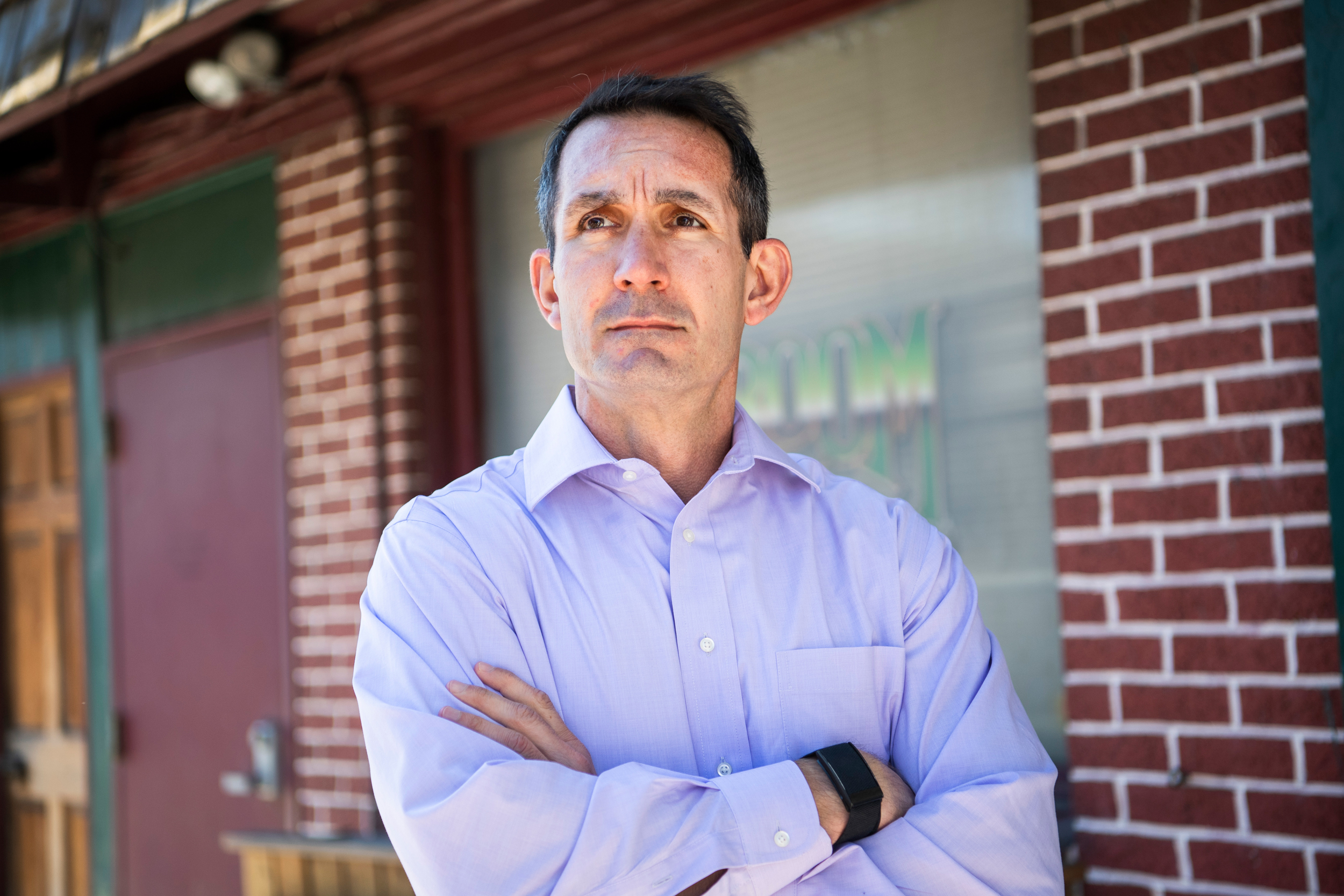
Eugene DePasquale, the current chair of the Pennsylvania Democratic Party, is the state chairman for Natural Allies. He appeared on the panel alongside Nutter.
“It’s always been focused on, ‘How do we convince Democrat officials to stay onside to support fossil fuels?’” said Charlie Spatz, a research manager at the Energy and Policy Institute, of Natural Allies’ mission. “They exclusively exist to influence Democrats, in my opinion.”
The group was created to ensure that gas companies still have “a seat at the table,” no matter which party is in power or what is happening in Washington, D.C., Spatz said. The second Trump administration’s rollbacks of Biden-era climate policies and enthusiasm for fossil fuels mean that regional and local battles are more important to the industry in 2026. Natural Allies spends money to influence politics in key states like Pennsylvania, New York, Virginia and New Jersey, targeting women, people of color and younger voters.
“They do a lot of sowing of doubt,” said Alan Zibel, research director at Public Citizen, which investigated the group in 2024. “It’s very sneaky and probably effective.”
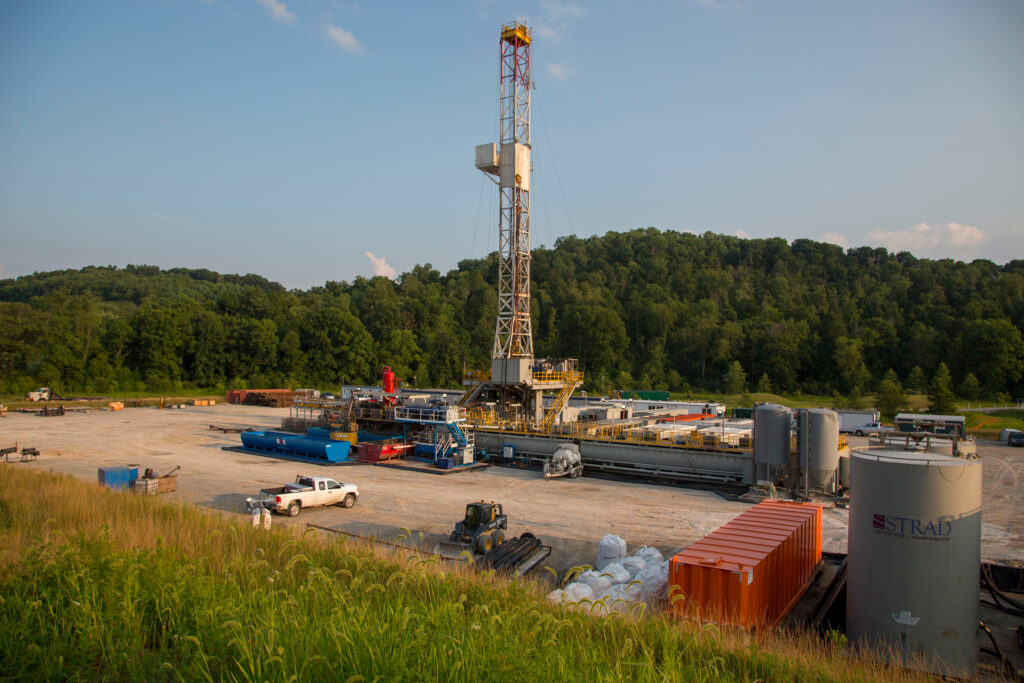
“I talk about natural gas as a part of a clean energy future as we transition to newer, better and greater,” Nutter said during the panel. “Yes, I’d like a clean energy future. But yes, I’d also like people to be able to cook a meal at night. And we have … an abundance of natural gas.” Pennsylvania is the country’s second-largest producer after Texas.
Nutter’s description of solar and wind power as unreliable and expensive may sound familiar. That’s because this talking point comes from the oil and gas industry playbook for stalling action on climate change, according to recent research on fossil fuel companies’ communications strategies.
To slow down a transition away from fossil fuels, the industry emphasizes downsides of renewable energy and paints their own products as “part of the solution,” said Jennie Stephens, a professor of climate justice at the National University of Ireland Maynooth who co-authored the study.
Stephens said these tactics are part of a shift away from outright denial that climate change is happening and toward obstruction and delay. Even the name of the product— which is largely made up of the potent climate pollutant methane—amounts to PR: “Calling it ‘natural’ is an industry strategy to make it seem more benign,” she said. “It’s constantly evolving, the strategies and tactics for blocking policy and any constraints on fossil fuels.”
Suggesting renewable energy is unaffordable is wrong—these days it’s the cheapest way to produce electricity, according to financial advisory firm Lazard. Gas is no longer essential to account for wind and solar’s intermittency: Battery storage smooths that out without emitting greenhouse gases.
Gas plants suffer from their own reliability issues, especially in extreme weather. And even as the costs of renewable energy decline, the U.S. war in Iran has illustrated the affordability problems for consumers when you rely solely on fossil fuels traded on a global market. States and countries using a more diverse mix of energy sources fare better when price spikes hit oil and gas.
This story is funded by readers like you.
Our nonprofit newsroom provides award-winning climate coverage free of charge and advertising. We rely on donations from readers like you to keep going. Please donate now to support our work.
Donate NowIn a narrow sense, burning gas is more efficient than burning coal or oil, Stephens said. “But that doesn’t mean it’s clean at all. It’s still a fossil fuel.” And because it’s a gas, every leak along the way from extraction to use damages the climate.
“For fracked shale gas used domestically in the U.S., the greenhouse gas footprint is about the same as coal,” said Robert Howarth, professor of ecology and environmental biology at Cornell University. Howarth has studied emissions from the fracking boom for more than 15 years. For gas that is exported as LNG, emissions are about 30 percent worse than coal, he said.
“If we continue to burn natural gas, we pose a real threat to the future of society as we know it,” Howarth said. And the ripple effects of climate change are only just beginning. “We’re getting more intense storms already, more floods, more droughts. We’re getting stronger fires. We’re seeing loss of agricultural productivity already.” Climate change has cost Pennsylvania hundreds of millions of dollars, and the bill is projected to increase in the future.
In an interview, DePasquale said he views his work with Natural Allies as a “continuation” of his career as a state legislator and auditor general, when he published a report on fracking that concluded state environmental regulators had “failed to keep pace with the industry’s expansion and the public’s demands.”
“I obviously view natural gas as a bridge to a day when we are going to have, potentially, 100 percent renewables. We’re obviously not there yet,” he said. “And I view natural gas as a significantly cleaner alternative to coal.”
“If we continue to burn natural gas, we pose a real threat to the future of society as we know it.”
— Robert Howarth, Cornell University
Supporters of the industry—including President Barack Obama—touted gas as a “transition fuel” between coal and renewables for years. Today, almost 60 percent of the state’s grid depends on gas. This reliance, coupled with increasing LNG exports, exposes Pennsylvanians to price swings in the global market even as production rises.
Natural Allies’ website, with its blue and green color palette and calming imagery of wind turbines and solar panels, evokes environmental progress. But the group seems to have dropped the old “bridge fuel” metaphor for a message that combating climate change means renewables and natural gas “working together.”
Democrats in Pennsylvania, including DePasquale and Gov. Josh Shapiro, promote an “all of the above” energy approach that includes solar, wind, nuclear and fossil fuels. In practice, that has meant expanding gas at the expense of other forms of energy.
“I think reasonable environmentalists understand that natural gas is not going away, but their frustration lies in the slowness of expanding renewables,” said Rep. Greg Vitali, a Democrat who has long championed environmental reforms in Pennsylvania’s legislature.
DePasquale chalked up this lack of growth to the reality of politics in a purple state: Republicans have controlled the Pennsylvania Senate since 1994.
In the early 2000s, before fracking took off in Pennsylvania, DePasquale was part of the team that promoted and passed Pennsylvania’s Alternative Energy Portfolio Standards Act, a law that required a certain percentage of electricity generation to come from alternative energy sources. Back then, Pennsylvania was a pioneer among its peers, leading the way on clean energy.
More than two decades later, it ranks 49th for renewable energy growth in the U.S. Only 4 percent of Pennsylvania’s electricity comes from renewable energy, and that number has barely budged since the fracking boom began.
If it were a country, Pennsylvania would rank 39th in the world for climate pollution. The clean energy portfolio standards have not been meaningfully updated since 2004.
“I’m still proud of the work we did,” DePasquale said. “I’m sure, if you would have asked all of us then, ‘Will the state have increased that portfolio by 2026?,’ I’m sure even Republican legislators that were pushing that would have said, ‘Yes.’ I know I would have.”
About This Story
Perhaps you noticed: This story, like all the news we publish, is free to read. That’s because Inside Climate News is a 501c3 nonprofit organization. We do not charge a subscription fee, lock our news behind a paywall, or clutter our website with ads. We make our news on climate and the environment freely available to you and anyone who wants it.
That’s not all. We also share our news for free with scores of other media organizations around the country. Many of them can’t afford to do environmental journalism of their own. We’ve built bureaus from coast to coast to report local stories, collaborate with local newsrooms and co-publish articles so that this vital work is shared as widely as possible.
Two of us launched ICN in 2007. Six years later we earned a Pulitzer Prize for National Reporting, and now we run the oldest and largest dedicated climate newsroom in the nation. We tell the story in all its complexity. We hold polluters accountable. We expose environmental injustice. We debunk misinformation. We scrutinize solutions and inspire action.
Donations from readers like you fund every aspect of what we do. If you don’t already, will you support our ongoing work, our reporting on the biggest crisis facing our planet, and help us reach even more readers in more places?
Please take a moment to make a tax-deductible donation. Every one of them makes a difference.
Thank you,

Kiley Bense
Reporter, Pennsylvania
Kiley Bense covers climate change and the environment with a focus on Pennsylvania, politics, energy, and public health. She has reported on the effects of the fracking boom in Pennsylvania, the expansion of the American plastics industry, and the intersection of climate change and culture. Her previous work has appeared in the New York Times, the Atlantic, Smithsonian Magazine, the Believer, and Sierra Magazine, and she holds master’s degrees in journalism and creative writing from Columbia University. She is based in Pennsylvania.