

As Corpus Christi teetered on the edge of a water supply disaster earlier this year, community organizers circulated a petition to dramatically increase the price of water for the region’s large industrial users during drought. They gathered almost 13,000 signatures, more than enough to put their proposal—called the Fair Water Amendment—on the ballot in November.
But the City Attorney’s office has recommended that City Council members block the effort using an obscure legal maneuver enacted by Texas’ Republican-led Legislature in 2023.
On Tuesday, council members will decide whether to take that step. It will be their last opportunity to intervene before an Aug. 17 deadline for the provision to be placed on the November ballot.
“The city attorney wants to use an unrelated state law to silence our community and let big industry keep their special deal,” said Isabel Araiza, a college professor in Corpus Christi and founder of the advocacy group For the Greater Good, which led the petition drive.
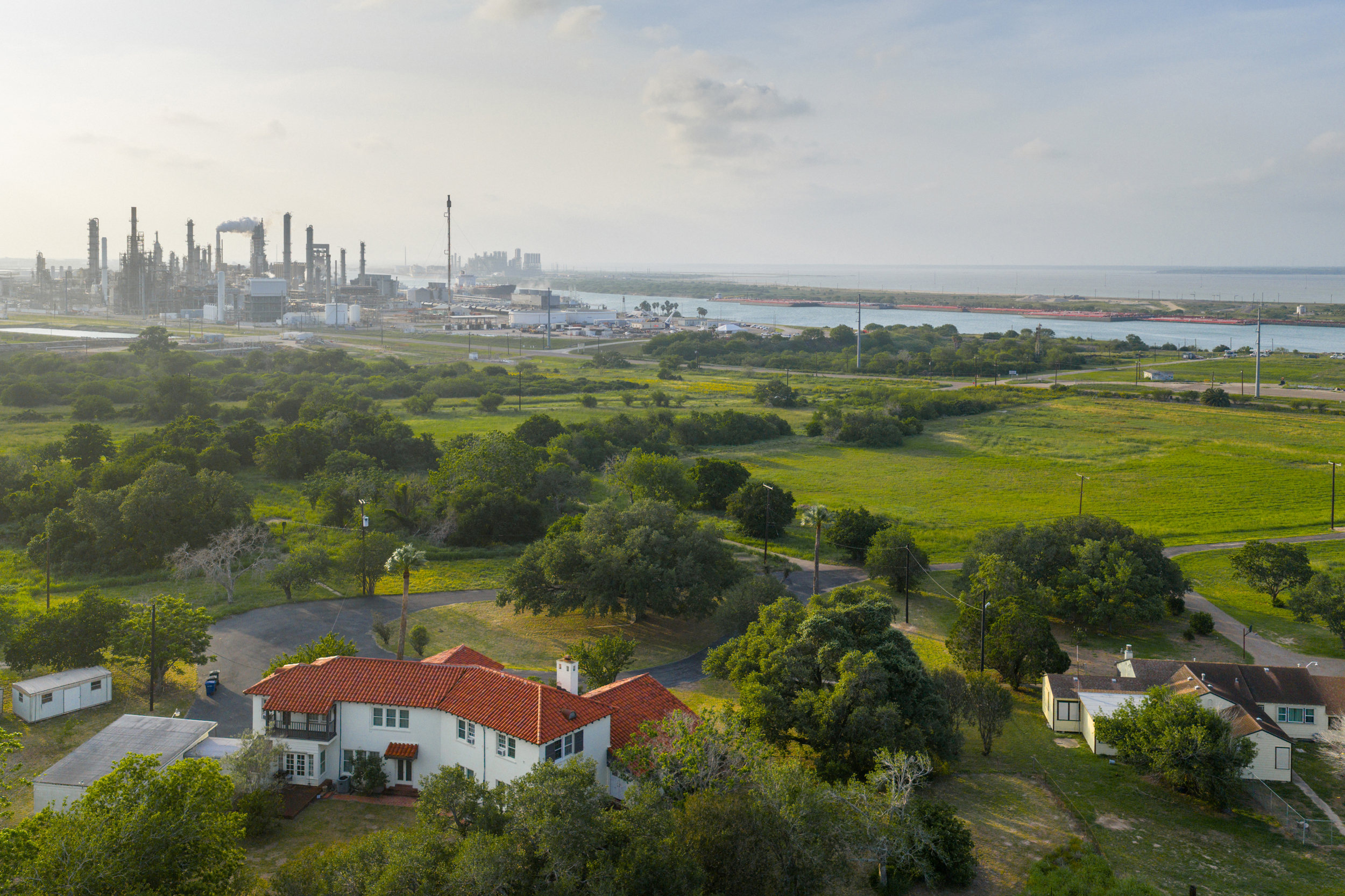
The debate over the measure, with multi-million-dollar implications for some of the largest energy companies in the nation, is the latest iteration of an increasingly fraught relationship between the residents of Texas’ eighth-largest city and the petrochemical plants and refineries that bolster its economy and consume most of its water.
Bob Paulison, spokesman for a local industry group that includes ExxonMobil, Occidental Chemical, Valero and other large energy companies that operate in the region, declined to comment on the proposed amendment or the recommendation to block it.
“We haven’t been involved in that conversation,” he wrote in an email.
The “special deal” Araiza was referencing is an agreement that a handful of large energy companies made with city leaders in 2018. Under the agreement, the companies are exempt from paying extra fees for water in times of drought in exchange for helping pay for a new seawater desalination plant in the region. (The plant has yet to be built).
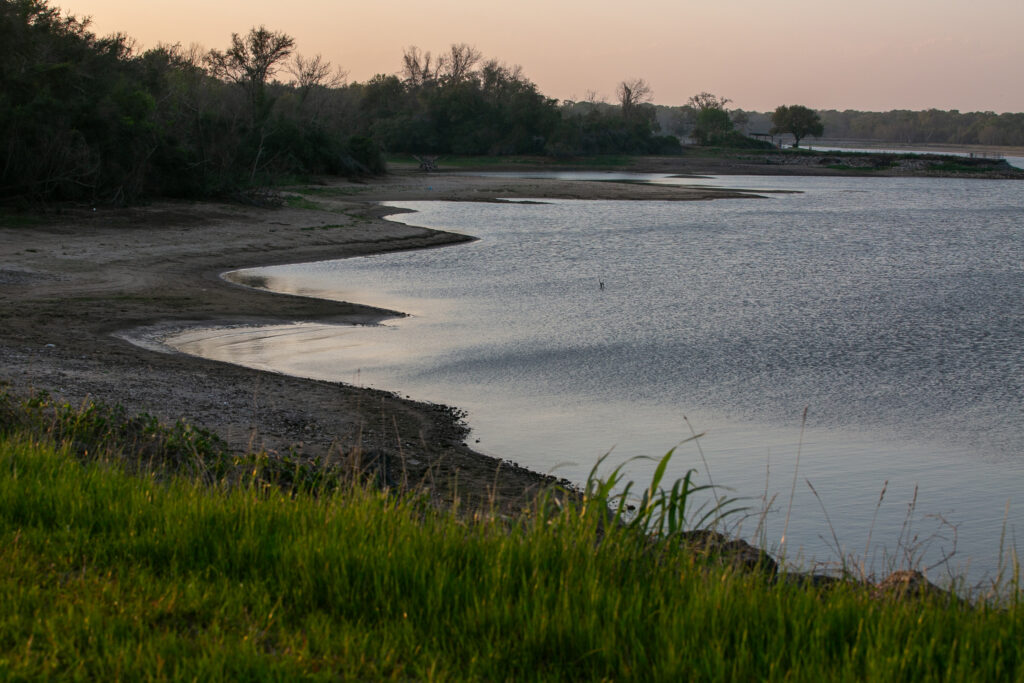
The proposed Fair Water Amendment would cancel that agreement. It would implement an additional fee of $3 per 1,000 gallons when the area’s reservoir levels are below 30 percent, which was the case for more than two years until recent heavy rainfall. That additional $3 fee would come on top of the current rate of $4.34 per 1,000 gallons.
The surcharge would have added more than $1 million to the monthly water bill for the region’s largest water users, ExxonMobil and Occidental Chemical. Valero, the third-largest water user, would pay an additional $830,000 per month.
Those fees would double when reservoirs dip below 20 percent, like they did between December 2024 and July of this year.
Peter Zanoni, Corpus Christi’s city manager, said such a policy could lead to an expensive lawsuit.
“If this goes through and is approved we need to be prepared with funds in our budget for potential litigation,” he said in an interview. “We’d probably lose.”
That’s why the city attorney’s office has proposed an ordinance that would declare the amendment a “climate charter.”
“This eliminates the City Council ministerial duty to place the proposed ‘Fair Water Amendment’ charter amendment on the ballot,” said the city attorney’s presentation, which was posted to the city website.
State lawmakers banned municipal “climate charters” in 2023 when they passed Senate Bill 1860. The law was a response to a citizen-led initiative in El Paso that sought to force the city to more aggressively adopt climate-friendly policies.
The law gave the term “climate charter” a broad definition: “a comprehensive rule or policy statement that purports to address climate change or the municipality’s environmental impact, including water and energy use and air pollution.”
The Fair Water Amendment fits that definition, Zanoni said, because of its singular focus on the city’s water resources and phrases in the provision like “recurring and increasingly severe drought conditions.”
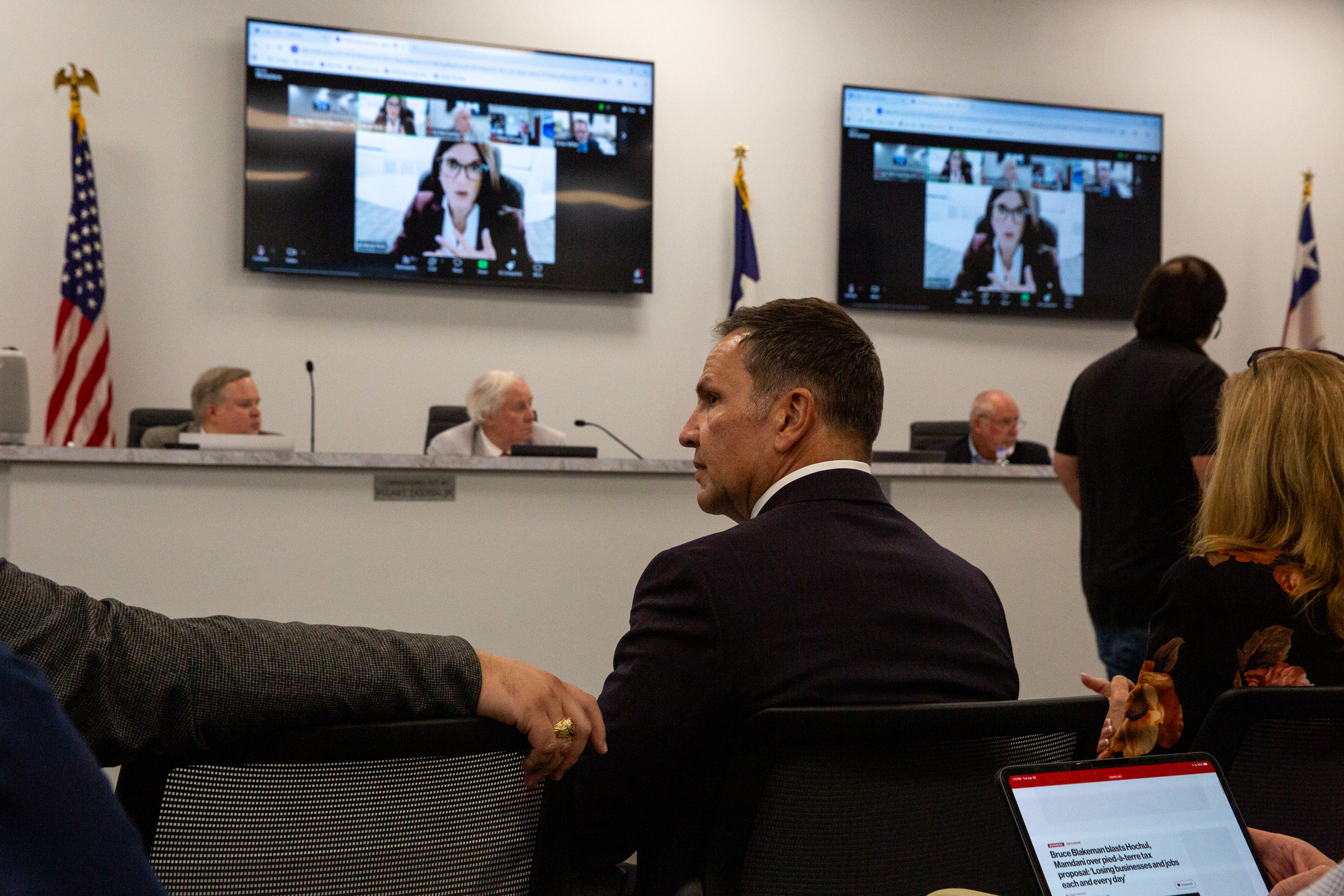
The Texas Secretary of State’s office came to the same conclusion in May after the city referred the matter to the agency.
“Our office believes there is an argument that this is a climate charter,” the Secretary of State’s office wrote in May, according to a recent city memo. “Ultimately the City must be the one to make the final determination.”
Chloe Torres, Coastal Bend coordinator for Texas Campaign for the Environment, which paid canvassers to gather signatures supporting the amendment, called that argument “transparently obstructionist.”
“The FWA [Fair Water Amendment] is about just one thing—reversing the exemption that the City gives to the largest industrial water users,” she said.
This story is funded by readers like you.
Our nonprofit newsroom provides award-winning climate coverage free of charge and advertising. We rely on donations from readers like you to keep going. Please donate now to support our work.
Donate NowThe Drought Surcharge Exemption Fee
Adopted in 2018, the Drought Surcharge Exemption Fee has fueled years of bitter debate in Corpus Christi over perceived fairness of water conservation measures.
“People out there are raising cane and mad as a hornet,” said Joe McComb, who was the city’s mayor at the time. “They’ve gone and gotten petitions and are trying to force an election.”
He called the Drought Surcharge Exemption Fee “a great program,” adding, “I was pleased to be a part of the negotiations when we instigated this.”
Supporters of the program, including the energy companies who helped design it, say it was the best way to secure the city’s future. It allowed large industrial water users to pay an “exemption fee” on their regular water bills in exchange for immunity from potential surcharges that City Council could implement during drought. Practically all of the largest water users pay the fee.
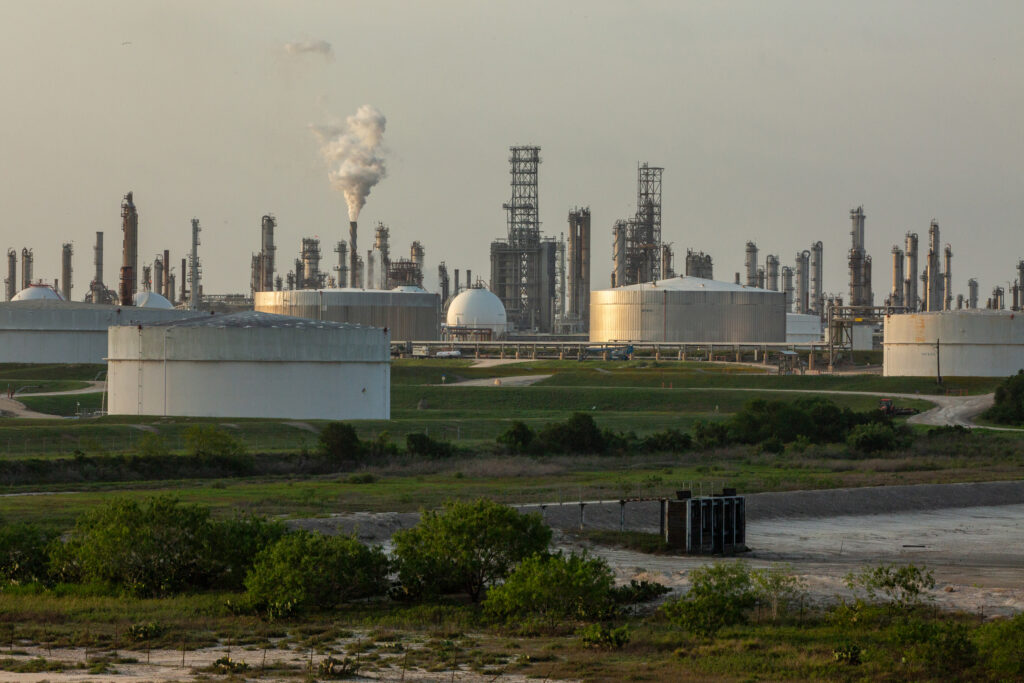
Critics say the fee eliminated any incentive for the city’s biggest water users to conserve the resource, especially as a historic drought hit the region just a few years after companies began paying it.
“It’s crazy that there’s never ever enough money for residents’ quality of life issues, but somehow the city can find ways to get money for industrial expansion and industry’s wants,” Araiza said. “The reason we were in the water crisis was because of [industry’s] water usage.”
McComb disagrees. He pointed out that the companies who pay the exemption fee never received privileged treatment during the recent drought conditions because the city never implemented drought surcharges on other water users, either.
“There’s been no exemption,” McComb said. “The purpose was to let this money help pay for finding and developing a future water supply.”
Paulison, the industry spokesman, said the fee was meant to serve as “insurance” for large industrial water users. They’d be exempt from any surcharges on water during times of drought, but in exchange, they’d pay the fee, which he said could serve not just as revenue for the city but could also accrue investment returns. As a result, he estimates it could ultimately lead to more than $300 million for the city over the next 30 years.
But that wouldn’t be enough to cover the costs of the seawater desalination plant that the money was meant for. In 2025, the city estimated that the annual debt costs for the project would be $68 million a year, while the exemption fee only brings in about $6 million per year.
If the City Council votes to block the Fair Water Amendment on Tuesday, groups may file a petition for intervention with the Thirteenth Court of Appeals or the Texas Supreme Court. The Aug. 17 deadline for November ballot measures still provides time for a court to act, said Renea Hicks, attorney for the Fair Water Political Action Committee.
“There would be a request for the courts to act quickly,” he said. “Typically in the past when I’ve been involved in these things, they do act quickly.”
Neena Satija of the Texas Newsroom contributed to this report.
About This Story
Perhaps you noticed: This story, like all the news we publish, is free to read. That’s because Inside Climate News is a 501c3 nonprofit organization. We do not charge a subscription fee, lock our news behind a paywall, or clutter our website with ads. We make our news on climate and the environment freely available to you and anyone who wants it.
That’s not all. We also share our news for free with scores of other media organizations around the country. Many of them can’t afford to do environmental journalism of their own. We’ve built bureaus from coast to coast to report local stories, collaborate with local newsrooms and co-publish articles so that this vital work is shared as widely as possible.
Two of us launched ICN in 2007. Six years later we earned a Pulitzer Prize for National Reporting, and now we run the oldest and largest dedicated climate newsroom in the nation. We tell the story in all its complexity. We hold polluters accountable. We expose environmental injustice. We debunk misinformation. We scrutinize solutions and inspire action.
Donations from readers like you fund every aspect of what we do. If you don’t already, will you support our ongoing work, our reporting on the biggest crisis facing our planet, and help us reach even more readers in more places?
Please take a moment to make a tax-deductible donation. Every one of them makes a difference.
Thank you,

Dylan Baddour
Reporter, Austin
Dylan Baddour covers the energy sector and environmental justice in Texas. Born in Houston, he’s worked the business desk at the Houston Chronicle, covered the U.S.-Mexico border for international outlets and reported for several years from Colombia for media like The Washington Post, BBC News and The Atlantic. He also spent two years investigating armed groups in Latin America for the global security department at Facebook before returning to Texas journalism. Baddour holds bachelor’s degrees in journalism and Latin American studies from the University of Texas at Austin. He has lived in Argentina, Kazakhstan and Colombia and speaks fluent Spanish.