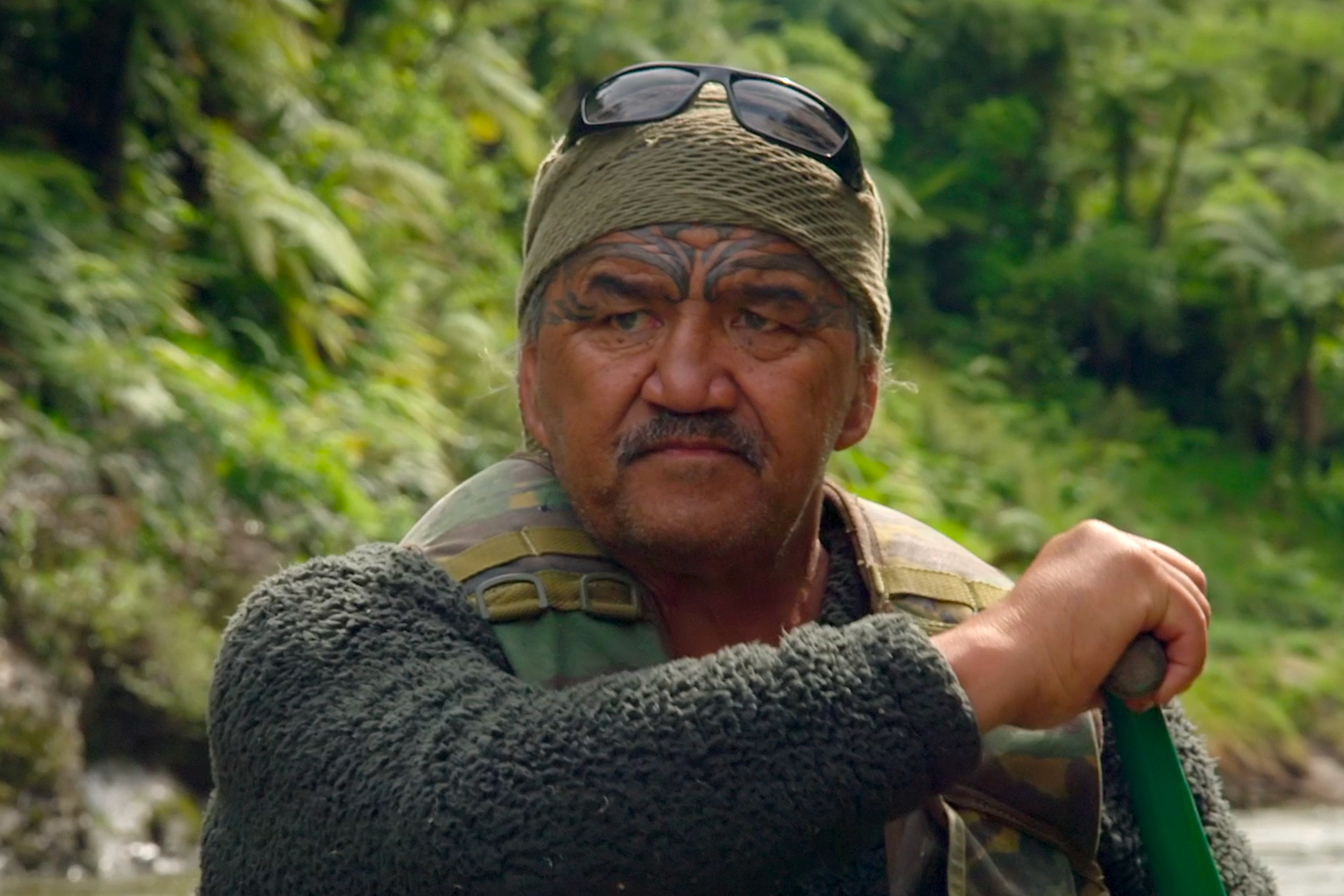


Ned Tapa has spent his life along New Zealand’s Whanganui River. For Tapa, a Māori leader, the river is not a resource to be managed or a commodity to be owned. It is an ancestor. A living being. A life force.
That worldview—captured in the Māori phrase “I am the river, and the river is me”—prevailed in 2017, when New Zealand recognized the Whanganui as a legal person.
The Whanganui River Claims Settlement Act did more than grant the river legal standing. It also acknowledged that the British Crown had surreptitiously taken sovereignty over Māori lands, and that the land grabs had harmed Indigenous communities’ ways of life, including their inherent connection to the river.
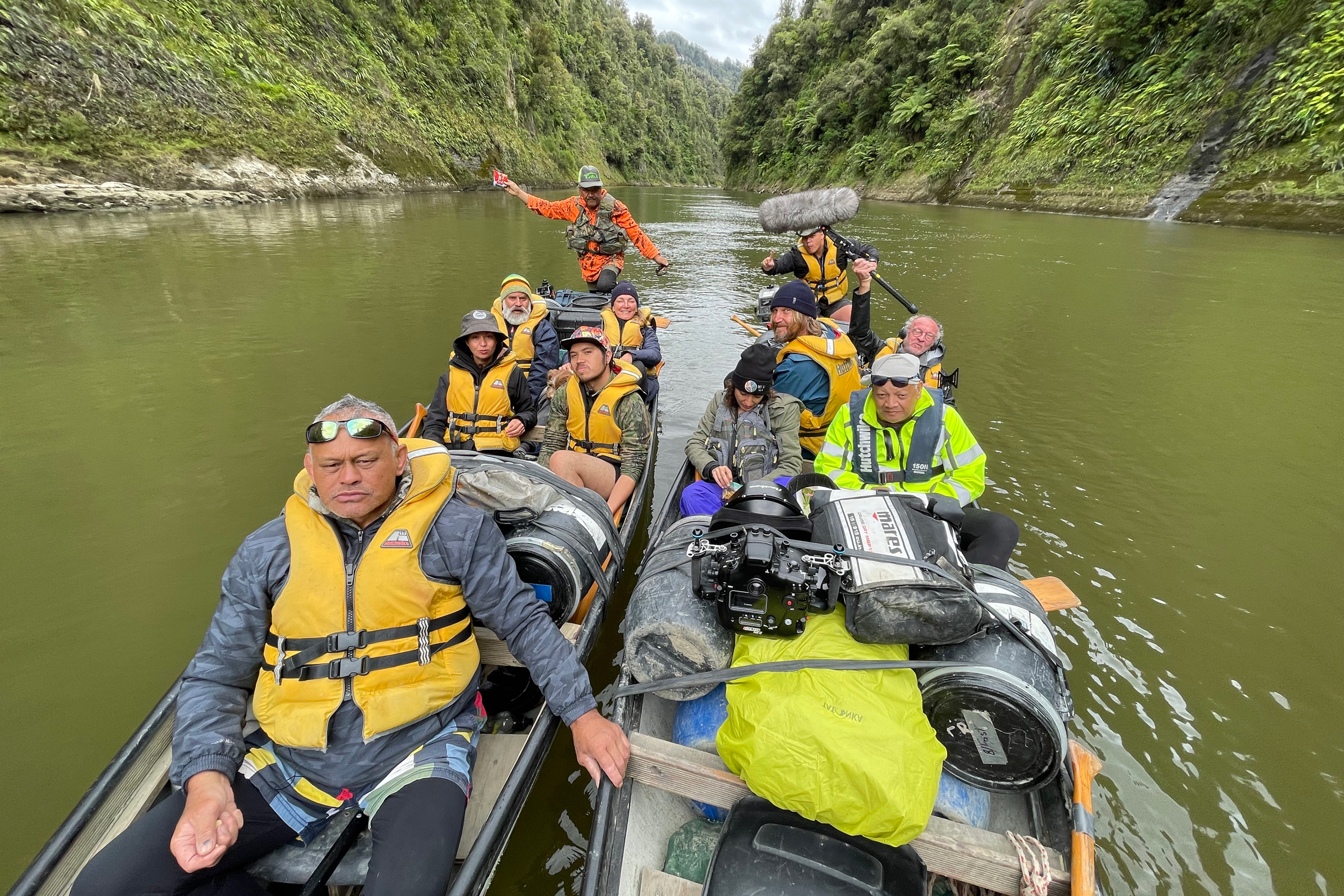
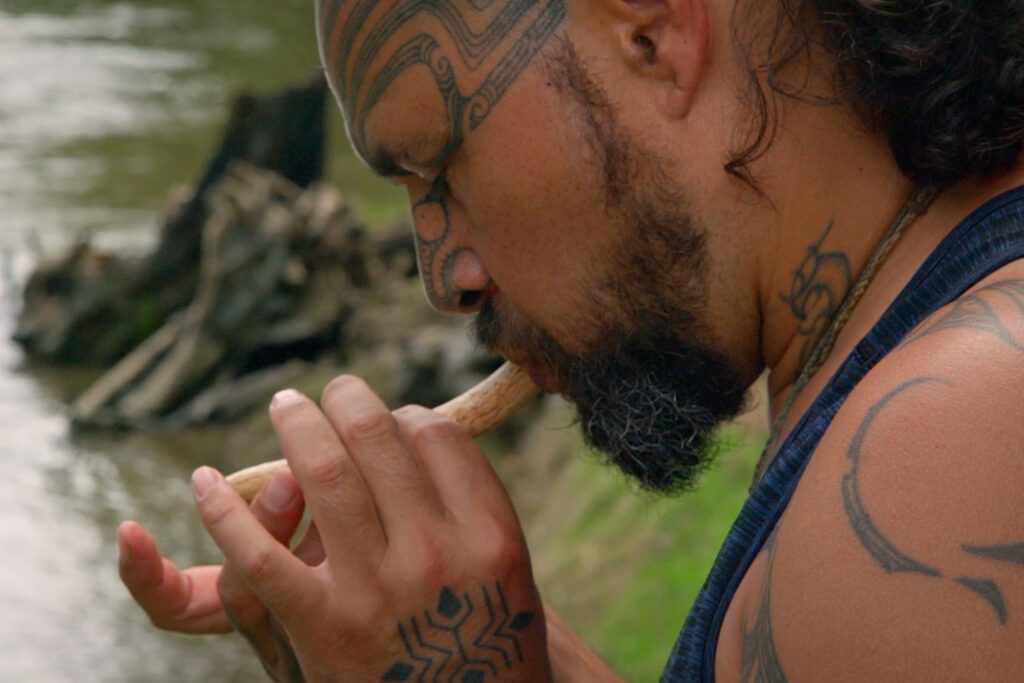
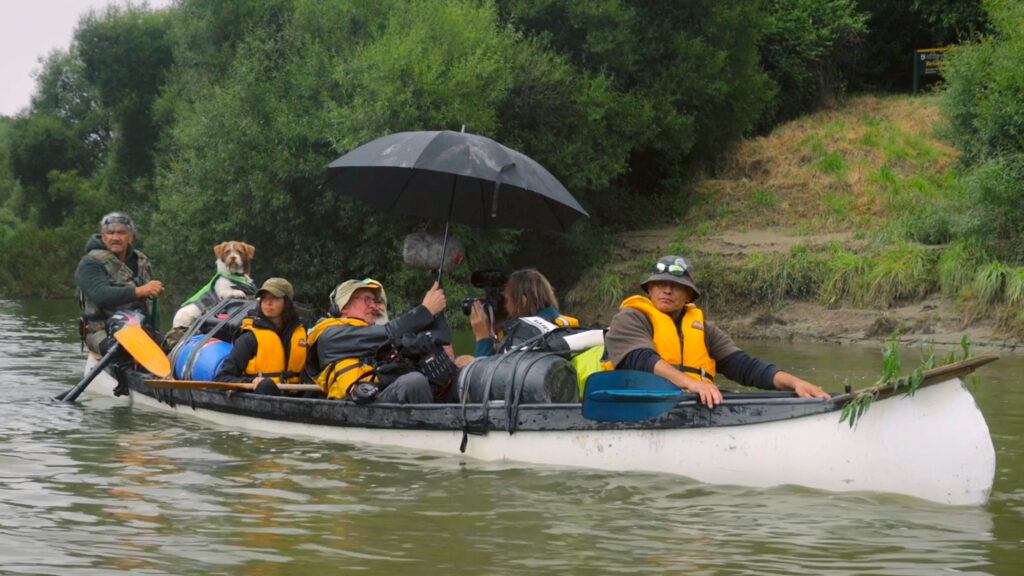
Tapa is featured in the 2024 documentary “I Am The River, The River Is Me,” a film that follows his journey along the river’s physical flow, from the mountains to the sea, while tracing some of the cultural, spiritual and legal currents that have shaped its fate.
The film invites viewers to reconsider the relationship between humans and the rest of the natural world. It also confronts audiences with some of the horrors of colonization, as when one of Tapa’s companions, an Australian First Nations elder, recounted how colonizers buried Indigenous babies and children up to their necks before killing them—and how those acts continue to reverberate across generations.
Tapa is among many Indigenous people worldwide leading the rights of nature movement, which aims to translate long-held worldviews and knowledge into law by seeking legal recognition that ecosystems, wildlife and the Earth itself are living beings with inherent rights to exist, evolve and regenerate.
Today, the Whanganui River has a formal voice over decisions that impact it—through human representatives, similar to how humans represent the interests of corporations in court. A joint body, including a Māori guardian and a government official, speaks for the river.
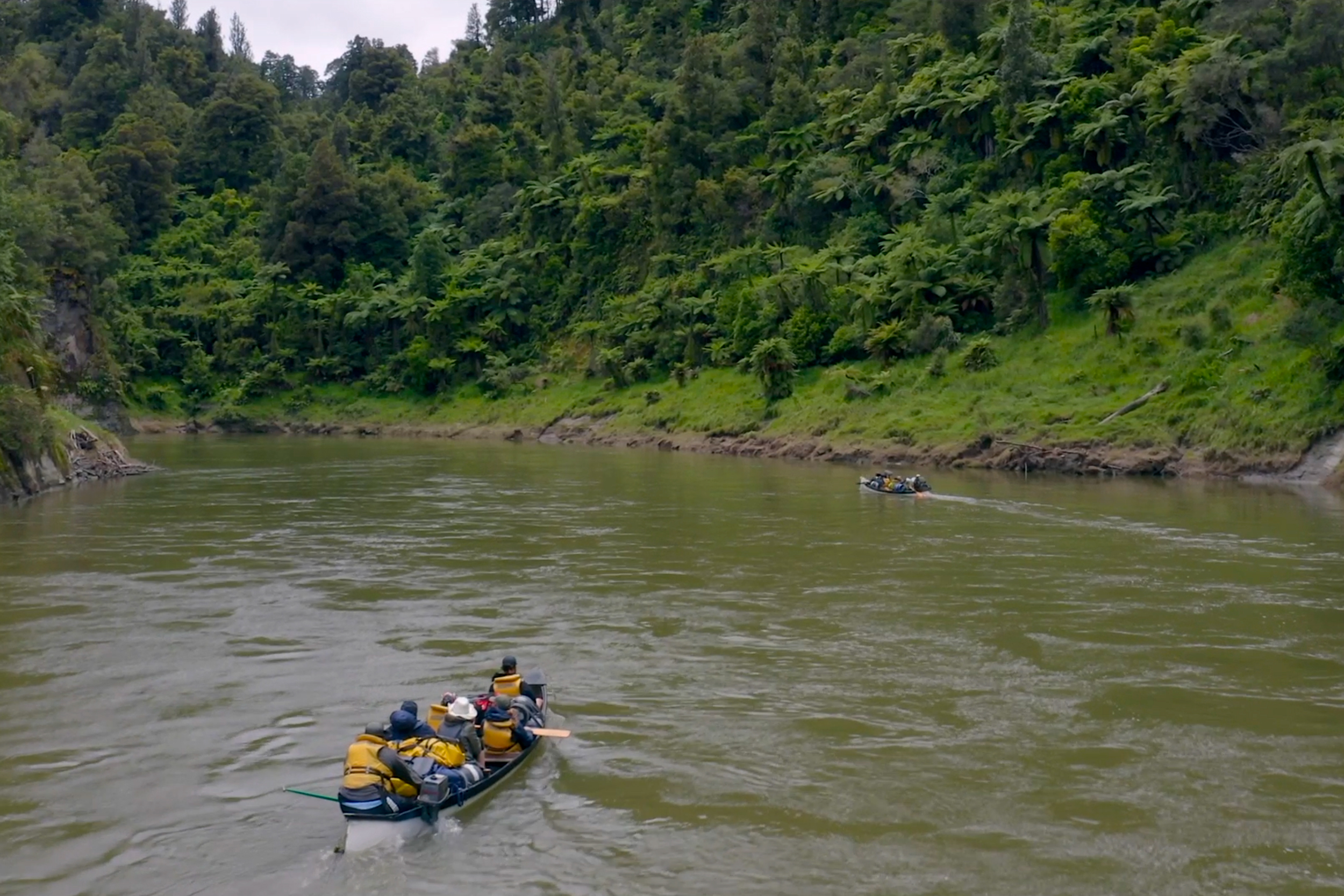
Tapa, who spends nearly every day on the Whanganui, isn’t a formal legal representative. But he is a kaitiaki, a Māori guardian and cultural steward of the river. As a caretaker, teacher and advocate, Tapa helps translate Māori knowledge and values for non-Indigenous people, which is also a key aim of the documentary.
Inside Climate News talked with Tapa and his partner, Rihi Karena—who is from the Māori tribes of Ngā Wairiki-Ngāti Apa, Te Ātihaunui-A-Pāpārangi, Ngāti Ruanui and Ngā Rauru—about the long battle that led to the river’s recognition as a legal person, what guardianship looks like in practice and why the Whanganui’s story has resonated around the world.
This conversation has been lightly edited for length and clarity.
KATIE SURMA: In U.S. culture and law, the conventional way to talk about nature is in terms of ownership—people own land, own water rights, own wildlife. Māori and many other Indigenous people use the term guardianship. How do you see the difference?
NED TAPA: Guardianship is about us looking after what we have for the short time that we are here on this Earth. It’s not only for future generations but for us who are still walking the face of this Earth.
With ownership, the Earth is just a commodity where you can buy it and sell it tomorrow and do whatever you want to do with it. We were raised along the riverbanks, immersed in our culture and the responsibility to care for the river—not to treat it as a commodity. If we all became guardians, it could only be better for Mother Earth.
I’m not saying that ownership is all bad because a lot of people who own their little bits of land do a good job of keeping it clean and sustaining it. But there are a lot who don’t. Because of the situation with colonization, we all own little bits and pieces of land. But when it comes to guardianship, that belongs to all of us as guardians of land and waters.
RIHI KARENA: Guardianship is collective. We collectively are guardians that care for the mana of our land, our rivers. It’s not about me: “I own this … and you can’t come onto it.” Guardianship is not “mine,” but “ours.”
SURMA: Can you explain the Māori saying: “I am the river and the river is me,” which is also the title of the film?
TAPA: It’s both a spiritual and physical connection. Through our lives growing up as children, through our belief system, we were always given the reasons why the river is there—where the river starts, where it comes from in the ground. Those particular areas have guardians to ensure the place is looked after. We look after them, and they look after us. So we feel very much that we are the river.
I am the river and the river is me—it’s just part and parcel of who we are. We treat it as a living being and as an ancestor. But it applies to everything. I am also the land and the land is me. I am the air and the air is me, because without them, we don’t survive.
KARENA: It’s about connection. The river is our ancestor. We come from the river. We don’t own it. The river is like the blood of Mother Earth. It feeds us and replenishes the Earth. It’s like veins in our body—the life force.
SURMA: The Whanganui River Claims Settlement Act is one of the first Western laws to recognize the legal personhood of a river. How did that all come together?
TAPA: This started over 100 years ago with our ancestors, and particularly my grandfather, who came together with our elders from the top end of the river to the bottom end of the river. It involved a lot of people because not only does the Whanganui River flow from the mountains to the sea, there are a lot of other Iwi [Māori kinship groups] whose tribal areas have rivers and streams that feed the Whanganui River. So a lot of people came together to start the initial conversations with the Crown.
This was during a time when the English, the colonials, started taking more and more power, from the late 1800s into the early 1900s.
Our elders felt a deep sense of loss of guardianship of the river, so they started the legal battle to regain that for our people. It’s been one of the longest legal battles in New Zealand’s history. It has taken many generations to get to where we are today.
SURMA: The fight went on for 140 years. In the end, what made the settlement politically possible?
TAPA: For things to change, you need to have the right people. There was a time in the early stages, in the early 2000s, when we had a change in government, and a change of people in power.
I think people became more educated about the environment without being so-called “greenies.” In the early 2000s, the government of the time was open to hearing what Iwi Māori were asking for. We also had some very educated, very clever elders at the time who had worked within the corridors of Parliament and knew what lawmakers were thinking.
Those elders were able to track a new way of looking at this through the eyes of the law. So we followed that path. And the path was bringing our traditional rights and our traditional ways of life into the law. What we were asking for had never happened before.
We were about 85 percent successful. We managed to get quite a bit back so that we can look after the river. We had a treaty and the treaty worked. That’s where the government and our people came together. We had battles, yes, but we were able to work things out.
It’s not that people have to be of the same mind. But it’s about being open enough to have those conversations, and then to do something about it. If you don’t have those types of people in government, then you get nowhere.
SURMA: The settlement has also had global significance.
TAPA: Initially, it was never about global impact. It was about our personal relationship with the river.
Our story has been shared. It blossomed into something bigger and helped to give people an idea of how others can do it. We want to support people in other countries, to say to them: “It can be done. We did it.”
We are only a small population, a speck in the sand compared to some major continents in the world. If the speck in the sand can do this, then it can only be an opening for others around the world to do the same. Because without water, we’re gone.
“We want to support people in other countries, to say to them: ‘It can be done. We did it.’”
— Ned Tapa
KARENA: It has got to start somewhere. For us, it started in our ancestors’ time. It’s about the next generation following that through and having that drive and that passion to make a difference.
It might not happen in their lifetime, but it might happen in future generations. So it’s about growing the next generation to be passionate about being the guardians of the rivers, the mountains, the sea and the land.
Ned is quite humble. He is very passionate about the river, and it is just who he is. It’s really hard to explain to people who don’t understand what that means. When you say, “I am the river and the river is me—and without the river, I don’t exist,” sometimes people don’t understand.
TAPA: That’s how I feel. But this change can happen in a lifetime. Look at Spain. There, they have a lagoon that they’ve succeeded [in] having recognized as a rights holder. There are countries that are already on board. In those places, the awakening has happened.
We’re not just talking about rivers. We’re talking about land, about forests, about mountains. It could only be better for us all if we became guardians. We would ensure that we look after it. Because at the end of the day, when we leave this Earth, the Earth takes care of us.
SURMA: Do you see the settlement as a step toward a more pluralistic legal system in New Zealand?
TAPA: A few years ago, I would’ve said yes. But right now, politically, we’re going backwards. The current government has shifted things back about 20 years.
SURMA: What’s happened since the settlement was finalized in 2017?
TAPA: Nothing happens on the river, or to the riverbanks on either side, unless it goes through the proper process. There is now collective responsibility.
We have our own Iwi structure set up called Ngā Tāngata Tiaki, which means the people who look after the land—the guardians. So if, say, there are rubble works to be done, like what’s happening at the moment, they go to our local Māori institution, Ngā Tāngata Tiaki. The district council comes in—everyone involved with the river comes together, understands what’s happening and makes a decision: yes or no. Even something like putting in a pontoon requires permission, because it’s about looking after the river.
KARENA: Just as a small example—I grew up in a neighboring tribe and I’m also connected here. Next Monday, we’re taking a group from the district council down our small river, the Whangaehu, to show them some of the things farmers are still doing to it. As a smaller or neighboring tribe, we’re only just starting that process ourselves—having leaders take councils out with our Iwi so they can visually see the impacts on the river.
SURMA: It sounds like a collective, collaborative process that’s bringing more people in. And it’s not just about future actions—you’re also looking at what people are already doing that could be harming the river, and finding ways to address that.
TAPA: Yeah, it’s a process, and it’s going to take time. For example, if you’re a farmer and you own stock, your land has to be separated from the river. There’s been a start—farmers have begun fencing off waterways from grazing land. Cattle make a hell of a mess. You can smell the water before you even get there.
That change is the positive side. The negative, of course, is that some people just put their finger up and carry on. But we’ll get there.
KARENA: We were out of town yesterday, just outside Whanganui, and there was a billboard that said, “Farmers looking after rivers.” Even in that space, there’s a shift in mindset about caring for the environment. The non-Māori population is starting to understand what we were talking about.
SURMA: There’s an intrinsic connection between Māori people and their territories. Can you talk about that?
TAPA: Culturally, we’re raised to identify who we are through our mountain, our river and our tribal area. So we introduce ourselves by saying things like: Ko Ruapehu te maunga, ko Whanganui te awa. Ruapehu is my mountain, Whanganui is my river. When someone stands and speaks that way, people immediately understand where they come from—what land, river and tribal area they belong to.
If you’re raised in Māori culture, that connection is intrinsic. It’s simply how things are.
The river flows from the mountain to the sea, and along its length there are many other tribal areas. When we went to Parliament, we knew we couldn’t do it alone, because others are connected to the river as well. So they were all invited to be part of the process. To this day, they remain involved, because their streams feed into our river. Whatever goes into their waterways eventually reaches us downstream.
So again, it’s about ensuring that its mauri—its life force—is protected. And only we can truly do that, because of how we feel about it and the relationship we have with it. That’s why we always speak up when things aren’t going right. We try to educate people who don’t have that same connection, not through any fault of their own, so we can bring them along with us and help them see the land the way we do.
SURMA: Do you have any advice for Indigenous or other communities that want to replicate what Māori people have done advancing the rights of nature?
TAPA: Share what knowledge you can share to give people insight into what you’re talking about because it’s hard for outsiders to understand that water has a life force, a spiritual life force. Educate those who do not know.
We have thousands and thousands of years of knowing our land. There’s an area of mountains here where our elders have always said: “That’s the oldest one, that’s the next oldest and that’s the baby, there.” Scientists asked us, “How do you know that?” We said, we know because we’ve been taught that from our ancestors. The scientists then went and took samples from each of the mountains and dated them. And of course, our ancestors were right.
The other piece of advice is, don’t give up. You can’t give up because if we give up, we become just like them.
This story is funded by readers like you.
Our nonprofit newsroom provides award-winning climate coverage free of charge and advertising. We rely on donations from readers like you to keep going. Please donate now to support our work.
Donate NowKARENA: Indigenous peoples know their land because they’re connected to it. They live it and breathe it. That knowledge is passed down from different ancestors to the next generation. So we know things—like the example Ned gave about our mountains—because our stories and our histories have been passed on from our ancestors.
TAPA: You just said a word there—stories. That can be a very damaging word for us because people see our stories like “once upon a time” stories. But actually, it’s the way our people talk to deliver what they’re seeing scientifically.
KARENA: It’s a misperception of our culture. They say: “That can’t be true. That’s a myth. It’s not factual—how can a mountain or river be a person?” It’s knowledge that has been shared through the telling of our experiences.
TAPA: We don’t often talk outside our particular tribal areas about some of our stories. One of the reasons is that someone will pick up what we have said and write a “once upon a time” story about it.
Indigenous people have wisdom. So does Western science. So again, it’s about the right people working together to make gains.
SURMA: Have there been any reactions to the film that surprised you or were particularly meaningful?
TAPA: When we were in Amsterdam, we had a question-and-answer time at the end of the movie. One gentleman got up and said: “Well, it’s OK for you to see nature, but I live in the city. I don’t see nature. If I want to see it, I have to drive four hours to go into the forest.”
I said: “You are in nature right now.” There’s green grass growing along the side of a fence. There’s a tree across the road. You just have to change the way you see things. Nature is all around us. That made him think.
KARENA: If you can inspire one person to make a difference or to make a change to help the environment, then that’s an impact. The overall responses from the premiers that we attended have always been positive. People say it’s inspiring, but it’s about what they do with that when they go away. Because you can watch something, you can be inspired. But actually, what do you put into action to make something happen? It might be something small—like if you see rubbish, pick it up.
Then there are the bigger things around policy change and government. That can happen. You can make a change.
About This Story
Perhaps you noticed: This story, like all the news we publish, is free to read. That’s because Inside Climate News is a 501c3 nonprofit organization. We do not charge a subscription fee, lock our news behind a paywall, or clutter our website with ads. We make our news on climate and the environment freely available to you and anyone who wants it.
That’s not all. We also share our news for free with scores of other media organizations around the country. Many of them can’t afford to do environmental journalism of their own. We’ve built bureaus from coast to coast to report local stories, collaborate with local newsrooms and co-publish articles so that this vital work is shared as widely as possible.
Two of us launched ICN in 2007. Six years later we earned a Pulitzer Prize for National Reporting, and now we run the oldest and largest dedicated climate newsroom in the nation. We tell the story in all its complexity. We hold polluters accountable. We expose environmental injustice. We debunk misinformation. We scrutinize solutions and inspire action.
Donations from readers like you fund every aspect of what we do. If you don’t already, will you support our ongoing work, our reporting on the biggest crisis facing our planet, and help us reach even more readers in more places?
Please take a moment to make a tax-deductible donation. Every one of them makes a difference.
Thank you,