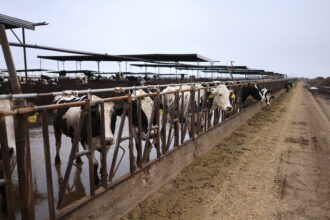
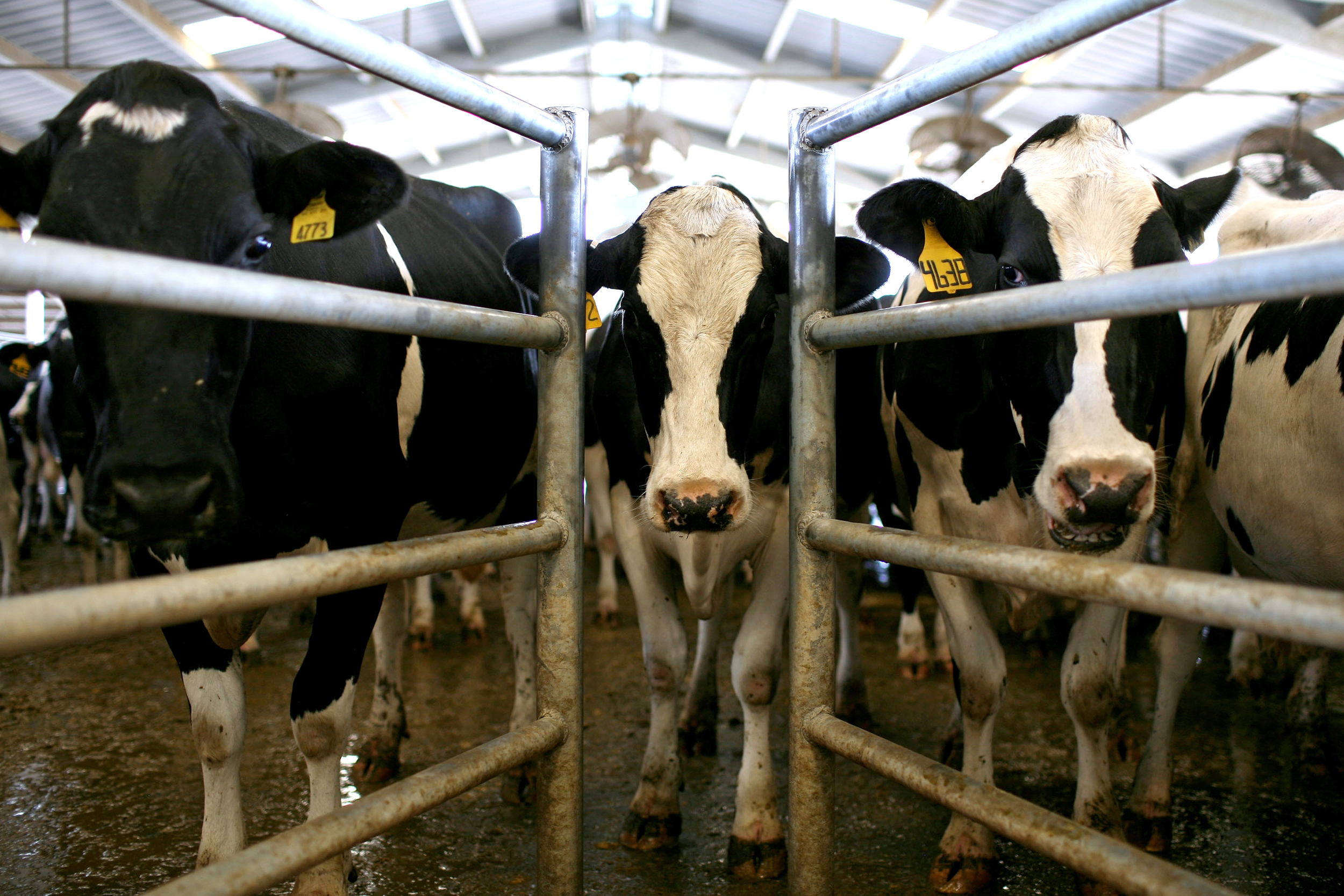


California dairies are out of balance. Everyone from environmentalists to regulators to the industry agrees that the nitrogen from milk cow manure is ending up where it can pose a health threat.
Excess nitrogen from dairies turns into excess nitrate in the soil, spilling into waterways, seeping into groundwater and contributing to widespread contamination of drinking water in the Central Valley. In some counties there, 40 percent of drinking wells are above the safe limit established by the U.S. Environmental Protection Agency, posing health risks like miscarriages and infant mortality.
In the next two months, the State Water Board says it will release a long overdue draft order that will chart a course to fix that.
A first draft of the board’s thinking came in October 2024, when it proposed a new framework requiring that Central Valley dairies comply with a nitrate drinking water standard of 10 milligrams per liter and meet new rules for storing waste, applying manure to crop fields and providing alternative drinking water to residents when nitrate levels in their water are unsafe.
“The fundamental requirement is that these operations have to figure out how to get to some level of whole-farm balance where they’re not creating more waste than they can deal with on an annual basis,” said Nathaniel Kane, executive director at the Environmental Law Foundation (ELF), which in 2013 petitioned the state to review the Central Valley’s dairy waste rules. “It’s a lot more specific about putting limits on how much nitrate can go into the soil from these areas. … Before this order, there was nothing really controlling that.”
The Central Valley Water Board regulates 1,300 dairies in the region under a 2013 waste discharge rule that was adopted after the ELF and the Asociación de Gente Unida por el Agua (AGUA), or Association of People United for Water, sued the regional board over its previous 2007 dairy regulation. A Sacramento court of appeals found the board out of compliance with the state’s law to protect high-quality water.
When the Central Valley Water Board reissued its rule following the lawsuit, AGUA and ELF petitioned for a review from the State Water Board, which found, over 10 years later, that certain components of the rule were still out of line with state policies.
The state board’s resulting 2024 draft order directs the Central Valley Water Board to develop revised dairy waste discharge requirements in line with recent findings. Those include a 2019 report from the Central Valley Dairy Representative Monitoring Program that led to what the state board described as a “fundamental shift” in its understanding of where groundwater pollution from dairies was coming from.
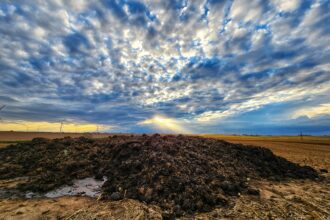
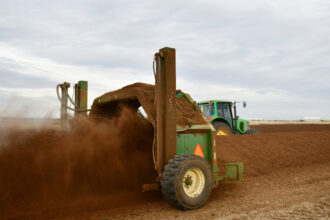
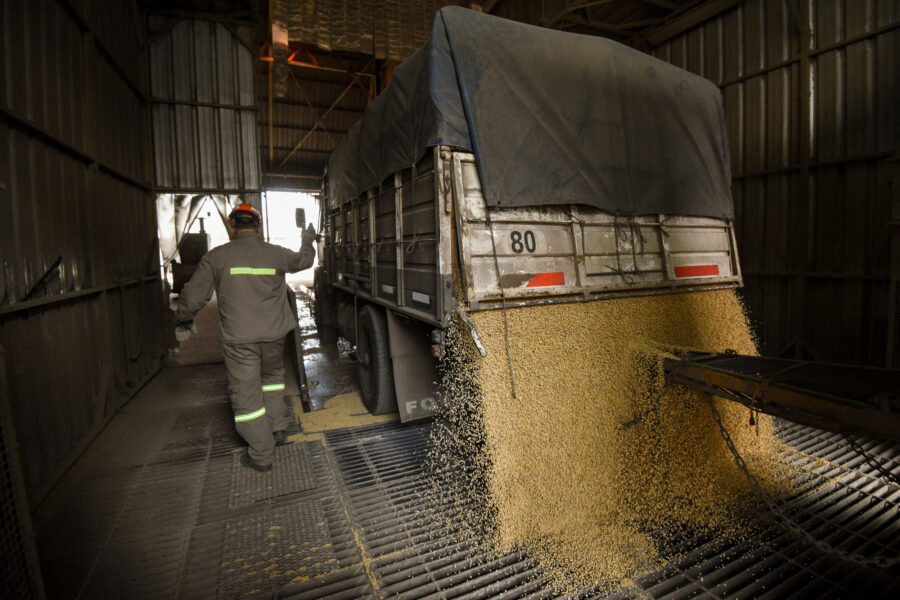
While previously it was assumed that the biggest source of nitrogen from dairies in aquifers was leaky waste retention pools, the report found that 94 percent of it actually came from spreading dairy waste across crop lands as fertilizer. So the state board’s October 2024 draft order focused on creating new requirements restricting dairies’ land applications of manure to levels that in 10 years would stop causing or contributing to nitrate contamination and get dairies into whole-farm nitrogen balance, where all nitrogen is taken up by crops, exported or treated.
In the year and four months since the draft order came out, dairy and farm industry representatives, environmental groups and environmental justice organizations representing communities around the dairies have been meeting with the State Water Board and advocating for their proposed changes.
“We’re hoping for some stronger language and more specificity around timelines,” said Kane.
The 2024 draft order did not establish a clear timeline for the Central Valley Water Board to develop a new rule. Additionally, since the new rule must apply to all dairies instead of just existing ones, it will be subject to review under the California Environmental Quality Act, which can drag out the rulemaking process.
Environmental groups have called for a deadline of two years after the adoption of a final State Water Board order for the Central Valley Water Board to revise its dairy waste discharge rules. In a letter to the state board, they also requested that, once it adopts its final order, it take no more than one year to finalize its groundwater nitrate loading limits and a new formula for land application rates to avoid delaying the regional board’s consideration.
“There’s a lot of good things about the draft and some things that need to change,” said Michael Claiborne, an attorney with the Leadership Counsel for Justice and Accountability, a Central Valley environmental justice group. “The biggest question I have is, ‘How do we implement this in a way that doesn’t delay things?’ I think the state board is wrestling with that as well.”
This story is funded by readers like you.
Our nonprofit newsroom provides award-winning climate coverage free of charge and advertising. We rely on donations from readers like you to keep going. Please donate now to support our work.
Donate NowThe dairy industry is also looking for changes in the draft order.
“We’re on board with the whole-farm balance concept,” said Michael Boccadoro, head of the California trade group Dairy Cares. “It really gets down to the nuts and bolts about how that’s implemented and how much time is provided for people to show progress to come into compliance.”
In their letter to the State Water Board, a coalition including Dairy Cares and the California Farm Bureau Federation requested that the Central Valley Water Board, rather than the state board, oversee the creation of the revised rule’s final land application rate formulas, groundwater loading limits and interim performance standards. They hope to see the standards developed by the Central Valley Dairy Representative Monitoring Program, a nonprofit group organized and overseen by dairy operators, and a process that “allows for an iterative, adaptive approach.”
They also want to see the state relax its proposal that dairies retrofit their waste retention ponds within three years if they have less than five feet of separation between the pond and the water table. Seepage from waste ponds is a small part of nitrogen pollution from dairies, they argued, but retrofitting them carries a large cost, potentially undermining more impactful actions “such as projects to export surplus manure, implement denitrification systems, or improve crop nutrient uptake via improved irrigation systems.”

Patrick Pulupa, the Central Valley Water Board’s executive officer, also submitted comments asking the state to scale back the scope of its order and allow the regional board to develop nitrogen standards. The board wants to do so as part of its Irrigated Lands Program, which regulates nitrogen from agricultural lands, and the Central Valley Salinity Alternatives for Long-Term Sustainability program, which aims to unify nitrate and salt pollution control under one program.
But environmental groups want to see the state board in charge.
“From our perspective, the Central Valley board is not as protective of groundwater quality as it needs to be, and the State Water Board has had to step in as a backstop on several occasions to try to put things back on track,” said Claiborne.
Deborah Sivas, professor of environmental law and a co-director of Stanford University’s Environmental Law Clinic, said she hoped to see the state board include stronger reporting enforcement standards.
In a new white paper, her research group looked at waste reporting from large Central Valley dairies in 2023 and 2024. The team found that facilities were frequently underreporting wastewater and manure production, and failing to document where waste goes. The researchers also found that regional water boards weren’t adequately enforcing reporting requirements.
“You can set a standard, but if nobody’s doing anything to show that they’re in compliance with the standard, and nobody’s enforcing it, then it’s all kind of meaningless,” said Sivas. “The state board needs to step it up and make the standards more stringent in terms of reporting enforcement in the dairy order because the regional boards are not doing it.”
Phil Wyels, assistant chief counsel for the State Water Board, said the board is aiming to release a new draft order in March or April, with a workshop to follow in May or June. After that, adoption could be “within the following couple of months,” he said.
Meanwhile, groups that have been involved with nitrate pollution issues since the early 2000s are growing impatient.
“It’s been two years since the draft order, which was promising, but on a slow timeline,” said ELF’s Kane. “It’s really frustrating, because real people have contaminated drinking water and could be drinking nitrate polluted water during this whole time.”
About This Story
Perhaps you noticed: This story, like all the news we publish, is free to read. That’s because Inside Climate News is a 501c3 nonprofit organization. We do not charge a subscription fee, lock our news behind a paywall, or clutter our website with ads. We make our news on climate and the environment freely available to you and anyone who wants it.
That’s not all. We also share our news for free with scores of other media organizations around the country. Many of them can’t afford to do environmental journalism of their own. We’ve built bureaus from coast to coast to report local stories, collaborate with local newsrooms and co-publish articles so that this vital work is shared as widely as possible.
Two of us launched ICN in 2007. Six years later we earned a Pulitzer Prize for National Reporting, and now we run the oldest and largest dedicated climate newsroom in the nation. We tell the story in all its complexity. We hold polluters accountable. We expose environmental injustice. We debunk misinformation. We scrutinize solutions and inspire action.
Donations from readers like you fund every aspect of what we do. If you don’t already, will you support our ongoing work, our reporting on the biggest crisis facing our planet, and help us reach even more readers in more places?
Please take a moment to make a tax-deductible donation. Every one of them makes a difference.
Thank you,

Blanca Begert
Reporter, California
Blanca Begert covers climate change and the environment in California. She previously reported on state climate policy and politics as the California climate and energy reporter at Politico. Before that, she was a fellow at Grist and an award-winning editor and video producer at PBS SoCal. She has a master’s degree in Environmental Science from the Yale School of the Environment, where she focused on forest management, conservation, and international climate policy. Her reporting has taken her across the United States, Latin America, and China. Blanca lives in Los Angeles and is originally from Miami, Florida.